• The Big Picture
  • Here’s ScottNerd…
  • Here’s DerekNerd…

Images and Nerds

~ We're turning pages–and writing about them!

Images and Nerds

Tag Archives: Watchmen

Best Books of the Spring

05 Wednesday Aug 2015

Posted by ScottNerd in Top 5 Books of the Month

≈ 1 Comment

Tags

A Christmas Carol, Alan Moore, Ales Kot, Allen Ginsberg, Ant-Man, Archie, Autumnlands: Tooth & Claw, Avatar, Benjamin Dewey, Black Mask, BOOM!, Chilling Adventures of Sabrina, Chris Peterson, Crash, Curt Pires, Dan Slott, Downton Abbey, Eddie Campbell, Erica Henderson, From Hell, Garth, Giant Days, God Hates Astronauts, H.P. Lovecraft, Howard Chaykin, Ian Betram, Image, Jacen Burrows, Jeff Lemire, John Allison, Jordie Bellaire, Juan Rodriguex, Kaptara, Kurt Busiek, Lissa Treiman, Marvel, Material, Matt Fraction, Mayday, Mike Allred, Nick Spencer, Ommegang Abbey Ale, Penn State, Pete Toms, Providence, Robert Hack, Ryan North, Satellite Sam, Silver Surfer, Stathis Tsemberlidis, The Crucible, The Shining, the unbeatable Squirrel Girl, Tomas Aira, War Stories, Watchmen, Will Tempest, William S. Burroughs, zero

Summer is in full swing! As you lather up the sunscreen, fill the cooler with your beverage of choice (Ommegang Abbey Ale for me, thanks) and break out your thongs (sandals or otherwise, hey, we don’t judge) we present a list of recent comics that are well worth tracking down for your seaside, margarita-sipping, swimsuit-watching summer reading. Enjoy!

Top 5 Books of March

5. Giant Days #1 (BOOM!): OK, so, about 25 years or so ago, I made my way to The Pennsylvania State University, University Park campus; got settled in on the 4th floor of Pinchot Hall, a 10-storey sausage factory; cycled through a few roommates–smokers, snorers, and  psychopaths–during my two years on campus; fell in with a group of dorks who’d be my best buds for four blurry years; and all together, as fun as I think it was–as I remember it was–it was nothing like John Allison and Lissa Treiman’s irrepressibly jocular Giant Days #1.  Maybe that’s why I loved it so much.  Co-ed Musketeers–Daisy, Esther, and Susan–are the hyperbolically dramatic center of this university; and hilarity revolves around them in effortless ellipses, much to our benefit.  So good that I can confidently quote McGraw, the mustachioed hate interest, as I consider what the future holds for Giant Days and, fearing a sophomore slump, threaten the creators of this tasty treat: “Nothing you can do can spoil gravy for me.” (SC)
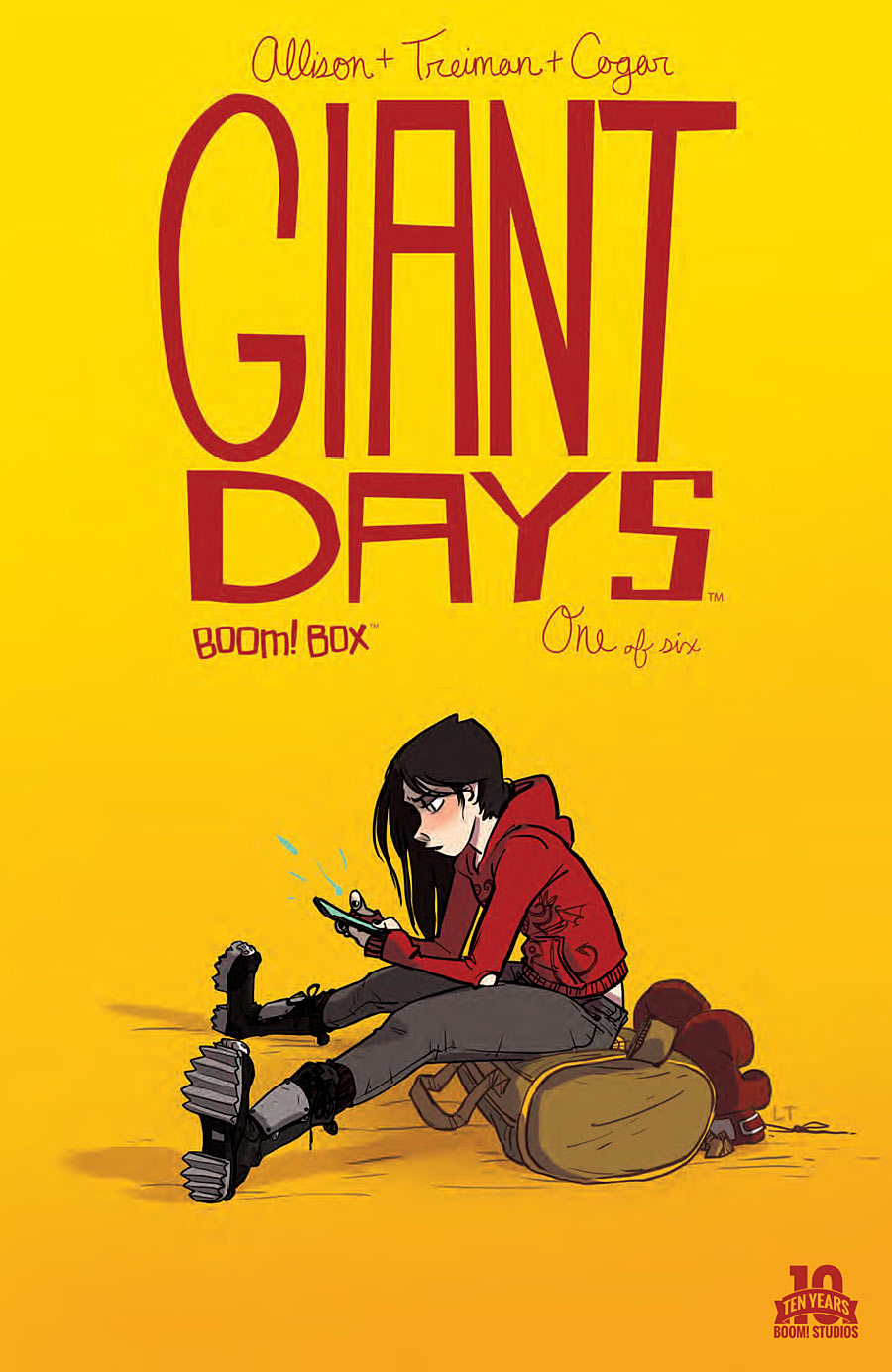
Giant Days #1

Giant Days #1

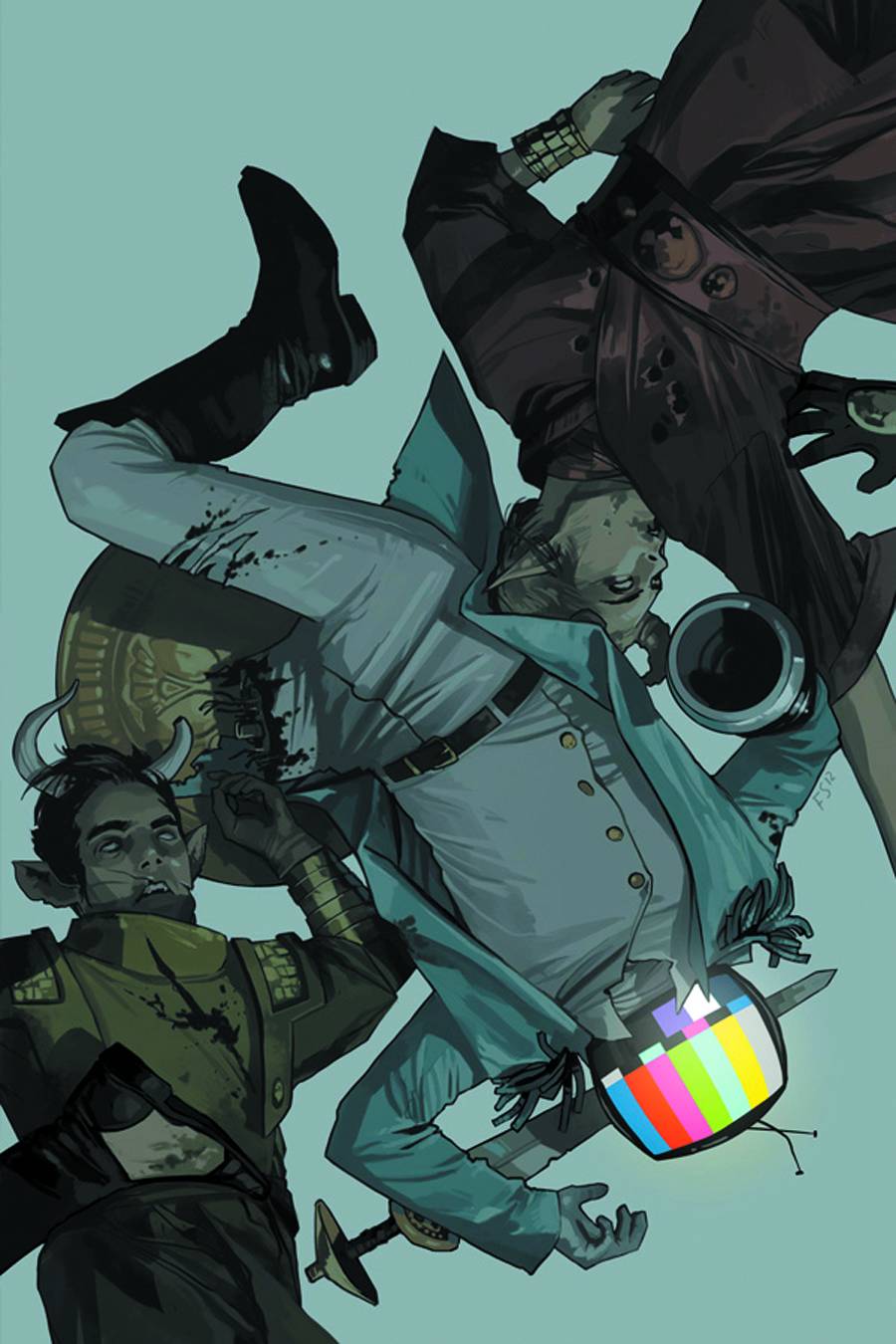
4. Autumnlands #5 (Image): Fantasy books are all about world-building. No comic in recent memory has presented a realm so fully realized as Autumnlands. Credit goes equally to writer Kurt Busiek (no stranger to this kind of thing – see Astro City) and artist Benjamin Dewey, whose lush style seems to belong to another era (it doesn’t hurt, of course, that it’s being colored by the omnipresent Jordie Bellaire, who I’m convinced at this point must be some sort of collective of robot artists). Floating cities, magical lore, calcified social strata, layer upon layer intertwine into a cohesive whole. Impressively, one doesn’t hear the awkard, behind-the-scenes clanging of this universe’s construction; rather, it’s as if it has always been there. It is merely our happy fortune to discover it, and get lost in it. Higher praise for a fantasy tale I can scarcely think of. (DM)
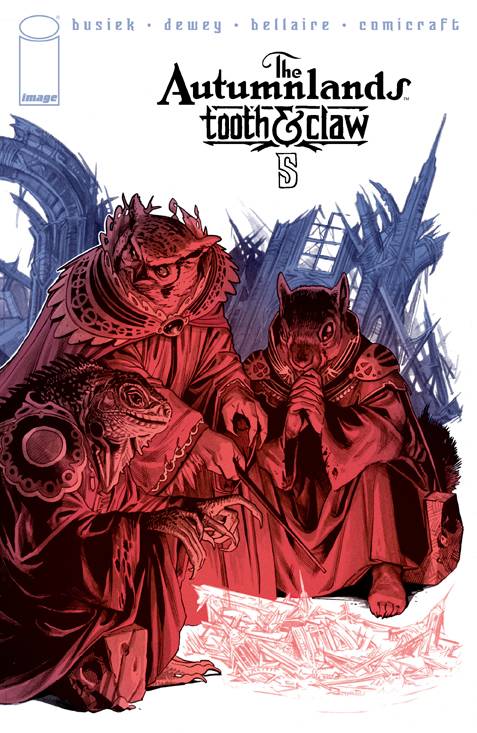
The Autumnlands: Tooth & Claw #5

The Autumnlands: Tooth & Claw #5

3. Ant-Man #3 (Marvel): I can’t even with this book. It is just too funny. I literally (and I mean that in the literal sense) have to keep putting it down because I’m laughing so hard. Literally! Nick Spencer is a comic (and I mean that in the comic sense) genius. Here’s your blurb: “The hero may be small, but the laughs are BIG!” (DM)

Ant-Man #3

Ant-Man #3

2. Silver Surfer #10 (Marvel): Dan Slott and Mike Allred are producing the definitive run of this classic character. They spent most of the first year bringing the fun, with story after story teeming with imagination and wit. But with the Silver Surfer, the piper must always be payed. They tackle the central pathos of the character head on: how can a being who played a role in the deaths of untold millions ever be redeemed? The story they come up with is so simple, so perfectly elegant, that I almost can’t believe no one’s thought of it before. Everyone knows that superhero stories from the Big Two are ‘never-ending’. That’s a shame, because this issue would serve as the perfect coda not just for this series, but for the journey that Norrin Radd has been on since Fantastic Four #48, all those decades ago. Beautiful. (DM)
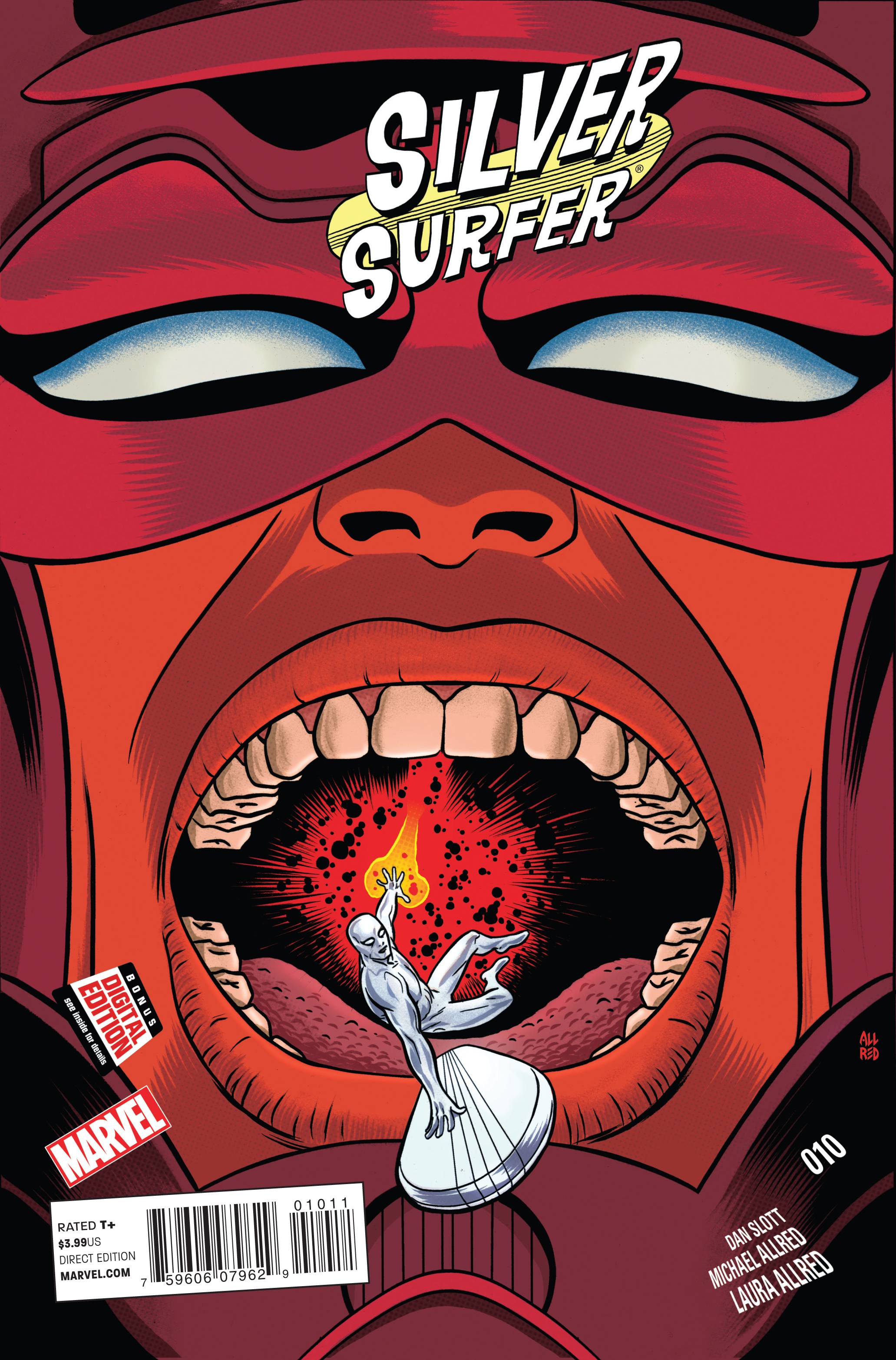
Silver Surfer #10

Silver Surfer #10

1. Zero #15 (Image): The Jeff Lemire variant queries innocently enough, “What is Zero?” Answers inspired by fourteen issues of Ales Kot’s crazy, crazy calculus: Soldier.  Spy.  Hero.  Killer.  Storyteller.  Everything.  Nothing.  Open up the book, open mind, as always, as necessary with this schizophrenic series, ask again: Who is Zero?  Answer inspired by page one, panel one: I have no effing idea! <–I borrowed an exclamation point; don’t think it’ll be missed.  Kot unexpectedly offers up a figure who’s furiously fingering a typewriter and, in doing so, adds a literary layer, making the book more than Zero.  He’s gone meta, forging unforeseen relationships, crafting, out of the story thus far, a psych-session confession and a catharsis-in-progress.  This stunning thing with its wild spirit sees Kot exploiting his poetic proclivities: his words build images that build upon artist Ian Bertram’s images and affecting layouts: it’s a conscious stream of Ginsberg and guns, fathers and sons, drugs and drugs–all of it burrowing into the brain like a drunk bullet.  Stories don’t get more tragic than William S. Burroughs’, and Kot’s made magic by borrowing it–as if you couldn’t tell.
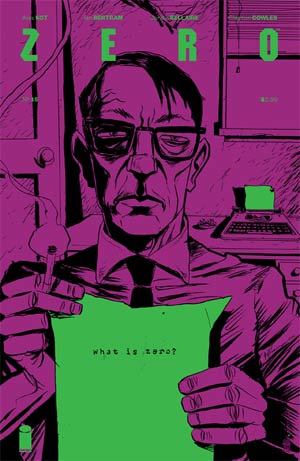
Zero #15

Zero #15

The Biggest Dis(appointment): Descender  #1 (Image)

Descender is the perfect title for this highly anticipated offering from the frustratingly inconsistent Jeff Lemire: the book, which starts off well enough, descends quickly–and dizzyingly so–to robotic schmaltz, lowlighted by the insultingly saccharine introduction of Tim-21, which bored a hole nerve-deep in my otherwise pretty resilient sweet tooth.  Anyone know a good dentist?  (SC)
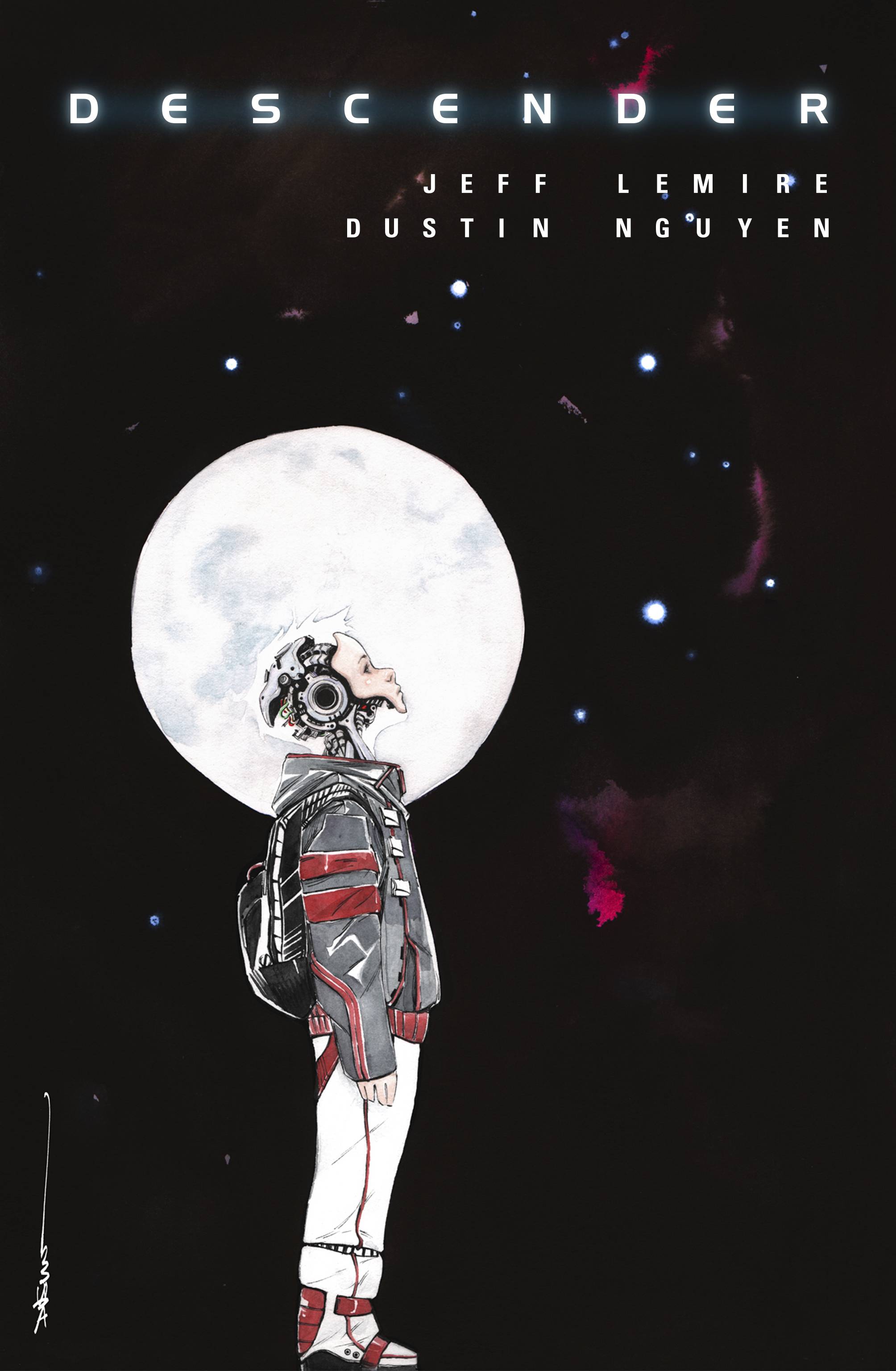
Descender #1

Descender #1


Top 5 Books of April

5. the unbeatable Squirrel Girl #4 (Marvel): There’s a long-overdue resurgence taking place in monthly comics that are putting the ‘funny’ back in ‘funny books’. We’ve been trumpeting the aforementioned Ant-Man for a while now; add to that the likes of God Hates Astronauts, Kaptara, and East of West (ok, maybe not that last one). Enter: Squirrel Girl. Ryan North (fresh of his excellent, award-winning run on Adventure Time) and artist Erica Henderson have already established a quirky charmer through three issues. Well the fourth installment is, simply put, the funniest single comic I’ve read all year. Most books are lucky to get a chuckle; this one had me laughing out loud five times before I was even that many number of pages in (I’m laughing now, just remembering them). Or maybe I should just put it this way: Squirrel Girl Vs. Galactus. Nuts Said. (DM)
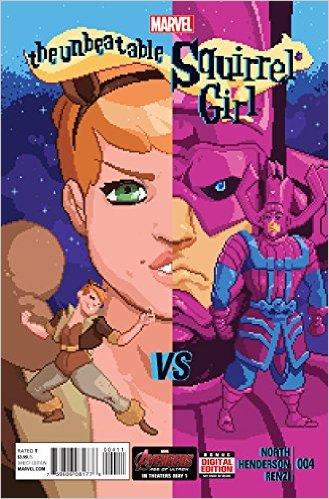
the unbeatable Squirrel Girl #4

the unbeatable Squirrel Girl #4

4. Mayday #1 (Black Mask): Curt Pires pops for real with this frenetic filet o’ film–one that drops some noms de cinéma (Kaufman, Lynch, and Bay) and goes to effing guerre with them.  Oh, yeah, man: it’s a wild ride that reads like a regiment of lines on a mirror meant to be snorted with the eyes and sorted out with a muddied mind.  Re: minds: Pires, paired with the more than competent Chris Peterson, sells a story that, in terms of comics, is “sort of like” Matt Fraction channeled through Ales Kot with Tyler Jenkins and Michael Walsh trying to one-up one another from one panel to the next.  Mayday #1 will leave you questioning your life choices–especially if most of them have sucked.  But you will not question your choice to pick it up–even if it is “just one big blur”; nor will you question whether or not you should pick up #2.  I mean, Kleio and Terrence have “just murdered two dudes.”  You totally don’t want them to come after you. (SC)
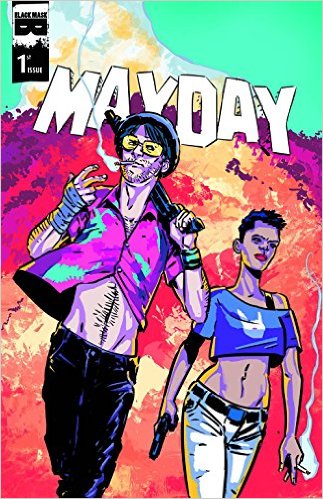
Mayday #1

Mayday #1

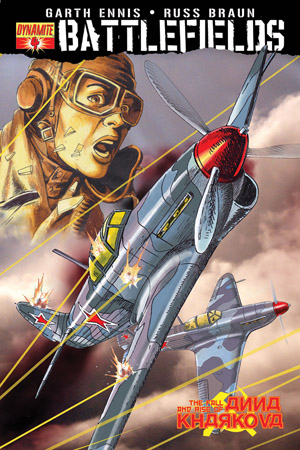
3. War Stories #8 (Avatar): Sounds like a given: Part 2 of “The Last German Winter” hits the mark with this icy mid-arc march through moral relativism; but let’s be honest: there’s nothing easy–nothing safe–about it.  I mean, who can take a Nazi, humanize his ass, then make you wonder all along when hell will come to pass?  Only Garth Ennis can.  Only Garth Ennis can.  (No, you’re not imagining things: go back and hum the tune as you read–heck, sing it out loud, you Sammy wannabe!)  He crafts a German hero–Gerhard the Gallant–who, considering the situation, is easy to root for; but we know better, don’t we?  Don’t we?  Just in case, Ennis reminds us, elbows us to make sure we’re paying attention; oh, but then he nudges us–so vulnerable to his charms–right back to where he wants us–seeing the man, not seeing the monster–thanks mostly to his narrative voice, the vulnerable Rachel Kohler, and to the portrayal of the even more monstrous Russians, their evil punctuated by an horrific splash from Tomas Aira.  The execution is near Nabokovian!  (No, you’re not imagining things: go back and Hum.)  Now that, dear reader, is a war story! (SC)
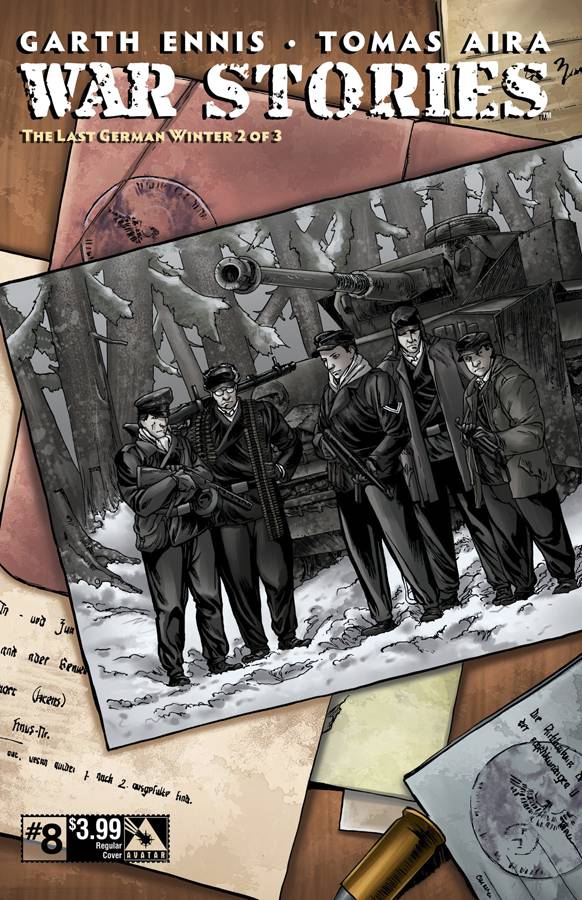
War Stories #8

War Stories #8

2. Chilling Adventures of Sabrina #2 (Archie Horror): Was a long time coming–so long that Roberto Aguirre-Sacasa offered up an apology to kick off the letter page!–but this second issue of Sabrina, which introduces with verve the vengeful and irredeemably evil Madam Satan, was well worth the wait.  The aforementioned writer–who not only sets a scene, he sets it on fire with his precise imagery–and artist Robert Hack, whose retro style is equal parts pillowy soft and boldly bloody, own the tone of this witches’ brew, which is bubbling over with literary allusions.  It’s campy; it’s creepy; it’s killer, kids! (SC)
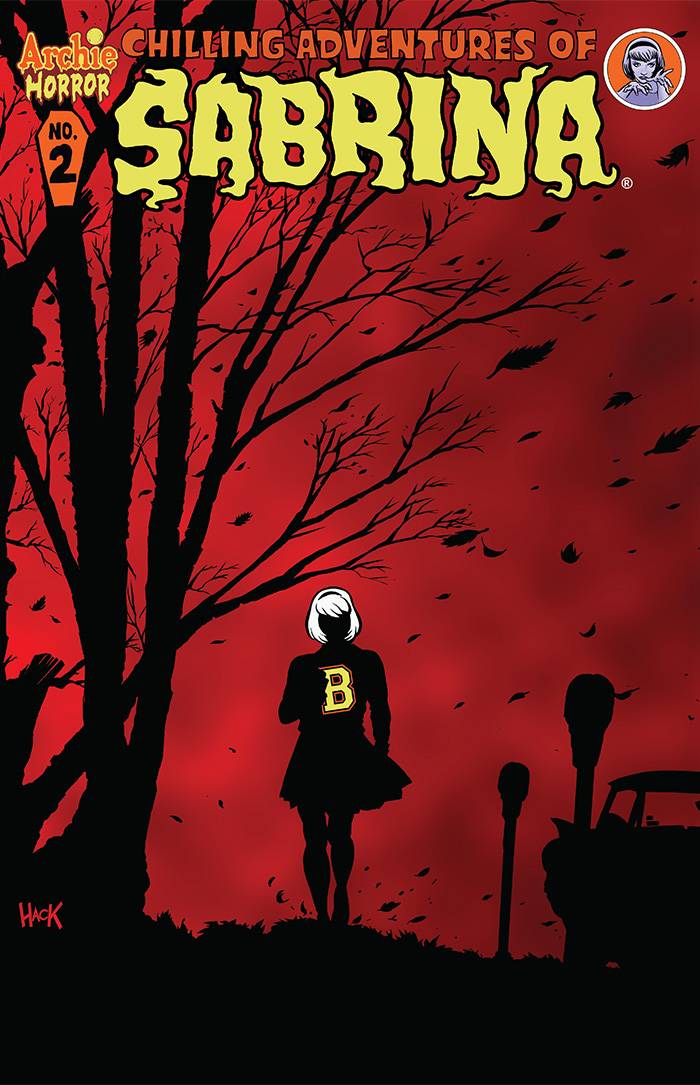
 

Sabrina #2

Sabrina #2

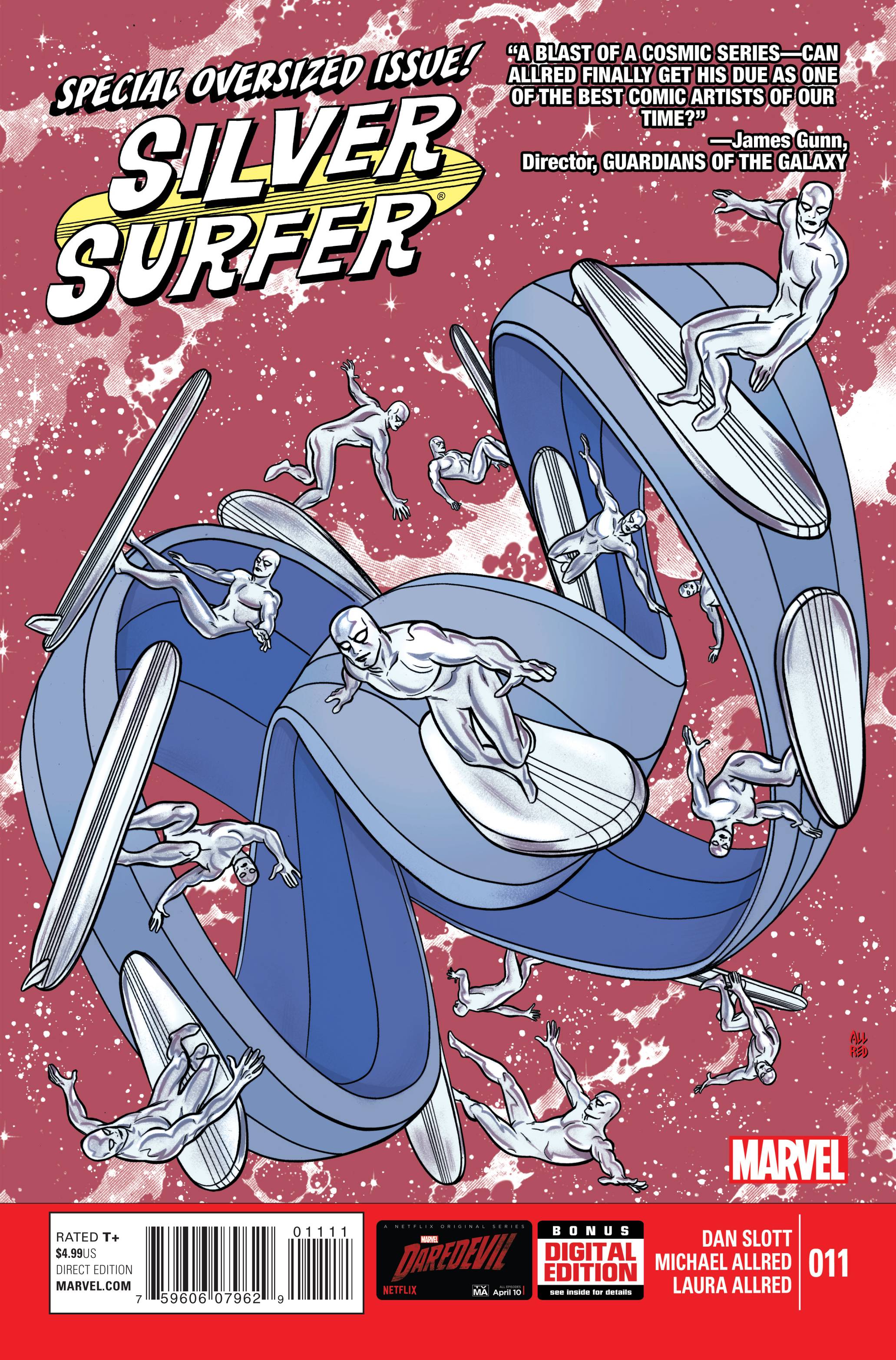
1. Silver Surfer #11 (Marvel): Dan Slott and Mike Allred follow up the powerhouse of issue 10 with a comic that is as formalistically daring as it is emotionally satisfying. Surfer and Co. are trapped in a time loop and the question becomes not only whether they’ll escape, but whether they’ll even realize it at all. A graphic illustration of Free Will versus Determinism, a metaphor for the repetitive cycle of our everyday experience, a tale of love, forgiveness and redemption; this issue delivers all three in a thrilling marriage of form and content. I maintain that issue 10 would have provided an excellent ending to this wonderful series. But I’m glad it didn’t. (DM)
Silver Surfer #11

Silver Surfer #11


Top 5 Books of May

5. Zero #16 (Image): Collective unconscious, the inevitability of change, the destiny of DNA, the life sentence that is guilt–Zero‘s certainly much more than its title insists.  It’s a proving ground, of sorts; it’s Ales Kot’s firing range of ideas: it’s rhyme-free reason; it’s a game of William Tell: Kot himself is the tortured William S. Burroughs, and we’re the trusting Joan Burroughs, with an apple of expectations balanced precariously on our head.  Too.  Tempting.  BANG!  Somehow this experimental spy story became an experiment in layers deep meta-fiction; and, despite the jarring shift, the result is nothing short of spore-born brilliance.  Wherever this crazy thing ends up, rest assured, Ales Kot will not fail us–but he’ll sure as hell phallus, as evidenced by Tom Muller and Stathis Tsemberlidis’s cocky cover, which, in turn, is further proof of an air of youthful arrogance in Kot’s work, especially here in Zero.  I’m more than happy to breathe it in for as long as it lasts.  (SC)

Zero #16

Zero #16

4. Afterlife with Archie #8 (Archie Horror): Roberto Aguirre-Sacasa and Francesco Francavilla continue to add to their modern horror mash-up by seamlessly incorporating elements that you didn’t even know you wanted; everything from The Shining to The Crucible, even A Christmas Carol. The result is rich tapestry that continues to add texture to the story, a mix that acknowledges the high-points in the history of horror through the unlikeliest of lenses. (DM)

Afterlife With Archie #8

Afterlife With Archie #8

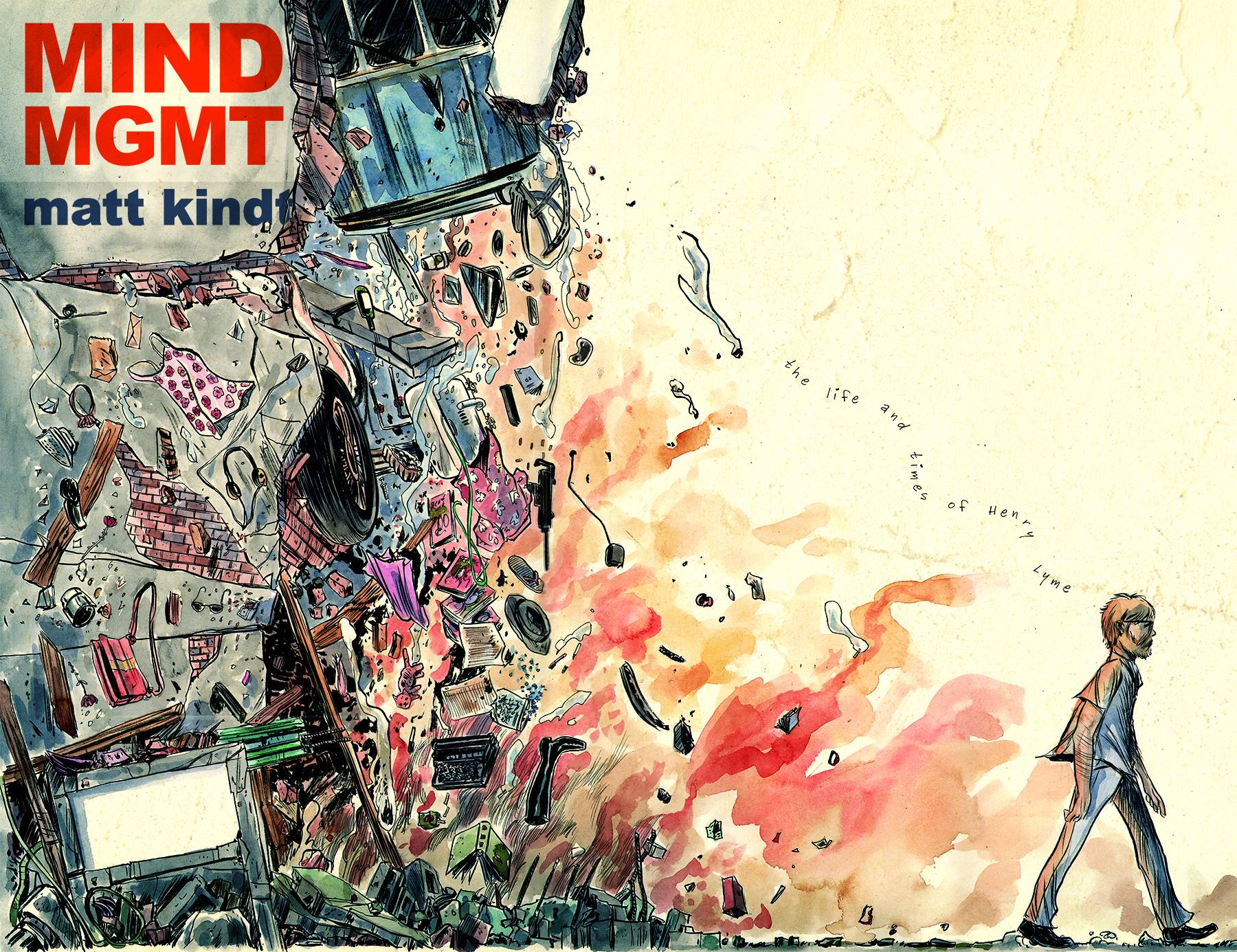
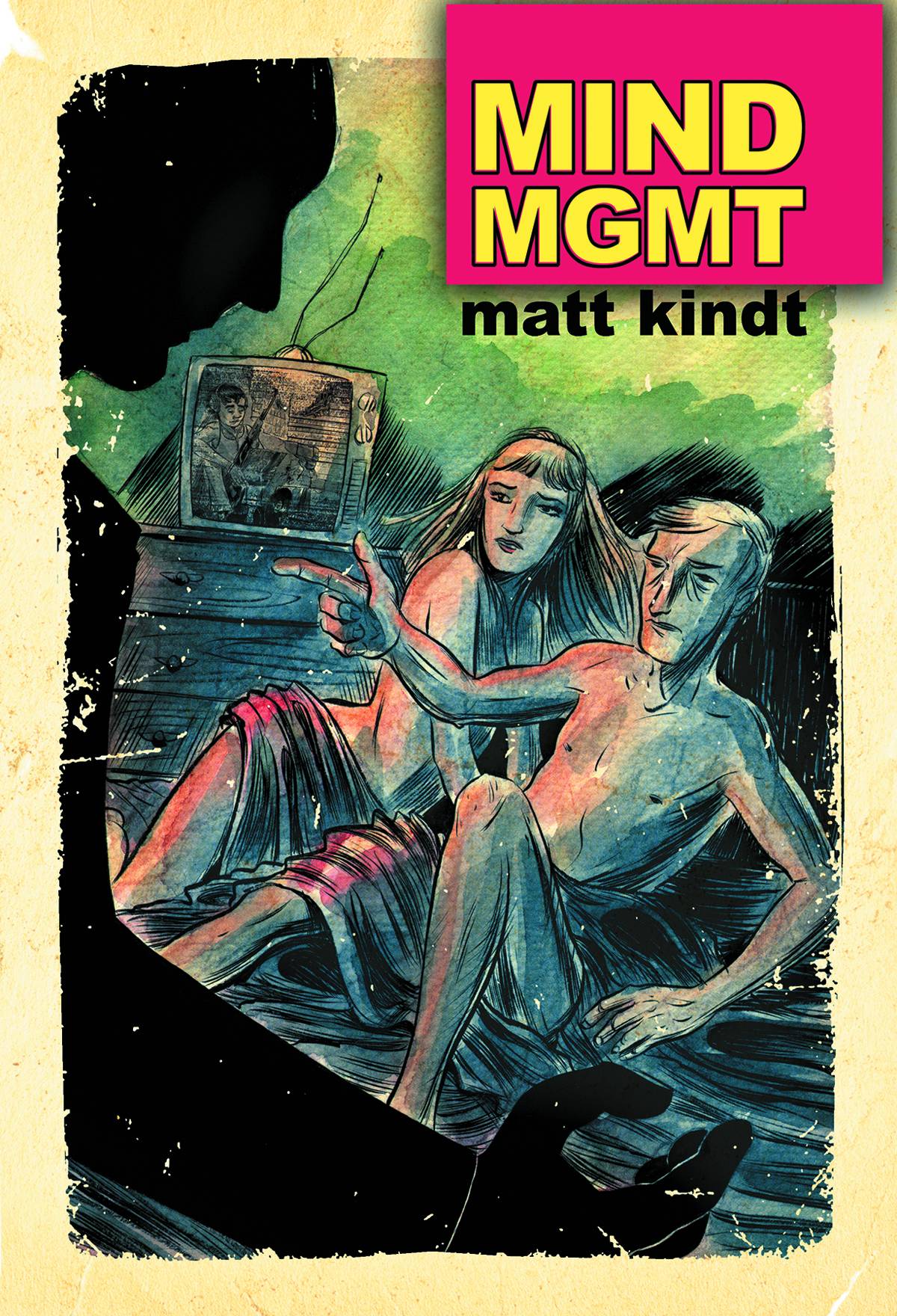
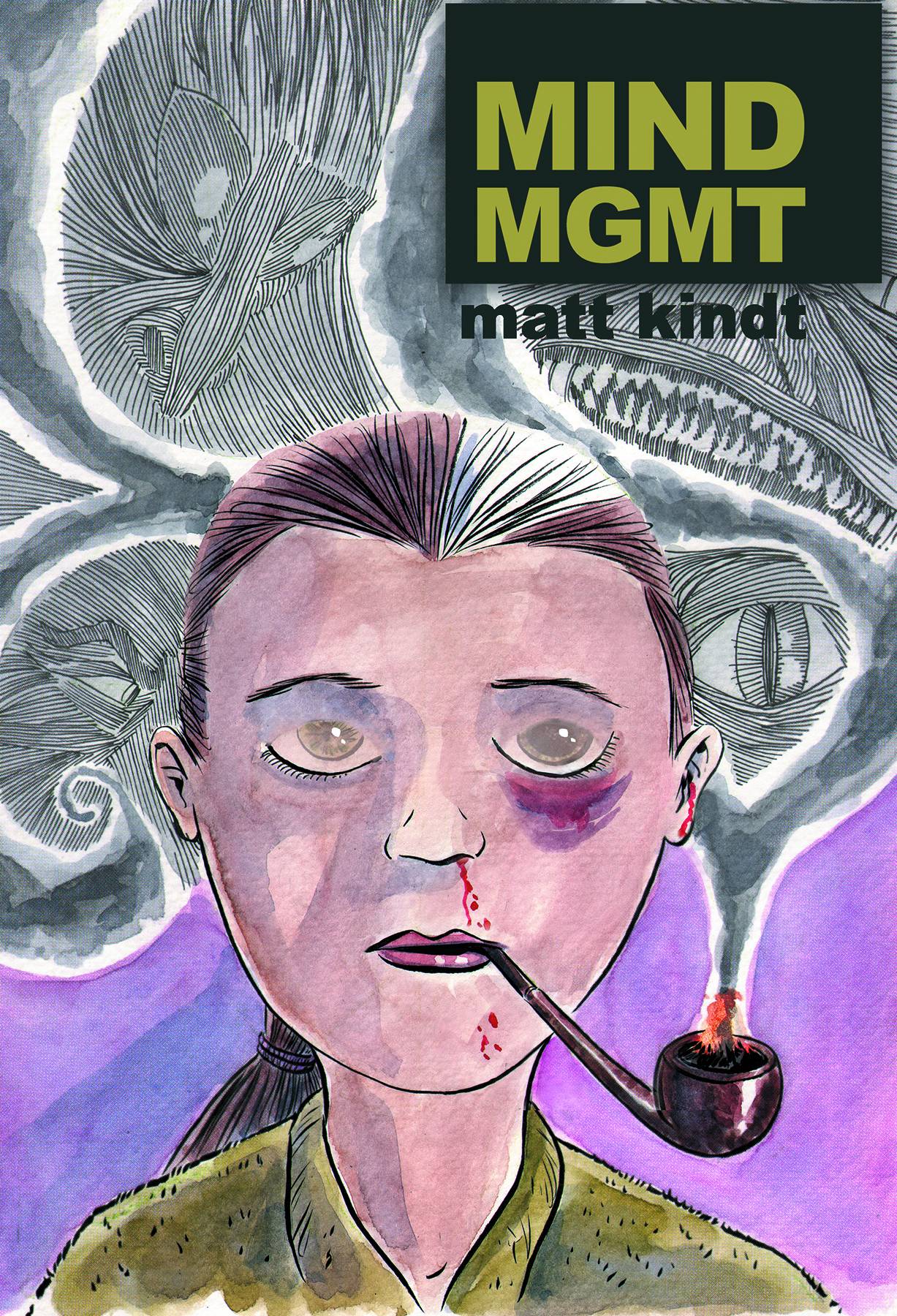
3. Mind MGMT #33 (Image): The ultimate showdown’s coming, but there’s no sign of a slowdown–even as Matt Kindt slows things down to foster a touching family reunion, one that frames Team Meru’s Soldiers of Fortune Cookies and their receiving and executing–with stunning efficiency–their munching–er, marching orders.  The decidedly deliberate issue ends with a Dalicious splash that promises a wild time.  With the end of the series so near, I’m excited, I’m anxious; but, no, Pipe Kid, I’m not ready–and I’m as not ready as I’m ever going to be.  (SC)
Mind MGMT #33

Mind MGMT #33

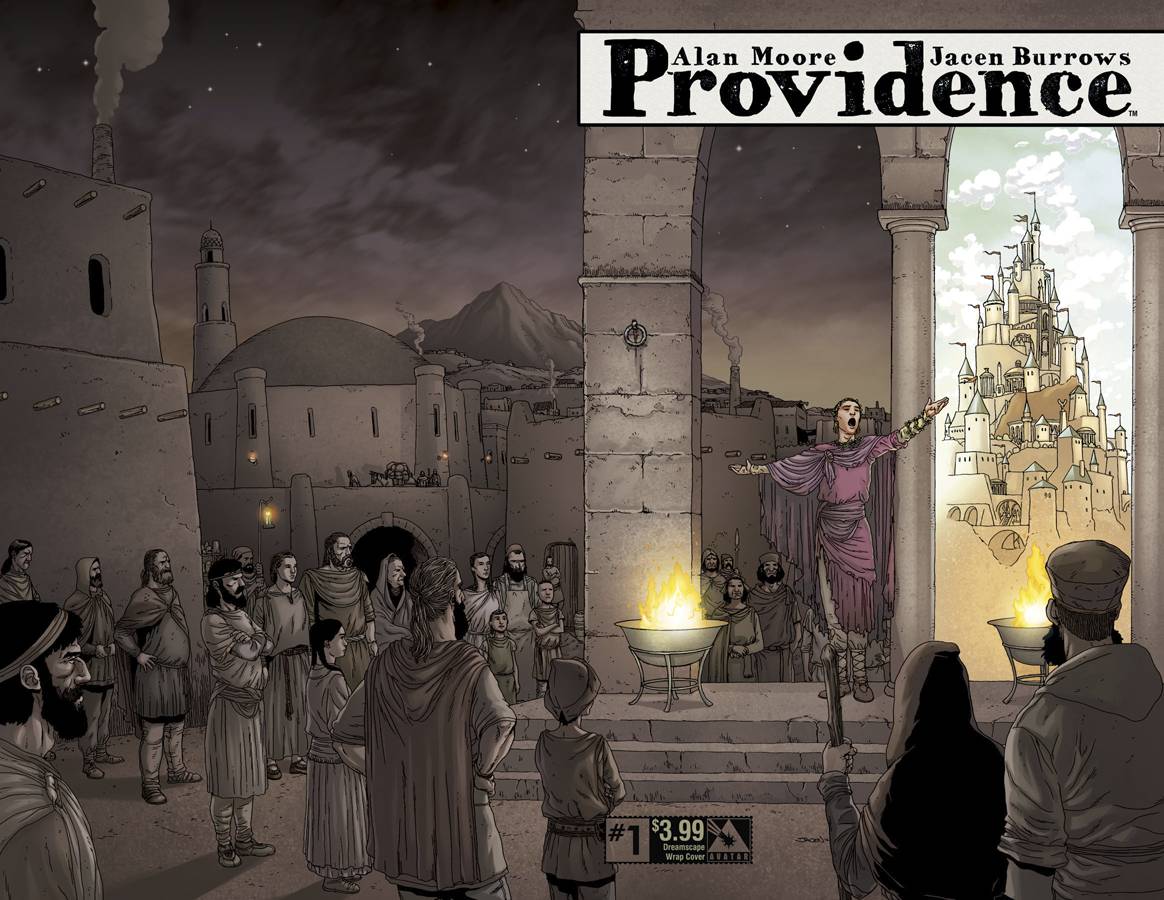
2. Providence #1 (Avatar): Avatar’s publicity department has been describing this new series by Alan Moore as “The Watchmen of horror”. But the story from Moore’s oeuvre that it more readily calls to mind is From Hell (an even more impressive achievement to this reviewer’s mind). FH brilliantly examined the underlying brutality of patriarchal hegemony through the lens of Victorian England, using the Whitechapel murders as a vehicle. Providence promises to delve into the repressed corners of American society of the past century using the fiction of H.P. Lovecraft (a passion of Moore’s for some time now) as a framework. Moore explores the Jungian implications of Lovecraft’s mythos (underlying realities masked by our limited human perception) by using them as a metaphor for aspects of the American experience that needed to remain hidden, given the times (in this case, “the love that dare not speak its name”). Yes, there is much to unpack here. Yet for all that,  this first issue is a master’s class in restrained, subtle storytelling. The deliberate pacing, the seemingly minor details that gain importance as the issue progresses, the symmetry of the opening and closing segments; Moore’s assured control of the material, when he’s on, has never been matched by another comic book writer. To say nothing of the insane amount of research that is woven throughout. Which brings us to the art. Here another comparison to FH is apt: Eddie Campbell’s nonpareil art in that tome had a scratchy looseness, a sketchy immediacy that pulled the modern reader with its irrepressible energy, despite the period setting. Here, Jacen Burrows takes the opposite approach: meticulously rendered, exhaustive research evident in every carefully placed line. The effect is polished, subdued and certainly visually impressive, but with a formal stiffness akin to watching an episode of Downton Abbey. And yet this is reflective of Moore’s otherworldly precision. Ultimately, the hyperbole of comparing this new series to the well-known Watchmen is needless. This first issue promises an epic Alan Moore tale to match or exceed, in scope, ambition and execution, anything he’s previously produced. That alone should suffice. (DM)
Providence #1

Providence #1

1. Material #1 (Image): With Material, Ales Kot’s has found his forum, the perfect space for him to keep pace with the injustices of the world.  No matter how desperate or disparate, they have a home here; and God knows he’ll never want for material as long as he never casts off the lenses–the perspective-altering critical approaches to analyzing, well, everything so relied upon by campus comrades, the arrogant academicians and their lecture-hall spawn–that help him to see the Ugly Spirit* in, well, everything.  Despite the pessimism that pervades the four narratives, which may or may not Crash into each other at some point, what Kot’s come up with–in tandem with the ironically-named Will Tempest–is beautiful.  He asserts that there’s hope in moments, in connections, and what better way to convey that point than with a comic book!  Holding its pages open is like holding hands with Kot himself as he leads the march toward enlightenment–toward Utopia.  And even if that march is born of naÏveté, it’s fueled by honesty, by brashness; and in the context of this comic, it’s something I want to follow.

*See Zero to see Burroughs to see that Kot’s got the Spirit–yes he does! (SC)

 

Material #1

Material #1

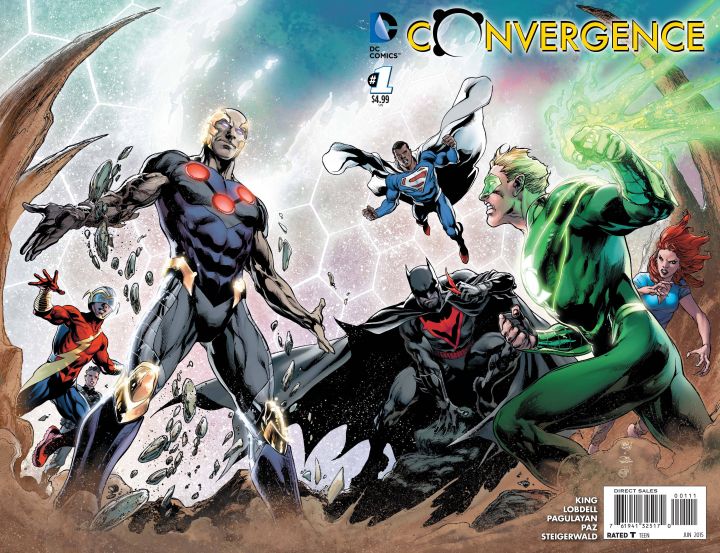
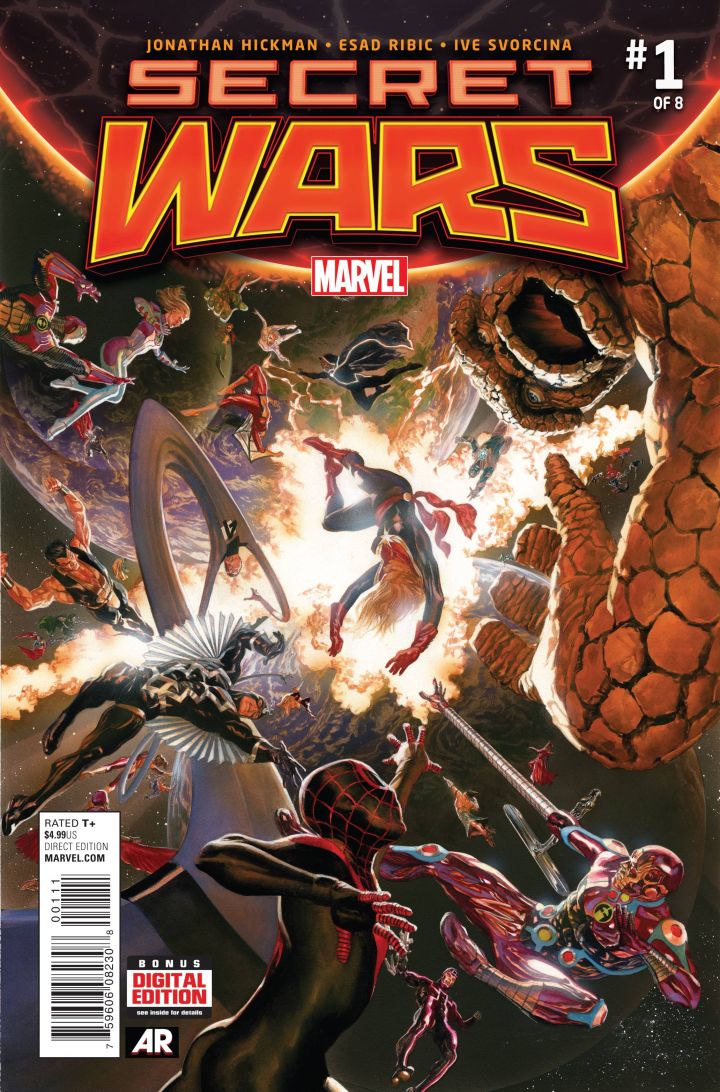
Biggest Dis(appointment)(April/May): Convergence/Secret Wars (DC/Marvel) – A bunch of heroes and villains from various alternate universes battle it out on a patchwork planet in a Secret Crisis of Ultimate Infinite blahblahblah. Yes, I’ve just described the plot of both summer blockbuster crossovers from the Big Two. In the cynical cycle of endless Events, this has to be a new low. I don’t know who’s guiltier: the company that seemingly pilfered the other’s concept, or the company that came up with such an awful idea to begin with. (DM)
Convergeance #1
Convergeance #1

Secret Wars #1

Secret Wars #1

Turning pages,

Derek & Scott

Share this:

  • Click to share on X (Opens in new window) X
  • Click to share on Facebook (Opens in new window) Facebook
  • Click to share on Tumblr (Opens in new window) Tumblr
  • Click to share on Reddit (Opens in new window) Reddit
  • Click to email a link to a friend (Opens in new window) Email
  • Click to share on Pinterest (Opens in new window) Pinterest
Like Loading...

I&N’s Top Ten Books of 2014

15 Sunday Feb 2015

Posted by dmainhart in I&N's Top Ten

≈ 9 Comments

Tags

1984, Action Labs, Afterlife With Archie, Alan Moore, Ales Kot, Archie, BOOM!, Brian Wood, Dan Abnett, Dan Slott, Danger Zone, Dark Horse, Declan Shalvey, Dry Spell, Dynamite, Francesco Francavilla, Garry Brown, Greg Rucka, Greg Smallwood, Guiu Vilanova, I.N.J. Culbard, Image, J. Michael Straczynski, Jamie S. Rich, Jordie Bellaire, Ken Krekeler, Lazarus, Madame Frankenstein, Marvel, Marvelman, Matt Kindt, Megan Levens, Michael Lark, Mike Allred, Mind MGMT, Miracleman, Moon Knight, Ms. Marvel, Roberto Aguirre Sacasa, Silver Surfer, The League of Extraordinary Gentlemen, The Massive, The New Deadwardians, The Twilight Zone, The War of the Worlds, The Wind in the Willows, Warren Ellis, Warrior, Watchmen, Wild's End, zero

Welcome to the 34th edition of I&N’s Top Ten Comics of the Year! Why, it seems like just yesterday we were bestowing our top honor to a little known comic from across the pond titled Warrior #1 (1982), solely for its inclusion of the work of a budding, young upstart named Alan Moore (who subsequently sent us a scroll with a nigh-illegible incantation, which was either a note of thanks or a curse from the Necronomicon; we could never tell which). While we dug his nascent V for Vendetta, it was his writing on Marvelman that enthralled. Happily, after a long absence, the original stories are finally being reprinted by Marvel Comics of all places (now re-titled Miracleman, due to the book’s long and tortured publishing history in which Marvel itself played an ignominious part). Viewed through the lens of history, this groundbreaking work has often been seen as Moore’s warm-up to his seminal, ubiquitous Watchmen. Visiting these stories afresh, however, it quickly becomes apparent that Moore’s initial go at “realistic” superheroes is as poetic, disquieting and masterful as his better-known oeuvre. Indeed, it’s a good thing we already recognized Marvelman’s greatness. Otherwise, despite Marvel’s awkward presentation (half of each issue is filler? and polybagged for no discernible reason?) these brilliant, essential tales would likely top our list again.

Speaking of which!

10. The Twilight Zone (Dynamite):

This is the dimension of J. Michael Straczynski’s imagination.  It is an area which we call the #10 book of 2014.  Returning to a creative comfort zone, J.M.S. has penned a series of meticulously plotted arcs that could easily stand as episodes of the iconic television show, each issue filled with tight twists, palpable fear, and ethical dilemmas that try and crush the souls of men and women alike.  Complementing Straczynski’s script is the gorgeous work of artist Guiu Vilanova, who draws out the fateful schemes in a realistic manner, making the unreal scenarios that much more believable–that much more frightening.  So while Straczynski might be going through the motions with some of his other titles, here he’s most assuredly in the zone.  We, unlike his protagonists, are the luckier for it; and Rod Serling’s somewhere out there in the timeless fifth dimension smiling, smoking–and waiting for the next issue of The Twilight Zone to hit the shelves.  Sadly, Straczynski and Vilanova’s terrific turn on this moralistic monster of a comic has but one issue left!  Ah, yet another cruel twist…(SC)

The Twilight Zone #4

The Twilight Zone #4

9. Wild’s End (BOOM!):

At this point, the mash-up is a long accepted (if not well-worn) artistic trope throughout all types of media. Indeed the initial collaboration between creators Dan Abnett and I.N.J. Culbard yielded The New Deadwardians, a ripping Victorian detective story simply teeming with zombies and vampires wot, wot! Wild’s End’s mix of The Wind in the Willows and The War of the Worlds may seem an unlikely entry into the burgeoning genre at first (and ill-advised besides, given Alan Moore’s own memorable War of the Worlds mash-up in The League of Extraordinary Gentlemen). But in the end, what matters, as it always has, is the telling. Abnett fully realizes the quaint comforts of his cozy anthropomorphized village, before threatening to tear it to shreds. Culbard’s rendering is uncluttered and timeless, effortlessly evoking both 19th century fairy tales and 1950’s sci-fi cinema. Most mash-ups hold their disparate elements in stark relief. The magic of this one is that it seems utterly seamless, as though these genres had been married from the start. The result is deceptively simple and completely enchanting. (DM)

Wild's End #3

Wild’s End #3

8. Moon Knight (Marvel):

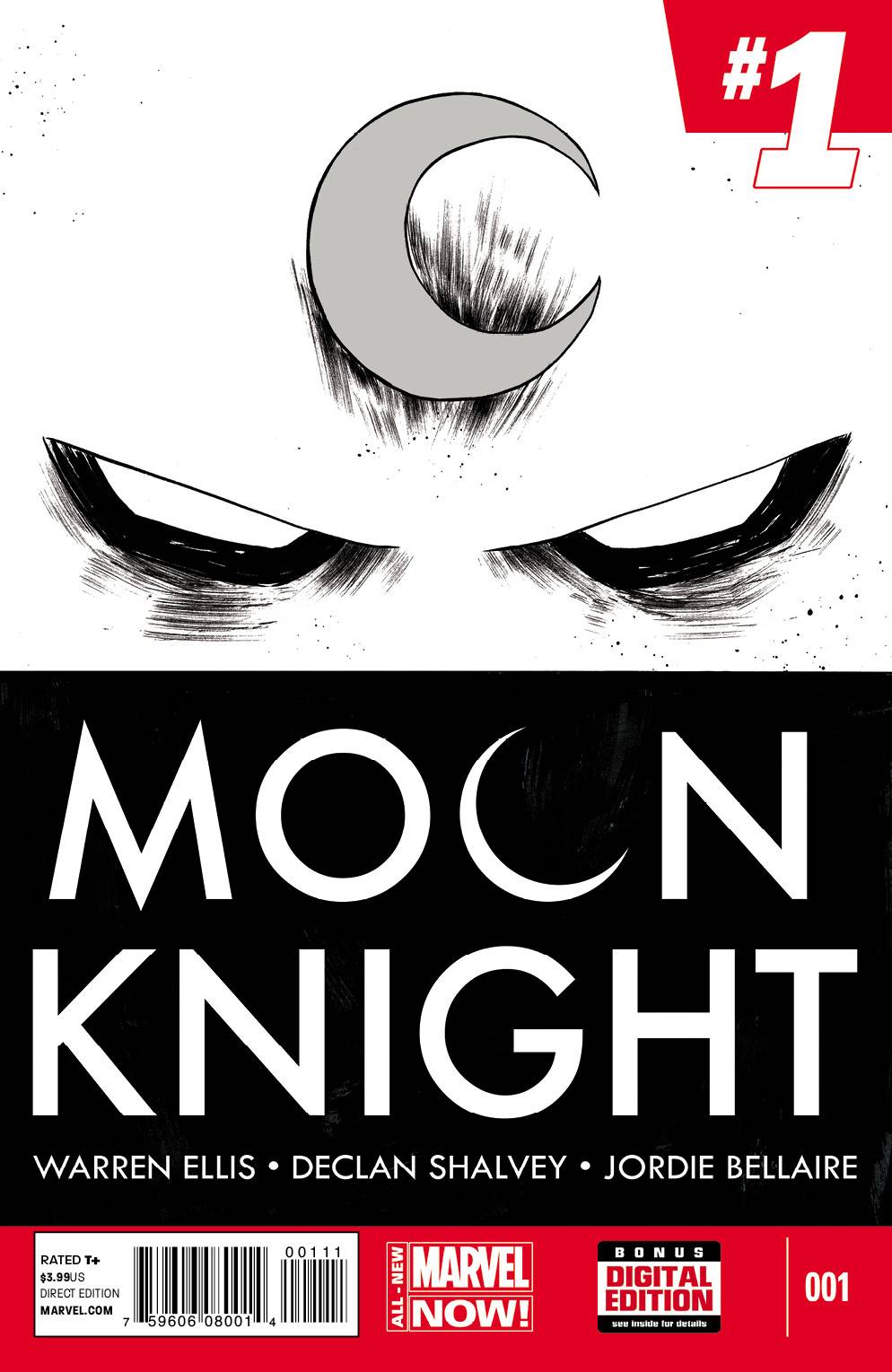
It’s an I&N first!  That’s right: we’re celebrating a book that has had two different creative teams–over the course of the title’s first ten issues, no less!  Yeah, that’s usually a bad sign.  Not here, though: the launch team of Warren Ellis and Declan Shalvey rocketed this latest incarnation of the second-string, schizophrenic servant of Khonshu into lunar orbit.  In a series of connected one-offs, Ellis finds his–and Marc Spector’s–voice while favoring frugality: displaying his mastery of the craft–and enough confidence to cast a long shadow over some of his long-winded contemporaries–he wisely withdraws his words from the massive moments, not because they are unnecessary, but to allow Shalvey to shine like the fullest of moons–and shine he does, showcasing loudly his silent storytelling through striking sequences issue after issue.  Now, the news that this team was only on board for a sixer didn’t come as a surprise, but it was disappointing, especially considering what the pair had accomplished in so short a time.  The disappointment wouldn’t last long, however: the new team–Brian Wood and Greg Smallwood–came in with a clear plan and executed it with a vengeance.  They were clearly not intimidated by the work before them, and their fearlessness helped them to hit the Marc–changing the titular character to suit this new phase–one that so far reads not unlike an episode–or an arc–of The Twilight Zone.  Man, I only wish they’d gibbous more than one more issue!  (See: sticking to the motif: it’s on to a newer phase–and on to creative team number three–with #13.)  What they–both teams–have given us, however, has been superior–and vital–superhero fare; what they’ve given us is a white knight to lead us out of the dark. (SC)

Moon Knight #1

Moon Knight #1

7. Zero (Image):

Certainly the most frustrating title on our list, Ales Kot’s nihilistic super-spy thriller could range from the poetically sublime one issue to incoherent violence the next. At different points this year we named it both Book of the Month and Biggest Dis(appointment) – one thing you could never call this book was ‘predictable’. But at its best, this title (drawn by an impressive roster of rotating artists) was at once lyrically beautiful and viscerally harrowing, loosely tethered, as it was, to real life arenas of violence. This was never more true than in issue #9, a tale (an origin story it turns out) set in the Bosnian War that encompassed deceit and innocence, hope and despair, and a tragic ultimatum that yielded new life in the face of brutal murder. Told in a spare 22 pages, it was possibly the best single comic we read all year. Holding up a mirror to the darkness of recent history, and shining a light upon it, however frail, not only to remember, but also to try to render something beautiful out of it, may well be a fruitless exercise. It may also be art. (DM)

Zero #10

Zero #10

6. Afterlife with Archie (Archie):

A no-brainer, really–well, only because said brains have been exuberantly consumed by the Jughead-led undead of Riverdale.  Maestro Roberto Aguirre Sacasa and the perfectly frightening Franceso Francavilla have continued their brazen exploration into the heart of nostalgia by wearing the mask of familiarity while delivering something wholly unexpected–something undeniably challenging and zombeautiful.  And, of course, there’s issue #4–our #2 book of March and one of the best single issues of the year–which, doggone it, made me cry.  Real tears.  See: as it turns, what happens to Vegas stays with you for a long, long time–like that heartbreaking song that’s so perfectly composed that you get lost in the shadow of every sorrowful note–and hope to never be found again.  Sure, this isn’t the afterlife that they pitched in Sunday school, but if I’m being honest–and maybe a little bit blasphemous–I like this one a hell of a lot more.  (SC)

Afterlife With Archie #4

Afterlife With Archie #4

5. The Massive (Dark Horse):

Environmental degradation and societal collapse have always been the subtext in Brian Wood’s magisterial, globe-trotting mystery. Well, in its unsparing final act, (with appropriately stark visuals by Garry Brown and Jordie Bellaire) subtext became text as the Ahab-like search for a missing vessel, which previously drove the narrative, was transformed into Judgement Day, with all the biblical proportion that implies. One always suspected that Wood would get around to driving his point home; that he did so with such force contrasted sharply with earlier issues, which were told with a subtlety that sometimes veered toward the opaque. The apocalyptic ending, with its uneasy mix of hope and misanthropy, served as a case study for a failed species: humanity. The series, in the end, is an impassioned, ecological cri de guerre, but one that is packed in a masterpiece of storytelling. (DM)

The Massive #24

The Massive #24

4. Silver Surfer (Marvel):

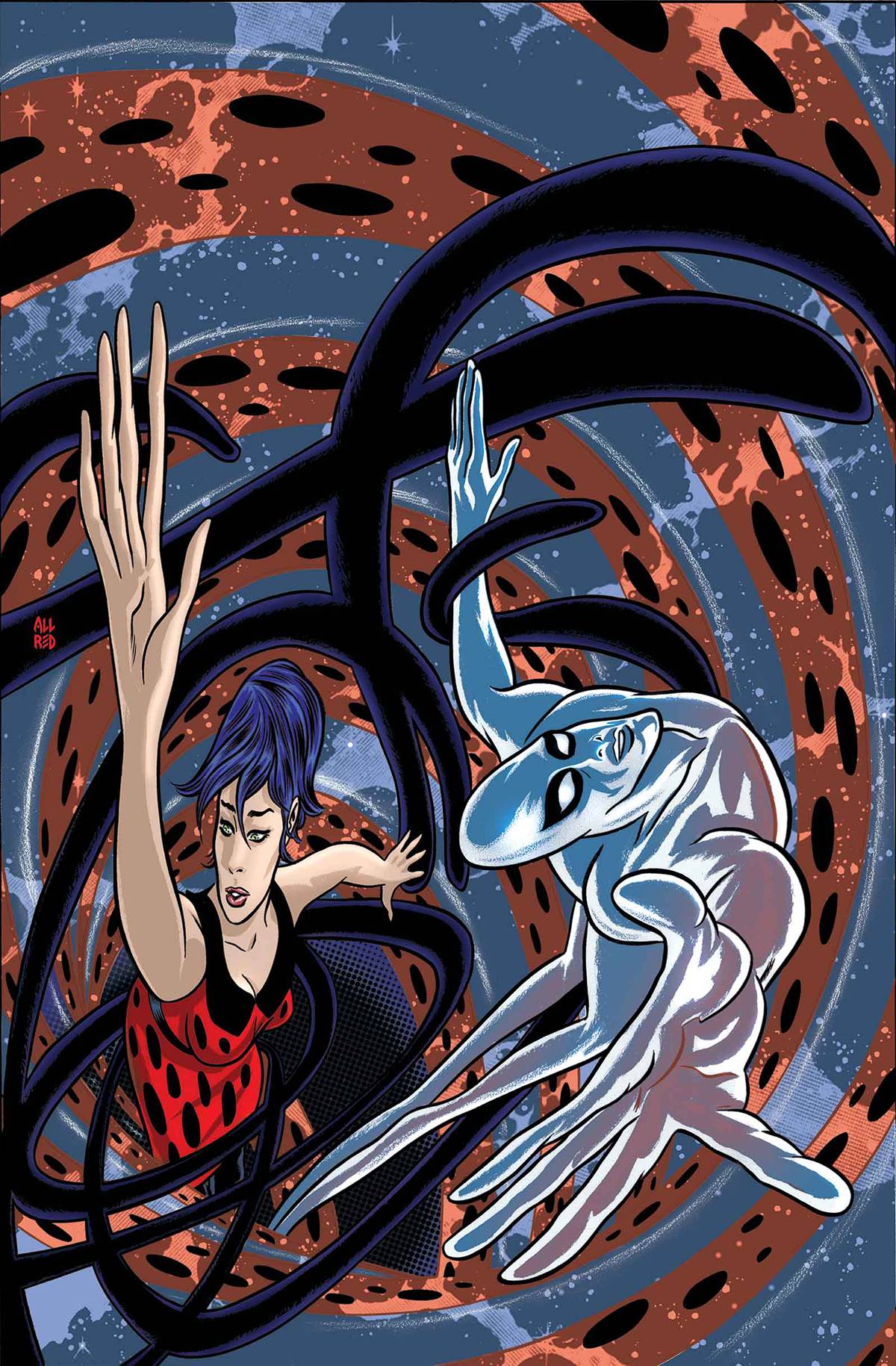
Of the so-called “Big Two” in 2014, Marvel seemed to have the more cohesive game plan. Certainly, they thrived on the expected, event-driven, media-tie-in franchise titles. But they balanced the relentless grinding of the hype machine with some surprisingly refreshing takes on some of their lesser known characters; those B and C – listers who exist at a remove from the shenanigans of the their bread-and-butter superstars. That remove and relative obscurity allowed for a certain amount of freedom. Marvel, to their credit, brought in some top-tier talent and gave them a free hand with these characters (see Moon Knight, above). Call them the Outliers, for their success seems to be in inverse proportion to their proximity to the main goings on of the Marvel U. (Even everyone’s darling, Ms. Marvel, began to flag once she was saddled with Wolverine guest-appearances and increasing ties to Marvel’s ongoing Inhumanity storyline). What better place then for Silver Surfer to be, than on the fringes of the known universe? Dan Slott’s inspired choice of setting not only wisely removed him from the chess board, so to speak, it gives wunderkind artist Mike Allred the largest possible canvas in which to unleash imagination. Aliens, other dimensions, planet casinos; Allred brings the F-U-N to any project he’s involved in. As I’ve said before, he seems to inspire his collaborators to elevate their game, and Slott has proven up to the challenge. Together they’ve concocted the kind of absurdly sublime cosmic romp one would be hard-pressed to find anywhere this side of Terry Pratchett. And in Dawn Greenwood, small-town girl from Anchor Bay, Mass., they created the most winning new Marvel character of the year (the aforementioned Ms. Marvel notwithstanding). Finally, in pairing the Man from Beyond the Stars with the Girl Next Door, they also have the makings of the most adorable budding romance in comics. Truly they’ve producing the best monthly super-hero book on the stands. Let’s hope it survives Marvel’s Next Big Thing. (DM)

Silver Surfer #7

Silver Surfer #7

3. Dry Spell (Action Labs/Danger Zone):

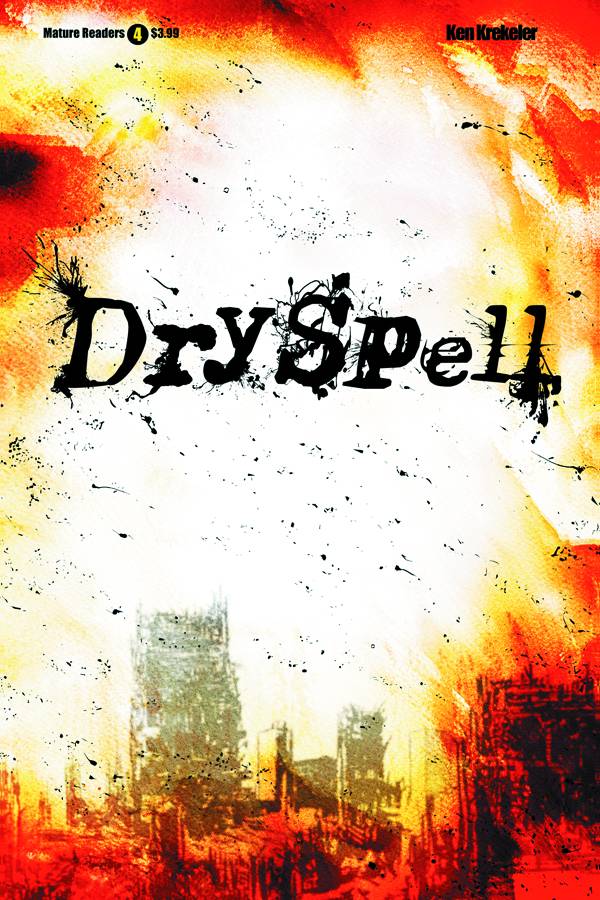
Ken Krekeler’s Dry Spell is a book that kicks off with a bold promise–one in the form an artfully chosen quotation from the incomparable Alan Moore.  In fact, I bought the book because I figured anyone ballsy enough to borrow so brazenly from the best must have something to say.  Turns out that Krekeler didn’t have something to say after all–he had something to shout!  Hey, Ken: I hear you.  Loud and clear.  OK, so, it took re-releasing your book (originally published through Krekeler’s own Kinetic Press in 2011) through a more established outfit like Action Labs to finally reach me; but thank goodness for that–for the person who knew this book needed to reach me and that it could only reach me this way; otherwise, I would’ve been deprived of this superb take on the superhero genre–a canvas filled with small voices and big moments, crazy twists and smart page-turns–in total, a “Howl” for the villain in us all.  Krekeler–a previously unknown quantity–delivers on his book’s bold promise by taking advantage of the medium, particularly with his inventive dialogue and his sympathetic color palette; and he serves up a finale–the definitive finale–a perfect final issue that hits massive notes–the biggest struck by the tsunami of splash pages, the last–reminiscent of Rocky and Apollo (coincidence?) throwing punches that never quite connect at the end of Rocky III–declaring the Black Baron’s personal dry spell officially over.  Good to know that this superior series–and best mini of 2014–isn’t over: the inside back cover of #4 makes another bold promise–one that Krekeler better keep, if he knows what’s good for him–and for us: Dry Spell 2 is coming soon.  Yeah, not soon enough. (SC)

Dry Spell #4

Dry Spell #4

2. Lazarus (Image):

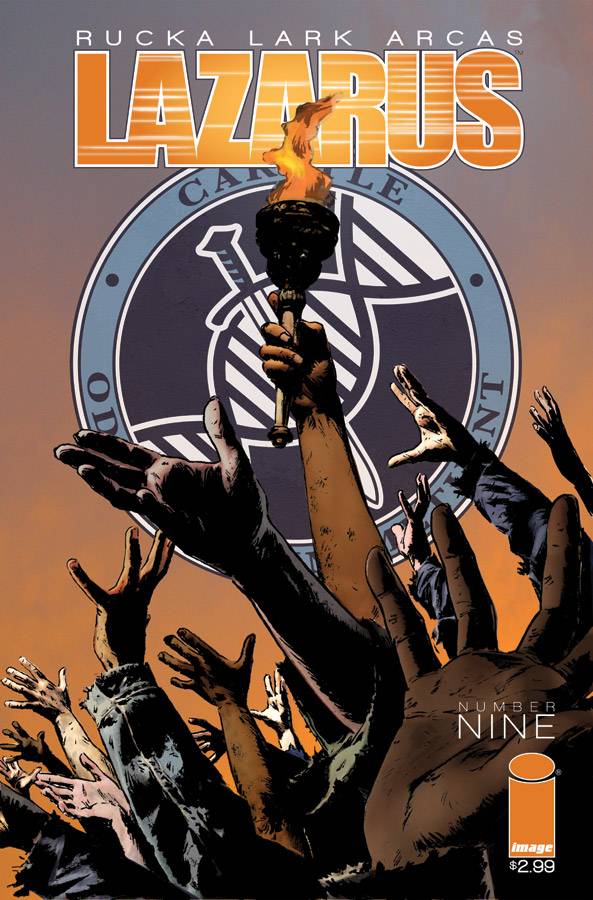
What would you get if 1984 was directed by Francis Ford Coppola from a screenplay written by Noam Chomsky? The answer might look a lot like Lazarus. Alternating between a macro view of a near-future worldwide economic catastrophe and a microcosm of the inner-workings of one of the powerful Families who rose to power because of it, Lazarus, like most great socially-minded science fiction, feels at once expansive and suffocating. Creators Greg Rucka and Michael Lark have hit that sweet spot of dystopian dread, where the reader is exhilarated by the sheer breadth of this brave new world, even as its does its best to debase, dehumanize and stamp out any sign of resistance from its inhabitants. No mere escapism this; its true power comes from the realization that the seeds of the future nightmare it describes are currently being planted all around us, if only we would notice. Lazarus is a visionary sci-fi masterpiece for the early 21st century. (DM)

Lazarus #9

Lazarus #9

1. Mind MGMT (Dark Horse):

There was no denying Matt Kindt’s kinetic masterpiece this time around.  Its ascension to the top spot of our annual Top Ten was as inevitable as truth and death: #3 (2012), #2 (2013), and now #1, the spot it so richly deserves for its clever cover homages (re: Rousseau [#18] and Magritte [#22]) and its ebullient barrages of images and words, which create a reading-cum-sensory experience even more unique than unique to the comic book genre.  The year flew by in a fury of frantic page turns: from Meru’s failed recruitment of Ella the Animal Kid, an inventive and intense story inspired by Kindt’s own daughter and one of our favorite single issues of the year; to the illusory introduction of the Magician; to the frustratingly thoughtful silent issue, which actually earned the ignominious title of Biggest Dis(appointment) for the month of April; to Kindt’s pushing the petal-to-the-metal to reach the speed of heartbreak, the result of the death of a major character; to the father of clichéd revelations that manages to be fresh and affecting; and ultimately, to a showdown that’s all show up, leaving us to wait a little while longer for the final throw down between Meru and the Eraser.  Kindt drives the narrative as only he can with his unexpected layouts and whitewater watercolors.  His Field Guide/Voice of God–voice of Meru!–marginalia continue to draw more into the story, allowing us to draw more out–more out of the relative reality of the universe he’s created; more out of the fiction that empowers Meru in climactic moments; more out of the memories that are either reality or fiction–or both.  There’s unquestionably more here in Mind MGMT than in any book on the shelf, which makes this our easy pick for the #1 book of 2014. (SC)

Mind MGMT #24

Mind MGMT #24

Derek’s Honorable Mentions: 20. Multiversity (DC) 19. Archer and Armstrong (Valiant) 18. Cap’n Dinosaur (Image) 17. Satellite Sam (Image) 16. The Fade Out (Image) 15. Punks: The Comic (Image) 14. Copperhead (Image) 13. Ordinary (Titan) 12. Little Nemo: Return to Slumberland (IDW) 11. Adventure Time (kaboom! – so long Ryan North & co.!)

Scott’s Honorable Mentions: 20. BPRD (Dark Horse) 19. Saga (Image) 18. Evil Empire (BOOM!) 17. Satellite Sam (Image) 16. Iron Fist: The Living Weapon (Marvel) 15. Stray Bullets: Killers (Image) 14. Southern Bastards (Image) 13. Brass Sun (2000 AD) 12. East of West (Image) 11. The Wicked & The Divine (Image)

Publisher of the Year:
This was the year that Image Comics doubled-down on its core strategy: attracting top-tier talent from throughout the industry and parlaying their success to create a space where lesser-known creators can play as well. The result was an avalanche of diversity that exemplified the boundless range of the medium (just check out how many Image titles made our Honorable Mentions, not to mention the two on our Top Ten). Were they all winners? Of course not. But each title was allowed to be its own idiosyncratic, little thing. To wit: Madame Frankenstein. Perhaps not one of the year’s best, Jamie S. Rich’s odd melange of Shelly’s classic horror story, F. Scott Fitzgerald’s milieu, Pygmalion‘s mores (stretched to their logical conclusion) and even Kafka-esque fatalism at the end, was unlike anything else on the stands, possibly ever. Furthermore, Megan Levens tackled such complex, macabre subject matter with an art style that was a cartoony blend of Jeff Smith and Ted Naifeh; in other words something one is more accustomed to seeing in a YA book. As a visual approach, it stretched the overall reading experience almost to the point of incongruity. Was Madame Frankenstein a complete success? I’m still not sure. But it sure was fascinating watching the creators try. And for giving such singular titles like this one a place to exist, I’m grateful to Image Comics. (DM)

Turning pages,

Derek & Scott

Share this:

  • Click to share on X (Opens in new window) X
  • Click to share on Facebook (Opens in new window) Facebook
  • Click to share on Tumblr (Opens in new window) Tumblr
  • Click to share on Reddit (Opens in new window) Reddit
  • Click to email a link to a friend (Opens in new window) Email
  • Click to share on Pinterest (Opens in new window) Pinterest
Like Loading...

Top 5 Books of April

29 Thursday May 2014

Posted by ScottNerd in Top 5 Books of the Month, Uncategorized

≈ 8 Comments

Tags

Astro City, Brent Eric Anderson, Brian Wood, Dan Slott, Daniel Zezelj, Dark Horse, DC, Douglas Adams, Dr. Strange, Elmore Leonard, Garth Ennis, Goran Parlov, Greg Rucka, Image, Innie Awards, Jack Kirby, Jason Aaron, Jason Latour, Jordie Bellaire, Justified, Kurt Busiek, Laura Allred, Lazarus, Mark Millar, Marvel, Michael Lark, Mike Allred, Moby Dick, Roy Thomas, Silver Age, Silver Surfer, Southern Bastards, Stan Lee, Steve Ditko, T.H. White, Terry Pratchett, The Massive, The Once and Future King, Vertigo, Watchmen

#5. Astro City #11 (DC/Vertigo): A quick perusal of our past Top 5 lists will tell you that we’re generally not the biggest fans of superhero fare. Oh sure, we have a soft spot in our hearts for the cape and costume set; they were after all our gateway drug into the wider world of comics. But with such a bevy of quality non-superhero books inhabiting the current comics landscape (it really is a golden age folks), why waste our time on the cynical merry-go-round of movie tie-ins, Big Events and the never-ending, never-changing battle? Even worse are those titles which claim to be edgy by adding some nominally ‘mature’ wrinkle to the works: ‘superheroes who swear!’ ‘superheroes who have sex! (full frontal!)’ or some other such trope that was well-worn by Watchmen nearly thirty years ago. It takes something far less gimmicky to add something new to the genre (and that’s what superheroes are, fanboys; not mainstream but a genre).

Luckily, in Astro City, Kurt Busiek and Brent Eric Anderson have managed just that. Nearly a year into the title’s return after an extended hiatus, Busiek and Co. remind us of their mastery of the eye-level approach to the fantastic. This time out centers around a personal assistant, the type of capable multi-tasker who’s invisible to the public and indispensable to her boss. But of course in this case, her boss is a superhero. Like many in her profession, her duties include, but are not limited to: answering mail, keeping track of finances, scheduling appointments, etc. But because her boss is a mystical Dr. Strange type, a missed appointment can mean placating interdimensional gods who threaten our world with annihilation for their inconvenience. The story is an ode to all of the unsung, behind-the-scenes supporting players who, through sheer competence, organization and the ability to keep a cool head, keep the world running, day in, day out. The pleasure comes from watching our harried-but-never-overwhelmed protagonist put out fires, ranging from the mundane to the apocalyptic, with nothing more than a well-placed phone call or a sift through her files. That, and the loving, sideways homage Busiek and Anderson have crafted to some of the stranger Silver Age forays of Kirby, Ditko, Lee, Thomas, et al. To paraphrase, there are a million stories in Astro City. This is one of the best. (DM)

Astro City #11

Astro City #11

#4. Silver Surfer #2 (Marvel): What goes on here? Two superhero books from the Big Two crack our Top 5? Well yes, when one of them is drawn by the inimitable Mike Allred. His wild, Pop Art aesthetic (enhanced by the bold hues of wife Laura Allred) immediately brings the fun to any book it graces. And Dan Slott scripts a tale to match involving intergalactic hucksters (‘the Incredulous Zed’) extra-dimensional god-constructs (‘The Queen of Nevers’) and sensitive Plorpian digestive systems. Not to mention the true protagonist of the story, one ‘Dawn Greenwood’ of Anchor Bay, Massachusetts. Appropriately titled “Everything And All At Once”, the story owes less to typically constrictive superhero dynamics, and more to the expansive exuberance of the likes of Douglas Adams and Terry Pratchett (despite our American creators, there is  something distinctly British about the proceedings; a compliment, naturally.) In other words, if you’re looking for a rollicking good sci-fi bender of a time (and why wouldn’t you be?), you could do a lot worse than Silver Surfer. (DM)

Silver Surfer #2

Silver Surfer #2

#3. Lazarus #8 (Image): Greg Rucka and Michael Lark are on quite a run: this is the third month in a row that we’re celebrating Lazarus as a top book.  (It’s true: check out what we had to say about the patient perfection of #6 and #7!)  What’s keeping the book pegged to the big board issue after issue?  It’s the storytelling.  The fellas have forged themselves a winning formula–one that’s made all the more impressive by the fact that in no way does it feel like they’re going through the motions; no, they’re keeping it fresh as can be, once again to purpose employing parallelism to amplify further the conflict, which has been an eager flame burning its way through a long fuse to an explosive effect without any bombs going off–at least not quite yet, anyway.  This installment of the 2014 Innie nominee for Best Ongoing Series is once again built upon a foundation of the early days of Forever.  In this case, Forever fails to live up to expectations and misses out on a meeting–on her birthday, no less!–with her frustrated father, who leaves a very significant gift behind: White’s The Once and Future King, an insinuation that speaks to Forever’s growth and purpose–and, in that, to Rucka’s inspiration for the series.  This significant sequence comes back around when present Forever finds herself in an ethical bind, knot courtesy of a catty Daddy Carlyle, over the impending terrorist attack in Denver.  Oh, the road to Denver is paved with good intentions, innit?   Doing most of the paving: Michael Barret and Casey, who, while on their way to the Lift Selection, are willing to offer up a hand to their fellow travelers, including, at the very end, an Angel of Death.  It’s all coming to a head, folks; and the book–and we–couldn’t be in better hands. (SC)

Lazarus #8

Lazarus #8

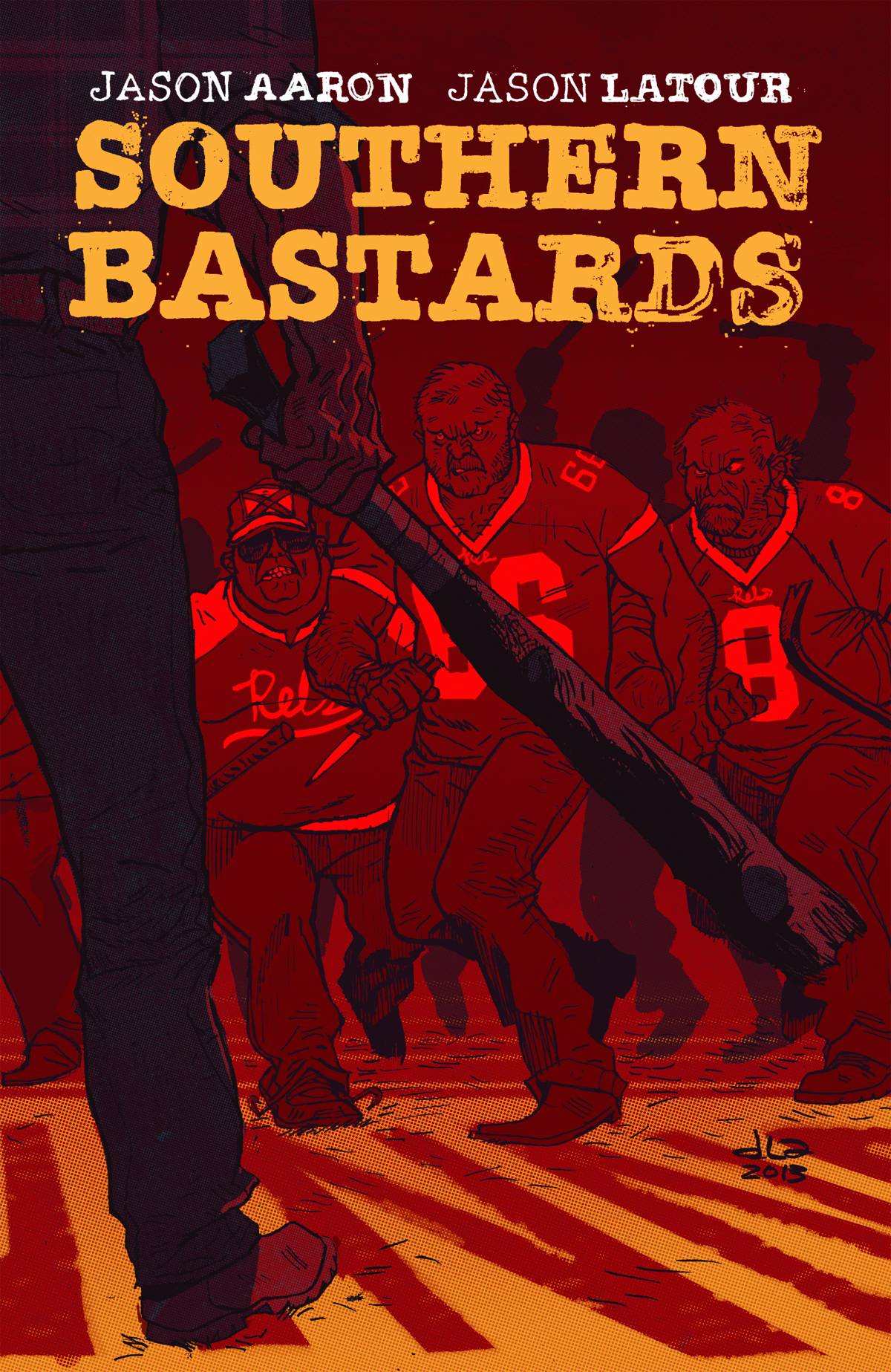
#2. Southern Bastards #1 (Image): Oh.  Shit.  Jason Aaron and Jason Latour have made quite a splash with their merciless ode to good ol’ boys.  Now, I’m predisposed to liking it because of its being not unlike Justified, with its Southern-fried setting and tone, and even its well-defined yet ambiguous cast of characters, smacking of the late, great Elmore Leonard, and, in that, the often late, great Garth Ennis–which makes even more sense considering that it also reads a hell of a lot like Fury: My War Gone By and Mark Millar’s Starlight because of the big notes of nostalgia and, tying it all together, because Latour’s Earl is plenty Parlovian.  The story’s solid from the get-go: Jason Squared pitches the prodigal son’s return and expertly upsells pathos as the conflict grows–just as a tree grows from Earl’s father’s grave–into the final sequence, itself a grueling duel of duels–a one-two combination (punishing blows received and delivered) of violent events enlivened by the lyrical layouts–that cements this debut as a top book of the month; it’s the love shown by the creators for the South and the story inspired by it that makes it even more than that.  (SC)

Southern Bastards #1

Southern Bastards #1

#1. The Massive #22 (Dark Horse): Thus far, Brian Wood’s apocalyptic take on Moby Dick has focused on one Callum Israel, whose Ahab-like obsession with finding his eponymous ship has led him to the far corners of a world that is slowly falling apart due to a mysterious event known as The Crash. The search has allowed Wood to explore in convincing detail (with the help of an impressive cadre of artists; here Danijel Zezelj does the honors, with Jordie Bellaire on colors) the effects of environmental devastation, economic collapse, and political disintegration in such disparate locales as Iceland, Hong Kong and Mogadishu. The sheer breadth of Wood’s geopolitical knowledge and inquiry is impressive. It also pulls off the neat trick of serving as both the series’ raison d’etre and narrative backdrop to its central mysteries: Where is the Massive? What caused The Crash?

Just as the answers have eluded the increasingly obsessive Callum (did I mention he was dying of cancer?), Wood’s writing has sometimes been frustratingly vague. Many of the arcs (all consisting of three issues) have run like this: fascinating set-up, high stakes climax, baffling denouement. While there’s something to be said for not giving the reader what they want, the considerable tension inherent in the story has sometimes been undercut by endings that seem deliberately anticlimactic, and even obtuse. Well the first issue of the latest arc, “Sahara”, finally promises some resolution, beginning with the one to the other great mystery: Where the hell has Mary been?

Mary, Callum’s lover, shipmate, and conscience of his crew, seemingly abandoned him in his time of greatest need. This issue finds her, in typical Wood fashion, smack dab in the middle of a geopolitical intrigue with real-world resonance. She’s guarding a convoy of the world’s most precious post-Crash resource: water. As the spotlight shifts to her, we begin to realize what Wood has been hinting at all along: the search for the Massive is a MacGuffin. All mysteries lead to Mary. By turns the most compassionate and the most remote, she has quietly taken on an otherworldly dimension. As we watch Mary cross the desert, now with child, one cannot help but think that as the series builds to its conclusion, Wood is countering the obsession and despair of the white whale with an almost biblical hope for salvation. (DM)

The Massive #22

The Biggest Dis(appointment): Mind MGMT #21 (Dark Horse): To truly understand this choice, you have to understand that disappointment comes from expectations not being met–and in some cases, from expectations being bitch slapped by promises unfulfilled.  In this case, we were led to believe that master storyteller Matt Kindt was going to deliver a “silent issue”; and if you we’re like me, you thought immediately to the silent issue of all silent issues: G.I. Joe #21 from Larry Hama and Steve Leialoha, which blew our minds thirty years ago–yikes!  With the poison–the potent neurotoxin nostalgia–already in the wound, what chance did this stab at a silent issue have–especially after our being rudely welcomed by word one!  Wouldn’t you know: Kindt–ever the clever creator–was playing us from the promise!  His interpretation of silent: no dialogue–which means that thoughts are fair game; and to make the game more fun, those thoughts were insightful, sure, but sometimes ironic, considering the situations in which the thoughts were, umm, thought.  So, fine, it’s “silent,” I’ll buy it–and I did buy it, blissfully ignorant and high on hope; however, while the story works well within the world of Mind MGMT, Kindt has managed to both exploit and execute my innocent expectations.  The former finds me somewhat satisfied, but it’s the latter than leaves me mostly nonplussed–and this issue as our Biggest Dis(appointment) of the month.  (SC)

Mind MGMT #21

Mind MGMT #21

Turning pages,

Scott & Derek

Share this:

  • Click to share on X (Opens in new window) X
  • Click to share on Facebook (Opens in new window) Facebook
  • Click to share on Tumblr (Opens in new window) Tumblr
  • Click to share on Reddit (Opens in new window) Reddit
  • Click to email a link to a friend (Opens in new window) Email
  • Click to share on Pinterest (Opens in new window) Pinterest
Like Loading...

Top 5 Books of April

07 Tuesday May 2013

Posted by ScottNerd in 5 Comics You Should Be Reading

≈ Leave a comment

Tags

Adventure Time, Andy Runton, Braden Lamb, Brian K. Vaughan, Dark Horse, Fiona Staples, Fury: My War Gone By, Garth Ennis, Goran Parlov, Image, Infinity Inc., Jonathan Hickman, Joshua Dysart, Jupiter's Legacy, Justice Society of America, kaboom!, Marvel Max, Matt Kindt, Mind MGMT, Nick Pitarra, Owly, Pendleton Ward, Runaways, Ryan North, Saga, Shelli Paroline, Steve Wands, The Manhattan Projects, Unknown Soldier, Watchmen, Zero Dark Thirty

5. Mind MGMT #10 (Dark Horse): Matt Kindt manages the impossible–with a twist of Lyme.  His artwork is incomparably kinetic.  His use of the margins–especially in the first half of this issue–is brilliantly thoughtful.  He is in total control: every mark on the page serves its master and, in that, is played “for the greater good.”  Nothing is left to chance, even as Meru rolls the dice in order to undo Duncan’s predictable advantage.  Sure, Mind MGMT has been solid of late; and for most titles that’d be a label to celebrate.  But for this book, solid is pretty much a euphemism for I expected more.  With #10, however, Dark Horse’s thoroughbred leaves a rather pedestrian solid in the dust and sprints toward utterly transcendent as it most assuredly must. (SC)

Mind MGMT #10

Mind MGMT #10

4. Adventure Time # 15 (kaboom!): Far from being a mere comic simulacrum of Pendleton Ward’s lauded TV series, this title has emerged as a monthly laboratory of formalistic innovation. Wry self-commentary, plots that collapse inwards, playing with the comic book format itself; one truly never knows what to expect. The semiotic experimentation in this particular issue does have precedent (specifically in Andy Runton’s adorable Owly) but, man, do Ryan North, Shelli Paroline, Braden Lamb and (series letterer) Steve Wands run with it! (DM)

Adventure Time #15

3. Saga #12 (Image): Rocking out with its whatchamacallit out–in more ways than one.  I mean, sure, there’s a one-eyed monster that Prince Robot IV jerks around for most of the issue; but that monster is D. Oswald Heist, author of the inflammatory “piece of s—” A Nighttime Smoke, which, Prince suspects, had a page in bringing Alana and Marko together.  All the talk leading up to this in-your-face–and cleverly self-aware–release, by the sagacious Brian K. Vaughn and the sagalicious Fiona Staples, probably “only boost[ed its] sales,” and left everyone thinking of this terrific treatise on the weight of images and words. (SC)

Saga #12

Saga #12

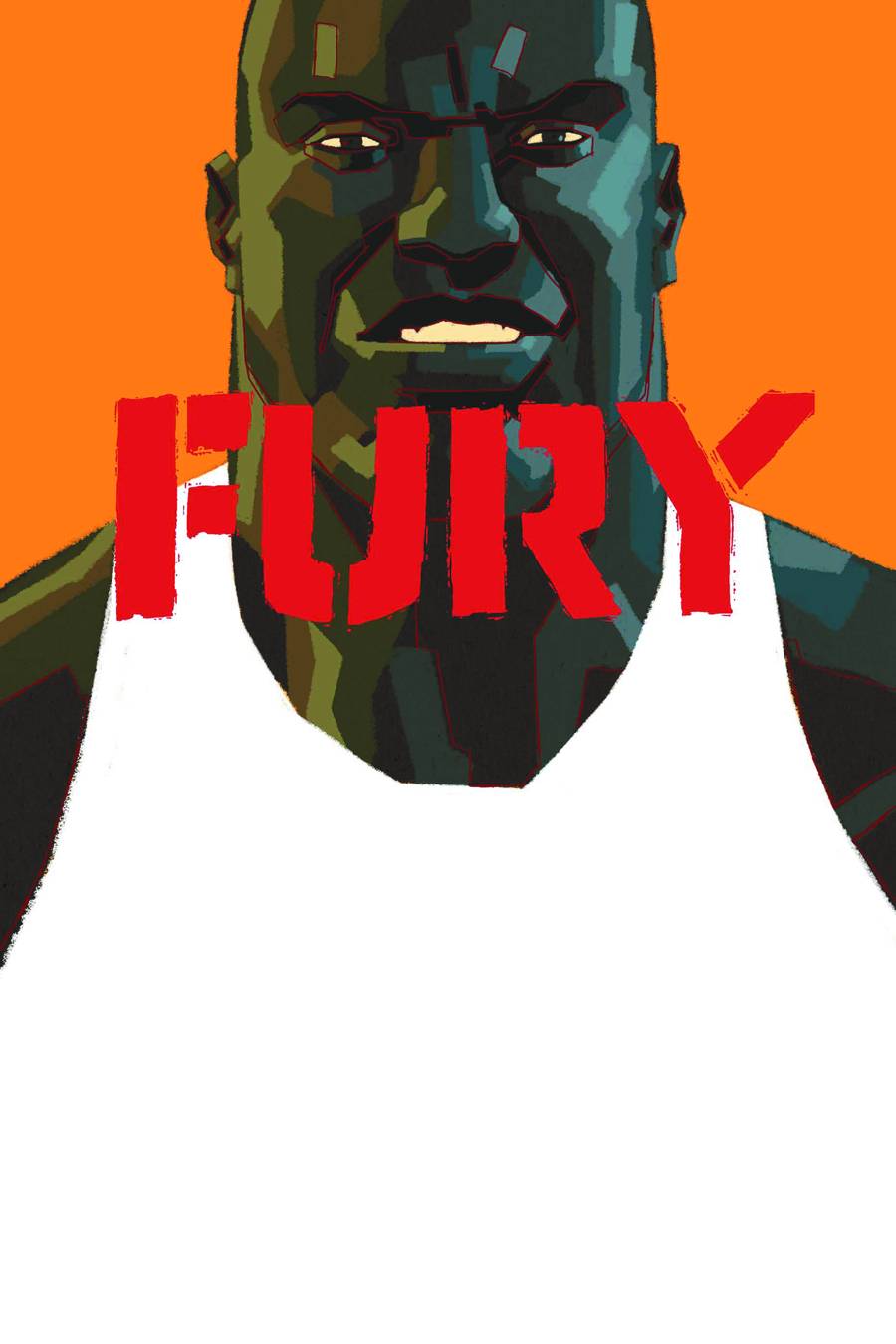
2. Fury: My War Gone By #11 (Marvel Max):  Garth Ennis’ revisionist examination of Marvel’s famous super-spy is the best exploration of the intersection of pop culture and real-world violence since Joshua Dysart’s late, lamented Unknown Soldier. Or is it exploitation? By removing the title character from his familiar milieu of superheroes and inserting him into some of the darkest corners of American military history, the story inherently raises questions about the boundaries between tragedy and entertainment (in much the way the recent Zero Dark Thirty did). Ennis navigates this terrain (illustrated with appropriate ruthlessness by Goran Parlov) partially by taking the core of the character – grizzled war hero – at his word. To his credit, as he shines a light on the all-too-real atrocities committed in the name of God and Country (as in the last, devastating panel in the book) neither Nick nor Ennis look away. (DM)

Fury: My War Gone By #11

Fury: My War Gone By #11

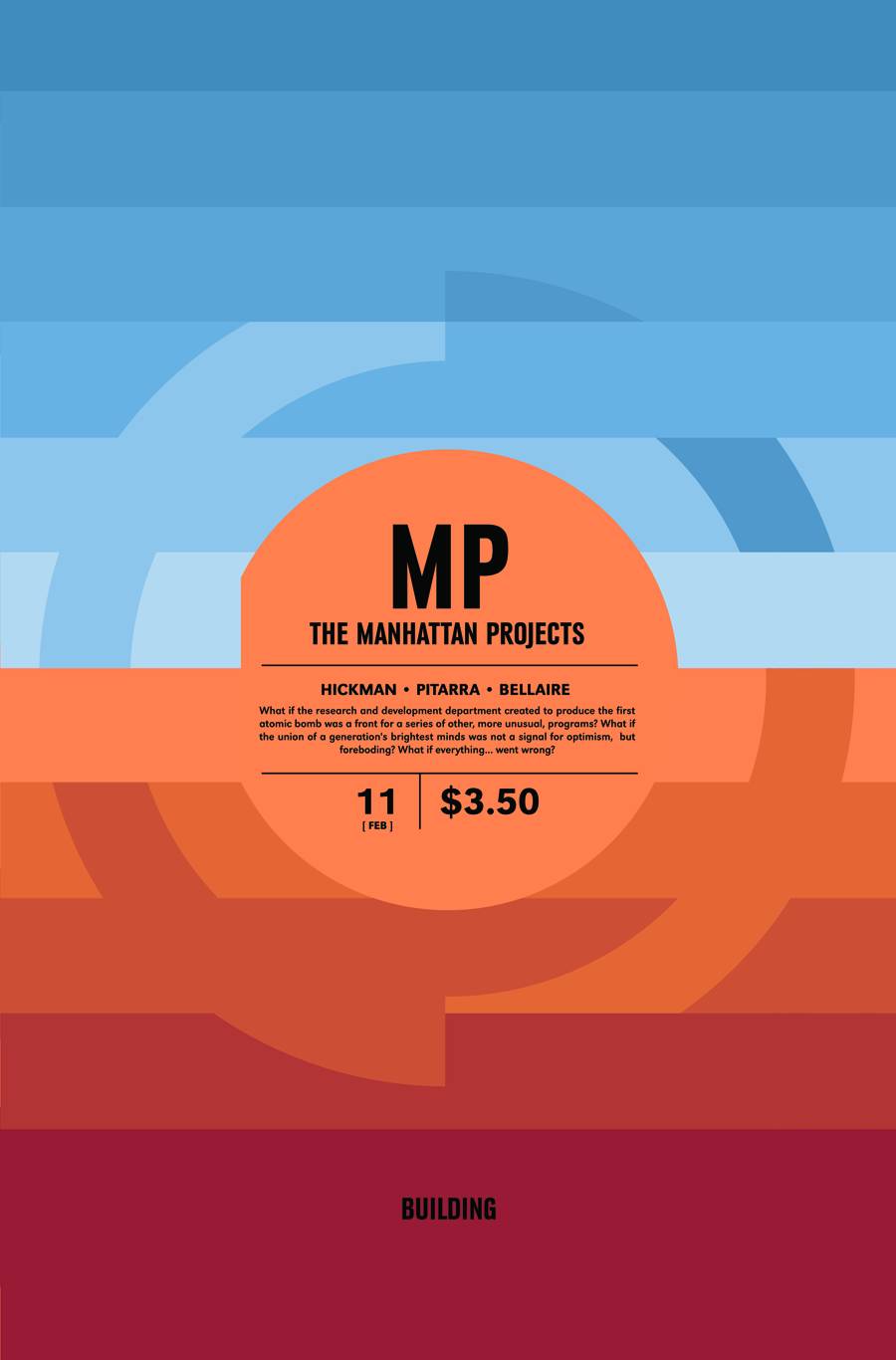
1. The Manhattan Projects #11 (Image): Then: I held The Manhattan Projects #1 in my hands.  Hmm.  Hickman?  Thumbed through.  Art: Pitarra?  Who?  Seemed, I don’t know, shaky.  Said to self, No, as I returned it to the shelf, so…  Now: Two trades and a single issue in, I’m completely sold on the project–particularly on the twists, both brutal and risible.  This issue, “Building,” while not as tied to the twist as previous issues, is a masterclass in storytelling on par with what Vaughn and Staples have been constructing over on Saga.  Hickman, Pitarra, and Bellaire–whose colors are indispensable in the development of the narrative–balance the past and present with remarkable ease; and, in doing so, they build the relationship between Enrico and Harry in such a heartwarming manner that it’d take exposure to plutonium to warm the heart any more.  Also at play here is the Cold War between the simple and the complex, highlighted by Enrico and Harry’s initial conversation–which culminates in a sweetly incomplex “I just wanted some ice cream”– and then hammered home by the juxtaposition of Oppenheimer’s three–“I think he means…four!”–terribly complicated plans for conquering the heavens and the natural simplicity of being someone’s friend.  As close to perfect as can be. (SC)

The Manhattan Projects #11

The Manhattan Projects #11

The Biggest Dis(appointment): Jupiter’s Legacy #1 (Image). The title, which manages to be both portentous and pretentious, pretty much sums up the whole book. The latest entry in Mark Millar’s self-christened Millarworld, this books seems like a stab at seriousness after the bawdiness of Kick-Ass and Secret Service (both coming soon to a theatre near you!) The set-up: the larger-than-life heroes of yesteryear now have children who are forced to exist in their sizable shadow. This is a theme that has been explored, at different levels, in such books as Infinity Inc., Runaways, hell, even Watchmen. But so what? Any concept is only as strong as what the writer bring to it. No, what really rankles here is how the characters feel the need to immediately announce their motivation, instead of having it arise naturally from the narrative. The elders, bearing a strong resemblance to the Justice Society of America, go on and on about the meaning of the American Dream. They debate their place in a democratic society: should they be servants to the will of the people, or should they be running the show? (yes, that old chestnut) They exist only as avatars of differing opinion. Pres. Obama is even name-dropped in an eye-rolling attempt at real-world relevance. The ungrateful youngsters, meanwhile, whine about the pressures of their privileged existence, whilst knee-deep in sex, drugs and publicists, natch (ooh, edgy!) The forced dialogue even seeps into the incidental characters, as when one proclaims of the elder group “Well, there’s no denying you’re a colorful bunch and you’ve certainly piqued my curiosity here.” This is in the first panel of the second page – before we’ve gotten to know any of them! It’s as though he’s stating what Millar wants the reader to think. Well, I’m sorry, but this colorful bunch has piqued in me only the regret of being separated from my $2.99. (DM)

Jupiter’s Legacy #1

So what made your list?

Turning Pages,

Scott & Derek

Share this:

  • Click to share on X (Opens in new window) X
  • Click to share on Facebook (Opens in new window) Facebook
  • Click to share on Tumblr (Opens in new window) Tumblr
  • Click to share on Reddit (Opens in new window) Reddit
  • Click to email a link to a friend (Opens in new window) Email
  • Click to share on Pinterest (Opens in new window) Pinterest
Like Loading...

Back and Forth: Sex & Children’s Books

17 Sunday Mar 2013

Posted by dmainhart in Back and Forth

≈ Leave a comment

Tags

Adventure Time, Adventure Time with Fionna & Cake, Animal Man, Aubrey Beardsley, Barnabas Collins, Batman, Batwoman, Bravest Warriors, Catwoman, Dark Shadows, DC Comics, Dynamite Entertainment, Ex Machina, Green Arrow, Hayao Miyazaki, Image, Jae Lee, Janet Lee, Jeff Lemire, Jim McCann, Joe Casey, kaboom!, Lost Vegas, Mike Raight, Nacho Tenorio, Natasha Allegri, New 52, Ocean's Eleven, Pendleton Ward, Piotr Kowalski, Return of the Dapper Men, Richard Corben, Rotworld, Scott Snyder, Sex, Swamp Thing, Watchmen, Winsor McCay, Yanick Paquette

Derek Mainhart: Provocative title, eh? Well, we’ll get to that in a minute. First to some (finally) finished business.

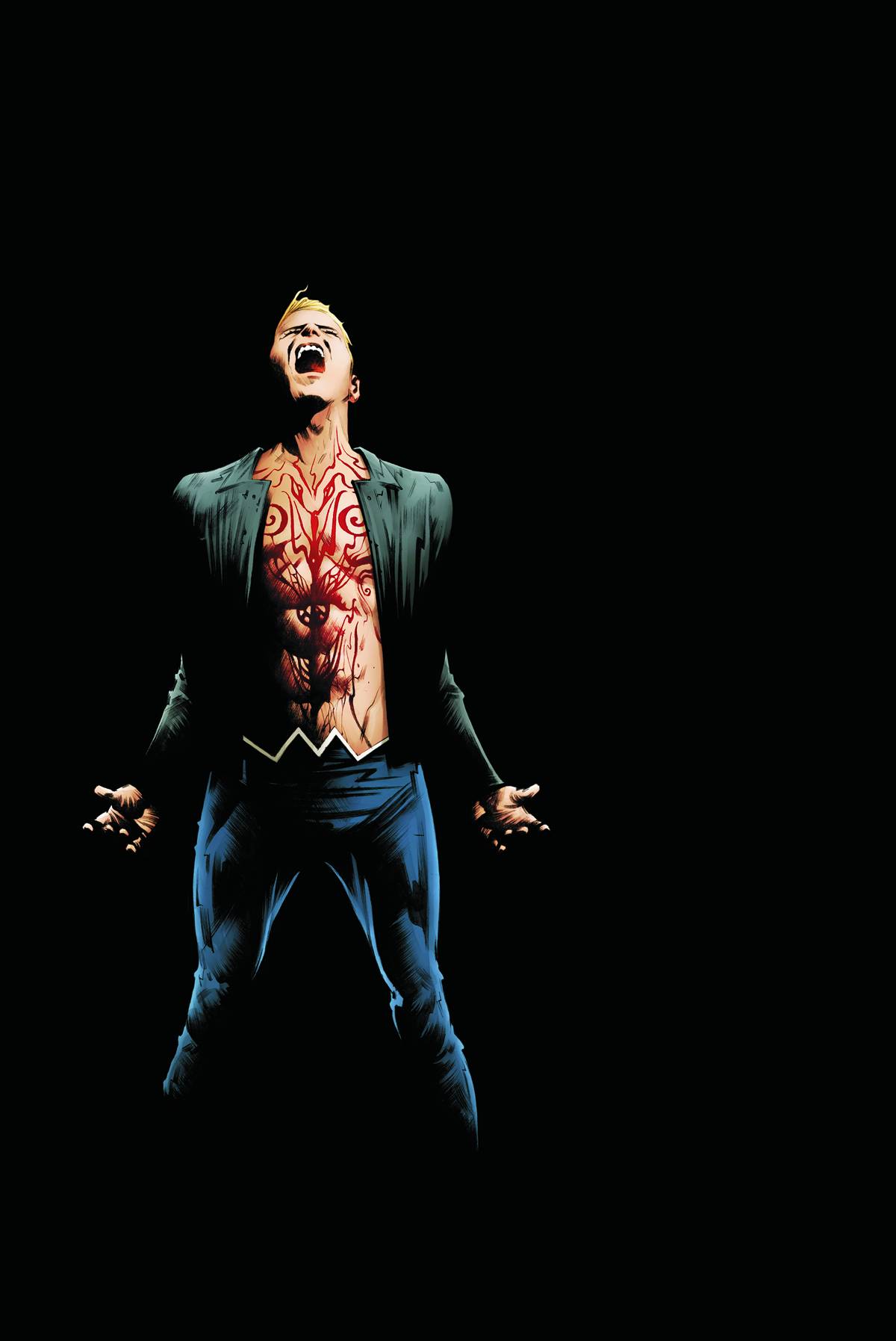
Scott Carney: Finished, indeed–at least as far as Animal Man #18 (DC) finishes anything.  And thank the good Lord, too.  The Rot was wearing on me, man.  It’s no secret: we didn’t care for the big two-part Rotworld finale for an unholy host of reasons.  Lucky for us, the finale was only the finale of the storyline as it takes place in the actual Rotworld; and by actual, I mean possible because, in the end, Baker and Holland were presented with the opportunity to keep it all from happening in the first place–and, boy, did they take it!  I can’t get into the nitty-gritty of the real finale, however, without first commenting on the ill-conceived cover.  Jae Lee’s anguished Animal Man is stunning; and the cover would’ve been, too, had it not been sullied by a tragically-placed assertion that spits vomits in the eye of subtlety:

I mean, come on!  Check out this art-only cover; it’s so much more effective:

Animal Man #18--Right?

Animal Man #18–Right?

Add the requisite logo and bar code and we’re still talking about an absolutely killer cover.

DM: Have to agree about the cover. Without the text, completely effective. With the text, it’s like that oft-parodied film cliche of the tragic hero falling to is knees while yelling “NNOOOOOOO!!!!” up at the sky. In other words: laughable. The early front-runner for worst cover of the year.

SC: Once inside, we’re treated to a quick little recap of the end of Swamp Thing #17 and then sucked into what Buddy refers to as “the most unsettling sensation,” while describing his return to the pre-Rotworld present.  I found the narration unsettling, as well; it seems to creep toward the edge of profundity, never quite making it there, and, as a result, festers in ineffectuality and leaves behind unintentionally laughable lines–and a hero for whom I had trouble hoping the very best.

(I don’t do this very often: spoiler alert!!!)

I did find a truly touching moment in Buddy’s remembering Cliff’s finger painting different animals when the latter was “a little boy.”  I’d have trouble, though, if you were to ask me to “flip the pages and point to another” such moment.  Couldn’t do it.  See: after that singular scene–in retrospect, the necessary father-and-son set-up for the end–the story dies as quickly and as unceremoniously as Cliff–who passes proudly as a “hero–just like [his father],” which, on a side note, is an interesting counterpoint to something Jeff Lemire’s developing in another one of his books, Green Arrow #18: Komodo, the Bullseye to Green Arrow’s Daredevil, has a daughter who–speaking of unsettling–plays the role of an evil apprentice, who also has a connection, story-wise to fingers, oddly enough; in this case, the little girl is used as a pointed threat against one of her father’s prisoners: “[…], or my daughter starts cutting off your fingers.”  (By the way, I’m still not too sure how I feel about it.  Kudos to Lemire for that!)

Back to Animal Man and the devolution of the story: with my own fingers dutifully turning pages, I found the dialogue disappointingly reminiscent of #17 (“So just die already!”).  And how strange was the splash on page 18, with the guys in the yellow suits shedding their rot?  At last!  Something interesting!  But, despite their presence on the page, neither Buddy nor Maxine react to the seemingly important revelation; and when Buddy finally does seem to notice them–several panels later–he doesn’t seem all that concerned!  It was all so very awkward and forced–well, Lemire did have to live up to the promise of the textually explicit cover, after all; couldn’t bring myself to care, though, even with the final splash–and just not what I’ve come to expect from the aforementioned esteemed writer, who is an absolute master at developing sympathetic characters and complex yet relatable relationships.  My expectations are still high for him and Animal Man, so I’ll be sticking around for more–especially since we’re headed in a new direction.

DM: Scott Snyder, on the other hand, in Swamp Thing #18 (DC), ties a bow on this story, and his run, in a manner that is satisfying and organic (pun intended–every time!). Amidst Yanick Paquette’s gorgeous leafmotif visuals is a story where the damsel becomes the hero, the demon is rent asunder, and our lovers have their stars well and truly crossed. But not before the creators generously allow them one last (first?) kiss, in which their passion literally burns. A fitting finale to a mostly excellent run.

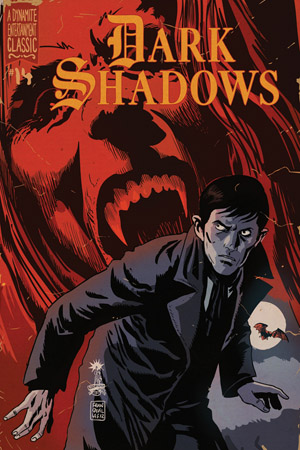
But Swamp Thing and Animal Man aren’t the only hero-inhabiting-a-new-body-travels-to-a-dystopian-future-to-defeat-unearthly-evil-then-returns-to-the-present-in-order-to-prevent-it-in-the-first-place stories this week. That’s right! The same exact plot is featured in Dynamite’s Dark Shadows #14!

Dark Shadows #14

Dark Shadows #14

Ah well, no new ideas and all that; it’s how well you handle them. Writer Mike Raight’s vampiric version involves Gothic plot twists, backstabbing (with wooden stakes, natch!) and enough Grand Guignol action to satiate any horror fan. Artist Nacho Tenorio does a nice job orchestrating the gore, alternating between excess and restraint, the way any 1960’s-influenced horror should. This isn’t all superficial bloodletting however. (SPOILERS!) Raight infuses some depth and existential quandary as the evil that the hero, Barnabas Collins, must destroy in order to save his family, is himself. There’s also a well-wrought, even delicate twist, as Barnabas’ mysterious ally reveals that aiding him and taking revenge upon him are, in this case, one and the same. Solid and compelling, this book is one of the most reliable sources of monthly macabre that you’re likely to find.

So, having been hooked by our attention-grabbing title, you’ve made it this far through our post, and yet you find yourself disappointed by the lack of any content that could be considered truly eye-opening.

SC: Hey!  What about my–

DM: Well then, you’ve got an idea of the experience of reading Sex #1 by Joe Casey and Piotr Kowalski (Image).

SC: Oh, I see.  Clever.

DM: Mr. Casey means well. In a heartfelt (and rather breathless) afterword, he holds forth on the state of today’s comics; mainly the continued dominance of the Big Two despite the wild variety and quality of other work out there. Well hear, hear! And yet, what does he offer us? A wealthy scion reluctantly returns to run his vaguely defined corporate empire. A seedy underworld controlled by a grotesque mob boss. Words of wisdom from a trusted Man (or in this case, Gal) Friday. And, oh yeah, said wealthy scion is a former superhero. This set up bears any number of resemblances to Batman, the newfangled Green Arrow, Ex Machina (a much better melange of superhero/real world tropes from eight years ago), etc. But wait, this has superheroes and sex. Well Watchmen broke that seal long ago. It’s simply no longer a shocking conceit (I mean even Catwoman’s done it for chrissakes). Now, to Casey’s credit, when the naughty section does occur, despite its fairly graphic nature, it’s contrasted in such a way that it is robbed of nearly all prurient titillation. The participants even call out the reader’s presumed lasciviousness, in a clever use of breaking the fourth wall. Kudos to Casey for subverting the expectations set up by his conspicuous title.  But in the end, this is just another superhero comic. And what’s so sexy about that?

SC: I hear ya.  Image did have another release this week that I enjoyed more than Sex—

DM: (tee-hee!)

SC: Uh-huh. Anyway, it’s Jim McCann and Janet Lee’s Lost Vegas #1.  It came with a little less hype than Casey’s book did, but it was loads better.  Though engaging from the get-go, McCann’s writing does prove a bit hard to swallow at times, especially as the Ocean’s Eleven-esque scheme is laid out; but Lee’s artwork is enviably voluptuous, a stunning exercise in sensuality.

DM: Yes, Lee’s work is certainly the star for me thus far. She blew me away on Return of the Dapper Men a few years ago (also written by McCann). There she dazzled with an unorthodox process that combined vibrant expressionistic backgrounds with the sublime precision of Winsor McCay (if you don’t know who that is, look him up. Look him up now.) Here the chameleon-like Ms. Lee seems to be offering something of the sensual loucheness of Aubrey Beardsley, combined with the sci-fi sensibilities of Richard Corben, and even a dash of Hayao Miyazaki for fun.

SC: That’s some company she’s keeping.

DM: Indeed. Like Batwoman, this could become a book that I buy for the art alone.

SC: Well worth the price of admission.  I’m certainly up for round two.

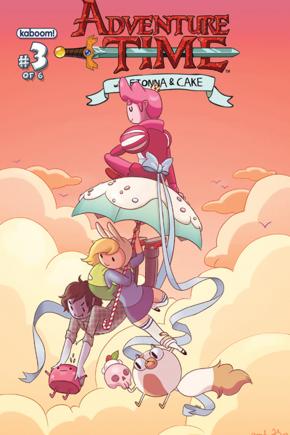
DM: Now, returning to our theme, for a nuanced, astute, refreshing exploration of sex, one need look no further than Adventure Time with Fionna & Cake #3 (kaboom!):

Adventure Time: Fiona and Cake #3

Adventure Time with Fiona & Cake #3

Sex, in this case, denoting gender. ‘A childrens’ book?’ you say, eyebrow ever so arched? Well in its brief existence, Pendleton Ward’s magical juggernaut has tackled such concepts as abandonment, existential loneliness, first loves, the bonds of honor and friendship, pride, sacrifice, betrayal, the origins of myth, the nature of evil, the afterlife, determinism, fate, and nuclear annihilation to name a few. It never addresses these issues head-on however (it’s much too smart for that), but from rather more of a sideways angle, (and perhaps, blindfolded). Y’know, Stuff Happens. Each candy-colored episode is wide open to (and the subject of) much interpretation. It’s the type of show that dissertations will be written about someday(if that hasn’t already happened). I ask you, what better place to consider gender and identity issues than the sociological phenomenon that is Adventure Time?

For those who don’t follow the show (losers!) Fionna and Cake was a fan-favorite episode which featured alternate, gender-swapped versions of series’ stars, Finn and Jake. Now Natasha Allegri, who had a hand in that episode, gives the ladies a chance to shine in their own title. Issue 3 is the best one yet. The first two issues established the characters as well the epic, yet tongue-in-cheek tone that AT does so well. The third issue really delves into the gender stuff and shows why this is not your father’s (um, older brother’s?) AT. The story begins with Marshall Lee (the male version of the vampire Marceline from AT) suddenly appearing in the lead characters’ home in a state of distress. But unlike his female counterpart, who is decidedly bad-ass, this vampire is positively sparkly. Needless to say, Fionna has a crush (-and Cake does not approve!) It seems they need to rescue Prince Gumball, who is caught in a ridiculous trap, which I won’t ruin for you. Nor shall I spoil all the loaded symbols, pregnant pauses and hysterical double entendres peppered throughout the tale. These never come across as forced or excessive; they are, indeed the story’s raison d’etre. I will say that they culminate in a visual gag so audacious that I couldn’t believe it was in a children’s comic, even as I barked with laughter. And yet it perfectly encapsulates the major theme of this series. Sound dirty? Well, again, it’s not because all of the above is not so much dealing with sex, as it is gender and identity. I am not suggesting (as I have with AT’s sister book Bravest Warriors) that this title is inappropriate for children. Part of Allegri’s brilliance (in addition to the beautiful art) is that this book is, on the literal level that children tend to read, an exuberant, imaginative adventure/fantasy. It certainly can (and should, to some degree) be enjoyed that way. The storytelling is deft enough that whatever other meaning children take away from it is entirely up to them. And you. Book of the Week.

Turning pages,

Derek & Scott

Share this:

  • Click to share on X (Opens in new window) X
  • Click to share on Facebook (Opens in new window) Facebook
  • Click to share on Tumblr (Opens in new window) Tumblr
  • Click to share on Reddit (Opens in new window) Reddit
  • Click to email a link to a friend (Opens in new window) Email
  • Click to share on Pinterest (Opens in new window) Pinterest
Like Loading...

Back and Forth: Warriors and Witches

23 Saturday Feb 2013

Posted by ScottNerd in Back and Forth

≈ 2 Comments

Tags

Alan Moore, Archer & Armstrong, Archimedes, AvX, Batman, Battlefields, Before Watchmen, Brian Azzarello, Brian Michael Bendis, Chris Bachalo, Comedian, Cyclops, DC Comics, Dynamite Entertainment, Ed Brubaker, Emanuela Lupacchino, Fatale, Fred Van Lente, Fury: My War Gone By, Garth Ennis, Gene Luen Yang, Goran Parlov, Grant Morrison, Greg Capullo, Guillermo Ortego, Harper Row, Heart of Darkness, IDW, Image, J.G. Jones, Jack Kirby, Joe Sacco, Joker, Josephine Baker, Larry Gonick, Mad Magazine, Marvel, Matrix, New Gods, Olive Oil, Popeye, Punisher, Rambo, Roger Langridge, Russ Braun, Samuel Jackson, Scott Snyder, Sean Phillips, Uncanny X-Men, Vince Musacchia, Watchmen, we, white man?

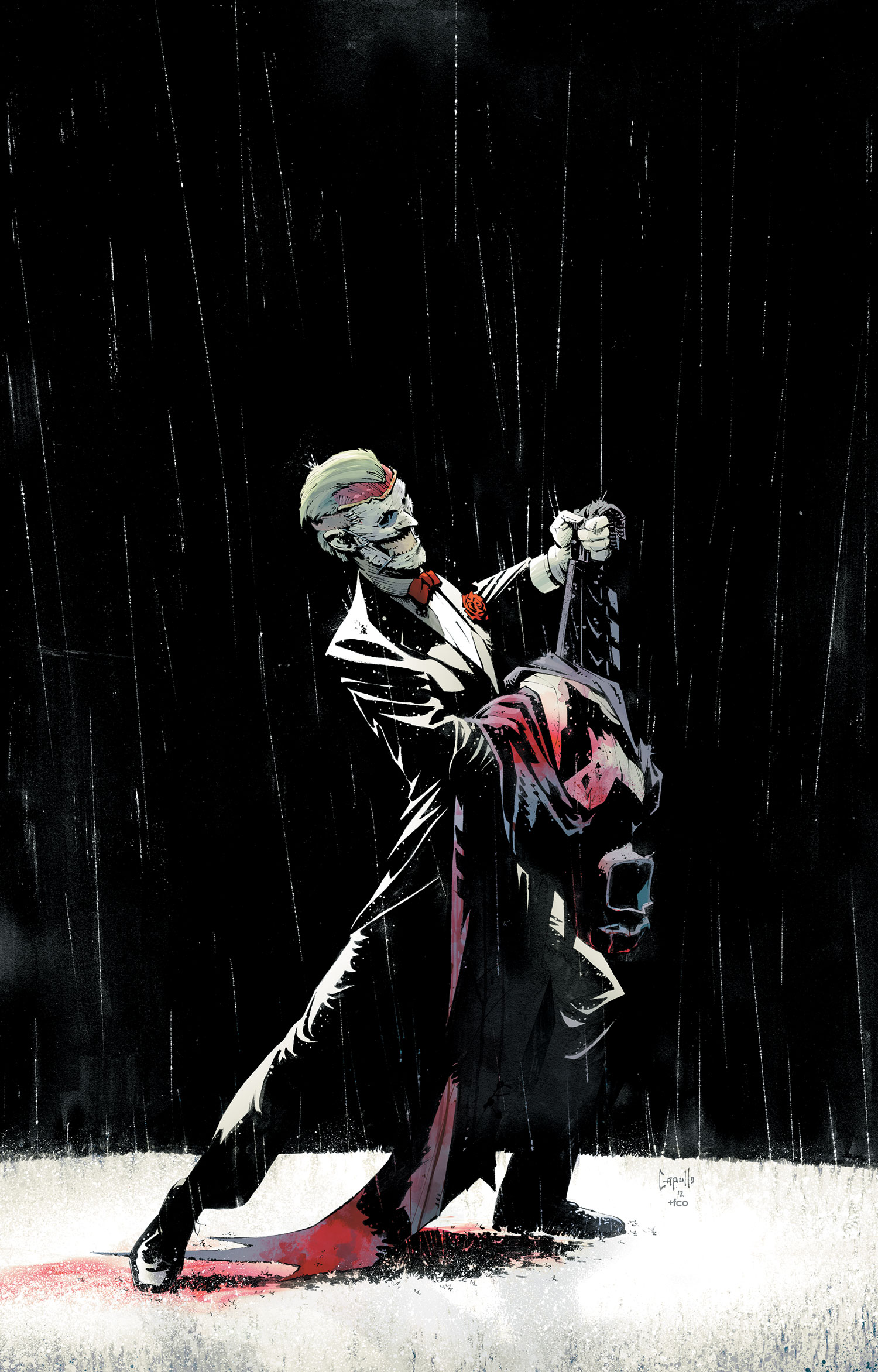
Scott Carney: The year’s most highly anticipated book–Batman #17–danced its way onto shop shelves, into our bags, and into our hands; and with every page turn, the story stumbles, trips and tumbles, and falls–along with the intolerably loquacious and ultimately uninspired Joker–from that lofty height of over-hyped expectations into a chasm of mediocrity–into a downright forgettable yawn. You know exactly what I mean. This stunningly inconsequential storyline–with a title that serves only to describe metaphorically what has befallen the Batfamily–delivers a punchline so impotent that I’m left wondering whether or not I will bother with the next arc; and, to be honest, the decision may not be very hard at all: the promise of more Harper Row has me thinking, No. What is it about this issue, in particular, that has left me even less than lukewarm about where’s Scott Snyder’s headed with Gotham’s grim guardian? Well, let’s start at the beginning. Snyder kicks things off by sloughing subtlety–because the Joker ain’t subtle, son–and serving up an overly vomitous villain, which may be a simple send-up of the blathering bad guy or may be a misstep, allowing the Joker’s words to speak much louder than his actions, which amount to pretty much nothing–unless, of course, you count the Joker’s failed attempts to kill the Batfamily as a success because the Batkids, after recovering from their harrowing ordeal (during a real gassy meal!), make transparent excuses not to meet with Batdad. Ugh! That’s right: in the end–which is also where it seems the Joker wanted it the whole time, if we’re to buy the unnecessary homoerotic insinuations, anyway, all implying, and insultingly so, that the psychotic killer’s insanity is somehow tied to his crush on the Caped Crusader–what’s the big change that was promised from the beginning? When all is said and, well, said, is the Joker any different? I guess we’ll find out when he makes his inevitable return, eh? Is Batman any different? Was he tested anew? Not really. Did he have to solve a mystery or do anything clever to overcome insurmountable odds? No. But one thing–one thing!–is different: Dick, Tim, Jason, and Barbara have been infected with an acute case of moroseness, perhaps a side effect of–ahem–hahnium poisoning. Yeah. Hilarious. Sure, the last page is cute, but it’s also pretty telling: as the story laughs its way to the final panel, it’s clear that the joke, friends, is on us.

Batman #17

Batman #17

Derek Mainhart: That’s a bold statement. My reaction was perhaps both less visceral and more at the same time. Less, because I didn’t hate this conclusion. This issue certainly had any number of cop-outs: after the Joker spent the previous few issues amping up the atrocities to truly absurd levels, why in the world wouldn’t he go the distance now? Twice? And good lord, how many times is this character going to fall off a high ledge? Having said that, even with the eventual cop-out, in those first few pages Snyder builds up a palpable tension. And then he delivers a genuine jolt. In a mainstream superhero comic, chronicling a multimillion dollar franchise no less, that’s no small thing. It was enough to remind me why I like Snyder to begin with. And enough to hope that he’ll rekindle the ol’ Bat-magic soon.

SC: All that said, I can’t wait for my American Vampire trades!

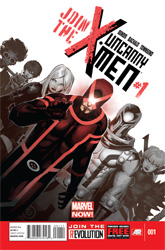
DM: Right. There actually were some good books this week so let’s get the rest of the dreck out of the way. My Book of the Weak: Uncanny X-Men #1 (Marvel NOW!). The plot: there’s a group of mutants with unheard of power levels posing a threat to humanity. Cyclops, a messianic zealot, is their leader. Someone very close to Cyclops is set to betray him. Sound familiar? It should. I’ve just described the plot of Avengers Vs. X-Men, easily the worst book of 2012. Looks like the powers that be aren’t done abusing Cyclops yet. But wait! Maybe this is about his redemption! Doubtful. And considering how Bendis and Co. have woefully mishandled the character up until now, I’m not sticking around to find out. Chris Bachalo’s art is great tho’.

Uncanny X-Men #1

Uncanny X-Men #1

SC: I’m not as down on it as you are. But that’s not saying much. I understand–and agree–with your point about its parallel to the abysmal AvX and Bendis’s epic mishandling of Cyclops. I also didn’t care for the fact that the first issue’s framed by this rather sudden betrayal angle. Why not build toward it a bit, for goodness sake? And the reveal at the end? That was an Ugh moment for me, not unlike–but not as apocalyptic as–the end of Superior Spider-Man #1. Hmm. An ironic turncoat? Whatever. That being said, I’m going to ignore all of that and pick up number two. Why? I don’t know. Well, I guess I know: I think, it’s, in part, because I can’t conceive of a world in which I’m not picking up a single X-book. (As it is, I’m already living in a world in which I’m picking up one–only one of the billion Avengers books; and it’s one without Captain America, for crying out loud!) Another part: this is called my not learning my lesson: I’m giving into the siren song that is Bachalo’s artwork. Yes, I remember what happened with Wolverine and the X-Men. He fell off the book after I got hooked; and it took me twenty-plus issues to realize I had been rooked. We’ll see what happens. But for now, I’m calling this a trial run.

DM: While we’re on the topic of “dangerous undesirables,” there is a book out this week that skillfully tackles one of our country’s most hot-button issues: illegal immigration. The threat of deportation, onerous paths to citizenship, official corruption, placing a greater value on certain immigrants over others; all these are handled with a deft hand therein. What’s that you say? Joe Sacco must have a new book? Or perhaps Gene Luen Yang? Nope, it’s Popeye #10 (IDW):

-Popeye #10

That’s right; Popeye. Here’s the scoop: Toar, a behemoth of a man and good friend of our favorite sailor-man, is being threatened by an unnamed government agency that strongly suggests the Dept. of Homeland Security. In order to stay in the good ol’ U.S. of A. Toar must prove he possesses a valuable skill that no other American has. Panicked, and none too bright, he blurts out “TOAR ONLY FELLA WHO KIN BEAT POPEYE IN FIGHT!!”. A rare gift indeed. The government agent in charge of his case fairly salivates over “the potential military applications” of Toar’s boast. Sound a little too heavy-handed (pun intended) for a Popeye comic? Fear not! Writer Roger Langridge has been working wonders with this title, and this installment has all the jokes, antics, roughhousing and romantic misunderstandings (via Olive Oyl) any Popeye fan could want, all in a scant fifteen pages. His light touch seamlessly interweaves the social with the shenanigans. And Vince Musacchia’s retro stylings keep the tone at a safe, 1930’s remove. Most satisfyingly, although Toar is clearly the sympathetic character here, Langridge refuses to be one-sided in the debate. In fact, it is ultimately the viewpoint of the government agent, unsavory though he most certainly is, that carries the day. There are some forces, it seems, even Popeye can’t vanquish.

A bunch of ruffians fighting against menacing global powers though they’re desperately outmatched? That’s Archer and Armstrong‘s bag baby!

Archer & Armstrong #7

Archer & Armstrong #7

Archer, a recently un-brainwashed religious militant, and Armstrong, an immortal lout, have teamed up to save the world from…nothing. That is, an ancient secret sect (aren’t they all) called the Null that has been working for centuries to return reality to the mathematical purity of nothingness. Issue 7 (Valiant) finds that our heroes have been joined (or thrown together more like) by the Eternal Warrior, who happens to be Armstrong’s straight-arrow (pun intended) killing machine of a brother, who’s also a bit of a pill. These two take sibling rivalry to mythic proportions. Rounding out our group is a Geomancer, a sort of earth-goddess-wizard-type. In a delicious twist, the latest incarnation of the Geomancer is a young corporate shill, the type that would be at home as a talking head on Fox News, who’s chosen by Mother Nature (a monkey, natch) for her excellent P.R. skills. Fred Van Lente’s whip-smart writing riffs on a wide swath of sources, both pop cultural and historical: the Anti-Life Equation from Jack Kirby’s New Gods, the Matrix films, ancient Roman history, Archimedean mathematics and World War II espionage, among others. For all its erudite underpinnings, the book maintains a breezy tone, ably abetted by the crisp artwork of Emanuela Lupacchino and Guillermo Ortego. Van Lente’s writing is the star here though, equal parts Grant Morrison, Larry Gonick and Mad Magazine, as he gleefully skirts the line between high adventure and high satire.

SC: Umm, I liked it, too. And, wouldn’t you know, for all of those exact same reasons.

DM: Interesting Factoid Dept.: Both Archer and Armstrong #7 and Comedian #5 make use of the old “We, white man?” joke in the same week.

But there the similarities end. If you want to talk similarities however, it has been fascinating to concurrently read Comedian (DC) and Fury: My War Gone By (Marvel Max). Both books take firmly established characters and place them in the cross-hairs of war and the realpolitik considerations thereof. Comedian would seem the better fit, given Alan Moore’s deliberate infusion of 20th century history into Watchmen (does it need to be said that this was a watershed series at this point?). Nick Fury, on the other hand, carries decades of comic book baggage. And while his origins are tried-and-true war comics, his character has become so diluted and utilitarian over the years that I can’t even tell what he looks like in the Marvel U anymore (classic cigar-chomper or head-shaven Samuel Jackson?). Well, trust Garth Ennis to remedy that. Ennis, simply put, is the best writer of war comics around. (Hey there’s a reason this book was #9 on our Top Ten of 2012). This series, with appropriately visceral visuals by Goran Parlov, puts Nick right in the middle of some of the most nefarious military imbroglios of the last sixty-some years, from the Bay of Pigs to Vietnam. The intrigue abounds as Nick is placed in situation after impossible situation due to sordid behind-the-scenes machinations that he knows all too well, but has little influence over. As such, an appropriate fatalistic air hangs over the series. In fact in the latest issue, (in which our suspension of disbelief is unfortunately tested by the inclusion of the Punisher doing his best Rambo impression) Ennis suggests that Fury wouldn’t change things even if he could. As he descends upon his target, a Vietnamese commander, we’re left wondering who the “bad guy” really is. And if, in Fury’s world, such questions aren’t strictly academic.

SC: Wasn’t my favorite issue of Fury, probably because it was more of a shoot-’em-up this time around. Oh, and because of one of the more awkward time-collapse transitions–signaled more arrogantly than cleverly by Fury’s “No time to f___ around”–I’ve experienced of late. (Sneaky suspicion: a page or two had to be lost in the final edit, and chopping this scene seemed the safest bet.) I do appreciate, however, the fact that Ennis drives home the point–especially in the two scenes with the smug Pug McCuskey–that Fury’s true nemesis isn’t to be found on foreign shores at all. In those scenes specifically, the real war–a war of words reminiscent of Othello–is waged; and, for now, anyway, Shirley DeFabio and Fury are left on the losing side. No matter: as long as Ennis forges ahead with this book, we’re all winners.

DM: For the Comedian, questions of morality don’t even exist. In issue 5 Brian Azzarello and J.G. Jones go straight into the Heart of Darkness. Again, the setting is the Vietnam War. As events spiral out of control, the Comedian takes matters into his own deadly hands. As he does, he bluntly explains the rationale behind his actions. It is a belief system that will support any violence, excuse any atrocity done in its name. It’s easy to imagine something similar going through the minds of soldiers of any stripe, in any conflict, as they perpetrate acts of gross inhumanity. It is simple and it is chilling. And the Comedian makes the Punisher look like a saint.

The whole Before Watchmen franchise has been largely, and justly, maligned. The titles suffer most from a quivering fealty to the source material (much as the movie did) that results in highlighting the most superficial aspects of the original, thus rendering the unique, cliche. But Comedian is the exception. Azzarello and Jones have crafted a book that can stand on its own. And a damn good one at that.

But the best war comic being produced these days is undoubtedly Battlefields (Dynamite)– again, by Garth Ennis (surprise!). Issue 4 begins a new arc entitled The Fall and Rise of Anna Kharkova, in which Ennis returns to the title character, a WWII female Russian fighter pilot (from a previous arc, The Night Witches) and one of his most winning creations. This issue presents the Fall as Anna’s plane is brought down behind German lines. She is taken prisoner, but due to circumstances that Ennis skillfully explains, she is being cared for by Chris Cohen, a medic, a British officer, and a Jew. This issue is largely a character study of the two, taking place in a single room during Anna’s long convalescence. Ennis’ writing is wonderful as the characters get to know each other; one could almost imagine this as a one-act play. He suggests the passage of time merely through tonal shifts in the dialogue. His immense knowledge of history is on full display, but never overwhelms. And then there is the dialogue itself: natural, revealing, funny, angry, human. The tragic Russian and the reserved Brit do occasionally talk like avatars of their respective cultures and historical circumstance. But wouldn’t war naturally engender such conversations amongst its combatants? (Kudos must also be given to Russ Braun: no harder task in comics than drawing pages and pages of two characters talking to each other in the same room.) Given the ending, I suspect we’re going to see a bit more Fall for Anna next issue before her Rise.

Battlefields #4

Battlefields #4

Dare I Hope? Dept.: With Ennis, along with Azzarello, producing such stellar work, could we be witnessing a Renaissance of that classic genre, the war comic?

From Night Witches to real witches: Fatale #12 (Image). I’ve simply run out of superlatives to describe this book. Would you care to take a shot?

SC: A shot? Heh. You motif monger! In this case, how about a stab?

Fatale #12

Fatale #12

Of all the books this week, nothing stands out more than Fatale #12–and not just because of Sean Phillips’ gorgeous cover. Yeah, it’s becoming a bit of a routine now: read Fatale, write about Fatale and name Fatale Book of the Week and then, eventually, Book of the Month. You’d think we’ve been paid to praise it! (Disclaimer: we haven’t been paid to praise it–not that we’d be against such an arrangement.) This time around, Ed Brubaker and the aforementioned Mr. Phillips cement their status as the hands-down Masters of the One Shot. I mean, it’s no secret: #11 was our Book of the Month for January and a stunning example of single-issue storytelling. While that storytelling skill is on full display in this issue as well, the creators take a bit of a risk here: they break from Josephine’s journey and jump across the ocean and back in time to 1286 A.D. Our heroine, Mathilda’s got what Josephine’s got: a mojo she can’t quite explain and that men can’t resist. Bearing this cross, she’s branded a witch and suffers for it–suffers but never dies. She meets Ganix, a kindly old cyclops–one actually worth caring about!–who cares for her, who fights for her, and who ends up suffering for her. Mathilda races to save Ganix and embraces her power over men as she descends upon those who have “come to drag the demon witch away.” Sure, she takes them all down–just as we expected her to; but Brubaker’s better than that: he knows what we’re expecting–because he’s made us expect it! Instead, we’re left with a Wow!, which is exactly what we want to walk away with after the final panel–which is exactly what we expect from Brubaker, a writer at the very top of his game. So, to make it official: Book of the Week.

Turning pages,

Derek & Scott
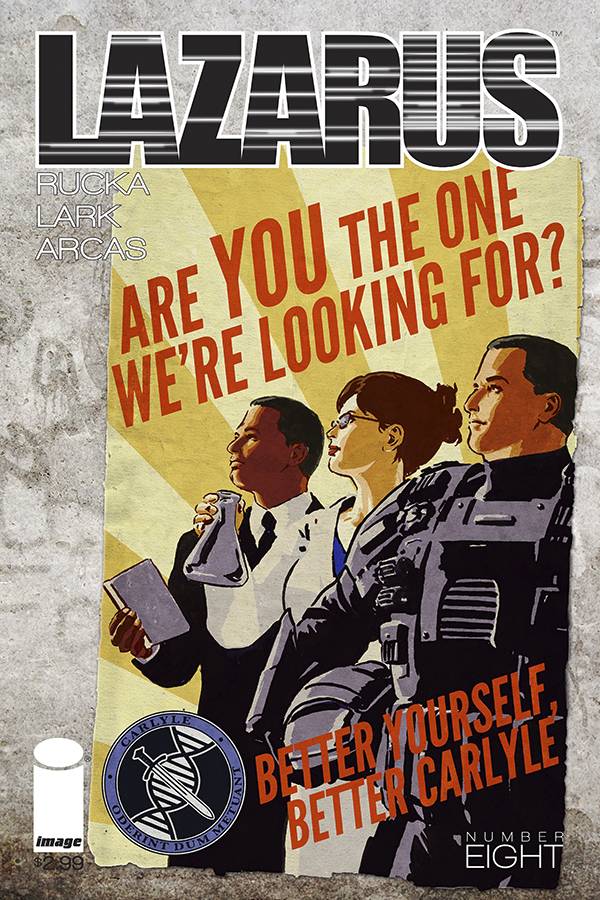
Share this:

  • Click to share on X (Opens in new window) X
  • Click to share on Facebook (Opens in new window) Facebook
  • Click to share on Tumblr (Opens in new window) Tumblr
  • Click to share on Reddit (Opens in new window) Reddit
  • Click to email a link to a friend (Opens in new window) Email
  • Click to share on Pinterest (Opens in new window) Pinterest
Like Loading...

Back and Forth: The More Things Change…

18 Friday Jan 2013

Posted by ScottNerd in Back and Forth

≈ 3 Comments

Tags

A.I. Artificial Intelligence, Ales Kot, Amazing Spider-Man, Animal Man, Archer & Armstrong, beat poetry, Bloodshot, Change, Chris Eliopoulos, Cormac McCarthy, Dan Slott, DC Comics, Essex County, H.P. Lovecraft, Harbinger, I Am Legend, Image, Jeff Lemire, Jose Villarrubia, Justin Jordan, Lily Tomlin, Marvel NOW!, Morgan Jeske, New 52, On the Road, Patrick Zircher, Rotworld, Ryan Stegman, Scott Snyder, Shadowman, Steve Martin, Superior Spider-Man, Swamp Thing, Sweet Tooth, The Road, The Underwater Welder, The Walking Dead, Valiant, Vertigo, Watchmen, X-O Manowar, Y: The Last Man, Yanick Paquette

(From On the Road to The Road in one comic review? Read on…)

Scott Carney: Two pages in, I knew that Change #2 (Image) would be my favorite book of the week. This trippy little thing is big on bouncing to the beat of an earlier generation. Oh, we’re on a road, all right; I’m just not entirely sure where that road–or where writer Ales Kot–is taking us, and I’m pretty sure that Google Maps isn’t going to help me.  And, you know what? That aspect, which could easily be a deal breaker, is actually one of the endearing qualities of this enigmatic issue–along with the poetry that pulses like poisoned blood through the veins of the sharply shifting vignettes, which all lead back, apparently, to the newly-revealed lungs of the book: New Atlantis. Another draw comes in the form of the fresh characters, whom I still hardly know two issues into the series, but about whom I care more than the hopeless heroes of of the Avengers Arena and more than the trite assemblage of assassins in the frivolous Thunderbolts.  (Each of those NOW! titles is now a THEN!  That’s right: El Droppo.  Would you say I’ve dropped a plethora of books?)  Sure, yeah, I felt lost; but isn’t that what I’m supposed to feel?  (Isn’t that what the characters feel?)  Damn it!  Isn’t that what I want?  Isn’t that what I’m paying for?  For an escape from the grind?  For a change of pace?  Appropriately, “YESSSSssss.”
Derek Mainhart: I agree that this is one idiosyncratic little book. The analogy you make to beat poetry is good one; this book has an evocative, rambling cadence that seems as much the point as the actual events that take place (whatever they are). The experience of reading an experimental, seemingly stream-of-conscious work like this can be an engaging, highly personal one. Like beat poetry, I appreciate the unorthodox immediacy of it (not to mention Morgan Jeske’s Paul Pope-inflected artwork). But it is simply not my groove. (Or maybe between this, Fatale and Locke and Key, I’ve just reached my quotient of Lovecraft-inspired comics.)

The Superior Spider-Man #1 (Marvel)

Speaking of change, this was billed as a BIG one. As regular readers are aware, I’m among those who are appalled by Spidey’s recent history. So when the rumors started flying about this book’s premise, I started picking up Amazing Spider-Man again for the first time in years. And I have to say, I was intrigued by Dan Slott’s story: having ol’ Doc Ock mind-swap with Peter Parker, then letting Parker die in Ock’s enfeebled body did, in fact, feel like a shake-up of the status quo. Letting a megalomaniac muck about in the life of an icon seemed to have potential (It says volumes about the mess Marvel’s made of Peter Parker that killing him could actually improve the book). So I was on board. And for the first twenty-one pages I was not disappointed (SPOILERS!): Doctor Spider-Pus fighting the new Sinister Six, not so much out of moral obligation but because he’s indignant that they’re sullying his legacy. Then, in true supervillain fashion, he defeats them by leading them into a meticulously prepared, elaborate deathtrap. With great ego, it would seem, comes great responsibility. That ego is again on display in a scene in which the brilliant Doctor starts fraying at the edges with the knowledge that all of his future accomplishments will be credited to Peter. And finally, in the best sequence in the book, Otto Parktavius goes on a date with Petey’s beloved Mary Jane. In a hilarious tour de lettering, Otto’s self-absorbed narration is “pasted” over MJ’s dialogue while he blithely ogles her (I assume this was Slott’s decision, but kudos to letterer Chris Eliopoulos anyway for an effect I’ve never quite seen before).  Ryan Stegman’s aggressive artwork, all sharp angles, blocky shadows and speed-lines, perfectly matched the irreverent tone of a story that held the promise of deconstructing super-hero tropes by turning them on their head (not that this is Watchmen or anything, but there is a gleeful audacity in doing this sort of thing to Spider-Man).

And then page twenty-two. Who should show up to ruin the fun? Why, Peter Parker of course! (or his ghost, or whatevyawn…) Now, I’m not naive; we’re talking about a super-hero comic. Of course Peter’s coming back. Nobody stays dead, silly! But so soon? The first issue of the much hoopla-ed big change? Maybe it was Slott’s plan all along, but this reeks of corporate hand-wringing: God forbid Peter Parker doesn’t appear in a Spider-Man comic for even one issue. (Slott even goes to the extent of having Petey verbalize the Game Plan: “I am Peter Parker. And I swear I will find a way BACK!“) Never mind that this retroactively robs AMS #700 of even the illusion of poignancy less than a month after its publication; in one fell swoop, an edgy, promising, even satirical premise has been rendered safe, predictable and pedestrian – the very opposite of a change in status quo. I, for one, am not looking forward to watching Peter play Lily Tomlin to Otto’s Steve Martin. (Name That Reference! Win a prize!) I haven’t been this deflated by an ending since A.I. Artificial Intelligence.

SC:  Yeah.  Me, too!  No, really: you took the web right out of my shooter.  But I–may I vent?  Come on!  They couldn’t’ve given us three issues–just three issues!–to savor this stroke of genius.  No, sir!  Gosh, I wish I were a spider on the wall during the pitches and the planning and any of the other processes that led to–to–this!  I mean, seriously: was this Slott’s plan all along?  Was there some directive from on high to not let this linger too long?  I’ll tell you what I wasn’t thinking after reading the page that shall remain numberless: Oh boy, I can’t wait to see how Peter comes back!  So, yeah, it’s quite possible that as quickly as they won me over, they’ve lost me.  I’m not too sure how far I’ll follow this not-so-superior turn.

OK, then, well, really speaking of change (you’d think it’s a theme or something): a big change is coming for one of our favorite titles.  And, it’s a bag-shattering change, too.  That’s right: Scott Snyder’s almost done with his run on Swamp Thing (DC); so I guess that means I’m almost done with my run, too.  Aye, and it was a good one.

DM: Yeah, talk about change you can’t believe in. It really is a shame; with issue 16, Snyder has recaptured some of the aura of the first year of the book. The extended build-up to the current Rotworld storyline distinguished itself with a steady baseline of unease, intermittently punctuated by surreal spasms of horror (especially when rendered with skin-crawling effectiveness by sometimes-series artist, Yanick Paquette). The series began to lose a little mojo with the introduction of Anton Arcane as the villain of the piece. The terror went from chillingly existential to almost cartoonish super-villainy (Anton would twirl his mustache if he had a face.) When Rotworld kicked into high gear a few months ago, the book seemed to further strain under the expectations of “epic” storytelling. But here Snyder once again hits his stride with a tale split between the struggle of the past to prevent the nightmarish present. The two strands also serve as emotional counterpoint, traversing the oh-so-short distance between hope and despair. In the (alternate?) present, Swamp Thing valiantly struggles to save, not the world, nor reality itself, but the only thing that matters to him in the end; his love, Abigail. More’s the pity then that Abigail’s quest in the past seemingly renders Swampy’s  heroics utterly futile. This is the stuff of tragedy–and of terror: without giving too much away, let’s just say that when Snyder promises a shock (unlike Superior Spider-Man), he doesn’t back down.

Only two more issues of Snyder and Paquette? Now that’s tragic.

SC: Hell yeah it is!  But, come on: do you really think Abigail’s gone for good?  I have a sneaky suspicion that Mr. Thing is going to use some of his bio-restorative formula to bring her back to life–to some form of life, maybe even as a Swamp Thingess.  That’d be a fitting finale, wouldn’t it: another out-of-step ending for the otherwise superior Scott Snyder.  (See the end of his Batman: Court of Owls arc if you don’t believe me.)

Moving on, I’m willing to admit it: I’ve changed my mind about Shadowman (Valiant) with #3.  A little background: I don’t have any background with Shadowman as a book or as a character.  I figured I’d give it a whirl since Valiant’s revamp was 4-for-4 with two home runs (Archer & Armstrong and Harbinger) and two triples (X-O Manowar and Bloodshot).  The first issue really didn’t do it for me, and I pretty much called it quits there.  Then, during a trip to a more well-stocked shop than my home base, I saw #2 and decided to pick it up because I had a few bucks left over.  (Yeah, I’m still working on the whole willpower thing.  Getting better, though!)  I still wasn’t too taken by it.  Flash forward to another trip to my shop on the side: the proprietor offered up #3 as one of his favorite covers of the week.  Yup.  That was enough for me.  And wouldn’t you know: I really liked it: I finally bought Mr. Twist as a terrifying villain.  I dug the descent into the Deadside; more specifically I was taken–along with Jack–by Jaunty, the talking monkey with the sweet hat and the sweeter Cajun ‘tude.  I appreciated the obvious allusion to King Arthur: Jack, in this case recognizing his responsibility, his destiny, draws the scythe from the shadow and becomes the new Shadowman.  And with that, Justin Jordan and Patrick Zircher have earned a new Shadowfan.  Bring on the big baddie: bring on Master Darque!

DM: And finally (and finally), Sweet Tooth #40 (DC/Vertigo), a book that’s all about change. Throughout it’s run this book has always seemed an odd, at times ill-fitting addition to the post-apocalyptic literary landscape. Jeff Lemire’s take on the end of man seemed to lack the visceral drive of The Walking Dead, the gravitas of I Am Legend, or the pointed political commentary of Y: The Last Man (to name but a few well-known exemplars of the genre). The story seemed to have a narrow focus: the young hybrid boy/deer, Gus and his grizzled protector, Jepperd fight to survive against malevolent pursuers, endlessly chasing them through the woods, determined to discover the mystery of Gus’ creation and, they hope, the key to mankind’s survival. And though the cast expanded, the scope of the narrative was never itself expansive in the way stories like this generally are. The same, however, cannot be said of the art. Nobody does desolate landscapes like Lemire (praise must also be heaped upon series colorist par excellence, Jose Villarrubia, he of the muted earth tones and washed out firmament). The setting and spare nature of much of the writing created a lyrical tone of atmosphere and ache. This restrained aesthetic, which is Lemire at his best (see Essex County) is ultimately what separates this book from the rest of the genre. In fact, with its devotion to craft, the work it most resembles is perhaps Cormac McCarthy’s The Road. Both are about fathers and sons (a recurring theme in Lemire’s work, from The Underwater Welder to Animal Man). And both find hope in the passing of the torch to the next generation. But whereas McCarthy’s hope is a flickering candle in unremittant darkness, Lemire’s is a bonfire of celebration. Though the territory covered by the series may not have broad, this generous, and alas, final issue is expansive in perhaps its most important measure: its heart. Book of the Week. Good Night, Sweet Tooth.

Sweet Tooth #40 Cover

Sweet Tooth #40 Cover

Turning pages,

Scott and Derek

Share this:

  • Click to share on X (Opens in new window) X
  • Click to share on Facebook (Opens in new window) Facebook
  • Click to share on Tumblr (Opens in new window) Tumblr
  • Click to share on Reddit (Opens in new window) Reddit
  • Click to email a link to a friend (Opens in new window) Email
  • Click to share on Pinterest (Opens in new window) Pinterest
Like Loading...

MARVEL: NO!

24 Saturday Nov 2012

Posted by dmainhart in Uncategorized

≈ 8 Comments

Tags

Adventure Time, Al Ewing, Alison Bechdel, All-New X-Men, Asgard, Avengers Vs. X-Men, AvX, AvX #11, Baltimore, Barnaby, Battlefields, BOOM!, Brendan McCarthy, Brian Azzarello, Brian K. Vaughan, Brian Michael Bendis, Bush administration, Captain America, China Mieville, Chris Claremont, Chris Ware, Civil War, Courtney Crumrin, Cyclops, Daniel Indiro, Daredevil, Dark Horse, Dark Reign, DC, Dial H, Donald Rumsfeld, Douglas Wolk, Dynamite Entertainment, Ed Brubaker, Eric Trautmann, Fantagraphics, Fatale, Fear Itself, FF, Fiona Staples, Flash Gordon: Zeitgeist, Garth Ennis, graphic novel, Green Lantern, Greg Rucka, Hawkeye, Hellboy, House of M, Hulk, IDW, Image Comics, Iron Man, Iron Man 2, Jack Kirby, Jason Lutes, Jean Grey, Jeremy Renner, kaboom!, Mark Waid, Marvel, Marvel Bullpen, Marvel NOW!, Marvel Super Heroes Secret Wars, Marvel Universe, Matt Fraction, Matthew Southworth, Michael Kupperman, Mike Allred, Mike Mignola, Miles Morales, New 52, Norman Osborn, Oni Press, Peanuts, Phoenix, Popeye, Professor X, Robert Downey Jr., Roger Langridge, Saga, Scarlet Witch, Scott Summers, Sean Phillips, Secret Invasion, Sentry, Siege, Skrulls, Snarked, Spider-Man, Stan Lee, Storm, Stumptown, Superman, Tales Designed to Thrizzle, Ted Naifeh, The Avengers, The Zaucer of Zilk, Thor, Tony Stark, Ultimate Spider-Man, Universal Studios, Void, Watchmen, Wolverine, Wolverine and the X-Men, Wonder Woman, X-Men, Zero Hour

“I’m worried about what’s going to happen next. I’m worried that the power they are holding is more than they can handle. In fact I know it is…What happens when they aren’t able to hold it any longer?” – Captain America, AVsX #11

Captain America is right to be worried. The Marvel Universe is facing a dire threat to its very fabric. It’s not from Thanos, Galactus or even Scott Summers, but from an unexpected quarter. The people in charge.

Every comics fan has one – that comic book that hooked them, that opened their mind to the nigh-limitless possibilities offered within its four-colored, dog-eared pages. For me, as I suspect it was for many boys of my generation, that book was Marvel Super Heroes Secret Wars. Here it was, an entire, well-defined universe, brimming with larger-than-life heroes and villains with a shared history, tackling a new, unimaginable threat.  This was my entry point into the master-narrative (a term used by Douglas Wolk, as good a writer on comics as you will find) into the Marvel Universe. And as a primer, it did its job beautifully. My ten-year-old mind was set a-buzz: gods, super-soldiers, mutants, and especially Spider-Man. For the next ten years or so, I would eagerly devour their exploits, breathlessly anticipating each month’s installment, as the previous ones were carefully bagged and filed, to be revisited easily and often.

And then, like many comcis fans, I drifted away. I was in college, reading, creating and experiencing things that made those larger-than-life characters seem more and more inconsequential. This was also a period (the early-mid nineties) that saw some headline-grabbing shake-ups of some of comics’ most iconic characters: Superman was killed! (and then came back), Batman was crippled! (and then came back, like in the movie), and Peter Parker was “revealed” to be a clone! (until he wasn’t). Whatever the merits of these stories, they did, to my mind, have the whiff of desperation. And once the status quo was (inevitably) re-established, there seemed to be no place new for these characters to go. Like never before in my comics-reading experience, a sense of “spinning their wheels” set in. And so I moved on.

I never completely dropped my comic habit, picking up the odd graphic novel or trade paperback (there is a distinction, which I’ll get to later). But for years, I gave up my Wednesday habit (if you don’t know what that is, I both pity and envy you.)

The comic that brought me back into the (stapled) fold was Civil War. Here at last was a super-hero story that had captured the zeitgeist. In the midst of the second term of the Bush administration, we had a story involving heroes fighting passionately over the central debate of the era: To what extent were we willing to sacrifice our rights in the name of security? Like the country, it split the costumed community down the middle. On one hand we had Captain America and his followers, on the side, not surprisingly, of preserving our freedoms. On the other, somewhat more surprisingly, was Iron Man (not yet a movie star) and company taking the security side as a practical manner, with the resources of the U.S. government behind them. Cap and crew, presented as underdogs, were perhaps more sympathetic. But the creators, to their credit, took pains not to take sides; each view was presented as legitimate. Echoes of the real world abounded: people were branded traitors, paranoia reigned, inhumane detention centers were quickly established and filled. Spider-Man, the eternal Everyman, was caught in the middle; he first sided with Iron Man, then switched over to Cap’s team. It was an even bolder move then, when Marvel had Iron Man’s side ultimately claim victory. Iron Man was placed in charge of the country’s security, with all grey ethical dilemmas that implied.

The ending was unconvincing (after seven issues of vicious fighting, Cap, on the brink of victory, surrenders because he’s suddenly worried about losing the moral high ground). But I was thrilled by events (current events, no less!) that truly seemed to shake the good ol’  Marvel U down to its core. That, and (youthful power fantasies aside) there’s just something cool about watching all these super-types get together and throw down. (There’s a reason The Avengers movie made a hundred-gajillion dollars). And so I resumed my Wednesday habit.

With said resumption I quickly learned some things about the Marvel U that had occurred in my absence. It seems the powers that be had, at some point, decided to shift the focus away from the X-Men franchise and toward the Avengers. To speed this along, the X-men’s most popular character, Wolverine, was now an Avenger, as well as the company’s flagship hero, Spider-Man.  All well and good. But at the same time there was a conscious effort to de-emphasize the X-Men.

Now the X-Men had long been fan favorites. Much of their popularity stemmed from their role as perennial underdogs. As mutants, they were heroes who were born different, forced to deal with a world that feared and hated them. This was a simple, brilliant paradigm (especially during Chris Claremont’s unparalleled run) that could encompass any number of themes on a societal or personal level; civil rights, sexual orientation (as seen in the X-Men movies) or just the onset of adolescence. Many was the comics fan who could identify with such feelings of alienation. Well, in the X-Men’s world, the Xavier School for Gifted Youngsters was a learning institution filled with such outcasts.  And the X-Men, more than being just super-heroes, were their role models, what they could aspire to be. This mixture of melodrama, family dynamic (often dysfunctional), social consciousness, and of course all-out action enthralled fans and kept the X-Men at the top of the sales chart, virtually unchallenged, for twenty years.  The decision by the powers that be to give a major push to the Avengers at the expense of the powerhouse X-Men seemed curious. But that’s just what they did in House of M.

House of M was the epic event prior to Civil War; the previous chapter in the Marvel master-narrative, if you will. It centered around the Scarlet Witch, a mutant B – lister who was previously best known for being married to a robot (now that was a comic with potential!) In HoM, her ill-defined hex power was suddenly and without explanation boosted exponentially. Mentally unbalanced at this point in her life, she first creates an entire alternate universe to escape her torment. When that doesn’t work she famously (and somewhat bafflingly) utters the phrase “No more mutants.” And – poof! – 99% of the world’s mutants instantly lose their powers. X-Men de-emphasized. This was actually the first manifestation of the Scarlet Witch’s most advantageous superpower: what I like to call the power of editorial dictum. In other words, why was she able to accomplish these great feats? Because the story needed her to.

Anyway, in the aftermath of Civil War a couple of things happened. Captain America was killed (very temporarily). And Spider-Man (I still can’t believe this, even as I type the words) sold his marriage to the devil. Why? Because it was suddenly decided that it was uncool for him to be saddled with a wife. So instead of having him get a divorce like a normal person, they had their flagship character, Marvel’s most selfless, noble hero, make a deal with the devil to erase his marriage (the devil has always, in literature, had the power of editorial dictum). In what warped view is a Faustian bargain a more palatable option than just ending a marriage? In any case, the result? The adventures his readers had been following for twenty years? Irrevocably altered. A disastrous decision from which Marvel’s most beloved character still hasn’t recovered.

Returning to the overarching master narrative, Civil War was followed by Secret Invasion, a series in which shape-shifting aliens, called Skrulls, had meticulously planted themselves in all levels of society in order to conquer humanity from within. This series was undeniably entertaining for a number of reasons. The Marvel writers (most notably Brian Michael Bendis) had been peppering their stories for years with clues that something was seriously amiss. This story was the culmination of all that impressive, meticulous planning; part of the fun was going back and finding the clues, and being rewarded for your patient detection. Like Civil War, this story pit hero against hero, but this time not because of ideology, but because of paranoia; anyone could be a Skrull. While this was all a lot of fun, it was difficult, in light of Civil War, not to see this in the parameters of society at large. The enemy was among us. It was not much of a leap to replace “Skrull” with “Terrorist” (indeed the Skrulls’ mission was recast in extremist, quasi-religious language). By the logic of the story then, the infringement of rights to ensure security was entirely justified. In fact it didn’t go far enough, since the Skrulls were so successful. In short, the master narrative of the Marvel U had taken a hard turn to the right.

Secret Invasion resulted in a couple of developments. First, Iron Man was fired as head of US security. The reason given in the comic was that the Skrull invasion had happened on his watch. The real reason of course was that Marvel had an unexpected blockbuster on its hands in the first Iron Man movie (largely due to Robert Downey Jr.’s magnetic performance; so magnetic that Marvel gave Tony Stark’s personality and appearance a subtle makeover in the comics to try to match it). With Iron Man suddenly a hot property it wouldn’t do to have him in the unpopular, compromising position of being The Man. But apparently removing him from power didn’t go far enough in redeeming his character. No, Marvel actually took the extraordinary step of having Tony Stark erase his memory (in a story by Matt Fraction, that was actually pretty compelling in an old-movie-serial kind of way). He then rebooted his brain (he’d been saving it on a hard drive. No, really.) But, conveniently, his rebooted memories stopped just before the events of Civil War. Character instantly absolved of all guilt and messy moral quandary! Ready for Iron Man 2! Here we have another disturbing example (along with Spidey’s erased marriage) of selective retcon-ing in order to free a character (and lucrative property) of being dragged down by any undesirable story lines (you know, the stories the fans have been following for years).

The second development was Iron Man being replaced in his national security position by Norman Osborn (aka The Green Goblin). The narrative rationale for handing control of our national security apparatus to a proven maniac was wholly unconvincing (he took the shot that killed the Skrull Queen), though, I must admit, Norman Osborn was certainly a better approximation of Donald Rumsfeld than Tony Stark was.  In any case, this had the sum effect of removing all the grey areas of the previous couple of years. Moral complexity be damned! It was Good Vs. Bad. And the bad guys were in charge. The story title? Dark Reign. The heroes were once again the underdogs.

This was certainly safer from a narrative standpoint. And it did set up a compelling showdown between the forces of Norman Osborn and the newly resurrected Captain America (he’d managed to stay dead for eighteen months!) And that’s what was promised in the next Big Event in the master narrative: Siege. But that’s not what we got.

The conflict in Siege is fairly preposterous: Osborn decides to attack Thor’s home of Asgard (which is floating over Oklahoma for some reason) on the pretext that it’s an incursion on U.S. soil. Whatever, it gets the action going. Osborn’s vaunted forces are fairly quickly (and anti-climatically) dispatched by Cap’s crew (the whole thing lasts just four issues), but Osborn has an ace in the hole; a character called the Sentry.

The Sentry was a fairly new character, whose history had been ret-conned (don’t ask) to establish that he had at one point been the greatest hero of the Marvel Universe, and certainly the most powerful. Someone they all looked up to and admired; sort of their Superman. But he had a dark side/nemesis called the Void, which threatened to take over his psyche. Hence he was highly unstable and easily manipulated by Osborn. Siege culminates with the Sentry losing control, and becoming the Void. The Sentry briefly regains control and begs the Avengers to kill him. Thor obliges, striking him down with a lightning bolt (it appears Thor, too, can wield the power of editorial dictum).

So Siege ends with the Avengers killing one of their own. Not just that, but supposedly their greatest hero. Perfectly understandable right? Had to be done. There was no other way.

Except…isn’t that why we admire these characters? The best of them, like Superman and Captain America, no matter the odds, no matter how hopeless things get, always find a way. Isn’t that why they inspire?

Siege then, seems like a means to an end. Like the decision to kill the Sentry, it was expedient; driven by the need to get from Point A to Point B in a way that was cold, calculated, and dare I say, corporate? This seems to be the new mindset of the Marvel offices and sadly, the Marvel Universe. Now Marvel is, of course, a business. Like any other major publisher, they have to make decisions based, at least partially, on their bottom line; it would be naive to imagine otherwise. But never before has this attitude manifested itself so baldly in the stories, even in the characters themselves. It seems we are a long way from the legendary, free-wheeling Bullpen days of Stan Lee and Jack Kirby.

(The next big event after Siege was something called Fear Itself, a story so bereft of purpose, cohesion and narrative logic, that it made Siege seem like Watchmen.)

Which brings us to the latest chapter in the Marvel master-narrative: Avengers Vs. X-Men. (Deep breath) Like Civil War, AvX features an old-fashioned throw-down between two groups of Marvel heroes. Unlike Civil War, one of the groups is clearly presented as being in the right. The Avengers, having been re-positioned over the previous few years to the center of the Marvel U (and newly-christened as box-office champs) are The Good Guys. The X-Men, overlooked for years, are repaid by being re-introduced into the master narrative not simply as mistaken or misunderstood, but as a threat to the earth’s very existence. And at the center of this folly stands the abused figure of Cyclops.

Now Cyclops is, of course, the X-Man. Central to their mythos, their alpha dog, their leader, their best (not that you’d know it from the movies.) He is their Captain America,  the man with the plan, the one who will always, as I have said, find a way. Destroy his character and you delegitimize the worldview that the X-Men have represented over the last 30 years.

Let us skip the preliminaries and head straight to the nadir of the story (and indeed of the master-narrative in general): AvX #11. This particular issue is worth special consideration, emblematic as it is of the current state of the Marvel Universe. Cyclops has been infused with the power of the Phoenix, an unpredictable cosmic force capable of destroying existence (and which, years ago, caused the death of his true love Jean Grey – but not to worry! No compassion here.) Our issue begins with Captain America making an entreaty for help in the fight against Cyclops from an unknown source (the quote that began this unwieldy diatribe is taken from this plea.) Here are some choice nuggets from Cap’s opening address:

“…I am at the end of my rope.”

“…We just cannot win the fight in front of us.”

“We can’t win it.”

Again, this is Captain America. The man who never lost hope in the depths of World War II. (The fact that he’s supplicating himself to the Hulk, whose strength would be negligible against a force that could destroy the universe, is beside the point.) He may be wearing the flag, the big “A” and the little wingtips on his head, but I do not know who this character is.

To the ignominious climax. The Avengers have Cyclops surrounded, alone and raving, like some rabid dog (spittle, literally flying from his mouth). So I suppose it should come as no surprise when one of them, Hawkeye (y’know, Jeremy Renner in the movie) shoots him in the neck. Another Avenger callously observes, “Nice shot.” I’m sorry, since when do the Avengers resort to attempted murder to solve their problems? Much less the killing of a hero? (Oh that’s right. Since Siege.)

When this fails, Cyclops yells, “You see that?…They’re trying to assassinate us!!” If this is some kind of meta moment, where the character becomes aware of his creators’ intentions, then it is brilliant. Yes, Cyclops, they are trying to assassinate you, or worse, your character.

Storm, Cyclops’ former teammate (and at this point, like Wolverine, an Avenger, I guess?) pleads “Stay down Scott. I beg you.” Good ol’ Captain America adds “I don’t.”, in a misguided attempt to sound, I don’t know, bad-ass? (Maybe he’s a leftover Skrull…)

Cyclops, of course, doesn’t stay down. He is confronted by Professor X, who is, in every way that counts, his father. And then the moment that set the internet a-buzz, (and is possibly the lowest point in Marvel history): Cyclops kills Professor X.

X-Men destroyed. In one fell swoop.

Let’s be clear: it is not the death of Professor X that rankles; this is a character, after all, that has died and come back a lot, even by comic book standards. No, what is galling is the act of Cyclops murdering his father. There are some things even a comic book character can’t recover from. (DC tried a similar tack with Green Lantern nearly two decades ago in a story called Zero Hour. It took the character years to recover, and all he tried to do was destroy the space/time continuum; fairly standard super villain operating procedure. Killing Dad? Not so much.)

So take heed all you outcasts and undesirables! Professor X had a dream. And now it’s over. Society was right to fear and hate you. It turns out you were a menace after all.

(Want further proof that the X-Men worldview has been vanquished? The one holdover X-book, Wolverine and the X-Men, whatever its merits, is virtually a parody of everything they have stood for over the last thirty years. Comic books, too, repeat themselves, first as tragedy, then as farce.)

In the wake of AvX (oh yeah, Cyclops is finally put down when a mutant named – I would argue ironically – Hope, and again, the Scarlet Witch [ah that all-purpose power of Editorial Dictum] double-punch him. Game over!) we have been promised a shiny, sorta-newish Marvel Universe. It is being called Marvel NOW! and its coming has been foretold by months of advertisements which prominently feature Cap, arrogantly posed and smugly staring out at the viewer (who is this dick?) surrounded by various cohorts. These ads are further festooned with thick red-borders and imperative statements in bold, block lettering and resemble nothing so much as poorly-designed Soviet propaganda posters. Some coming highlights: Lot of Avengers books (featuring a bunch of former X-Men – I mean, where else were they gonna go?), a new, darker Spider-Man (oy vey) and, for the beleagured mutants, something called All-New X-Men. The concept: with the current X-Men in disarray, the original X-Men, still teenagers, are zapped to the present (y’know, bypassing all that messy civil rights stuff) as a way to hit the refresh button. The conceit: they are horrified by the current state of the Marvel Universe (well on that we can agree).

Which brings me to a Helpful Suggestion. The Marvel Now! initiative was done largely as a response to DC’s hugely successful New 52! relaunch of last year, in which they wiped the narrative slate clean and rebooted their entire universe from scratch. DC has a habit of doing this sort of thing every so often. A point of pride at Marvel is that they have never taken this approach. The stories you’re reading today are, ostensibly, a continuation of the stories begun by Stan and Jack over fifty years ago. Marvel has taken great pains to explain that Marvel Now! is…um…well, I’m not sure, but it is emphatically not a DC-style reboot. My question is, given the above snapshot of the Marvel Universe, why the hell not? Instead of just playing musical chairs with your established cadre of creators and using that as an excuse to haphazardly introduce some new #1 issues, why not just start the whole damn thing over? You don’t have to abandon your veteran creators, but bring in some fresh blood! Put them on your major books! The ship is sinking! History be damned!

Now. The above should not be interpreted as so much inchoate Marvel-bashing. (Just the fact that I’ve read these comics should tell you something.) They do, in fact, produce a number of very good books (just scroll down and see!) This is meant to suggest however, in the view of this lifelong fan and observer, that the master narrative (last time I’ll use the term, I promise) has been heading in an untenable overall direction for quite some time, and that those in charge (are they still called architects?) are ill-suited keepers of the flame.

So, does this mean that, once again, I’ve been disillusioned? That I’m about to give up my Wednesday habit a second time? Of course not. Having been reintroduced into the four-colored realm, I have surveyed the landscape. And I am excited by what I see. More than that; I’m convinced. The comic book medium has always had the same potential as any other narrative form (films, novels, television, etc.); that is to say, limitless. A casual glance will show that the sheer breadth of talent, diversity, subject matter (of which super heroes are an ever shrinking genre) and experimentation happening now (right NOW!) proves beyond any doubt that they are finally fulfilling that potential. It is my argument, my thesis, my conviction, that there has never been a better time to read comics. Saying you don’t like comics is like saying you don’t like movies. If you think they aren’t for you, you aren’t looking hard enough. A small sample of evidence:

Image Comics: currently the most exciting publisher around. Initially a boutique for a handful of superstars, their current mixture of established names and active scouring for new talent makes them comics’ equivalent of that cool indy music label (back when there were music labels) that is trend-setting by virtue of being fearless. Standout titles include the rollicking, sci-fi space opera, Saga by Brian K. Vaughan and Fiona Staples, and the neo-noir terror of Fatale by Ed Brubaker and Sean Phillips.

Not far behind is Oni Press, with its line of intriguing creator-owned work, such as Ted Naifeh’s moody, supernatural coming-of-age tale, Courtney Crumrin, and the laid-back, funky detective work found in Stumptown by Greg Rucka and Matthew Southworth.

Like a modern-day incarnation of Universal Studios from the 1930’s, Dark Horse Comics has a wide-ranging catalog, but their specialty is horror. And nobody does it better. The cornerstone of their house of horrors is Mike Mignola’s line of books (Hellboy, Baltimore, etc.) that combine a healthy respect for the history of the genre with the cold, unblinking eye of an auteur. They manage to feel classic and edgy at the same time.

The “ID” in IDW might well stand for “idiosyncratic”, as their eclectic range of titles include Roger Langridge’s retro, thoroughly excellent Popeye series as well as the Carrollian psychedelia of The Zaucer of Zilk by Brendan McCarthy and Al Ewing.

Dynamite Entertainment does some wonderful things with the heroes of yesteryear, whether they be of the pulp variety (the exuberant fun of Flash Gordon: Zeitgeist by Eric Trautmann and Daniel Indiro) or more historical in nature (Garth Ennis’ superlative Battlefields series; not only one of the best war comics ever, but also one of the best comics being produced right now, period.)

Speaking of history, Fantagraphics does truly commendable work reprinting the classics of funny pages past (Peanuts, Barnaby, etc). They also publish the funniest comic book on the planet, Michael Kupperman’s Tales Designed to Thrizzle.

How about something for the kiddies? kaboom! (BOOM!’s all-ages imprint) provides a healthy does of childlike wonder with the comic version of Adventure Time! as well as Roger Langridge’s (him again) inspired nonsense in Snarked!.

I haven’t even mentioned the rich world of graphic novels – not trade paperback collections of ongoing titles, but singular, literary works expressly conceived in the comic book medium. There just isn’t enough space to even scratch the surface of the wide array of practitioners of – oh, here’s three: Chris Ware, Alison Bechdel, and Jason Lutes. Go discover.

And, not to leave out the so-called Big Two: DC publishes some fine work, such as Brian Azzarello’s revisionist take on Wonder Woman and especially China Mieville’s nigh-undefinable Dial H. And finally, bringing things full circle, over at Marvel: Mark Waid’s award-winning run on Daredevil justly deserves the accolades it’s been receiving. And Brian Michael Bendis’ bold, risky choices on Ultimate Spider-Man have led to the introduction one of the most engaging new heroes in years, in young Miles Morales. (Hell, I’ll even cop to my excitement over one of the Marvel NOW! titles – Mike Allred drawing a goofy cast of B-listers in FF? Yes please.)

Marvel Comics will always hold a special place in my heart for igniting my love for the medium in the first place, and then again for bringing me back into the fold when I had strayed. And who knows? Perhaps their new initiative will produce some fun comics. But now, given the state of things as I continue to indulge my Wednesday habit, and peruse the embarrassment of riches that today’s comics have to offer (of which the above is only the smallest fraction), I am more likely than ever to say, “Marvel? Nah…”

Share this:

  • Click to share on X (Opens in new window) X
  • Click to share on Facebook (Opens in new window) Facebook
  • Click to share on Tumblr (Opens in new window) Tumblr
  • Click to share on Reddit (Opens in new window) Reddit
  • Click to email a link to a friend (Opens in new window) Email
  • Click to share on Pinterest (Opens in new window) Pinterest
Like Loading...

The Nerds

  • dmainhart's avatar dmainhart
  • ScottNerd's avatar ScottNerd

Enter your email address to follow this blog and receive notifications of new posts by email.

Join 142 other subscribers

An Amazing Comic Shop

Wiggle Room

It's just the beginning...

Tag Salad!

Ales Kot All-New X-Men Animal Man Archer & Armstrong Avatar Batman Batwoman Bloodshot BOOM! Brian Azzarello Brian K. Vaughan Brian Michael Bendis Brian Wood China Mieville Chris Bachalo Chris Samnee Clone comics Cullen Bunn Daredevil Dark Horse DC DC Comics Dial H Dynamite Dynamite Entertainment Ed Brubaker Fatale Fiona Staples Fred Van Lente Garth Ennis Goran Parlov Grant Morrison Greg Rucka Harbinger IDW Image Image Comics J.H. Williams III J. Michael Straczynski Jason Aaron Jeff Lemire Jonathan Hickman Jordie Bellaire Joshua Dysart Kevin Eastman Kieron Gillen Kurt Busiek Lazarus Mark Waid Marvel Matt Fraction Matt Kindt Mike Allred Mind MGMT Nick Spencer Oni Press Rachel Rising Robert Venditti Saga Scott Snyder Sean Phillips Swamp Thing Teenage Mutant Ninja Turtles Terry Moore The Massive Titan Uber Ultimate Spider-Man Uncanny X-Men Valiant Vertigo Wonder Woman X-O Manowar zero

Archives

  • August 2022
  • March 2022
  • February 2022
  • December 2021
  • August 2020
  • November 2018
  • October 2018
  • September 2018
  • August 2018
  • July 2018
  • August 2017
  • September 2016
  • August 2016
  • July 2016
  • September 2015
  • August 2015
  • July 2015
  • June 2015
  • May 2015
  • April 2015
  • March 2015
  • February 2015
  • January 2015
  • December 2014
  • November 2014
  • October 2014
  • September 2014
  • August 2014
  • July 2014
  • June 2014
  • May 2014
  • April 2014
  • March 2014
  • February 2014
  • January 2014
  • December 2013
  • November 2013
  • October 2013
  • September 2013
  • August 2013
  • July 2013
  • June 2013
  • May 2013
  • April 2013
  • March 2013
  • February 2013
  • January 2013
  • December 2012
  • November 2012
  • October 2012
  • September 2012
  • August 2012

Features

  • 22 I&N 22
  • 5 Comics You Should Be Reading
  • Back and Forth
  • Derekommendations
  • I&N Print
  • I&N Review
  • I&N Scott's Bag
  • I&N Store
  • I&N the Gutter…
  • I&N's Top Ten
  • I&Nsight
  • I&Nterview
  • Innie Awards
  • Microviews
  • Scottlight on…
  • Superhero Friday!
  • Top 5 Books of the Month
  • Uncategorized
  • What's I&N Store?

Recent Posts

  • Creator Watch: Deniz Camp
  • The Best Comics You’re Not Reading
  • Pick of the Week
  • Best Comics of 2021
  • Worth Your Time

Real Nerdy Stuff

  • Create account
  • Log in
  • Entries feed
  • Comments feed
  • WordPress.com

Twitter Updates

Tweets by imagesandnerds

Top 3 Posts & Pages

  • Creator Watch: Deniz Camp
  • The Best Comics You're Not Reading
  • Pick of the Week

Finders Keepers

Blog at WordPress.com.

Privacy & Cookies: This site uses cookies. By continuing to use this website, you agree to their use.
To find out more, including how to control cookies, see here: Cookie Policy
  • Subscribe Subscribed
    • Images and Nerds
    • Join 57 other subscribers
    • Already have a WordPress.com account? Log in now.
    • Images and Nerds
    • Subscribe Subscribed
    • Sign up
    • Log in
    • Report this content
    • View site in Reader
    • Manage subscriptions
    • Collapse this bar
 

Loading Comments...
 

    %d