• The Big Picture
  • Here’s ScottNerd…
  • Here’s DerekNerd…

Images and Nerds

~ We're turning pages–and writing about them!

Images and Nerds

Category Archives: Top 5 Books of the Month

Best Books of the Spring

05 Wednesday Aug 2015

Posted by ScottNerd in Top 5 Books of the Month

≈ 1 Comment

Tags

A Christmas Carol, Alan Moore, Ales Kot, Allen Ginsberg, Ant-Man, Archie, Autumnlands: Tooth & Claw, Avatar, Benjamin Dewey, Black Mask, BOOM!, Chilling Adventures of Sabrina, Chris Peterson, Crash, Curt Pires, Dan Slott, Downton Abbey, Eddie Campbell, Erica Henderson, From Hell, Garth, Giant Days, God Hates Astronauts, H.P. Lovecraft, Howard Chaykin, Ian Betram, Image, Jacen Burrows, Jeff Lemire, John Allison, Jordie Bellaire, Juan Rodriguex, Kaptara, Kurt Busiek, Lissa Treiman, Marvel, Material, Matt Fraction, Mayday, Mike Allred, Nick Spencer, Ommegang Abbey Ale, Penn State, Pete Toms, Providence, Robert Hack, Ryan North, Satellite Sam, Silver Surfer, Stathis Tsemberlidis, The Crucible, The Shining, the unbeatable Squirrel Girl, Tomas Aira, War Stories, Watchmen, Will Tempest, William S. Burroughs, zero

Summer is in full swing! As you lather up the sunscreen, fill the cooler with your beverage of choice (Ommegang Abbey Ale for me, thanks) and break out your thongs (sandals or otherwise, hey, we don’t judge) we present a list of recent comics that are well worth tracking down for your seaside, margarita-sipping, swimsuit-watching summer reading. Enjoy!

Top 5 Books of March

5. Giant Days #1 (BOOM!): OK, so, about 25 years or so ago, I made my way to The Pennsylvania State University, University Park campus; got settled in on the 4th floor of Pinchot Hall, a 10-storey sausage factory; cycled through a few roommates–smokers, snorers, and  psychopaths–during my two years on campus; fell in with a group of dorks who’d be my best buds for four blurry years; and all together, as fun as I think it was–as I remember it was–it was nothing like John Allison and Lissa Treiman’s irrepressibly jocular Giant Days #1.  Maybe that’s why I loved it so much.  Co-ed Musketeers–Daisy, Esther, and Susan–are the hyperbolically dramatic center of this university; and hilarity revolves around them in effortless ellipses, much to our benefit.  So good that I can confidently quote McGraw, the mustachioed hate interest, as I consider what the future holds for Giant Days and, fearing a sophomore slump, threaten the creators of this tasty treat: “Nothing you can do can spoil gravy for me.” (SC)
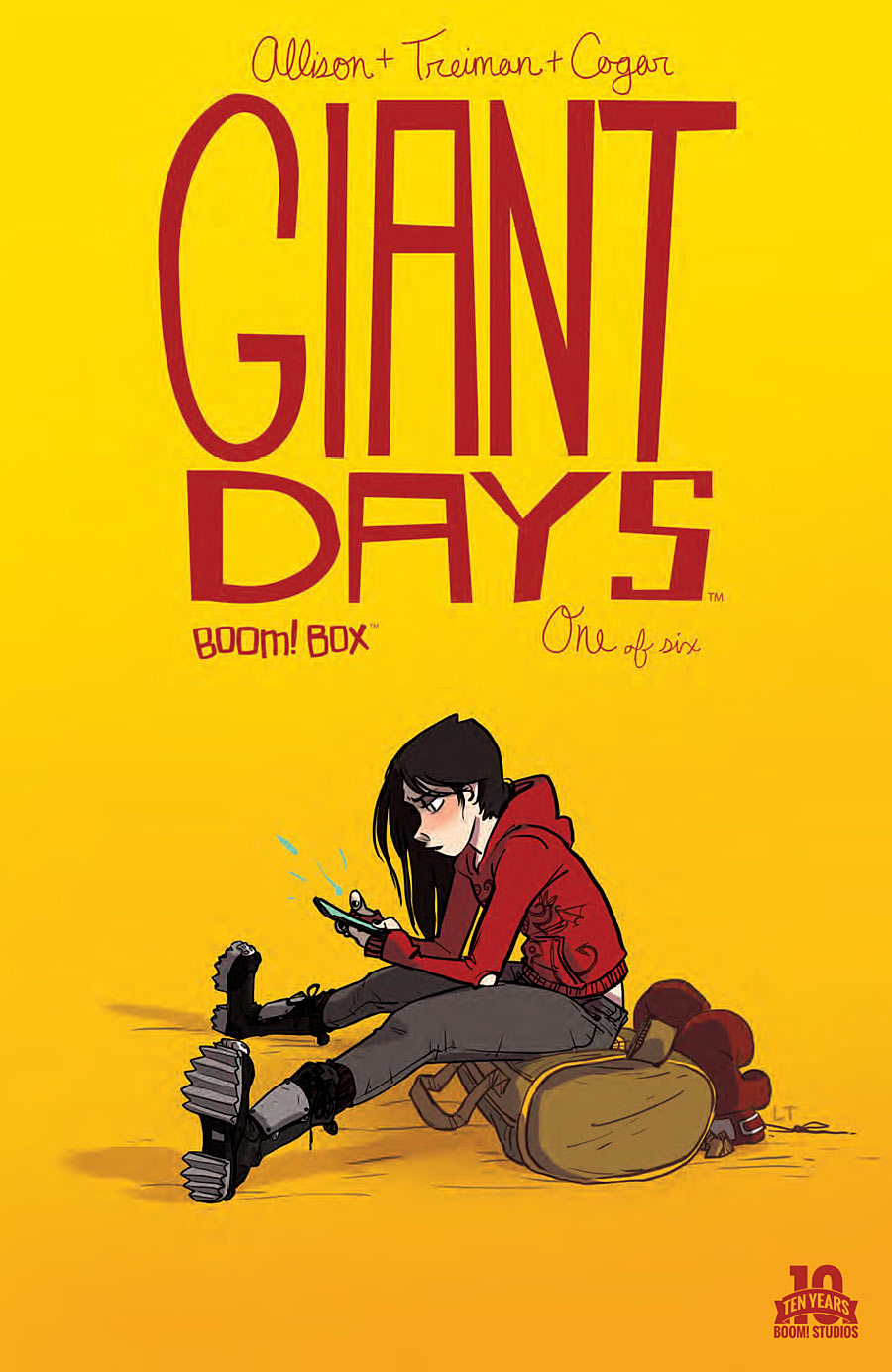
Giant Days #1

Giant Days #1

4. Autumnlands #5 (Image): Fantasy books are all about world-building. No comic in recent memory has presented a realm so fully realized as Autumnlands. Credit goes equally to writer Kurt Busiek (no stranger to this kind of thing – see Astro City) and artist Benjamin Dewey, whose lush style seems to belong to another era (it doesn’t hurt, of course, that it’s being colored by the omnipresent Jordie Bellaire, who I’m convinced at this point must be some sort of collective of robot artists). Floating cities, magical lore, calcified social strata, layer upon layer intertwine into a cohesive whole. Impressively, one doesn’t hear the awkard, behind-the-scenes clanging of this universe’s construction; rather, it’s as if it has always been there. It is merely our happy fortune to discover it, and get lost in it. Higher praise for a fantasy tale I can scarcely think of. (DM)
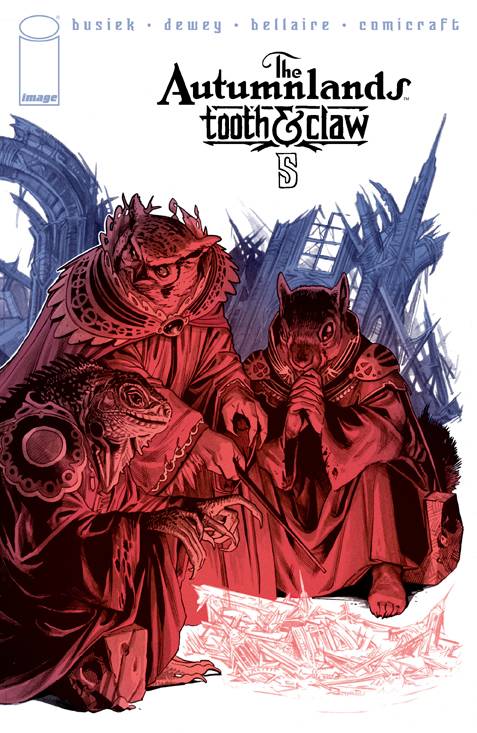
The Autumnlands: Tooth & Claw #5

The Autumnlands: Tooth & Claw #5

3. Ant-Man #3 (Marvel): I can’t even with this book. It is just too funny. I literally (and I mean that in the literal sense) have to keep putting it down because I’m laughing so hard. Literally! Nick Spencer is a comic (and I mean that in the comic sense) genius. Here’s your blurb: “The hero may be small, but the laughs are BIG!” (DM)

Ant-Man #3

Ant-Man #3

2. Silver Surfer #10 (Marvel): Dan Slott and Mike Allred are producing the definitive run of this classic character. They spent most of the first year bringing the fun, with story after story teeming with imagination and wit. But with the Silver Surfer, the piper must always be payed. They tackle the central pathos of the character head on: how can a being who played a role in the deaths of untold millions ever be redeemed? The story they come up with is so simple, so perfectly elegant, that I almost can’t believe no one’s thought of it before. Everyone knows that superhero stories from the Big Two are ‘never-ending’. That’s a shame, because this issue would serve as the perfect coda not just for this series, but for the journey that Norrin Radd has been on since Fantastic Four #48, all those decades ago. Beautiful. (DM)
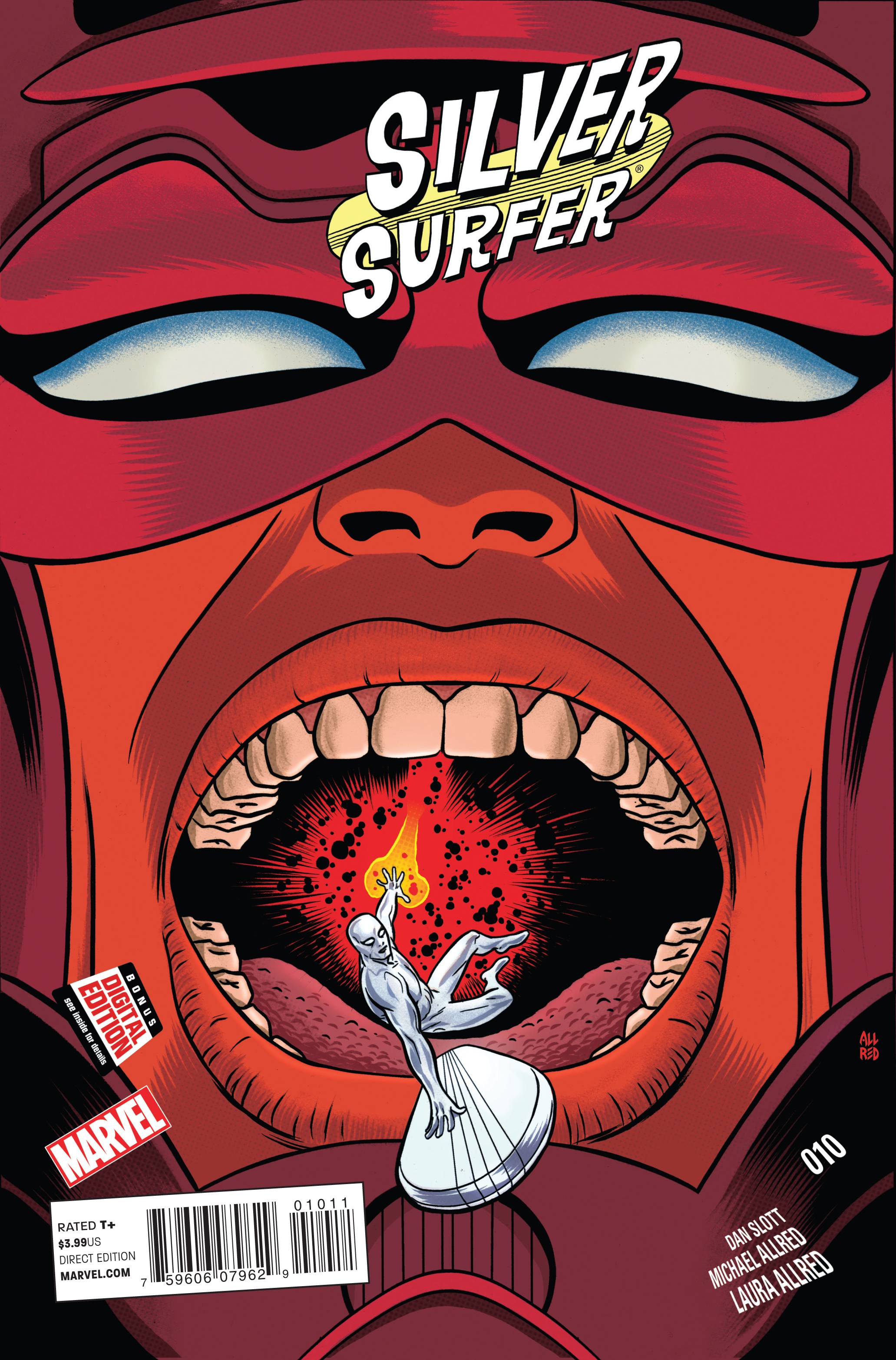
Silver Surfer #10

Silver Surfer #10

1. Zero #15 (Image): The Jeff Lemire variant queries innocently enough, “What is Zero?” Answers inspired by fourteen issues of Ales Kot’s crazy, crazy calculus: Soldier.  Spy.  Hero.  Killer.  Storyteller.  Everything.  Nothing.  Open up the book, open mind, as always, as necessary with this schizophrenic series, ask again: Who is Zero?  Answer inspired by page one, panel one: I have no effing idea! <–I borrowed an exclamation point; don’t think it’ll be missed.  Kot unexpectedly offers up a figure who’s furiously fingering a typewriter and, in doing so, adds a literary layer, making the book more than Zero.  He’s gone meta, forging unforeseen relationships, crafting, out of the story thus far, a psych-session confession and a catharsis-in-progress.  This stunning thing with its wild spirit sees Kot exploiting his poetic proclivities: his words build images that build upon artist Ian Bertram’s images and affecting layouts: it’s a conscious stream of Ginsberg and guns, fathers and sons, drugs and drugs–all of it burrowing into the brain like a drunk bullet.  Stories don’t get more tragic than William S. Burroughs’, and Kot’s made magic by borrowing it–as if you couldn’t tell.
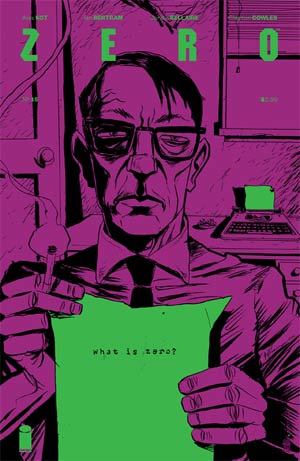
Zero #15

Zero #15

The Biggest Dis(appointment): Descender  #1 (Image)

Descender is the perfect title for this highly anticipated offering from the frustratingly inconsistent Jeff Lemire: the book, which starts off well enough, descends quickly–and dizzyingly so–to robotic schmaltz, lowlighted by the insultingly saccharine introduction of Tim-21, which bored a hole nerve-deep in my otherwise pretty resilient sweet tooth.  Anyone know a good dentist?  (SC)
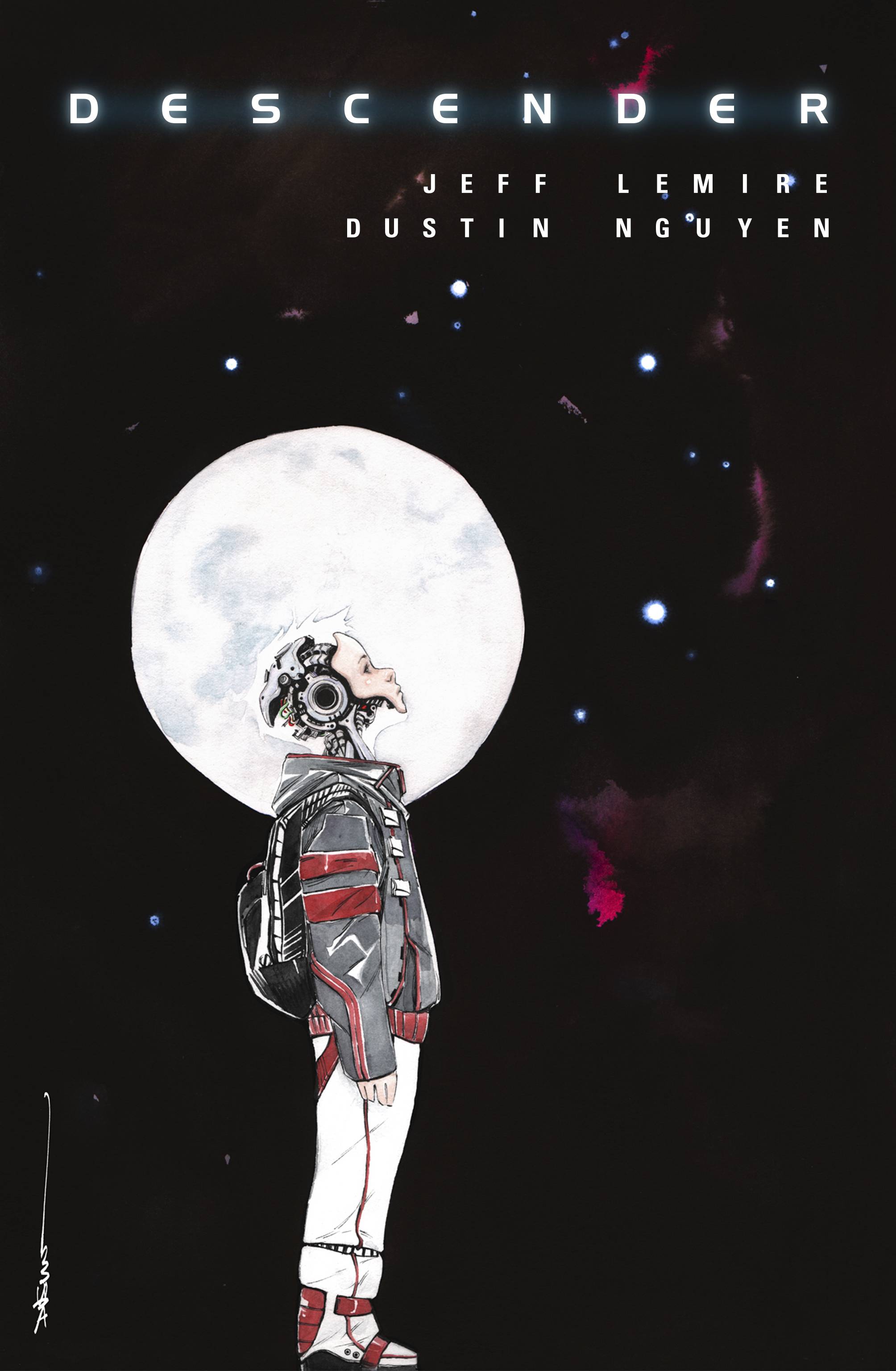
Descender #1

Descender #1


Top 5 Books of April

5. the unbeatable Squirrel Girl #4 (Marvel): There’s a long-overdue resurgence taking place in monthly comics that are putting the ‘funny’ back in ‘funny books’. We’ve been trumpeting the aforementioned Ant-Man for a while now; add to that the likes of God Hates Astronauts, Kaptara, and East of West (ok, maybe not that last one). Enter: Squirrel Girl. Ryan North (fresh of his excellent, award-winning run on Adventure Time) and artist Erica Henderson have already established a quirky charmer through three issues. Well the fourth installment is, simply put, the funniest single comic I’ve read all year. Most books are lucky to get a chuckle; this one had me laughing out loud five times before I was even that many number of pages in (I’m laughing now, just remembering them). Or maybe I should just put it this way: Squirrel Girl Vs. Galactus. Nuts Said. (DM)
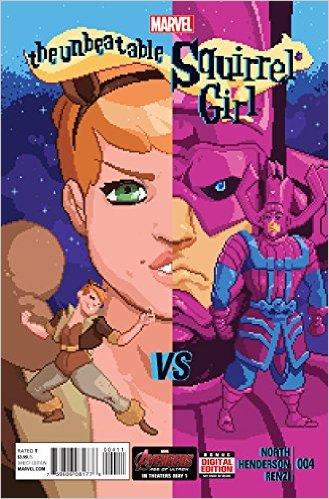
the unbeatable Squirrel Girl #4

the unbeatable Squirrel Girl #4

4. Mayday #1 (Black Mask): Curt Pires pops for real with this frenetic filet o’ film–one that drops some noms de cinéma (Kaufman, Lynch, and Bay) and goes to effing guerre with them.  Oh, yeah, man: it’s a wild ride that reads like a regiment of lines on a mirror meant to be snorted with the eyes and sorted out with a muddied mind.  Re: minds: Pires, paired with the more than competent Chris Peterson, sells a story that, in terms of comics, is “sort of like” Matt Fraction channeled through Ales Kot with Tyler Jenkins and Michael Walsh trying to one-up one another from one panel to the next.  Mayday #1 will leave you questioning your life choices–especially if most of them have sucked.  But you will not question your choice to pick it up–even if it is “just one big blur”; nor will you question whether or not you should pick up #2.  I mean, Kleio and Terrence have “just murdered two dudes.”  You totally don’t want them to come after you. (SC)
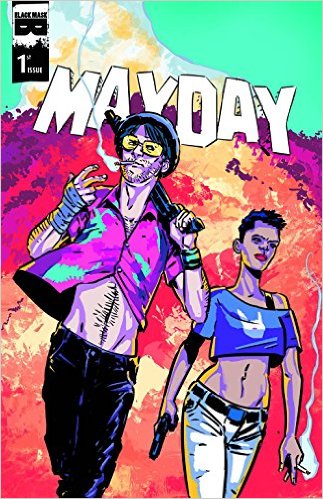
Mayday #1

Mayday #1

3. War Stories #8 (Avatar): Sounds like a given: Part 2 of “The Last German Winter” hits the mark with this icy mid-arc march through moral relativism; but let’s be honest: there’s nothing easy–nothing safe–about it.  I mean, who can take a Nazi, humanize his ass, then make you wonder all along when hell will come to pass?  Only Garth Ennis can.  Only Garth Ennis can.  (No, you’re not imagining things: go back and hum the tune as you read–heck, sing it out loud, you Sammy wannabe!)  He crafts a German hero–Gerhard the Gallant–who, considering the situation, is easy to root for; but we know better, don’t we?  Don’t we?  Just in case, Ennis reminds us, elbows us to make sure we’re paying attention; oh, but then he nudges us–so vulnerable to his charms–right back to where he wants us–seeing the man, not seeing the monster–thanks mostly to his narrative voice, the vulnerable Rachel Kohler, and to the portrayal of the even more monstrous Russians, their evil punctuated by an horrific splash from Tomas Aira.  The execution is near Nabokovian!  (No, you’re not imagining things: go back and Hum.)  Now that, dear reader, is a war story! (SC)
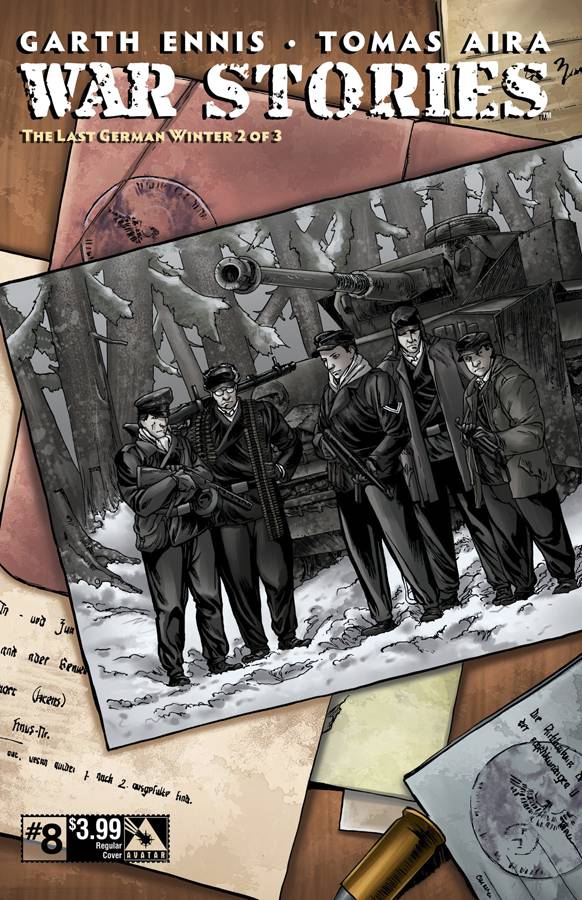
War Stories #8

War Stories #8

2. Chilling Adventures of Sabrina #2 (Archie Horror): Was a long time coming–so long that Roberto Aguirre-Sacasa offered up an apology to kick off the letter page!–but this second issue of Sabrina, which introduces with verve the vengeful and irredeemably evil Madam Satan, was well worth the wait.  The aforementioned writer–who not only sets a scene, he sets it on fire with his precise imagery–and artist Robert Hack, whose retro style is equal parts pillowy soft and boldly bloody, own the tone of this witches’ brew, which is bubbling over with literary allusions.  It’s campy; it’s creepy; it’s killer, kids! (SC)
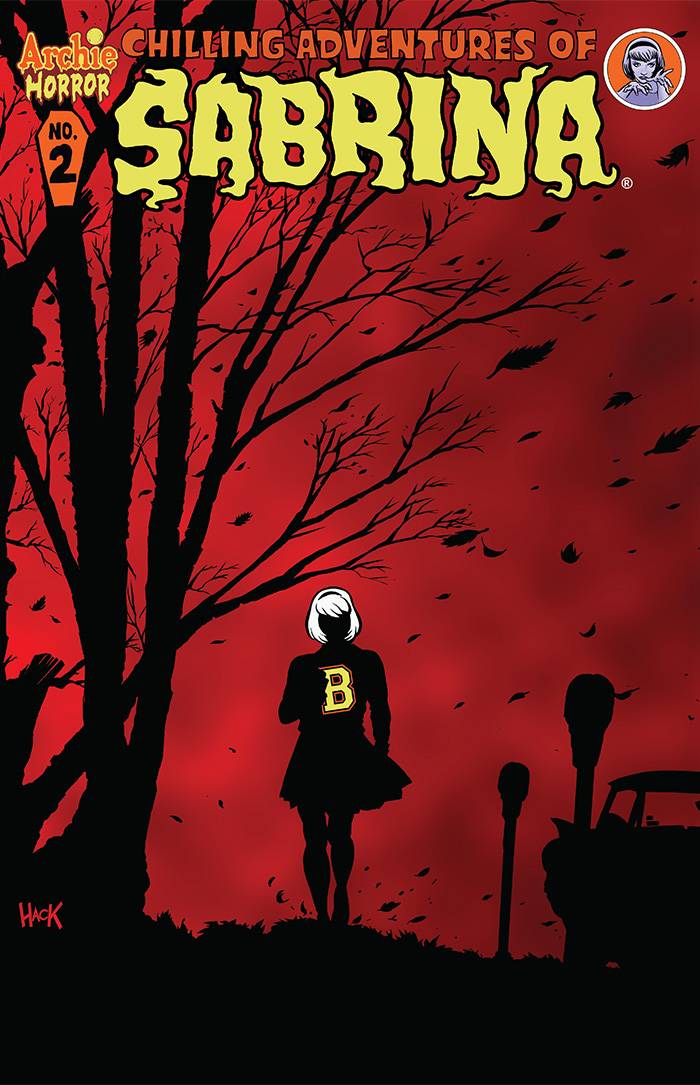
 

Sabrina #2

Sabrina #2

1. Silver Surfer #11 (Marvel): Dan Slott and Mike Allred follow up the powerhouse of issue 10 with a comic that is as formalistically daring as it is emotionally satisfying. Surfer and Co. are trapped in a time loop and the question becomes not only whether they’ll escape, but whether they’ll even realize it at all. A graphic illustration of Free Will versus Determinism, a metaphor for the repetitive cycle of our everyday experience, a tale of love, forgiveness and redemption; this issue delivers all three in a thrilling marriage of form and content. I maintain that issue 10 would have provided an excellent ending to this wonderful series. But I’m glad it didn’t. (DM)
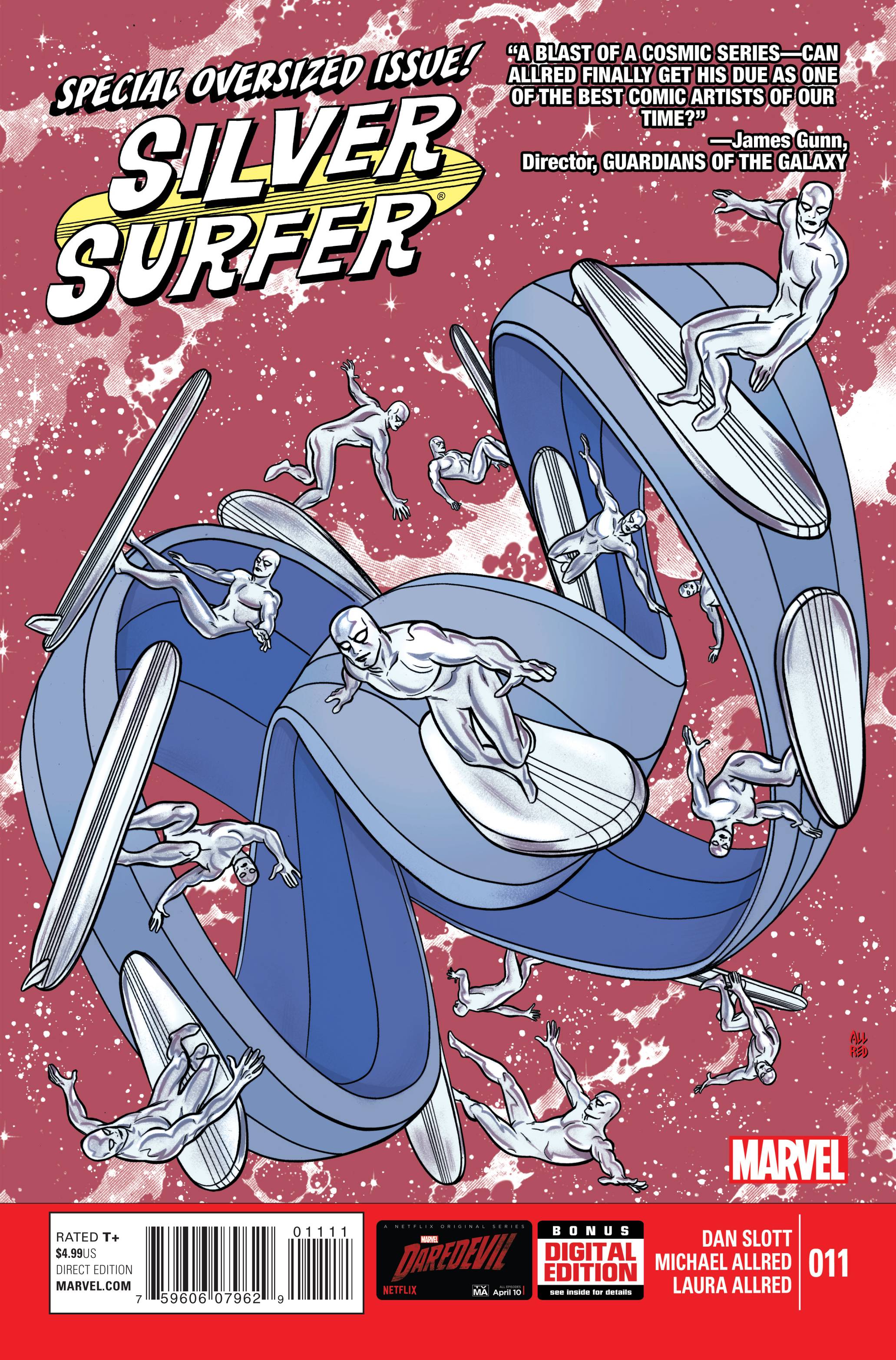
Silver Surfer #11

Silver Surfer #11


Top 5 Books of May

5. Zero #16 (Image): Collective unconscious, the inevitability of change, the destiny of DNA, the life sentence that is guilt–Zero‘s certainly much more than its title insists.  It’s a proving ground, of sorts; it’s Ales Kot’s firing range of ideas: it’s rhyme-free reason; it’s a game of William Tell: Kot himself is the tortured William S. Burroughs, and we’re the trusting Joan Burroughs, with an apple of expectations balanced precariously on our head.  Too.  Tempting.  BANG!  Somehow this experimental spy story became an experiment in layers deep meta-fiction; and, despite the jarring shift, the result is nothing short of spore-born brilliance.  Wherever this crazy thing ends up, rest assured, Ales Kot will not fail us–but he’ll sure as hell phallus, as evidenced by Tom Muller and Stathis Tsemberlidis’s cocky cover, which, in turn, is further proof of an air of youthful arrogance in Kot’s work, especially here in Zero.  I’m more than happy to breathe it in for as long as it lasts.  (SC)

Zero #16

Zero #16

4. Afterlife with Archie #8 (Archie Horror): Roberto Aguirre-Sacasa and Francesco Francavilla continue to add to their modern horror mash-up by seamlessly incorporating elements that you didn’t even know you wanted; everything from The Shining to The Crucible, even A Christmas Carol. The result is rich tapestry that continues to add texture to the story, a mix that acknowledges the high-points in the history of horror through the unlikeliest of lenses. (DM)

Afterlife With Archie #8

Afterlife With Archie #8

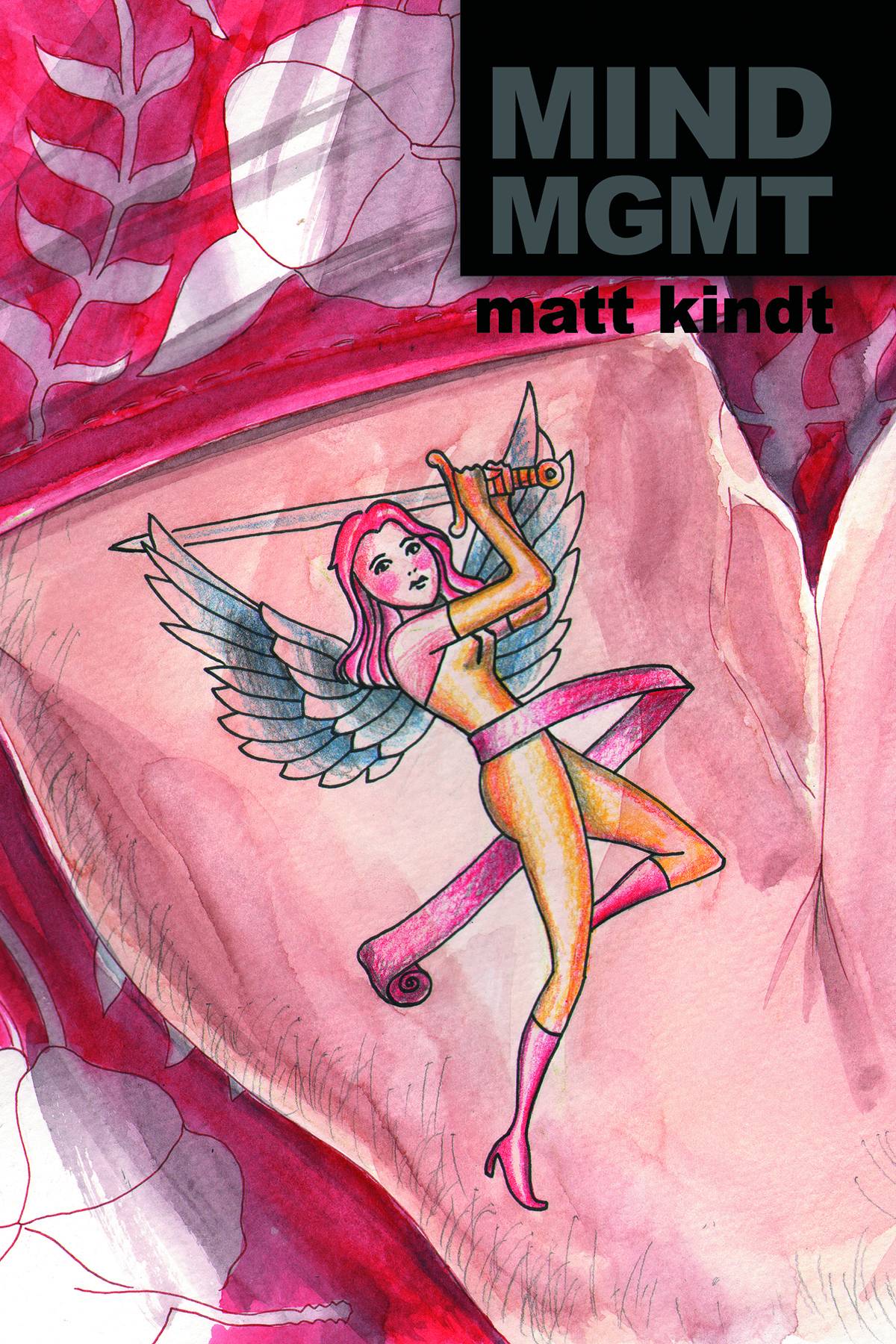
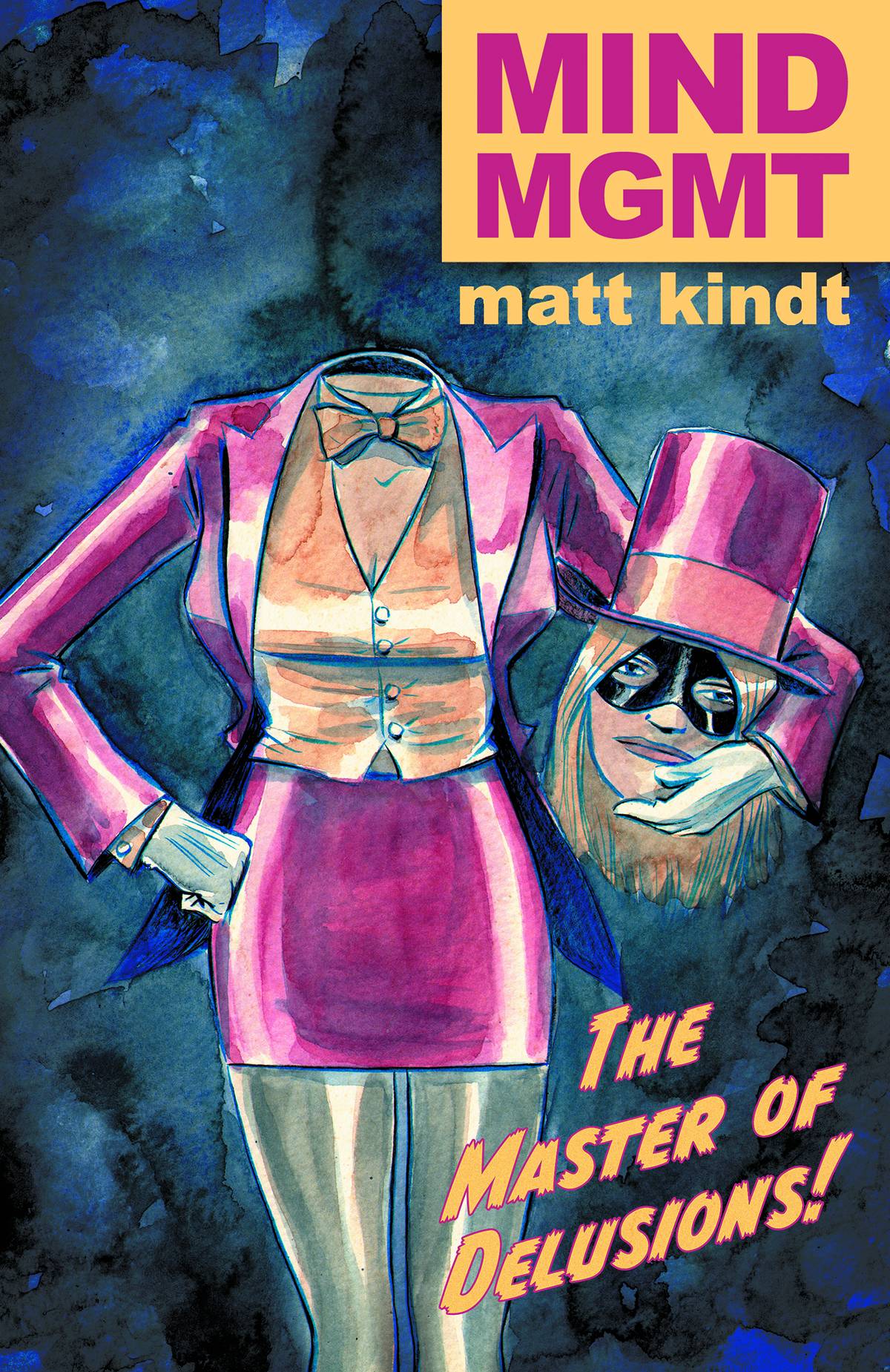
3. Mind MGMT #33 (Image): The ultimate showdown’s coming, but there’s no sign of a slowdown–even as Matt Kindt slows things down to foster a touching family reunion, one that frames Team Meru’s Soldiers of Fortune Cookies and their receiving and executing–with stunning efficiency–their munching–er, marching orders.  The decidedly deliberate issue ends with a Dalicious splash that promises a wild time.  With the end of the series so near, I’m excited, I’m anxious; but, no, Pipe Kid, I’m not ready–and I’m as not ready as I’m ever going to be.  (SC)
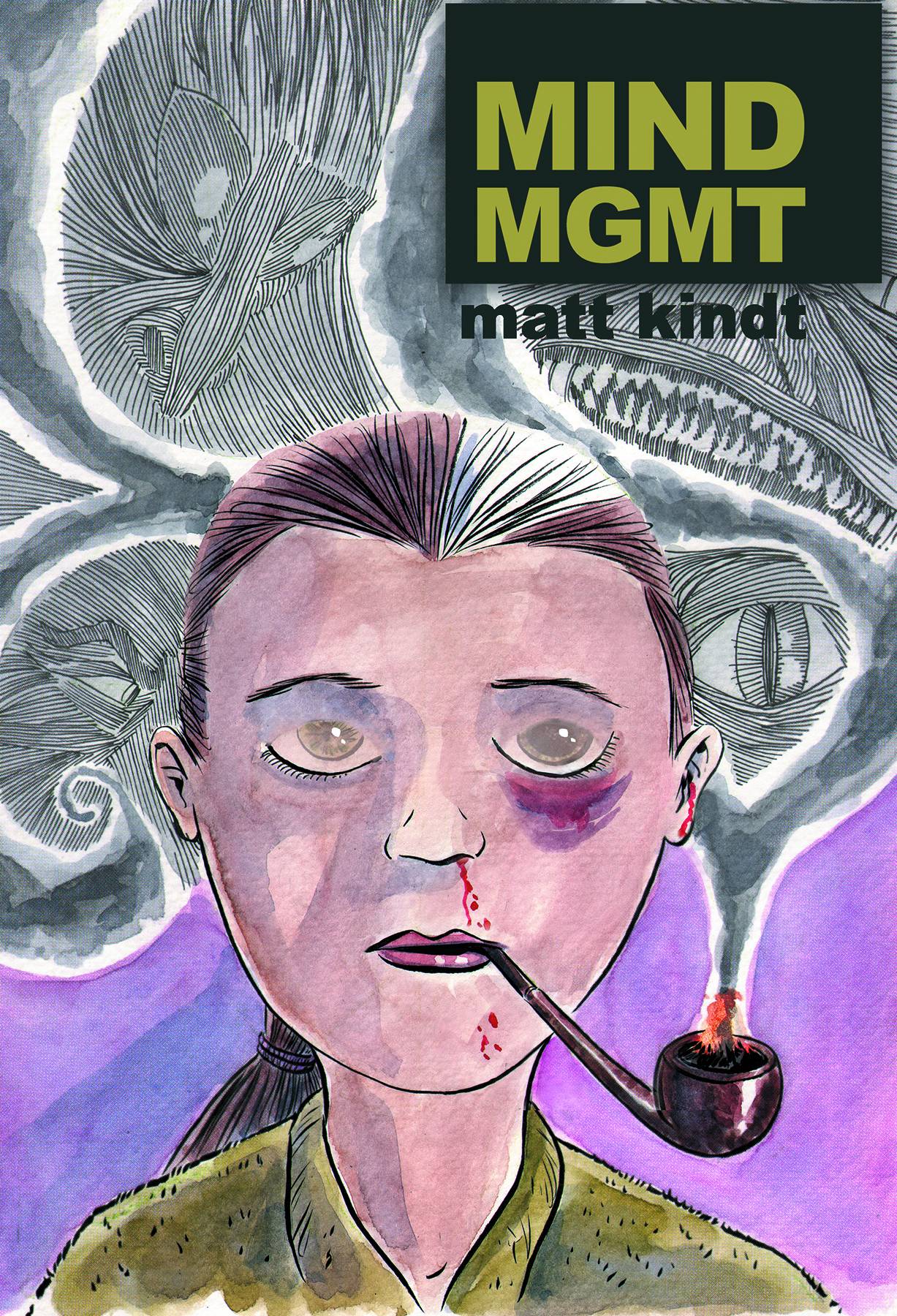
Mind MGMT #33

Mind MGMT #33

2. Providence #1 (Avatar): Avatar’s publicity department has been describing this new series by Alan Moore as “The Watchmen of horror”. But the story from Moore’s oeuvre that it more readily calls to mind is From Hell (an even more impressive achievement to this reviewer’s mind). FH brilliantly examined the underlying brutality of patriarchal hegemony through the lens of Victorian England, using the Whitechapel murders as a vehicle. Providence promises to delve into the repressed corners of American society of the past century using the fiction of H.P. Lovecraft (a passion of Moore’s for some time now) as a framework. Moore explores the Jungian implications of Lovecraft’s mythos (underlying realities masked by our limited human perception) by using them as a metaphor for aspects of the American experience that needed to remain hidden, given the times (in this case, “the love that dare not speak its name”). Yes, there is much to unpack here. Yet for all that,  this first issue is a master’s class in restrained, subtle storytelling. The deliberate pacing, the seemingly minor details that gain importance as the issue progresses, the symmetry of the opening and closing segments; Moore’s assured control of the material, when he’s on, has never been matched by another comic book writer. To say nothing of the insane amount of research that is woven throughout. Which brings us to the art. Here another comparison to FH is apt: Eddie Campbell’s nonpareil art in that tome had a scratchy looseness, a sketchy immediacy that pulled the modern reader with its irrepressible energy, despite the period setting. Here, Jacen Burrows takes the opposite approach: meticulously rendered, exhaustive research evident in every carefully placed line. The effect is polished, subdued and certainly visually impressive, but with a formal stiffness akin to watching an episode of Downton Abbey. And yet this is reflective of Moore’s otherworldly precision. Ultimately, the hyperbole of comparing this new series to the well-known Watchmen is needless. This first issue promises an epic Alan Moore tale to match or exceed, in scope, ambition and execution, anything he’s previously produced. That alone should suffice. (DM)
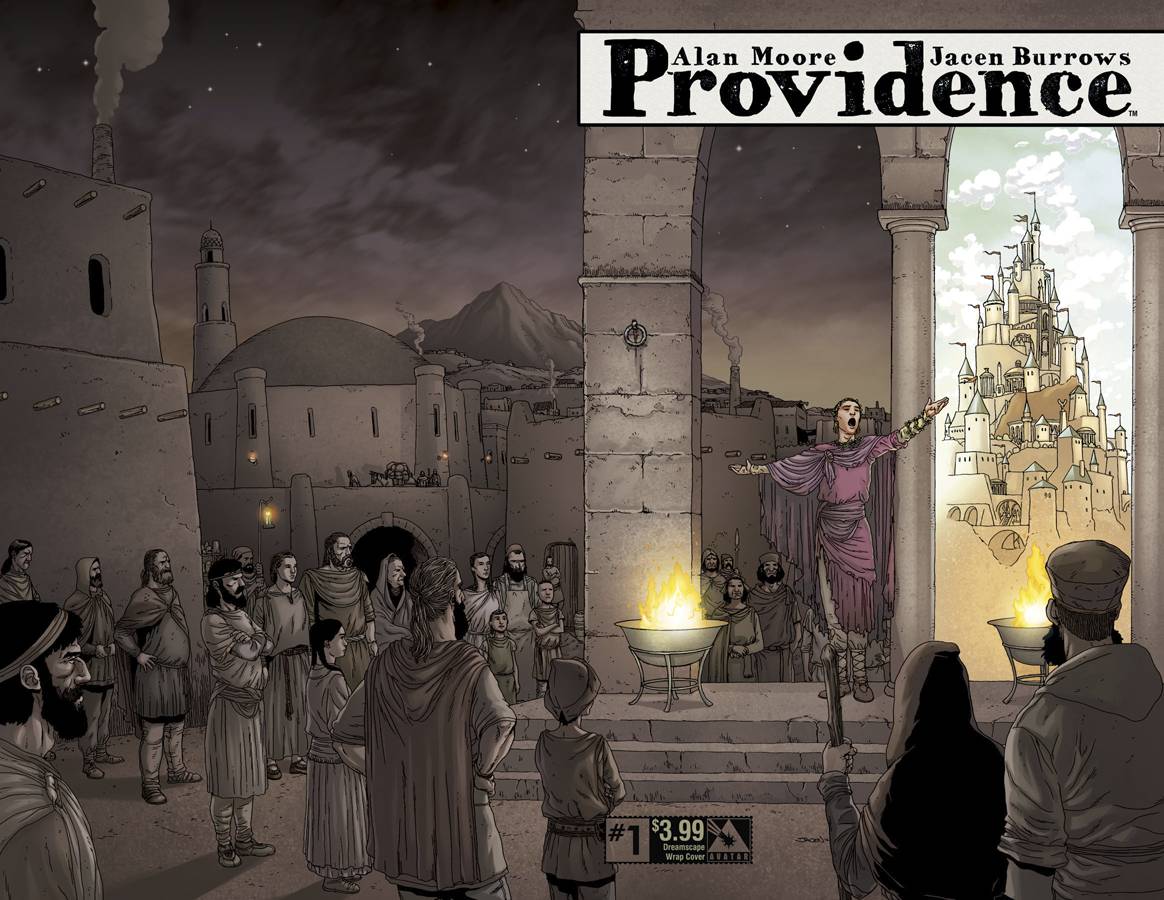
Providence #1

Providence #1

1. Material #1 (Image): With Material, Ales Kot’s has found his forum, the perfect space for him to keep pace with the injustices of the world.  No matter how desperate or disparate, they have a home here; and God knows he’ll never want for material as long as he never casts off the lenses–the perspective-altering critical approaches to analyzing, well, everything so relied upon by campus comrades, the arrogant academicians and their lecture-hall spawn–that help him to see the Ugly Spirit* in, well, everything.  Despite the pessimism that pervades the four narratives, which may or may not Crash into each other at some point, what Kot’s come up with–in tandem with the ironically-named Will Tempest–is beautiful.  He asserts that there’s hope in moments, in connections, and what better way to convey that point than with a comic book!  Holding its pages open is like holding hands with Kot himself as he leads the march toward enlightenment–toward Utopia.  And even if that march is born of naÏveté, it’s fueled by honesty, by brashness; and in the context of this comic, it’s something I want to follow.

*See Zero to see Burroughs to see that Kot’s got the Spirit–yes he does! (SC)

 

Material #1

Material #1

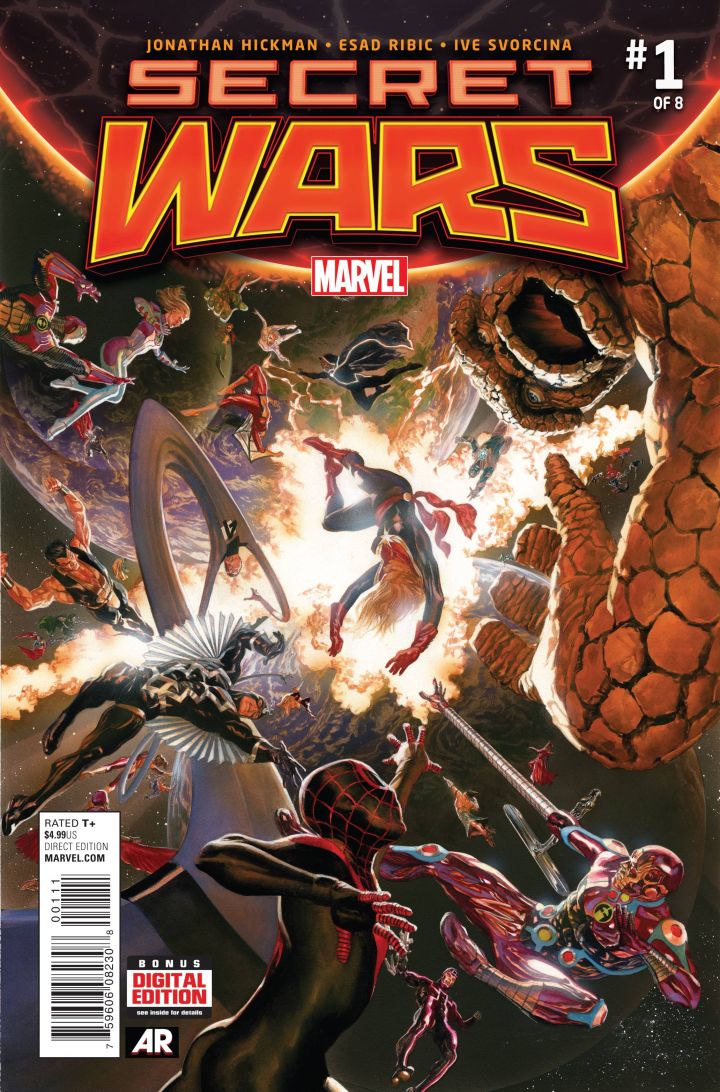
Biggest Dis(appointment)(April/May): Convergence/Secret Wars (DC/Marvel) – A bunch of heroes and villains from various alternate universes battle it out on a patchwork planet in a Secret Crisis of Ultimate Infinite blahblahblah. Yes, I’ve just described the plot of both summer blockbuster crossovers from the Big Two. In the cynical cycle of endless Events, this has to be a new low. I don’t know who’s guiltier: the company that seemingly pilfered the other’s concept, or the company that came up with such an awful idea to begin with. (DM)
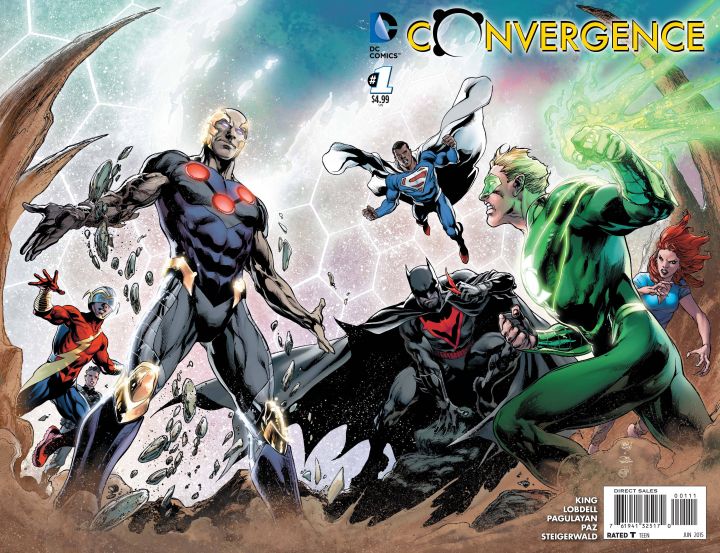
Convergeance #1
Convergeance #1

Secret Wars #1

Secret Wars #1

Turning pages,

Derek & Scott

Share this:

  • Click to share on X (Opens in new window) X
  • Click to share on Facebook (Opens in new window) Facebook
  • Click to share on Tumblr (Opens in new window) Tumblr
  • Click to share on Reddit (Opens in new window) Reddit
  • Click to email a link to a friend (Opens in new window) Email
  • Click to share on Pinterest (Opens in new window) Pinterest
Like Loading...

Top 5 Books of February

11 Saturday Apr 2015

Posted by ScottNerd in Top 5 Books of the Month

≈ 2 Comments

Tags

Ant-Man, Brian Wood, Dan Slott, Dark Horse, David Lapham, Dean Motter, Edgar Allan Poe, Greg Smallwood, Howard Chaykin, Image, Jordan Boyd, Marvel, Matt Fraction, Mike Allred, Mister X: Eviction, Mister X: Razed, Moon Knight, Nick Spencer, O. Henry, Radiant City, Ramon Rosanas, Satellite Sam, Silver Surfer, Spanish Scott, Stray Bullets: Sunshine and Roses

For all of you keeping score, here it is: our Top 5 Books of February!

5. Satellite Sam #11 (Image): Waking life–and death!  Matt Fraction and Howard Chaykin are as masterful as ever as alarm bells go off, eyes open, and metaphors deliver their lines with ironic conviction.  This thickly-themed and perfectly-timed issue sees the largely unlikable ensemble cast dissembled and reassembled, self-serving agendas selflessly serving as the common thread that binds the lot together on this very, very good morning. (SC)

Satellite Sam #11

Satellite Sam #11

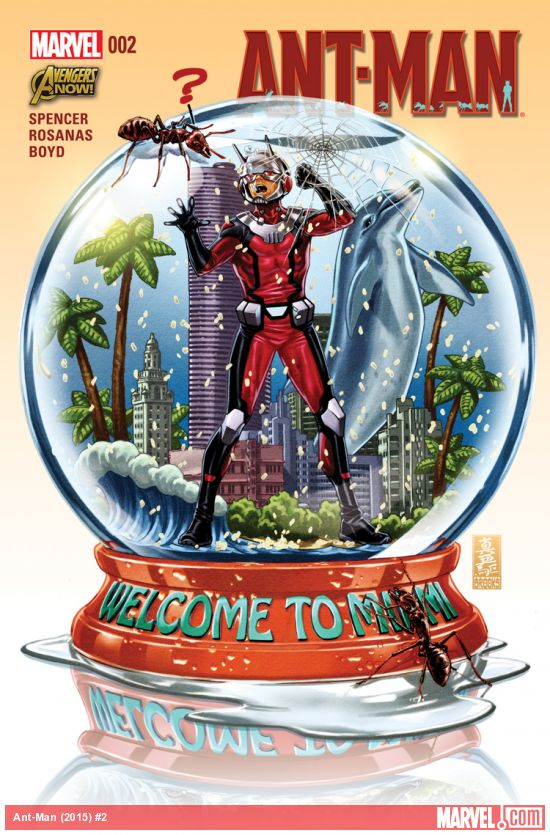
4. Ant-Man #2 (Marvel): How did this book, easily dismissed as a cynical corporate media tie-in, make it into our bag, much less our hallowed Top 5? Well, one could mention the appealing heart in a story about a down-on-his-luck divorced father who’s willing to do anything to be near his daughter. Or one could point to the clean, appealing art by Ramon Rosanas and Jordan Boyd. All true, but what separates this book from the congested, middle of the road superhero pack is that it is so. Damn. Funny. We mean it folks: not LOL funny, but quite literally Laugh-Out-Loud funny. People on the train giving me strange looks as I’m guffawing at a freaking comic book funny. Any comic, hell anything, that can engender such a visceral reaction is aces in my book. So let’s just come out and say it: Nick Spencer is the funniest writer working in funny books today. (DM)

Ant-Man #2

Ant-Man #2

3. Stray Bullets: Sunshine and Roses #1 (Image): With a sly “Hi,” David Lapham welcomes us back to the next round of Bullets: a lone gunman–a coldly fetching Kretchmeyer–is hunted down by series vet, the brooding Spanish Scott, a calculating killer himself, who is, let’s be honest, more siesta than fiesta.  Scott’s lethargic inevitability–you know, like death itself–is integral to the development of the issue-spanning tension, especially as it mirrors the dangerously direct and determined Kretchmeyer’s own semisomnambulistic nature.  Lapham brings the two together, guns drawn, in an unforgettable–and emphatically phallic–panel that finds Beth, one seriously distressed damsel, an extremely interested party who quite literally doesn’t want to lose her head.  Yeah, it’s vintage Stray Bullets, folks: it’s fun; it’s violent, and it’s tight–it’s “another [effing] hole-in-one.” (SC)

Stray Bullets: Sunshine and Roses #1

Stray Bullets: Sunshine and Roses #1

2. Silver Surfer #9 (Marvel): The little engine that could.  The ant with high apple-pie-in-the-sky hopes.  Buster Douglas.  Life.   Yeah, we’ve got a thing for the underdog; it’s hardwired; heck, it’s about survival–our own survival that we fight for vicariously through whatever odds-against scenario we’re privy to in the moment.  That’s what makes this issue of Silver Surfer so affective–so blisteringly painful.  Dan Slott and Mike Allred do more than just continue the brilliant course set in #8, our #2 book of January; they ride it to greater emotional heights, selling the Surfer’s inspirational effort of “surfing the moon,” only to–in the blast of an eye–reveal the tack’s ultimate value: none.  Yeah, seems Galactus is no Goliath, and the Surfer–stripped of the power cosmic–is the Surfer no more.  But his defeat doesn’t leave us feeling defeated.  Oh, no it doesn’t.  Despite the bleak ending–maybe because of the bleak ending–we’re built up even more; we’re even more defiant, more hopeful.  See: hope is our heroin, and thanks to the low note struck at the end, we are super high and primed for the return of our hero in a month’s time–primed for victory–because the little guy always wins–right? (SC)

Silver Surfer #9

Silver Surfer #9

1. Mister X: Razed #1 (Dark Horse): We honored Dean Motter’s previous installment Mister X: Eviction with the 2014 Innie Award for Best Limited Series. So expectations were high for his new collection. Well, we’re happy to report those expectations have been met and surpassed. In a book that already wears such stylish influences as Will Eisner and Fritz Lang, this issue boasts a gorgeous ensemble of O. Henry with just a dash of Edgar Allan Poe (in the undergarments) to weave a seamless, pulpy dream. You won’t find a better looking (or reading) book this season!

Seriously, Motter has spent years building up the fantastic, darkly surreal playground that is Radiant City. Now we get the supreme pleasure of just sitting back and watching the master play. (DM)

Mister X: Razed #1

Mister X: Razed #1

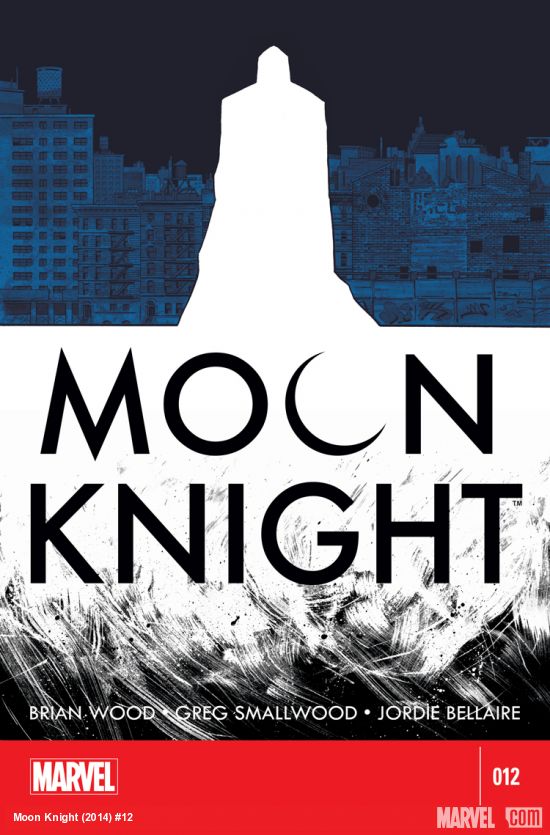
Biggest Dis(appointment): Moon Knight #12 (Marvel) – Brian Wood takes a fascinating, morally fraught premise – Khnoshu abandons Marc Spector and bestows the mantle of Moon Knight on someone who’s willing to murder a head of state for his past crimes against humanity – and ends it with a cop out. Spoiler alert! Turns out the new Moon Knight was just after his money! A weak ending that invalidates a riveting, timely premise. A true let-down. (DM)

Moon Knight #12

Moon Knight #12

Turning pages,

Scott & Derek

Share this:

  • Click to share on X (Opens in new window) X
  • Click to share on Facebook (Opens in new window) Facebook
  • Click to share on Tumblr (Opens in new window) Tumblr
  • Click to share on Reddit (Opens in new window) Reddit
  • Click to email a link to a friend (Opens in new window) Email
  • Click to share on Pinterest (Opens in new window) Pinterest
Like Loading...

The Top 5 Books of January

31 Tuesday Mar 2015

Posted by ScottNerd in 5 Comics You Should Be Reading, Top 5 Books of the Month

≈ 2 Comments

Tags

BOOM!, Dan Abnett, Dan Slott, Dark Horse, DC, Grant Morrison, I.N.J. Culbard, Jamie S. Rich, Joelle Jones, Lady Killer, Marvel, Matt Kindt, Mike Allred, Mind MGMT, Silver Surfer, The Multiversity, Wild's End

Great Scott! Can it be? Has a third of the year gone by without us posting one of our ballyhooed Top 5 lists? I&Ndefensible we say! So, for you completists, here it is: our Top 5 books of January. Coming soon: our Top 5 of Feb! And March! (We swear!)

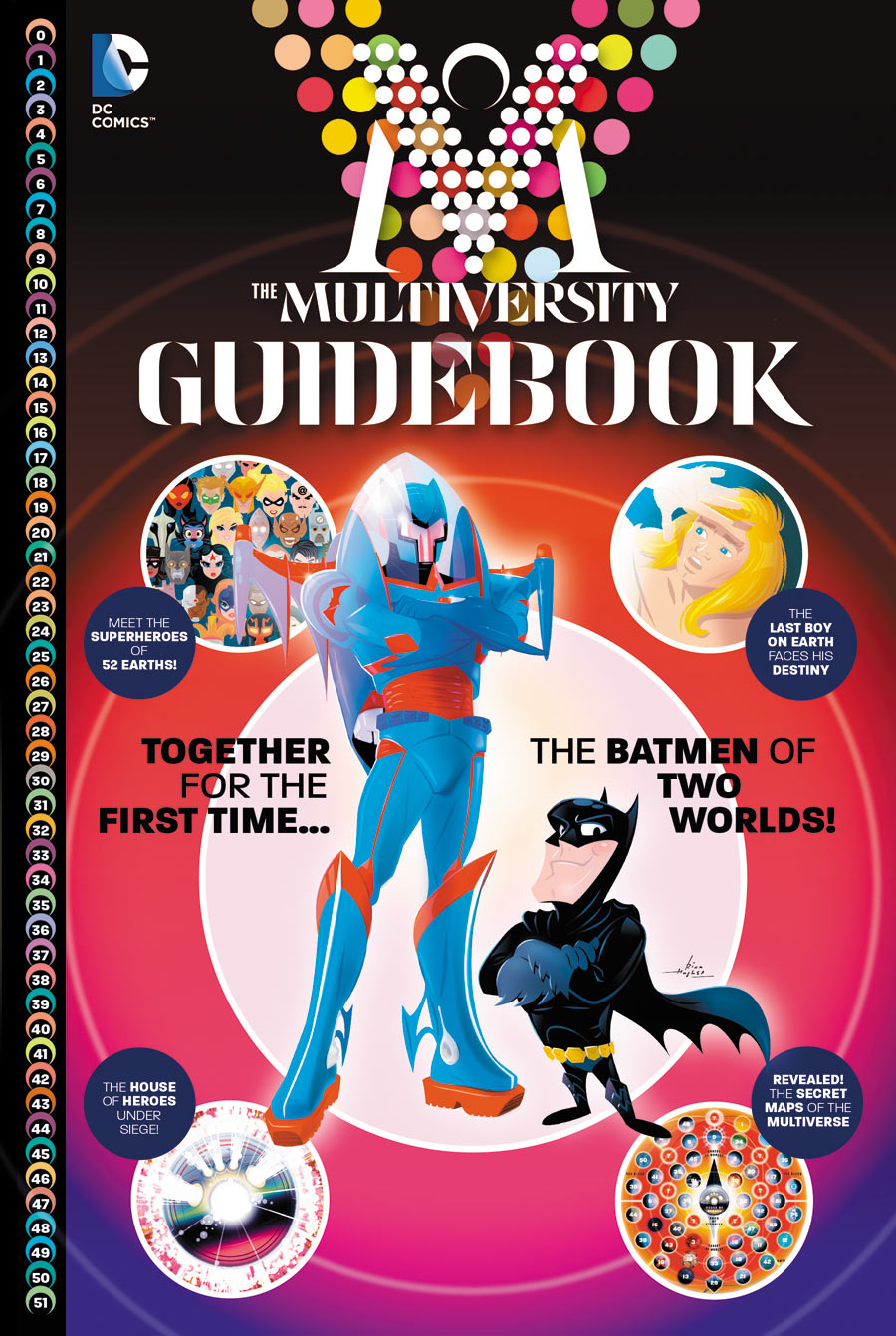
5. The Multiversity: Guidebook #1 (DC): Grant Morrison takes the unwieldy mess that is the DC multiverse and turns it into a strength; a rich tapestry, (illustrated by an impressive bevy of artists) at once alien and familiar, ripe with possibility. He not only accomplishes the herculean feat of making sense of it all, he tells one barn burner of a story while doing it. His expansive view seemingly embraces everything, the odder and more trivial the better. I don’t what DC has planned after its next clearing of the decks, but it could do a lot worse than using this as its Guidebook. (DM)

The Multiversity: Guidebook #1

The Multiversity: Guidebook #1

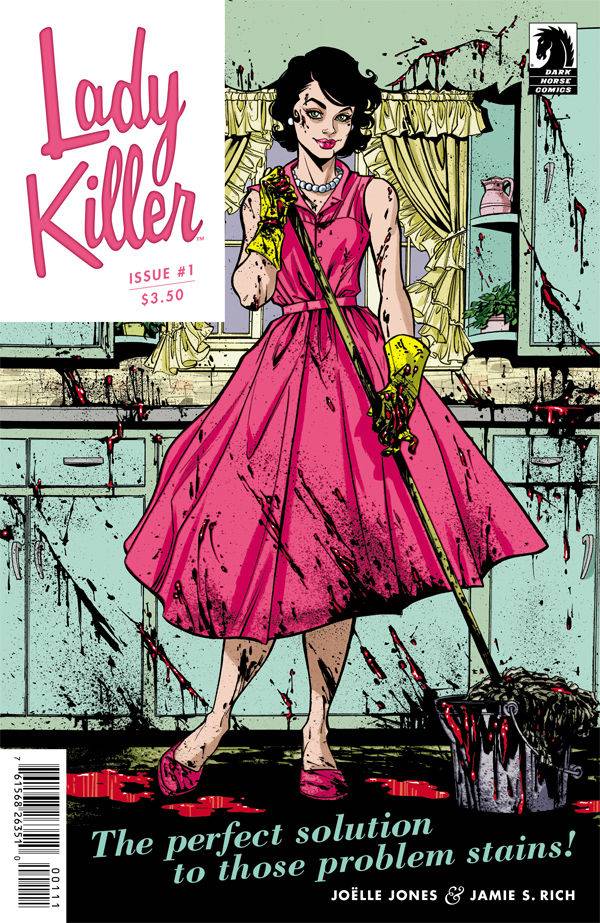
4. Lady Killer #1 (Dark Horse): “Top 5 Books of January calling!”  Wow!  What a killer debut from Joëlle Jones and Jamie S. Rich!  As evidenced by the cover–a kitchen done up in classic post-war abattoir–they’re mopping the floor with genre tropes and gender notes, the highest being Josie, of course, their Bride of Fifties-stein, who is June Cleaver living up to her name, that’s for sure!  She’s one tough mother–one who’s not afraid to use her assets to get the job done.  It’s the nature of the assassin–and of clever creators–to play a game of cat and mouse with her prey, isn’t it?  Consider the final page, fellow readers: we are most assuredly the mice.  (SC)

Lady Killer #1

Lady Killer #1

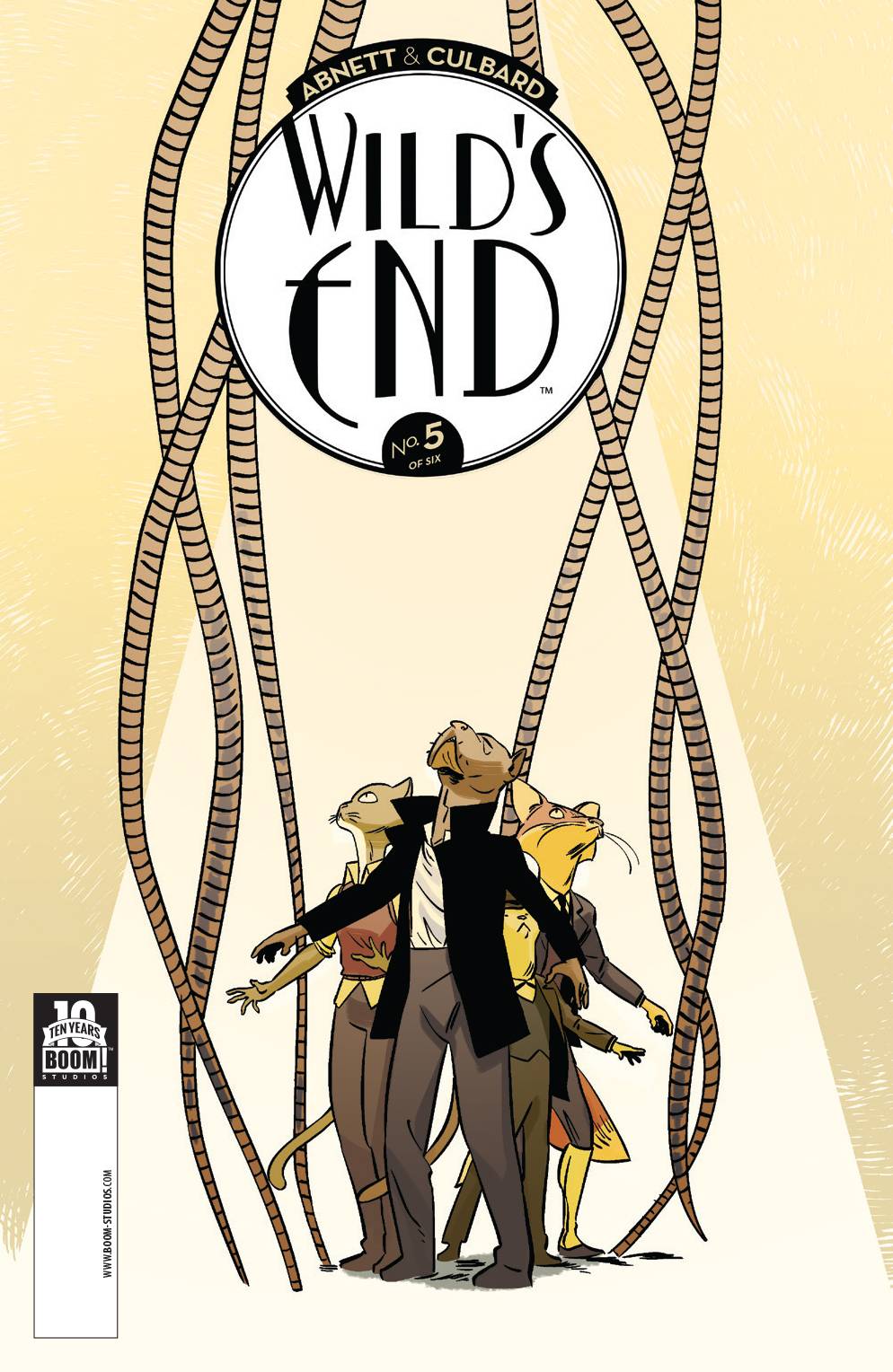
3. Wild’s End #5 (BOOM!): Abnett and Culbard’s Wild’s End–our #9 book of 2014–has been about as perfect as a book can be after five issues.  In this installment, the stakes are wildly high, what with the killer lamppost lighting around and lighting up our motley zoo crew, who, all along, keep–relatively–calm and carry on as well as they can with a six-legged, extraterrestrial death ray on their tails.  Love the ribbon tied to the end of the issue: revealing the irrepressible Ms. Peardew’s written account of the big adventure and her pretty assertive assessment of Lewis Cornfelt.  With its tentacles 100% wrapped around me, if Wild’s End were the only fiction left in the world, I’d be quite satisfied.  (SC)

Wild's End #5

Wild’s End #5

2. Silver Surfer #8 (Marvel): Fresh off their claiming the #4 spot on our Top Ten Books of 2014, Dan Slott and Mike Allred offer up a grave planet of survivors–each the last of his or her or its species–and a tidal wave of guilt upon which the former herald of Galactus rides, leaving a wake of cosmic energy that leads the Devourer of Worlds to perhaps his most satisfying meal yet.  It’s a brilliant premise that brings together a universe of victims and pulls apart our otherwise perfect pair, the Surfer and Dawn Greenwood, as emotionally affective individually as when side by side–and, in a very fun moment, with Dawn at the wheel for the first time, “Ha ha ha!”–they ride the temperamental Toomie.  What’s that?  You’re right: When it comes to superhero books, there is none higher, and #8 is further proof.  (SC)

Silver Surfer #8

Silver Surfer #8

1. Mind MGMT #30 (Dark Horse): In one fell swoop Matt Kindt takes everything you knew about this title and turns it on its head. He gathers up threads from earlier issues and ties them together with a revelation that changes the perspective of the entire series. Not content with that, he tells the modern-day story as though it were a pulp sci-fi novel of the 1960s. The meta conceit however is merely a filter for the viewpoint of the narrator, one that makes total sense given her past. Furthermore this narrator, through the use of the (always challenging to pull off) second person, becomes “you.” Confused yet? Perhaps the biggest miracle in this is that Kindt doesn’t lose you, even for a second. A masterpiece. (DM)

Mind MGMT #30

Mind MGMT #30

The Biggest Dis(appointment): Loki: Agent of Asgard #10 (Marvel) – What could have been just another movie franchise tie-in, turned out, in the early going, to be remarkably entertaining due to Al Ewing’s witty, exuberant writing. Alas, just as Loki himself seems unable to escape his destiny, this book was unable to steer clear of getting embroiled in a “Big Event.”  Since then the jocularity has been drained of this once surprising title, its imaginative gold spun into cumbersome lead. (DM)

Loki: Agent of Asgard #10

Loki: Agent of Asgard #10

Turning pages,

Derek & Scott

Share this:

  • Click to share on X (Opens in new window) X
  • Click to share on Facebook (Opens in new window) Facebook
  • Click to share on Tumblr (Opens in new window) Tumblr
  • Click to share on Reddit (Opens in new window) Reddit
  • Click to email a link to a friend (Opens in new window) Email
  • Click to share on Pinterest (Opens in new window) Pinterest
Like Loading...

The Top 5 Books of July

31 Sunday Aug 2014

Posted by ScottNerd in Top 5 Books of the Month, Uncategorized

≈ 4 Comments

Tags

9/11, Ales Kot, Archie Comics, Bodies, BOOM!, Bosnian War, Cap'n Dinosaur, Chris Miskiewicz, Constantine, David Mazzucchelli, David Quantick, DC, Dean Ormston, Glenn Whitmore, Hellblazer, Image, Jim Amash, Jordie Bellaire, Joshua Dysart, Kek-W, Lee Loughridge, Life With Archie, Mandrake the Magician, Meghan Hetrick, Michael Kupperman, Mike Allred, Palle Schmidt, Pat Kennedy, Paul Kupperberg, Phil Winslade, Shaky Kane, Si Spencer, Silver Surfer, That's Because You're a Robot, Thomas Alsop, Tim Kennedy, Tonci Zonjic, Tula Lotay, Unknown Soldier, Vertigo, zero

This was one stacked month of comics. Consider: our #1 book from last month (Silver Surfer), despite another strong outing, didn’t crack the Top 5 this time out. Also, only one of the titles below has been featured on our hallowed list before (having been, at different times, praised and damned – see below). This speaks to the veritable title wave of new, quality work being produced in this, the New Golden Age of Comics.

#5. Bodies #1 (DC/Vertigo): Brit scribe Si Spencer–whose ambition is clearly as vaulting as a well-known Shakespearean Thane-in-the-neck–has brazenly pieced together a primo pastiche of disparate eras and artists–including a Murderers’ Row of Meghan Hetrick, Dean Ormston, Tula Lotay, and Phil Winslade–and in doing so has Doyle-d up a Holmes-ian mystery multiplied by four.  Sure, the transitions from one time period to the next are as harsh as a head on collision, but it’s entirely understandable because so is the seemingly singular homicide that links one Longharvest Lane crime scene to the next.  Lee Loughridge’s colors, too, help to both draw a distinction and create a connection among the settings, the latter established by his use of a clichéd shade of red, which is hinted at by the blood splatter on Fiona Stephenson’s vintage–and ironically vivacious–cover.  Bodies #1 is a killer first issue that executes an experimental exposition that could’ve easily succumbed to redundancy, but instead rises effortlessly to the level of required reading. (SC)

Bodies #1

Bodies #1

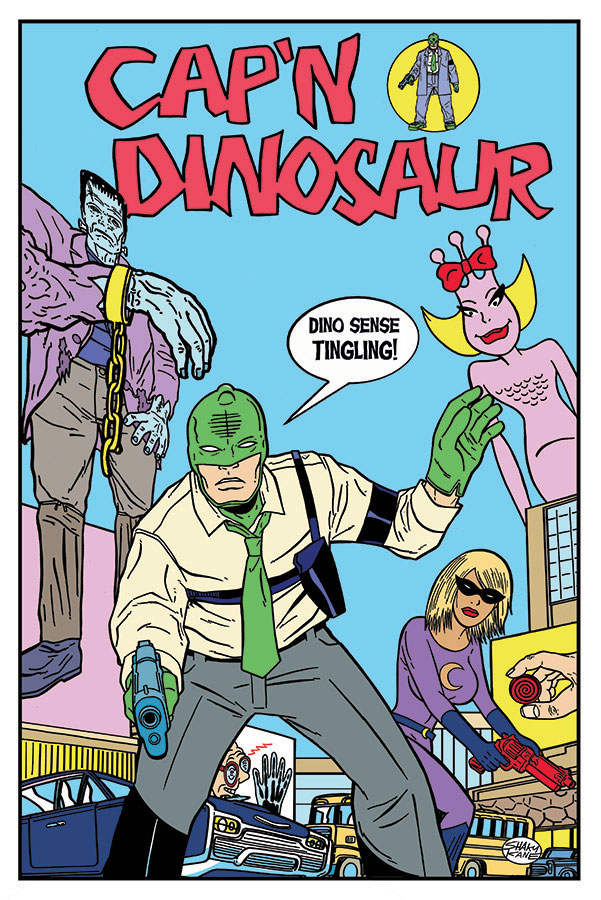
#4. Cap’n Dinosaur (one-shot) (Image): MORE! FUN! COMICS! Cap’n Dinosaur is just what any jaded comic book reader needs: sublime silliness distilled through a love of classic super hero tropes. A synopsis of the plot would be futile, and pointless besides (just take a gander at the cover!) Suffice it to say that writer Kek-W and artist Shaky Kane have cooked up a kooky confection of pure comic-y goodness. Kane’s absurdist Silver-Age aesthetic seems to bring out the best in his collaborators (as evidenced by another recent Image one-shot, That’s Because You’re a Robot, with writer David Quantick – also worth a look). In particular, Kane seems to inspire writers to release their buried id in order to keep up with his lunatic visions, in much the same way that Mike Allred does. In fact, with his timeless, retro style, anarchic non-sequiturs and surreal approach to pop culture, I’d say that if Mike Allred and (comic genius) Michael Kupperman had a baby, it would be Shaky Kane. So I guess what I’m saying is: Mike Allred and Michael Kupperman should have babies….Oh, just buy this book! (DM)

Cap'n Dinosaur

Cap’n Dinosaur

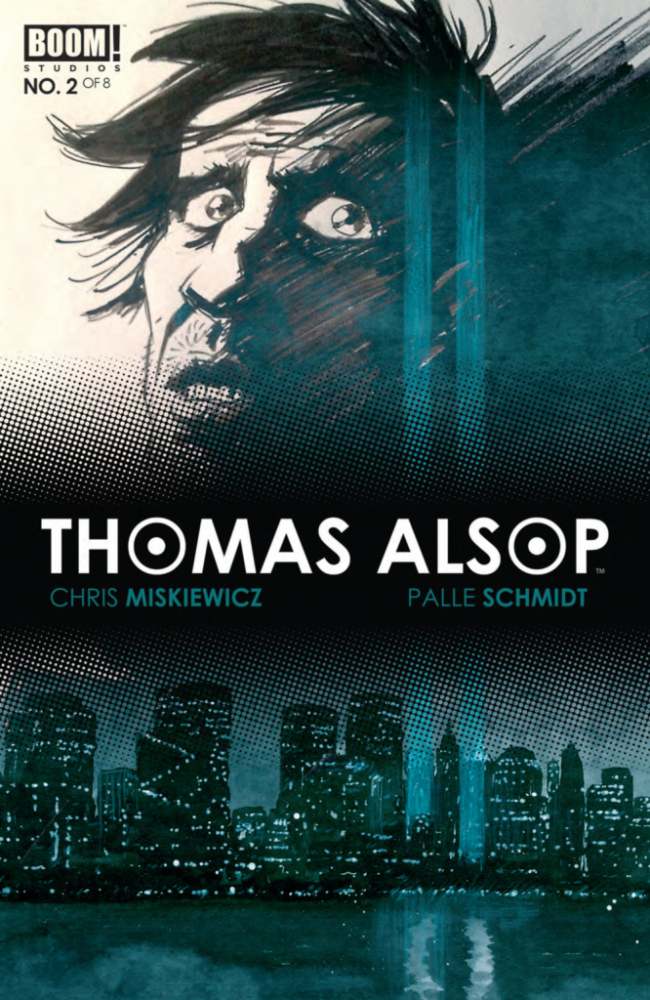
#3. Thomas Alsop #2 (BOOM!): The Mage. The Mystic. That mysterious Master of the Dark Arts, guarding the thin veil that protects our reality from the nefarious nether-worlds. Such figures have constituted their own archetype in comics since at least Mandrake the Magician. Curious then, that they have been underrepresented in the current comics scene since the demise of the venerated Hellblazer (What’s that you say? There’s a comic called Constantine featuring the same character? Sorry, never heard of it.) Poised to step into those considerable loafers is one Thomas Alsop. And by “step” I mean “stagger, covered in his own vomit.” Conjured from the aether by writer Chris Miskiewicz and artist Palle Schmidt, the titular magician (and voracious abuser of all sorts of substances), possesses a nice insouciance, equal parts debounair and depraved, that provides a necessary (gin and) tonic to the severity of the grave matters at hand (all puns and in-jokes are very much intended). Calling himself a “Supernatural Detective”, he shills his skills on his own reality television show (what else?). This however, is largely a cover (albeit one that pays handsomely) for his more serious work as protector of New York City. But that is not all the creators have up their sleeves; adding complexity is the story of Thomas’ ancestor Richard, the first magical protector of New York, and the dark secret that links past and present. And more still: this being very much a tale of New York, Miskiewicz has, very bravely I think, interwoven the 9/11 tragedy into his story. No small risk that, especially amidst all the fun and games. But he and Schmidt have, so far, accorded it the respectful tone it requires. All in all, this brew, seemingly light and frothy, is a lot more heady than at first it seems. Another round! (DM)

Thomas Alsop #2

Thomas Alsop #2

#2. Life With Archie #36 (Archie): Paul Kupperberg and Co.’s chocolate soda brought all the boys and girls–including yours truly–to the comic shop, and damn right it’s better than than all but one of July’s releases.  Yeah, this book–with the help of mainstream media coverage–absolutely blew up.  And I–like many other non-Archie readers–was caught in the blast radius; so even though I hadn’t touched as much as an Archie Comics Digest in 30-plus years, I just had to have it!  Mind you, this was no ordinary ordinance; this was a nostalgia bomb–one that made me feel welcome in Riverdale despite my being, for all intents and purposes, a complete stranger.

Writer Kupperberg and artists Pat and Tim Kennedy (pencils), Jim Amash (inks), and Glenn Whitmore (colors) put Archie on a path through his past, present, and future–in a lead up to the not-so-shock ending–and as I followed I was struck by just how good Archie is; in, fact, he’s not unlike Superman in his Boy Scout-ish goodness.  In the end, however, he is simply a man: he can’t fly or see through walls; he’s not bulletproof; and his sacrifice leaves us all lamenting the death of that perfect innocence embodied by Archie Andrews–which is made more affective not by the amount of blood about Archie’s body but by the final image of a chocolate soda with three straws having been knocked over during the fracas, its figurative innocence–established on a playful first page–left to melt and spill to the floor.

More that that, really, I was surprised by how good the journey through Archie’s life made me feel.  Gosh, it made me wish more than once that we could all be Archies and Jugheads and Bettys and Veronicas–that all joy could be shared and problems solved over a chocolate soda with three straws. What a world it’d be!  It was an experience I did not expect.  I had initially planned to thumb through the thing and stick it in a bag.  Who knew that “every bit of it [would] just [feel] like home”? (SC)

Life With Archie #36

Life With Archie #36

#1. Zero #9 (Image): Sonuvabitch. As you might have surmised, we here at I&N read a LOT of comics. With so much new product coming out each month, we not only have to decide which titles are worth our time, but also which titles are no longer cutting the mustard. Zero, Ales Kot’s minimalist gut-punch of a spy thriller, in particular has been quite the roller coaster ride, and not always in a good way. After naming it one of our Top Ten Books of 2013 for its innovation and unpredictability, it promptly took a nosedive, as unpredictability gave way to incoherence. In fact, it was only a couple of months ago that the previous issue (#8) was named our Biggest Dis(appointment) of the month. So yeah, this book was on the chopping block.

And then Kot does this. Set in the midst of the Bosnian War, Zero #9 tells a tale from Roman Zizek’s past. Zizek is Zero’s mentor, an American black ops agent, and a war profiteer. Unsurprisingly, he’s a double-dealer of the first order. Already knee-deep in subterfuge and complicit in some of the worst atrocity in recent history, he also has a Bosnian girlfriend who is pregnant, victimized by the war. And things go from there.

Artist Tonci Zonjic deserves special mention as his storytelling manages to be atmospheric, clean, and cartoony (in the classic sense), perfectly setting the tone with a style reminiscent of early Mazzuchelli. And Jordie Bellaire’s muted hues, perfectly navigating between harsh reality and precious memory, are, as always, flawless.

A cursory look at the news will tell you that the world is rife with new, terrible things happening every day. So much so, that the horrors of even the recent past quickly get buried. Rare is the comic that can successfully mine such tragic events for its own fictive purposes, while also shining a light on those so easily forgotten or ignored (Joshua Dysart’s Unknown Soldier comes to mind). Rarer still, one that can do so with such spare, awful beauty. With this issue, Kot and Co. have not only banished any thought of dropping this vital book; they’ve produced one of the most powerful, resonant stories of the year. (DM)

Zero #9

Zero #9

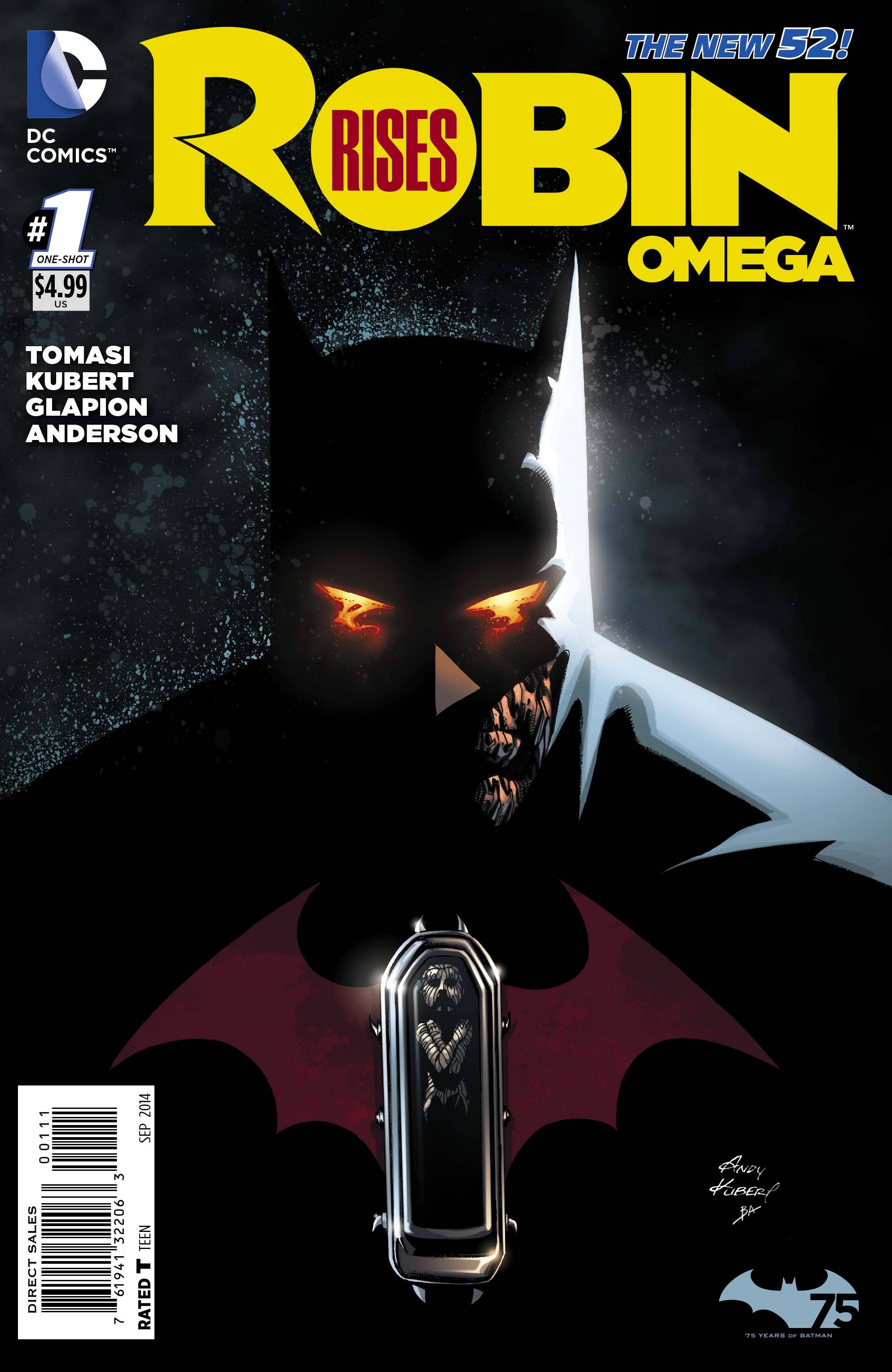
The Biggest Dis(appointment): Robin Rises: Omega #1 (DC): I’ve been pretty vocal in my support of Peter J. Tomasi’s Batman and Whoever, especially in light of its being overshadowed by the over-hyped and underwhelming Snyder books.  (I even told Mr. Tomasi as much when I met him at the 2013 NYCC.  He seemed mildly appreciative.)  Tomasi did a commendable job of following in Grant Morrison’s footsteps, when it seemed that others had no use for them–until now, that is.  Ah, and therein lies the disappointment.  This book, which starts off well enough with a Damien-Robin retrospective, descends into a chaotic disaster of day-old dialogue and stumbles–despite some solid work from Andy Kubert, Jonathan Glapion, and Brad Anderson–into a terminally anemic battle scene–an epic game of casket keep away–that only ends because it eventually reaches its $4.99 price-point page limit.  To make matters worse, it turns out that Batman’s going to have to go BOOM! if he wants to get Robin back; that’s right: he’s headed to DC’s dark side–and, boy, I’d punch Tomasi in his pursed Mother-Boxing Apokolips if I were to ever see him again for going so against the Wayne with his choice of settings for the next rung on the way toward Robin’s return.  (Heck, whom am I fooling?  I’d probably say, “Hey, Mr. Tomasi!  Love your work!  I can’t wait to see what you have in store for…Superman/Wonder Woman!”  And he’d probably be mildly appreciative.)  The New God-darned piece of shard is so distressingly disappointing that I’m seriously considering giving up entirely on Batman and Robin–no, seriously–which would leave me Bat-less for the first time since I jumped into The New 52.  Well, there’s always Moon Knight…(SC)

Robin Rises: Omega #1

Robin Rises: Omega #1

Turning pages,

Derek & Scott
Share this:

  • Click to share on X (Opens in new window) X
  • Click to share on Facebook (Opens in new window) Facebook
  • Click to share on Tumblr (Opens in new window) Tumblr
  • Click to share on Reddit (Opens in new window) Reddit
  • Click to email a link to a friend (Opens in new window) Email
  • Click to share on Pinterest (Opens in new window) Pinterest
Like Loading...

Top 5(ish) Books of June

02 Saturday Aug 2014

Posted by ScottNerd in 5 Comics You Should Be Reading, Top 5 Books of the Month

≈ 4 Comments

Tags

Andre Sirangelo, Archaia, Archer & Armstrong, Brian Wood, D'Israeli, Dan Slott, Danijel Zezelj, Dark Horse, Fred Van Lente, Gabriel Iumazark, Jordie Bellaire, Laura Allred, Marvel, Matt Kindt, Mike Allred, Mind MGMT, Ordinary, Pere Perez, Rob Williams, Silver Surfer, The Last Broadcast, The Massive, Titan, Valiant

Here’s a little secret: we, the mighty gate-keepers here at I&N, don’t always agree on who makes the cut on our monthly purview of comics excellence. But, through a complex process of behind-the-scenes negotiation, diplomacy, arm-twisting and, if need be, feats of manliness, we have always been able to whittle down the monthly title wave to our hallowed Top 5. That is, until now. And so, recklessly abandoning all sense of tradition and decorum, we present for the first time: our Top 6 Books of the Month.

#5 (tie). Mind MGMT #23 (Dark Horse): Matt Kindt–winner of the 2014 Innie for Best Artist–delivers a real punch to the gut with this well composed hit-single issue, which sees the Dusty-deadicated side notes harmonizing heroically with the cacophony of the nihilistic narrative–with the darkness Dusty so deeply despised and hoped to one day change with his music.  With the in memoriam to Dusty as the lead vocal of the book, Kindt further develops the memory motif by making the Eraser play “memory games” with an incredulous Meru, using blacked out panels to indicate the missing moments; and by putting petal to the metal in a series of flowering flashbacks featuring Bill and Meru that fan out to form a stunning centerpiece for this death-marred installment and ultimately fall from the stem, foreshadowing poor Bill’s demise and Meru’s heartbreak.  In the end, Kindt cleverly ties the margin matter to the story proper by having Meru’s falling tears look just like the music rising from the headphones that are taken from Dusty’s dead body.  That alone would’ve been enough to tattoo this issue on our Top 5!   But as a final note–or a last grain of hourglass sand–Kindt calls upon the aforementioned memory motif one last time and offers up an intimate Mad Magazine fold-in that’ll rattle around in your skull well after reading. (SC)

Mind MGMT #23

#5 (tie). The Massive #24 (Dark Horse): As Brian Wood’s near-future socioeconomic/environmental dystopia comes to a head, the enigmatic Mary stands revealed as the lynchpin. Some kind of goddess-figure, Mary’s been witness to centuries of manmade degradation of every kind: against nature, against each other, against our own history (part of the brilliance of Wood’s argument is that, throughout the series, he’s presented these as one and the same). Well now she sits in judgement, speaking in biblical terms that portend even greater disaster (or, perhaps, wrath). Even more damning, she stares out directly at the reader as she does so (indelibly rendered, as is the entire arc, by Danijel Zezelj and Jordie Bellaire). If this seems a bit heavy-handed, this particular sequence, all of two pages, stands in stark relief to twenty-three previous issues of breathtaking, world-spanning incident remarkable for the sheer depth of knowledge displayed, as well as their understated, plot-driven delivery. It also thrusts us headlong into the mysteries to be revealed in the final arc, and adds one more: could Mary have played a role in The Crash, the event that laid the world low to begin with? And, having found mankind wanting, is the worst yet to come? (DM)

The Massive #24

The Massive #24

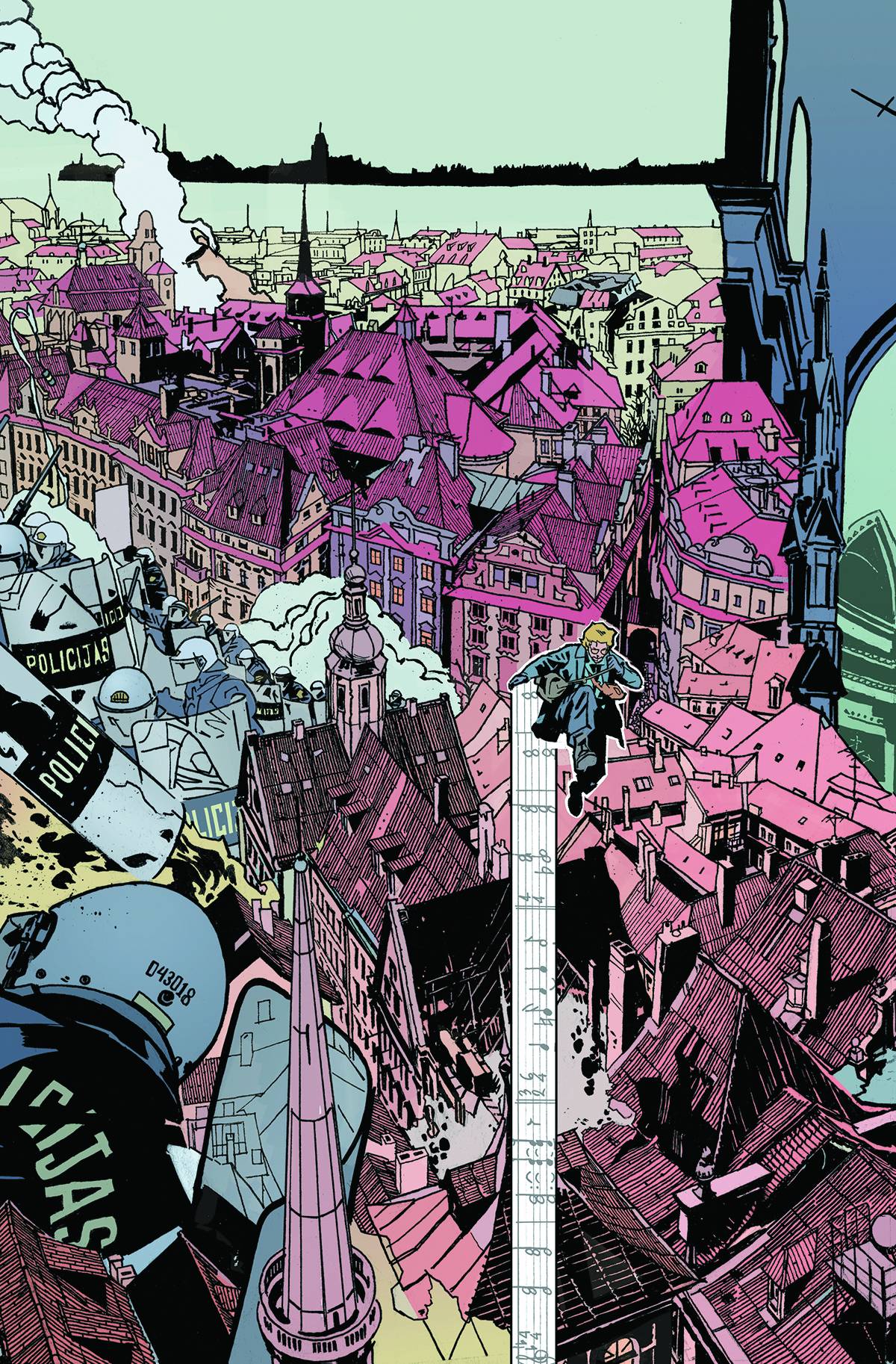
#4. The Last Broadcast #2 (Archaia): Great magicians never reveal their secrets; and those secrets, for the compulsively curious, inevitably become the seeds of great mysteries.  Writer André Sirangelo and artist Gabriel Iumazark plant plenty of seductive seeds here in the second installment of The Last Broadcast, which puts our main man Ivan–himself a magician–on a crooked path of discovery.  His frantic search for his pal Dmitri is an off-kilter crusade–one amplified by Iumazark’s irregular panel pattern that keeps us likewise off balance as we move from page to page–that finds him courting odd characters, including an enigmatic bookshop owner and an eye-biting barfly who pleasingly smack of Polanski stock, and that leads him to a couple of urban explorers–the Backbone of the story–who themselves are missing a mate.  (I, too, am compulsively curious, and I wonder: Could Dmitri and Damon be one in the same?)  Making the story–and the story to come–even more exciting is the prospect of a very-much-alive Sir Arthur Conan Doyle’s having a hand in scripting the outcome.  Believe your eyes, folks: this magic–The Last Broadcast–is for real. (SC)

The Last Broadcast #2

The Last Broadcast #2

#3. Ordinary #2 (Titan): A determined father intrepidly braves a gauntlet of nefarious characters and death-defying situations with only one thought on his mind: to find his son! This may sound like the latest Liam Neeson revenge flick, until you realize that a) the determined father is Michael, a balding, bespectacled schlub with a dead-end job; b) the nefarious characters are everyone else on the planet, who have suddenly and inexplicably been granted ridiculous super powers; and c) the death-defying situations include show-stopping Broadway musical numbers (especially frightening that). Rob Williams and D’Israeli serve up thrill-ride absurdity that at once takes the gas out of the sort of adolescent power fantasies that so many comics fans (many of whom bear more than a passing resemblance to Michael) still faithfully devour, while also slyly celebrating them. After all, if the biggest loser in the world can overcome odds like this, there’s hope for everyone. (DM)

Ordinary #2

Ordinary #2

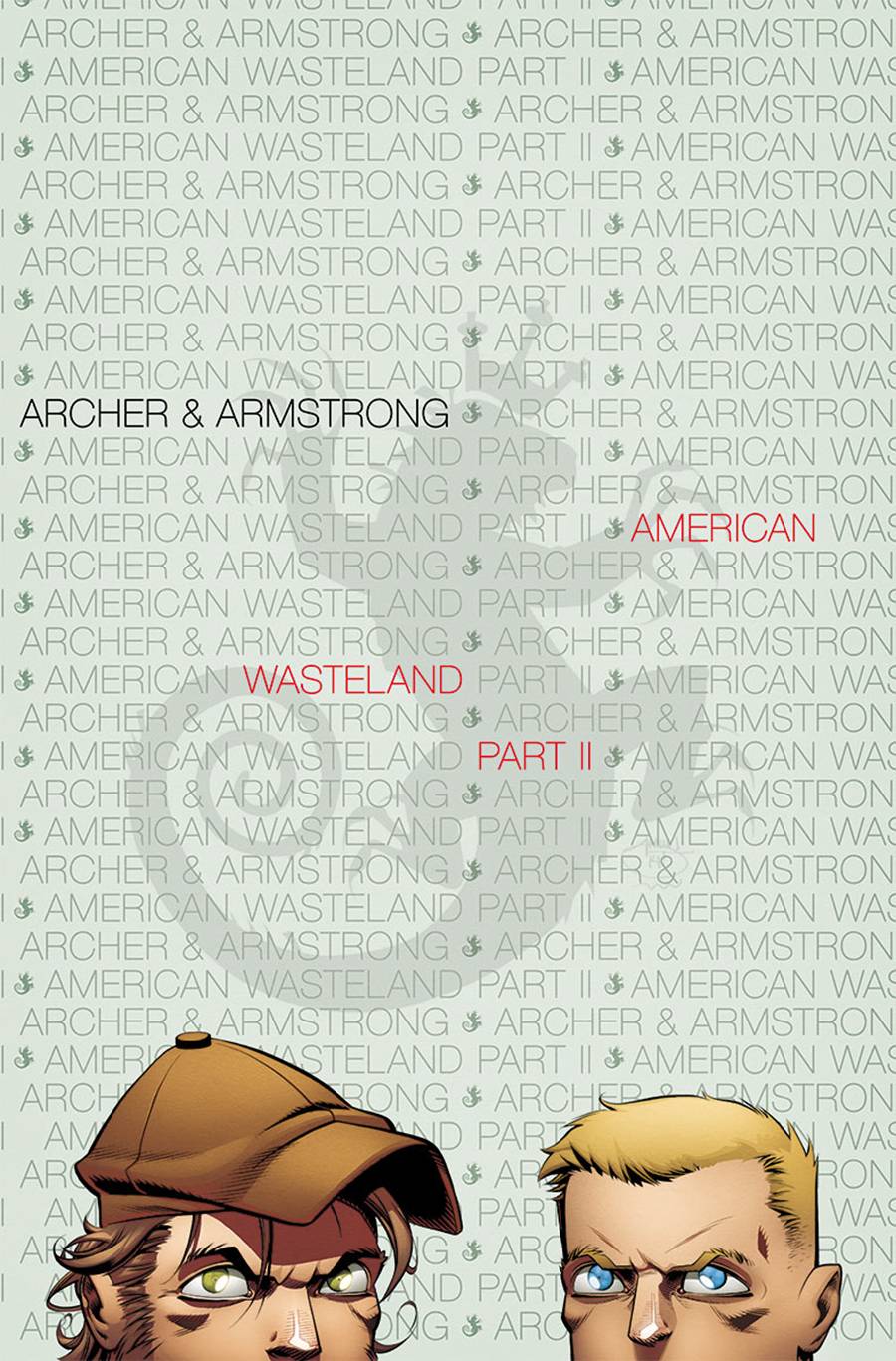
#2. Archer & Armstrong #21 (Valiant): Our fascination with celebrities in many ways defines us as a culture.  Funny enough, our fascination with dead celebrities even more so.  Fred Van Lente knows that, and he’s clearly having a blast bringing back some long–and some freshly–dead famous folks for his satirical tour de farce “American Wasteland.”  Artist Pere Pérez brings the late lot to life around Archer and Armstrong, kicking off a game of “How many dead celebs can you name?”; and it’s a game where we’re all winners for playing along.  I was slayed by the inclusion of Jeff Hanneman and then was all “Already?” upon seeing Philip Seymour Hoffman.  The next three page turns may very well be as unforgettable as the featured figures themselves: first, it’s a father and child reunion as Bruce and Brandon Lee attack our heroes in a sole-touching moment!  (Do they win?  Of course they Jeet Kune Don’t–thanks to Archer’s, umm, stun ram.)  And, after meeting a distraught Jackie Kennedy, who isn’t long for even this world (I was like, “No he di’int!”), A & A come across more Oswalds than you can shake a Zapruder film at!  Throw in some East and West disorderly action with phat boys Biggie and Tupac, and you’ve got yourself a book where a clever contrivance becomes more the thing than the story itself–well, initially, anyway.  Because after the excitement of recognition and the well-earned laughter fall to necessary contemplation, there’s Van Lente himself laughing, “Gotcha.” (SC)

Archer & Armstrong #21

Archer & Armstrong #21

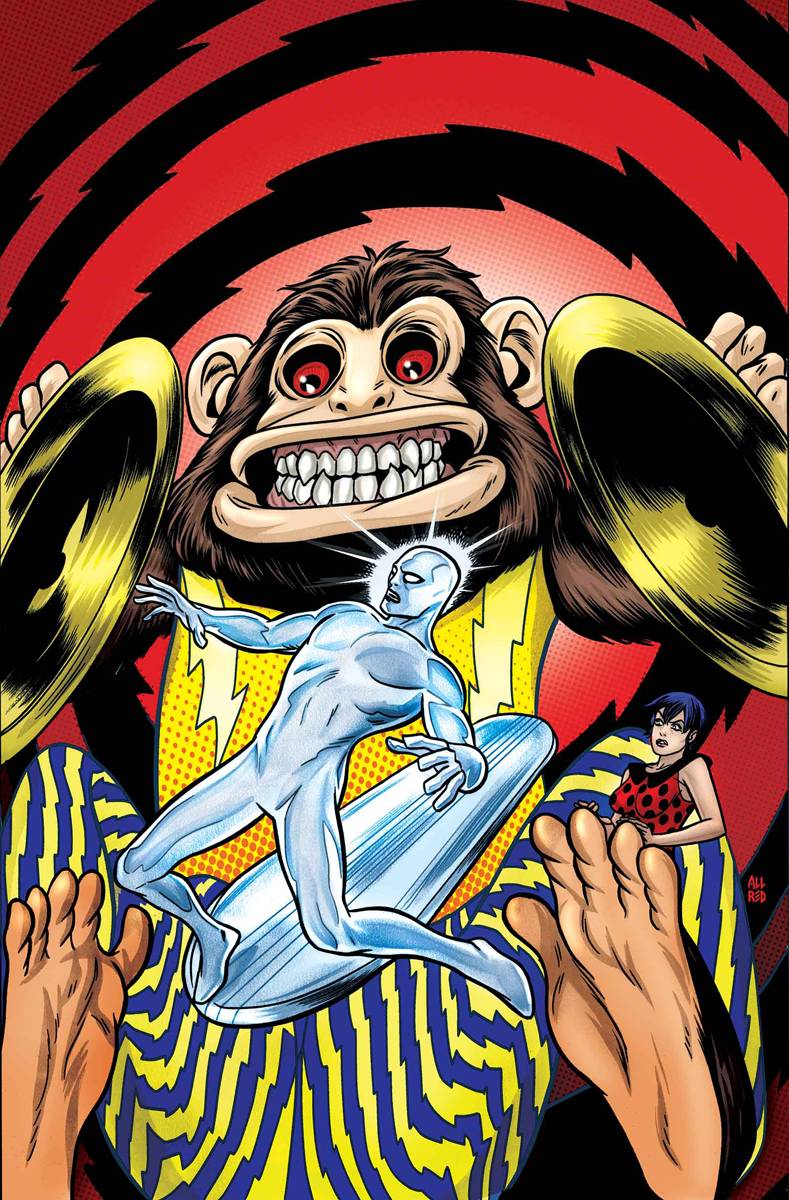
#1. Silver Surfer #3 (Marvel): There was a recent internet controversy which involved, among other things, the notion that certain aspects of super heroes were just too “goofy” and needed to be jettisoned in order for today’s audiences to take the characters seriously. The thinking behind this seems to be that the colorful, larger-than-life paragons of heroism that have populated comics since their inception need to be brought back down to earth, their vibrancy toned down to reflect our own muddled reality. One could make the case  that this view, in its cynicism, utterly misses the point of what super heroes are supposed to be. But why do that when you could just read Silver Surfer by Dan Slott and Michael and Laura Allred instead? It makes the case better than any argument ever could.

The current issue is particularly apt, as it deals with a cosmic struggle not so much of good versus evil, but of reality versus possibility. In it, a double-talking alien named the Incredulous Zed seeks to strike down an entity known as the Never Queen to ensure that the future will only ever have one possible outcome. Standing against him are the Silver Surfer and his new partner Dawn Greenwood, an especially winning creation, who runs a nice bed-and-breakfast in Anchor Bay, Mass. Slott’s wild, expansive approach to story is matched by Allred’s art, which, as always, is teeming with fantastic weirdness. There are monkey toys and stolen hearts. Space freaks and childhood memories. True love and The Three Stooges. And in Slott’s and Allred’s vision these live comfortably side-by-side. They suggest, in the sheer vitality of their storytelling, that one need not discard absurdity in the pursuit of profundity. Rather, whatever it is that is profound in these types of stories, whatever is truly wonderful, is inextricably tied to the fact that they’re so damn much FUN. (DM)

Silver Surfer #3

Silver Surfer #3

The Biggest Dis(appointment): Trees #2 (Image) – It has been a storytelling trope the last twenty years or so to juggle multiple, seemingly disparate narratives within an overall framework, and then slowly draw the separate strands together so that they all collide by the end, revealing a larger picture. It is perhaps perfectly legitimate in today’s hyper-connected world to seek meaning in the seemingly infinite byways that cyberspace allows, especially as it has simultaneously caused the world to get ever smaller. This narrative approach, depending on how it’s handled, can be insightful and profound or obtuse and annoying (Terence Malick’s The Tree of Life [no relation] for example, falls into either one or the other categories depending on your point of view). But it works best when the individual stories are compelling (as in say, Pulp Fiction). Unfortunately Trees manages to be both obtuse and uninteresting. Warren Ellis’ story, involving a bunch of giant alien trees that suddenly appear on earth (nicely rendered by Jason Howard), apparently indifferent to human activity, unwittingly provides an apt metaphor for the experience of reading it. When the various narratives are as soporific as those presented, one can’t blame the title characters for ignoring them. The back inside cover, presumably reinforcing the trees ambivalence, ends the issue with the sentence  “It doesn’t care.

Neither do I. (DM)

Trees #2

Trees #2


Turning pages,

Derek & Scott

Share this:

  • Click to share on X (Opens in new window) X
  • Click to share on Facebook (Opens in new window) Facebook
  • Click to share on Tumblr (Opens in new window) Tumblr
  • Click to share on Reddit (Opens in new window) Reddit
  • Click to email a link to a friend (Opens in new window) Email
  • Click to share on Pinterest (Opens in new window) Pinterest
Like Loading...

Top 5 Books of May: Revenge of the Superheroes!

30 Monday Jun 2014

Posted by dmainhart in Top 5 Books of the Month

≈ 9 Comments

Tags

Action Lab, Brian Wood, D'Israeli, Danijel Zezelj, Dark Horse, Double Indemnity, Dry Spell, James Asmus, Jordie Bellaire, Kano, Ken Krekeler, Marcel Duchamp, Matt Kindt, Mind MGMT, Ordinary, Quantum and Woody, Rene Magritte, Rob Williams, The Massive, Titan, Valiant, Woody Allen

Oh, crow! That most foul-tasting, um, fowl. ‘Twas only a month ago I was bemoaning the continuing prevalence of superhero books on ye olde comics stand. And yet here we are, scarcely four weeks later, and no less than three such titles are being featured our hallowed list (and two taking the top slots no less!) In my defense, I did say that in the right hands, gold could still be wrought from the well-worn cape and tights set. The creators below have managed just that. To wit:

#5. Quantum and Woody #10 (Valiant): Look!  Up in the intro!  It’s a word!  It’s a phrase!  It’s Super Segue!  You bet it is!  And, so, well, this might hurt a bit: Speaking of wit: Quantum and Woody–a super duper hero book if there ever was one–has been full of it from the get-goat.  Here, though, the comic runneth over–and spiritedly so!  The Abbott and Costello of comedic crime fighting–straight man Quantum and wise-cracking Woody, respectively–find themselves in deep voodoo as Woody seemingly switches sides instead of simply splitting them, leaving Quantum in quite the buggy bind.  As the story takes shape, Woody’s questionable character is analyzed expertly by the heroes behind the heroes: creators James Asmus and Kano deliver a gay romp of painfully obvious punchlines and playful layouts–one that reaches around to the past for some insight into Woody’s relationship with the larcenous Jacklean; one that sees the images and words coming together to bust guts and gutters.  (Love, love, love how Woody–in a memorable meta moment–pushes aside the bars of his four-panel prison.)  Toss in a roundly panned appearance by the Swedish Chef and a surprising dash of sympathy for Woody, and we can’t help but confess: Quantum and Woody ain’t no joke; it’s a top book–as this super issue so heroically insists. (SC)

Picture

Quantum and Woody #10

#4. Mind MGMT #22 (Dark Horse): After its ignominious appearance as The Biggest Dis(appointment) of last month’s list, Matt Kindt’s surreal spy masterpiece returns to rarefied form. As the plot explores the backstory of a splinter group within the overall worldwide conspiracy, the issue actually reveals itself to be a piece of art about art; the meticulous planning that goes into its creation, the frustration of failure, and its subtle, pervasive, and often unintentional influence. Kindt’s distinctly postmodern approach then, acts simultaneously as an apt metaphor for the book’s very existence, as well as catnip for art nerds (like me). The front-and-back matter that bookend the tale both take place in art museums, Marcel Duchamp is casually referenced, as is a supposed sequel to Double Indemnity (which had me immediately conducting Google searches to see if there actually was such a thing. I found nothing.) And talk about surreal – Kindt’s Magritte-inspired painting – whimsical, beautiful and oh-so-clever – is, as far as I’m concerned, already the cover of the year. (DM)

Mind MGMT #22

#3. The Massive #23 (Dark Horse): Brian Wood’s stripped down plot befits his story of survival at its most primal: at the end of the world a convoy of life-sustaining water crosses the unforgiving desert. The precious cargo, beset by thieves on all sides, is guarded by a small cadre of women led by the mysterious Mary, revealed at last to be akin to a goddess. The simplicity of the plot (matched by the bold, near woodcut-like art of Danijel Zezelj with colors by the peerless Jordie Bellaire) also belies the rich complexity of Wood’s themes: environmental degradation, the consequences of dwindling natural resources, geopolitical power and gender politics; and finally, and perhaps surprisingly, the remarkable resiliency of life in the face of devastation. (DM)

The Massive #23

#2. Ordinary #1 (Titan): But enough of this hoity-toity art stuff! Postmodernism? Gender politics? We’re here to talk superheroes! Capes! Muscles! Lasers shooting out of things! The stuff of every boy’s fantasy! And in Ordinary, by Rob Wiiliams and D’Israeli, everyone gets to be one. Everyone, that is, except Michael. A middle-aged schlemiel, eking out a pathetic living, Michael seemingly exists only to be life’s punching bag.  When a mysterious event grants superpowers to everyone on the planet, Michael is inexplicably left out. Hilarity arises as Michael suddenly has to navigate the increasing insanity around him. And this book is funny folks. Talking bears, super-beggars and cabbie-gods, all are part of the surreal, new landscape (D’Israeli, working in an exuberant Neo-Pop Art style, absolutely goes to town). But there is also pathos, including an astonishing scene involving a lonely old lady. And Michael himself is basically a decent guy: when the world goes nuts, his first thought is his son’s safety (his second thought is to get a drink). And then there’s the satiric edge: by making Michael a balding, bespectacled schlub surrounded by fantastic superpowers, Williams and D’Israeli have created a wry stand-in for the sort of middle-aged man who reads this type of story to begin with (ahem). A sad sack protagonist, absurdist humor, underlying heart: this is the comic Woody Allen would write if he wrote superheroes. (DM)

ORDINARY #1

Ordinary #1

#1. Dry Spell #1 (Action Lab): Ken Krekeler has made quite a statement with Dry Spell #1.  Good thing, too, considering his choice to start his story with someone else’s.  And that someone else just so happens to be comic book god Alan Moore, so, you know, no pressure, right?  Wrong!  Duh.  Because the quotation Krekeler has chosen as his first issue’s first words aren’t merely an epigraph that simply sets a tone for the tale to come; they are the opening salvo of a layered conversation about what it means to be an artist–about that will-o-the-wisp known as inspiration and the war that rages between activity and passivity; and, as the conversation develops, about the nature of superheroes and the duality of man, which makes sense, you know, with the whole Watchman thing that comes along with Mr. Moore.  Sure, Krekeler’s placed the burden on himself, but he’s clearly up to the challenge, just as, on page three, Apollo, the first hero to whom we’re introduced, is up to his: he’s seen carrying a passenger plane to safety–seen not just by us, but by the protagonist, Tom, as well.  He’s a cubicle jockey, who is, as we later learn, more than just some guy with an empty job, an empty relationship, and an empty canvas that’s more like a mirror that mocks him by showing him what he’s become since leaving the a super-powered life behind: nothing. His secret uncovered by a clever co-worker–who just so happens to also be a former costumed figure–Tom eventually finds himself at a club among powered peers, who seem to have designs on his ability to design things.  In a stunning psychedelic splash that stands as an exemplar of both Krekeler’s eye for color and his ear for poetry, a tripping Tom appears to fracture as two voices dance across the page: one his own, lucid voice and the other–neither still nor small–that leads him directly into temptation and into a sequence that delivers some serious tension, that is until Nightingale–a super-powered woman from the club with whom Tom has some history left a mystery–saves an unsuspecting woman from Tom and Tom from himself.  But to what end?  We’ll find out in a month’s time.  The immediate end, however, is a compelling story captained by a sympathetic character and an inspired take on the superhero set that courageously–and believably–promises Moore. (SC)

Dry Spell #1

Dry Spell #1

The Biggest Dis(appointment): Zero #8 (Image): Ales Kot’s Zero hit the scene late in 2013 and made quite the impression; in fact, it went from zero to eight–our #8 book of the year–after only four innovative issues, each a singular experience served up by an artiste du mois.  Man, we were high on this book.  Were.  Now, we’re pretty darned low.  As low as one can go, really.  Four issues into 2014 and Zero has gone from eight back to zero, coincidentally on the weakness of #8, this month’s mock minimalist offering.  See: to catch us up with Roman Zizek’s plan for Sara Cooke, Kot makes up for a rather remarkable dearth of dialogue and overall want for words by having artist Jorge Coelho pile on the panels–so many unnecessary, momentum murdering panels–and leave plenty unsaid, well, undrawn, giving us the responsibility of crawling through the gutters in order to bring some clarity to the narrative.  Comprehension be damned!  Yeah, what we’ve got here is not so much storytelling as it is story suggesting–often imploring that we suspend disbelief in order to overlook some absolutely absurd moments.  My disbelief?  Suspended from the gallows until dead, dead, dead–and buried along with my anticipation and any hopes that Kot will return to the form that forced us to take notice in the first place.  In fact, I’ll let Zero’s final words be my final words on Zero, as well: “I am here to tell you that I quit.” (SC)

Zero #8

Share this:

  • Click to share on X (Opens in new window) X
  • Click to share on Facebook (Opens in new window) Facebook
  • Click to share on Tumblr (Opens in new window) Tumblr
  • Click to share on Reddit (Opens in new window) Reddit
  • Click to email a link to a friend (Opens in new window) Email
  • Click to share on Pinterest (Opens in new window) Pinterest
Like Loading...

Top 5 Books of April

29 Thursday May 2014

Posted by ScottNerd in Top 5 Books of the Month, Uncategorized

≈ 8 Comments

Tags

Astro City, Brent Eric Anderson, Brian Wood, Dan Slott, Daniel Zezelj, Dark Horse, DC, Douglas Adams, Dr. Strange, Elmore Leonard, Garth Ennis, Goran Parlov, Greg Rucka, Image, Innie Awards, Jack Kirby, Jason Aaron, Jason Latour, Jordie Bellaire, Justified, Kurt Busiek, Laura Allred, Lazarus, Mark Millar, Marvel, Michael Lark, Mike Allred, Moby Dick, Roy Thomas, Silver Age, Silver Surfer, Southern Bastards, Stan Lee, Steve Ditko, T.H. White, Terry Pratchett, The Massive, The Once and Future King, Vertigo, Watchmen

#5. Astro City #11 (DC/Vertigo): A quick perusal of our past Top 5 lists will tell you that we’re generally not the biggest fans of superhero fare. Oh sure, we have a soft spot in our hearts for the cape and costume set; they were after all our gateway drug into the wider world of comics. But with such a bevy of quality non-superhero books inhabiting the current comics landscape (it really is a golden age folks), why waste our time on the cynical merry-go-round of movie tie-ins, Big Events and the never-ending, never-changing battle? Even worse are those titles which claim to be edgy by adding some nominally ‘mature’ wrinkle to the works: ‘superheroes who swear!’ ‘superheroes who have sex! (full frontal!)’ or some other such trope that was well-worn by Watchmen nearly thirty years ago. It takes something far less gimmicky to add something new to the genre (and that’s what superheroes are, fanboys; not mainstream but a genre).

Luckily, in Astro City, Kurt Busiek and Brent Eric Anderson have managed just that. Nearly a year into the title’s return after an extended hiatus, Busiek and Co. remind us of their mastery of the eye-level approach to the fantastic. This time out centers around a personal assistant, the type of capable multi-tasker who’s invisible to the public and indispensable to her boss. But of course in this case, her boss is a superhero. Like many in her profession, her duties include, but are not limited to: answering mail, keeping track of finances, scheduling appointments, etc. But because her boss is a mystical Dr. Strange type, a missed appointment can mean placating interdimensional gods who threaten our world with annihilation for their inconvenience. The story is an ode to all of the unsung, behind-the-scenes supporting players who, through sheer competence, organization and the ability to keep a cool head, keep the world running, day in, day out. The pleasure comes from watching our harried-but-never-overwhelmed protagonist put out fires, ranging from the mundane to the apocalyptic, with nothing more than a well-placed phone call or a sift through her files. That, and the loving, sideways homage Busiek and Anderson have crafted to some of the stranger Silver Age forays of Kirby, Ditko, Lee, Thomas, et al. To paraphrase, there are a million stories in Astro City. This is one of the best. (DM)

Astro City #11

Astro City #11

#4. Silver Surfer #2 (Marvel): What goes on here? Two superhero books from the Big Two crack our Top 5? Well yes, when one of them is drawn by the inimitable Mike Allred. His wild, Pop Art aesthetic (enhanced by the bold hues of wife Laura Allred) immediately brings the fun to any book it graces. And Dan Slott scripts a tale to match involving intergalactic hucksters (‘the Incredulous Zed’) extra-dimensional god-constructs (‘The Queen of Nevers’) and sensitive Plorpian digestive systems. Not to mention the true protagonist of the story, one ‘Dawn Greenwood’ of Anchor Bay, Massachusetts. Appropriately titled “Everything And All At Once”, the story owes less to typically constrictive superhero dynamics, and more to the expansive exuberance of the likes of Douglas Adams and Terry Pratchett (despite our American creators, there is  something distinctly British about the proceedings; a compliment, naturally.) In other words, if you’re looking for a rollicking good sci-fi bender of a time (and why wouldn’t you be?), you could do a lot worse than Silver Surfer. (DM)

Silver Surfer #2

Silver Surfer #2

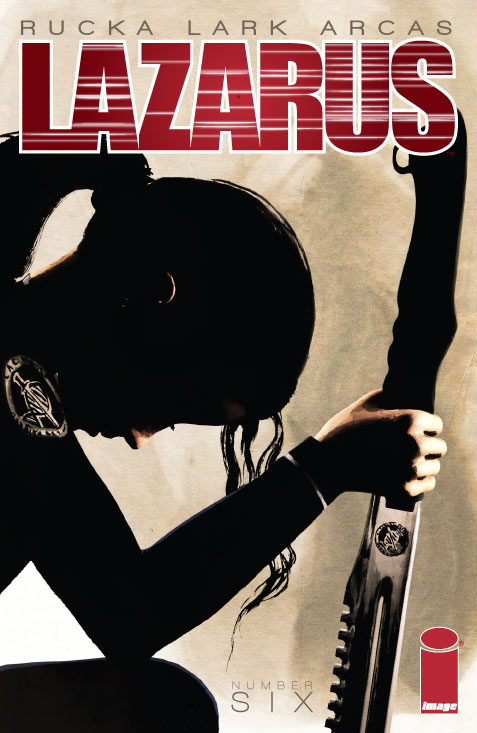
#3. Lazarus #8 (Image): Greg Rucka and Michael Lark are on quite a run: this is the third month in a row that we’re celebrating Lazarus as a top book.  (It’s true: check out what we had to say about the patient perfection of #6 and #7!)  What’s keeping the book pegged to the big board issue after issue?  It’s the storytelling.  The fellas have forged themselves a winning formula–one that’s made all the more impressive by the fact that in no way does it feel like they’re going through the motions; no, they’re keeping it fresh as can be, once again to purpose employing parallelism to amplify further the conflict, which has been an eager flame burning its way through a long fuse to an explosive effect without any bombs going off–at least not quite yet, anyway.  This installment of the 2014 Innie nominee for Best Ongoing Series is once again built upon a foundation of the early days of Forever.  In this case, Forever fails to live up to expectations and misses out on a meeting–on her birthday, no less!–with her frustrated father, who leaves a very significant gift behind: White’s The Once and Future King, an insinuation that speaks to Forever’s growth and purpose–and, in that, to Rucka’s inspiration for the series.  This significant sequence comes back around when present Forever finds herself in an ethical bind, knot courtesy of a catty Daddy Carlyle, over the impending terrorist attack in Denver.  Oh, the road to Denver is paved with good intentions, innit?   Doing most of the paving: Michael Barret and Casey, who, while on their way to the Lift Selection, are willing to offer up a hand to their fellow travelers, including, at the very end, an Angel of Death.  It’s all coming to a head, folks; and the book–and we–couldn’t be in better hands. (SC)

Lazarus #8

Lazarus #8

#2. Southern Bastards #1 (Image): Oh.  Shit.  Jason Aaron and Jason Latour have made quite a splash with their merciless ode to good ol’ boys.  Now, I’m predisposed to liking it because of its being not unlike Justified, with its Southern-fried setting and tone, and even its well-defined yet ambiguous cast of characters, smacking of the late, great Elmore Leonard, and, in that, the often late, great Garth Ennis–which makes even more sense considering that it also reads a hell of a lot like Fury: My War Gone By and Mark Millar’s Starlight because of the big notes of nostalgia and, tying it all together, because Latour’s Earl is plenty Parlovian.  The story’s solid from the get-go: Jason Squared pitches the prodigal son’s return and expertly upsells pathos as the conflict grows–just as a tree grows from Earl’s father’s grave–into the final sequence, itself a grueling duel of duels–a one-two combination (punishing blows received and delivered) of violent events enlivened by the lyrical layouts–that cements this debut as a top book of the month; it’s the love shown by the creators for the South and the story inspired by it that makes it even more than that.  (SC)

Southern Bastards #1

Southern Bastards #1

#1. The Massive #22 (Dark Horse): Thus far, Brian Wood’s apocalyptic take on Moby Dick has focused on one Callum Israel, whose Ahab-like obsession with finding his eponymous ship has led him to the far corners of a world that is slowly falling apart due to a mysterious event known as The Crash. The search has allowed Wood to explore in convincing detail (with the help of an impressive cadre of artists; here Danijel Zezelj does the honors, with Jordie Bellaire on colors) the effects of environmental devastation, economic collapse, and political disintegration in such disparate locales as Iceland, Hong Kong and Mogadishu. The sheer breadth of Wood’s geopolitical knowledge and inquiry is impressive. It also pulls off the neat trick of serving as both the series’ raison d’etre and narrative backdrop to its central mysteries: Where is the Massive? What caused The Crash?

Just as the answers have eluded the increasingly obsessive Callum (did I mention he was dying of cancer?), Wood’s writing has sometimes been frustratingly vague. Many of the arcs (all consisting of three issues) have run like this: fascinating set-up, high stakes climax, baffling denouement. While there’s something to be said for not giving the reader what they want, the considerable tension inherent in the story has sometimes been undercut by endings that seem deliberately anticlimactic, and even obtuse. Well the first issue of the latest arc, “Sahara”, finally promises some resolution, beginning with the one to the other great mystery: Where the hell has Mary been?

Mary, Callum’s lover, shipmate, and conscience of his crew, seemingly abandoned him in his time of greatest need. This issue finds her, in typical Wood fashion, smack dab in the middle of a geopolitical intrigue with real-world resonance. She’s guarding a convoy of the world’s most precious post-Crash resource: water. As the spotlight shifts to her, we begin to realize what Wood has been hinting at all along: the search for the Massive is a MacGuffin. All mysteries lead to Mary. By turns the most compassionate and the most remote, she has quietly taken on an otherworldly dimension. As we watch Mary cross the desert, now with child, one cannot help but think that as the series builds to its conclusion, Wood is countering the obsession and despair of the white whale with an almost biblical hope for salvation. (DM)

The Massive #22

The Biggest Dis(appointment): Mind MGMT #21 (Dark Horse): To truly understand this choice, you have to understand that disappointment comes from expectations not being met–and in some cases, from expectations being bitch slapped by promises unfulfilled.  In this case, we were led to believe that master storyteller Matt Kindt was going to deliver a “silent issue”; and if you we’re like me, you thought immediately to the silent issue of all silent issues: G.I. Joe #21 from Larry Hama and Steve Leialoha, which blew our minds thirty years ago–yikes!  With the poison–the potent neurotoxin nostalgia–already in the wound, what chance did this stab at a silent issue have–especially after our being rudely welcomed by word one!  Wouldn’t you know: Kindt–ever the clever creator–was playing us from the promise!  His interpretation of silent: no dialogue–which means that thoughts are fair game; and to make the game more fun, those thoughts were insightful, sure, but sometimes ironic, considering the situations in which the thoughts were, umm, thought.  So, fine, it’s “silent,” I’ll buy it–and I did buy it, blissfully ignorant and high on hope; however, while the story works well within the world of Mind MGMT, Kindt has managed to both exploit and execute my innocent expectations.  The former finds me somewhat satisfied, but it’s the latter than leaves me mostly nonplussed–and this issue as our Biggest Dis(appointment) of the month.  (SC)

Mind MGMT #21

Mind MGMT #21

Turning pages,

Scott & Derek

Share this:

  • Click to share on X (Opens in new window) X
  • Click to share on Facebook (Opens in new window) Facebook
  • Click to share on Tumblr (Opens in new window) Tumblr
  • Click to share on Reddit (Opens in new window) Reddit
  • Click to email a link to a friend (Opens in new window) Email
  • Click to share on Pinterest (Opens in new window) Pinterest
Like Loading...

Top 5 Books of March

21 Monday Apr 2014

Posted by ScottNerd in Top 5 Books of the Month

≈ 8 Comments

Tags

Afterlife With Archie, Archie Comics, Brian Wood, Carmine Infantino, Dan Slott, Dark Horse, David Lapham, El Capitan, Epic, FF, Francesco Francavilla, Frank Miller, Garry Brown, Great Lakes Avengers, Greg Rucka, Image, Jack Kirby, Laura Allred, Lazarus, Madman, Marvel, Matt Fraction, Michael Lark, Mike Allred, Moebius, Parable, Pulp Fiction, Quentin Tarantino, Ren & Stimpy, Robert Altman, Roberto Aguirre Sacasa, Silver Age, Silver Surfer, Sin City, Stan Lee, Stray Bullets, Stray Bullets: Killers, The Flash, The Massive

#5. Silver Surfer #1 (Marvel): I’ve said it before and I’ll say it again: Mike Allred brings out the best in his writers. For most of his existence, the Silver Surfer has been a solemn, portentous presence in the Marvel universe. To be fair, this was written into Stan Lee and Jack Kirby’s very concept of the character: he’s the herald of Galactus, destroyer of worlds, after all. If the Surfer showed up, your goose was cooked. Of course, in the end he sacrificed his freedom, not once but twice in order to avert disaster. The tragic nature of the character has been explored by writers ever since, from Steve Englehart to Jim Starlin and perhaps best exemplified in Stan Lee’s Epic return to the character in Parable (drawn with graceful panache by the legendary french artist Moebius). All well and good, but somehow left unexplored in all of this was what was originally suggested by Kirby’s truly rad character design: a genius amalgam of surf culture and space age sleekness (this was the ’60’s after all). Outside of Carmine Infantino’s design for The Flash, the look of the Surfer is simply the coolest representation of that bold, optimistic era. Space Opera meets Pop Art. A gnarly rider of the cosmic waves, he puts the Silver in Silver Age. So why’s he such a bummer all the time? Where’s the fun?

Enter Mike Allred. As many (but not enough) comics fans know, Allred’s seminal Madman was almost single-handedly putting the fun back in superhero comics back in the 1990’s. In an era defined by, dank, “gritty” violence (which somehow purported to be more “mature”) Madman harkened back to a time of limitless, zany possibility. That an “independent” comic had to remind the Big Two how it was done was sad commentary on comics of the era. Now, twenty years later, and “mainstream” (whatever that means) superheroes are finally catching up. And at Marvel, Allred is finding a fertile ground to play in. On the recently concluded FF, writer Matt Fraction wisely amped up the absurdity to take advantage of his artist’s manic sensibility. The result was one of Marvel’s most entertaining books in recent years. Call it the “Allred Effect” (please do, I’m accepting royalties).

Now, with writer Dan Slott, he’s taking on one of the big guns. And if the first issue’s any indication, we’re in for a grand ol’ time. Slott, no stranger to strangeness, what with his runs on Great Lakes Avengers and Ren & Stimpy, again wisely plays to his artist’s strengths, setting the story on a fantastical casino/resort/amusement park the size of a planet (seriously, dig the double-page spread). Slott stays true to the character however; indeed the comedy arises out of the contrast between the ever-serious Surfer and his increasingly ridiculous surroundings. In a similar vein, Slott highlights the bizarre bazaar even further by cleverly juxtaposing it with the quotidian goings-on at the quaintest little New England bed and breakfast you ever saw. And all of it rendered by Allred (with beautiful colors by his wife Laura) whose wild and wooly aesthetic, brimming with possibility, is the guiding principle for the book. This promises to be fun. (DM)

Silver Surfer 001 Mike Allred Cover

Silver Surfer #1

#4. The Massive #21 (Dark Horse): Oh, we’ve been waiting for this!  Boys and girls, Brian Wood has done it!  The patient poet, who tells a mighty fine tale in a most measured meter, has finally followed a spectacular second stanza–the most recent celebrated just last month in this very blog–with a worthy third that doesn’t simply satisfy–it electrifies!  Wood, ever the simmering salesman, at last has boiled over, has pulled the trigger at precisely the right moment, ending the arc by ending Arkady and, perhaps more significantly, the malignant matter of trust between the cancer-ridden Callum and his loyal Ninth Wave mate, Mag.  And, as a bookended bonus, Wood, with a little Bay City backstory at the beginning, teases even more about Mary, and, at the end, marries her mystery to that of The Massive and the Crash.  Garry Brown, busy now with Marvel’s Iron Patriot, delivers some of his best work on the series, evidenced emphatically by a final splash that reveals exactly what’s on Callum’s mind: the song that cinches it–that links the lady in question to the last day of the world as they knew it–and this last issue of The Massive as we know it.  That’s right: expectations have officially been rejiggered: Wood and Brown aren’t all slow boil, after all; if they need to, it’s quite clear: they can scald.  Can’t wait to see how this mystery, one of the more intriguing in comics today, plays out in the next arc: Sahara.  I can already feel the heat! (SC)

The Massive #21

#3. Lazarus #7 (Image): Looking for a lift?  Ain’t gonna find it here; I mean, just look at the cover:

Lazarus #7

Instead, Greg Rucka and Michael Lark segue smoothly into the next sequence of steps in the well-choreographed comparison between Forever Carlyle and Casey Solomon, joylessly juxtaposing the incomparable plights of Family and Waste.  The opening scene, paced patiently in order to deliver an emotional punch, is a trying training exercise that exposes the fledgling Forever’s fragility.  During the revealing conversation between Forever and her mentor, Marisol, Lark plays angles and eyes to perfection, amplifying the pain of innocence lost–of growing up Forever.  Casey, on the other hand, doesn’t have the luxury of training; she must master the moment when it arises–and in the “Badlands,” a moment “Kraks” the night and cruelly cuts down young Leigh, which leads to Casey’s first two “Kraks” at doing what needs be done–and she is masterful.  Yes, the storylines are solid: the terrorist threat still exists, and present-day Forever and Johanna work toward breaking Emma, the one suspect they have in custody, by offering to lift her from Waste to Serf; and the Barrets, whose hopes for the future have been slashed by a third, still have their sights set on Denver, which is where the all-important–and apparently well-attended–Lift Selection will take place.  But what makes this issue one of our selections is the impeccably employed parallelism, which brings a curious parity to a world where there seemingly is none. (SC)

#2. Afterlife With Archie #4 (Archie): “Please don’t…Don’t make me do this,” indeed. I’m crying right now. Crying!  All I did was open the damn book to refresh myself—you know, in order to piece together a proper review—and then “Ker-rasshhh!!!” I mean, I can’t even.  See: when Vegas—Archie’s fiercely loyal four-legged best friend—vaults through the window, Roberto Aguirre-Sacasa and Francesco Francavilla are the ones sending shards of glass poisoned with flashback-fueled nostalgia into my heart, which bleeds freely during the succeeding sacrifice—a brilliant sequence amplified by the dutiful dog’s thoughts and his pleading eyes—and coaxes my eyes to commiserate in their own salty style. The creators push the pace and impose another emotional toll—paid in more tears!–as Archie must play the same role Vegas played for him as he protects his mother from his zombified father—a smashing sequence in its own right, highlighted by a fifteen-panel masterpiece: a puzzle comprised violently and lovingly of pieces from the present and the past. Even though Archie’s able to hit a regretful homerun, there’s clearly no rest for the weary–or the teary: Vegas is back, this time looking to make a meal of his master; and the only way to escape is to “Ker-rashhh!” an old car through the garage door.  Yeah, despite all of the tears it’s easy to see how it all comes together—into an exquisitely composed book well worth celebrating as one of the very best of the month. (SC)

Afterlife with Archie #4

#1. Stray Bullets: Killers #1 (El Capitan/Image): Picture it: 1995. The comics landscape was a far different place. Mutants were everywhere. Just slapping an “X” in front of a title ensured sales in the bajillions. DC was in between its endless Crises. Image was a far cry from what it is today, with top-selling titles like Spawn, and Witchblade. Scantily-clad women with tiny feet and permanent wedgies threw down with half-metal men who were always missing an eye against demonic bad guys that were all teeth and claws. And oh, the guns, guns, those giant guns, and blades with ridiculous hilts, and bikini armor and all manner of accessories ill-suited for an actual fight. And all of it drawn in a sleek, substance-less style that suggested the artist had never seen what an actual weapon or tooth or woman actually looked like.

Into this morass of hyperventilating adolescent fantasy quietly appeared the first issue of a little black and white self-published comic called Stray Bullets. It was written and drawn by a relative unknown named David Lapham who’d done some work for Valiant or something. Like the above examples, it was printed on paper, with a front and back cover and was held together by two staples. And there the similarities ended.

That’s not to say that the first issue wasn’t violent. It’s called Stray Bullets for a reason. But it dropped the reader into the quiet moments between the violence in a way that felt completely natural. This realism made the threat of violence, its inevitability, all the more terrifying. Set in the future year of 1997, the story traced the night where Everything Went Wrong; the night a quiet, easily overlooked nobody became a mass murderer. As the body count mounted, so did our sense of dread, as we recognized this all too plausible world as our own. An act of violence also haunted the second issue. Set twenty years prior (Lapham is constantly time-hopping in the series),  an 8 year old girl witnesses a murder and is robbed of her innocence utterly. She is Virginia Applejack, and she’s the closest thing the series had to a main character. After the character studies of the first two issues, the third introduced an expansive cast in a kinetic, beautifully orchestrated group scene that would’ve done Robert Altman proud. And then, just when you thought you had a handle on it, the sixth issue completely pulled the rug out from under you.

Part of the beauty of these stories was that Lapham designed each to be a complete experience unto itself and yet also pieces of a larger whole. Characters who were the focus of one story might drop into the background of another. A world was being created, one alley, trailer, sucker at a time.

Now, when it first appeared, the comic book that SB got most compared to was Sin City. But, other than an element of crime, Frank Miller’s stylized testosterone noir pastiche had nothing in common with Lapham’s slice-of-life-turned-on-its-head approach. The forced comparison occurred simply because there was nothing else in comics to compare it to. More than Miller’s .45 slug, SB was a cannon blast through the conventions of comics.  No, in order to find suitable comparisons, one had to look to film: Altman, Cassavetes, the Coen Brothers, film noir, etc. In fact, given the interconnected structure of smaller stories forming a larger tapestry, the contemporary work that provided the best correlation was perhaps Quentin Tarantino’s Pulp Fiction. But whereas that masterpiece juggled three stories over the span of a couple of days, Lapham pulled off his magic trick for forty issues covering a couple of decades. And then, in 2005, he stopped. He started doing work for hire at the Big Two and elsewhere; presumably there were bills to be paid. And while he did some interesting work, none of it ever approached the scope and ambition of SB.

Fast forward nearly ten years. The comic book landscape is a much different place, offering a wider selection of genre, story and innovation than any time in its history. Creators have more freedom and opportunity now to pursue their own mad visions. And actually be paid for them. The time was finally ripe for SB to return. (I don’t know what stars had to align, but it is to Image Comics’ eternal credit that they played a part in it.) But then…foreboding. There’s always a danger in revisiting greatness. Considering how high he’d set the bar the first time around, could Lapham possibly regain his form? Did he still have that edge?

Well the results are in, and man, he hasn’t missed a beat. Killers #1 is everything a fan could ask for and more: sex, violence, secrets, betrayal. Like the story of Virginia Applejack, this issue involves a child who sees things he shouldn’t have, and the consequences thereof. The story structure, the beautiful, clear art, that sweet, sweet sense of dread, it’s all here. From the first panel, there’s no doubt you’re in the hands of a storytelling maestro. If you’ve read SB before, there are callbacks to the original series that enrich the story. If you haven’t, then this is a great jumping on point. But then every issue of SB is a great jumping on point; as I said, Lapham’s designed them that way.

People are calling this the return of the most acclaimed crime comic of all time. But SB is more than just a crime comic. It’s about safe, recognizable lives turned upside down by the awful world around them. Like all great art, it’s a mirror, albeit a shattered one. So instead of calling it a crime comic or restricting it to some other genre, I’ll simply say: it’s the return of the best comic ever. (DM)

Stray Bullets Killers #1

Stray Bullets: Killers #1

The Biggest Dis(appointment): Rachel Rising #24 (Abstract Studio): Here’s a little secret: the book we choose for The Biggest Dis is generally not the worst book we’ve read that month. Rather it is the book that failed, often spectacularly, to approach whatever expectations we had for it. Our expectations are nearly always attached to our experience with the creator(s) involved. So our BD is often directed at a title or creator that we hold in some regard.

We’ve been cheerleaders for Terry Moore’s Rachel Rising almost from the start. Indeed, we included it in our Top Ten Books of 2013. The story of competing, reawakening evils, threatening to consume the sleepy town of Manson and the dead girl caught in the middle, was a slow burn, alternating between between spare, atmospheric lyricism and spasmodic violence. Moore’s considerable chops were on display from the get go: engaging characters, an ear for gallows humor and the perfected art of the unannounced shock, often serving as a cliffhanger for the next issue. And of course, the unparalleled black and white artwork, each page a master’s class in composition, concision and storytelling. Everything clicked, resulting in the best horror comic on the market. For over twenty-three issues the tension inexorably built toward a showdown of biblical proportion.

How truly dispiriting then to read issue twenty-four. The putative climax to the story, it is such a rushed, slapdash affair as to scarcely seem part of the same series. Where we had drama, we now have farce. The interaction of the characters is forced and completely unconvincing. The threat turns out to have been not very threatening at all. And the moment of truth is so anticlimactic, it feels like a cheat.

I understand there may have been financial considerations at play. Moore has publicly discussed ending Rachel Rising due to poor sales. But that, at the risk of sounding mean-spirited, is not the concern of the readers who’ve been faithfully following the story for over two years. Whether or not he could continue in the long or even the short run, his audience, however small, deserved a better effort than this. And, as it turns out, he is continuing the series. A month ago I would’ve considered this cause for celebration. Whether or not I will follow him now is suddenly, and sadly, an open question. (DM)

rachel-rising-24

Rachel Rising #24


Turning pages,

Derek & Scott
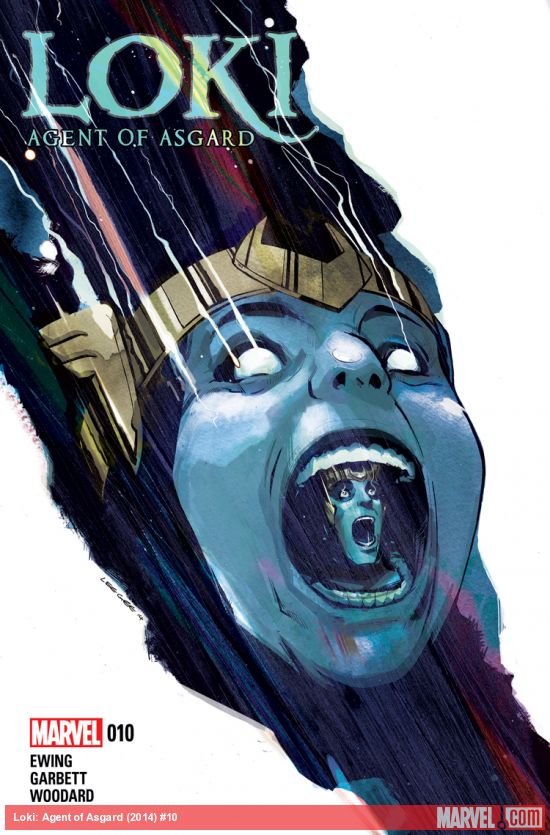
Share this:

  • Click to share on X (Opens in new window) X
  • Click to share on Facebook (Opens in new window) Facebook
  • Click to share on Tumblr (Opens in new window) Tumblr
  • Click to share on Reddit (Opens in new window) Reddit
  • Click to email a link to a friend (Opens in new window) Email
  • Click to share on Pinterest (Opens in new window) Pinterest
Like Loading...

Top 5 Books of February

06 Sunday Apr 2014

Posted by ScottNerd in Top 5 Books of the Month

≈ 5 Comments

Tags

Brian Wood, Dark Horse, Dynamite Entertainment, Ed Brubaker, Fatale, Garry Brown, Greg Rucka, Guiu Vilanova, Image, Lazarus, Matt Kindt, Michael Lark, Mind MGMT, Sean Phillips, The Massive, The Twilight Zone

Sorry our list is late.  I blame Derek for having passed on his half of the Top 5 because his wife gave birth to his second child–another beautiful daughter–or something silly like that.

#5. Lazarus #6 (Image): Greg Rucka’s not a shy guy.  We know which way he leans politically–and there’s plenty of leaning here in Lazarus.  Sure, he could easily have turned this series into a didactic dystopian diatribe; however, he handles the political landscape with class, never becoming too heavy handed.  This chapter is beautifully bookended: it kicks off with a flashback to a young Forever–and the simmering mystery regarding her family ties–and ends with the hope of a brighter future for old Dennis’s granddaughter–a future with a family not her own.  The issue is a slow burn, satisfyingly so, which at its peak features the fleeting threat of violence.  Michael Lark’s art is as effective as ever, but it’s the pacing, the patience, that propels this part of the story. (SC)

Lazarus_06-1

#4. The Twilight Zone #2 (Dynamite): J. Michael Straczynski’s a frustrating fella.  His Joe’s Comics line, in general, has been a major disappointment; but we’re still willing to give him a shot, aren’t we?  Of course, we are: he’s JMS, after all.  And good thing, too: The Twilight Zone is something special–even if it isn’t so unique.  See: the storyline–what makes this initial arc a believable Twilight Zone episode–is the very same storyline at the center of JMS’s Sidekick.  No kidding!  But I’m not going to speculate as to the reason for his identical identity-swapping plots; instead, I’m going to put that inconvenient truth aside and celebrate what he’s done well.  Let’s be honest: it’s no surprise that Straczynski shines here: after all, he wrote episodes of The Twilight Zone television series some twenty-five years ago; and those TV writing chops are seen specifically in the furious pace that is set, the result of narration and dialogue designed to launch the story into the stratosphere, where, in true Twilight Zone fashion, the impossible becomes even more impossible: Trevor Richmond, who is technically the re-faced former Trevor Richmond, finds a new and improved Trevor Richmond, who unsettlingly looks the part and is looking to right the former’s wrongs–in the boardroom and in the bedroom–and the former is none to happy about it!  Straczynski and artist Guiu Vilanova set Trevor Prime in motion–a la Dan Aykroyd’s Louis Winthorpe III from Trading Places: he gets scoffed at, shot at, frying-panned at; and, unable to take it anymore, he swears revenge “one way…or the other” on an ominous final page that makes us believe him.  Something tells me that this new Trevor Richmond isn’t exactly what he looks like. (SC)

Twilight Zone #2

Twilight Zone #2

#3. The Massive #20 (Dark Horse): Once again, Brian Wood wields tension like a gun loaded with climaxes but not fired. He offers us a rope; we willingly pull it taut; and he challenges us along the way, never allowing any slack, but also never threatening to snap the rope in two. The telling tug-of-war extends to the characters, as well: Mag vs. agents of Arkady–and then Arkady himself; Cal vs. Yusup, himself a seemingly reluctant agent of Arkady; and, ultimately, roiling beneath the surface, waiting to boil over, Cal vs. Mag. The juxtaposition of the conversations is choreographed elegantly, and executed expertly by the game Garry Brown, through to the final page of this deliberate dance–a final page that hints at Wood’s willingness to finally pull the trigger: as his page-bound proxy promises, come next issue, “[A]ll will be made clear.”  Oh, and there’s something about Mary–something very mysterious and melodious about Mary. (SC)

The Massive #20

The Massive #20

#2. Fatale #20 (Image): Ed Brubaker and Sean Phillips’ Fatale has been a well-Lovecrafted hypnotic thrill-ride from the smoking hot and super suggestive first issue.  But none has possessed as much raw demonic power as this month’s offering, in which Josephine lights up and lets go, revealing several sides of herself, including, most notably, her desperate suiside–well, her numerous attempts, anyway.  She’s driven to find Nick, and she ain’t kiddin’ around: in fact, in a particularly creepy scene, she kicks a kid–a boy who hits puberty hard in Jo’s “pretty, pretty” presence–out of a car she jacks and leaves him in the middle of the road, another casualty of the ruinous raven-haired femme fatale, who, in the end, lobotomizes Lance with a cigarette-flavored kiss and saves Nick, but not before leaving him with a memory that blows his mind–and an issue that blows ours to smithereens.  Sexy mothereffing smithereens. (SC)

Fatale #20

Fatale #20

#1. Mind MGMT #19 (Dark Horse): And now for Matt Kindt’s next trick: using a torn paper technique and tri-color coding to affect four–count ’em: four!–concurrent narratives, the incomparable creator sends Meru to Berlin for the next stop on her magical mystery recruitment tour, leaving us with that childish sense of wonder only a true wizard of the medium can inspire.  The Magician’s Tale–the issue’s spine, fractured from the moment the fem illusionist first steps on stage–takes us on a vertical adventure, page after page, from fleeing the increasingly unfriendly audience–and the agents she’s identified in it–all the way to the welcoming arms of the new Mind Management.  Attempting to keep pace with the disgraced mage, Meru’s crew splits into two teams, each–in its own series of panels–heading horizontally toward some precarious parallelism–all while the Eraser and her gang, in their own longitudinal fashion, actively pursue, and ultimately score the former agent.  Doesn’t matter for whom you’re rooting: it’s an issue that deserves a standing ovation and the top spot in our Top 5. (SC)

Mind MGMT #19

Mind MGMT #19

The Biggest Dis(appointment): Rover Red Charlie #3 (Avatar)

Our heroic hounds chasing chickens?  A tasty treat!  Umm, but having a former feeder toss a bulldog’s kibbles leaves a bad taste in the mouth, doesn’t it? Ugh. (SC)

Rover Red Charlie #3

Rover Red Charlie #3

Turning pages,

Scott

Share this:

  • Click to share on X (Opens in new window) X
  • Click to share on Facebook (Opens in new window) Facebook
  • Click to share on Tumblr (Opens in new window) Tumblr
  • Click to share on Reddit (Opens in new window) Reddit
  • Click to email a link to a friend (Opens in new window) Email
  • Click to share on Pinterest (Opens in new window) Pinterest
Like Loading...

The Nerds

  • dmainhart's avatar dmainhart
  • ScottNerd's avatar ScottNerd

Enter your email address to follow this blog and receive notifications of new posts by email.

Join 142 other subscribers

An Amazing Comic Shop

Wiggle Room

It's just the beginning...

Tag Salad!

Ales Kot All-New X-Men Animal Man Archer & Armstrong Avatar Batman Batwoman Bloodshot BOOM! Brian Azzarello Brian K. Vaughan Brian Michael Bendis Brian Wood China Mieville Chris Bachalo Chris Samnee Clone comics Cullen Bunn Daredevil Dark Horse DC DC Comics Dial H Dynamite Dynamite Entertainment Ed Brubaker Fatale Fiona Staples Fred Van Lente Garth Ennis Goran Parlov Grant Morrison Greg Rucka Harbinger IDW Image Image Comics J.H. Williams III J. Michael Straczynski Jason Aaron Jeff Lemire Jonathan Hickman Jordie Bellaire Joshua Dysart Kevin Eastman Kieron Gillen Kurt Busiek Lazarus Mark Waid Marvel Matt Fraction Matt Kindt Mike Allred Mind MGMT Nick Spencer Oni Press Rachel Rising Robert Venditti Saga Scott Snyder Sean Phillips Swamp Thing Teenage Mutant Ninja Turtles Terry Moore The Massive Titan Uber Ultimate Spider-Man Uncanny X-Men Valiant Vertigo Wonder Woman X-O Manowar zero
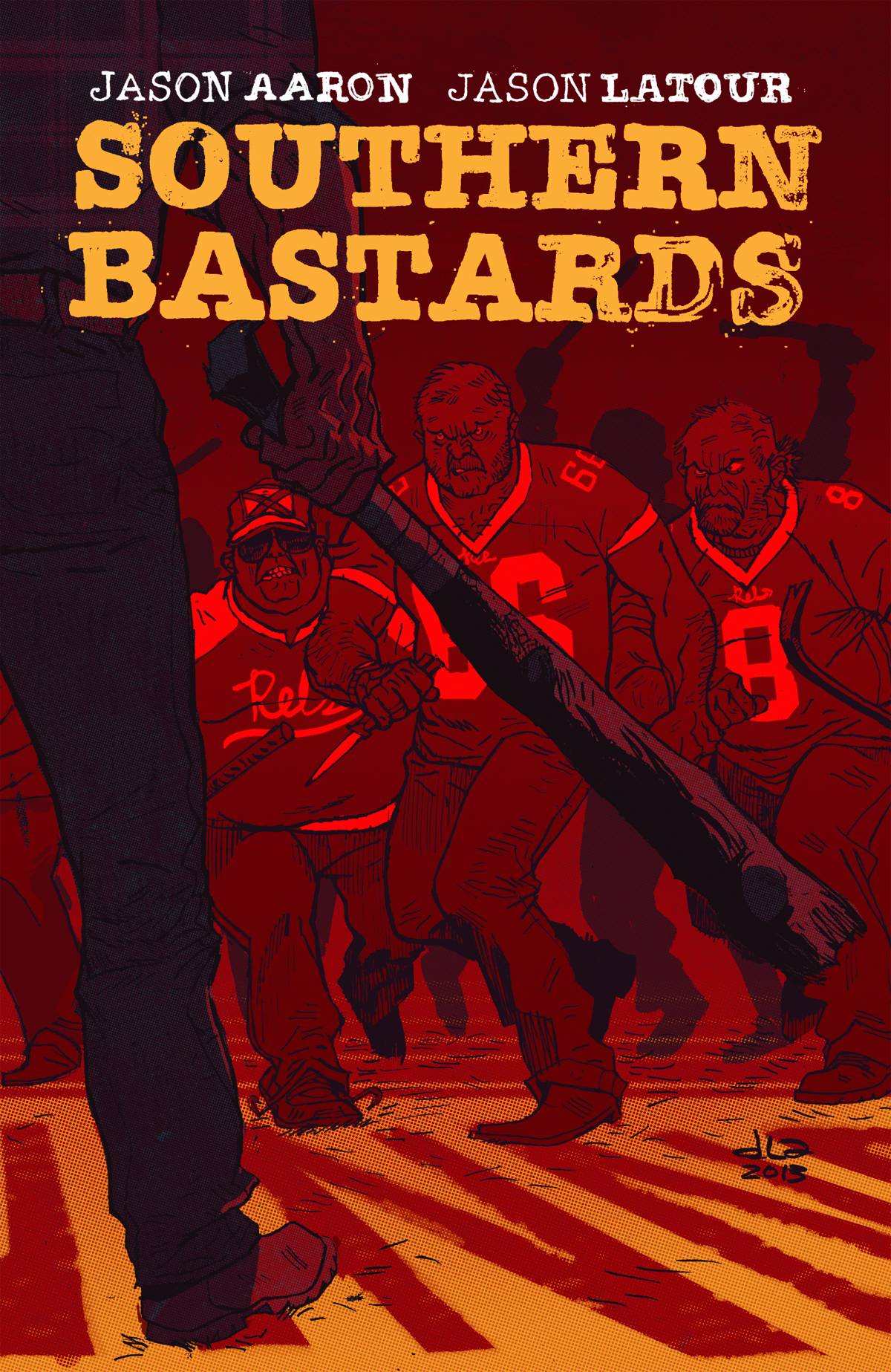
Archives

  • August 2022
  • March 2022
  • February 2022
  • December 2021
  • August 2020
  • November 2018
  • October 2018
  • September 2018
  • August 2018
  • July 2018
  • August 2017
  • September 2016
  • August 2016
  • July 2016
  • September 2015
  • August 2015
  • July 2015
  • June 2015
  • May 2015
  • April 2015
  • March 2015
  • February 2015
  • January 2015
  • December 2014
  • November 2014
  • October 2014
  • September 2014
  • August 2014
  • July 2014
  • June 2014
  • May 2014
  • April 2014
  • March 2014
  • February 2014
  • January 2014
  • December 2013
  • November 2013
  • October 2013
  • September 2013
  • August 2013
  • July 2013
  • June 2013
  • May 2013
  • April 2013
  • March 2013
  • February 2013
  • January 2013
  • December 2012
  • November 2012
  • October 2012
  • September 2012
  • August 2012

Features

  • 22 I&N 22
  • 5 Comics You Should Be Reading
  • Back and Forth
  • Derekommendations
  • I&N Print
  • I&N Review
  • I&N Scott's Bag
  • I&N Store
  • I&N the Gutter…
  • I&N's Top Ten
  • I&Nsight
  • I&Nterview
  • Innie Awards
  • Microviews
  • Scottlight on…
  • Superhero Friday!
  • Top 5 Books of the Month
  • Uncategorized
  • What's I&N Store?

Recent Posts

  • Creator Watch: Deniz Camp
  • The Best Comics You’re Not Reading
  • Pick of the Week
  • Best Comics of 2021
  • Worth Your Time

Real Nerdy Stuff

  • Create account
  • Log in
  • Entries feed
  • Comments feed
  • WordPress.com

Twitter Updates

Tweets by imagesandnerds

Top 3 Posts & Pages

  • Creator Watch: Deniz Camp
  • The Best Comics You're Not Reading
  • Pick of the Week

Finders Keepers

Create a free website or blog at WordPress.com.

Privacy & Cookies: This site uses cookies. By continuing to use this website, you agree to their use.
To find out more, including how to control cookies, see here: Cookie Policy
  • Subscribe Subscribed
    • Images and Nerds
    • Join 57 other subscribers
    • Already have a WordPress.com account? Log in now.
    • Images and Nerds
    • Subscribe Subscribed
    • Sign up
    • Log in
    • Report this content
    • View site in Reader
    • Manage subscriptions
    • Collapse this bar
 

Loading Comments...
 

    %d