• The Big Picture
  • Here’s ScottNerd…
  • Here’s DerekNerd…

Images and Nerds

~ We're turning pages–and writing about them!

Images and Nerds

Author Archives: dmainhart

Derekommendations: Demons and Dreams

09 Sunday Nov 2014

Posted by dmainhart in Derekommendations

≈ Leave a comment

Tags

Chris Ware, Demon, Eric Shanower, Gabriel Rodriguez, Jason, Jason Shiga, Little Nemo in Slumberland, Little Nemo: Return to Slumberland, Nelson Daniel, Winsor McCay

Hey there everyone. Been a while. Read any good comics lately?

As some of you may know, in our real lives we here at I&N are educators (“What’s that?!” you ask, “A comic critiquing website doesn’t pay the bills?!” I know. I’m as surprised as you.) Well this new school year has hit this particular educator like a ton of bricks. (Seriously, if you know any teachers, give them a hug. Or maybe a flask.)

The sad result? You haven’t heard much from me lately. (How do you go on?) But there were two recent titles that I couldn’t let go by without comment and still consider myself a comics scholar, aesthete and general know-it-all. To wit:

Demon #1 (self-published): Award-winning cartoonist Jason Shiga’s (Empire State, Meanwhile) latest features a determined young man with a never-say-die attitude…towards dying. Without giving too much away, the story reads like a gleefully demented version of Groundhog’s Day. Shiga delivers his devilishly black humor with impeccable comic pacing. Originally presented as a daily, serialized webcomic, the story benefits from the more traditional comic book format, as it displays Shiga’s mastery of the page turn for comedic effect. The simplicity of the setting (most of the story takes place in the same room) lends a certain claustrophobia, as events slowly grow ever more surreal. The art, while pleasingly cartoony, has a schematic quality in both style and layout, that brings to mind the ironically understated work of Jason or Chris Ware. This matter-of-fact presentation, given the bleak subject matter, only heightens the awful, laugh-out-loud moments. And of those, there are quite a few. Because, while suicide may not be painless, in Shiga’s manic, twisted hands, it is hilarious.

Demon #1

Little Nemo: Return to Slumberland #1 (IDW): Winsor McCay is one of the greatest artists (not just cartoonists) of the 20th century. His work has inspired everyone from Walt Disney to Maurice Sendak. His seminal achievement is arguably Little Nemo in Slumberland. In newspapers across the country, McCay presented a weekly art nouveau tableau of fantasy, in which Nemo’s dream world came breathtakingly to life. Never had such a wild imagination been rendered with such precise, consummate draftsmanship. At the very dawn of comics McCay set a bar for the medium that has never been surpassed. Eric Shanower and Gabriel Rodriguez attempting to revisit this masterwork is then, the most quietly audacious move of the year.

Of the two, Mr. Rodriguez has by far the more difficult task. How does an artist, even one as talented as Rodriguez, interpret the work of the most gifted fabulist ever to hold a pencil, without seeming slavish or paling by comparison? Happily, he seems up to the challenge. While obviously owing much to McCay’s work, Rodriguez introduces a more modern cinematic flair to the proceedings (McCay, for instance, nearly always kept his main characters in mid-range shots, almost never employing close-ups) that may have been influenced by the gorgeous, but structurally flawed, animated movie adaptation of 1989. While nothing can ever quite compare to the original, the artwork here is playful, precise, and candy-colored (hues skillfully provided by Nelson Daniel. McCay, of course, colored the originals.) In other words, it is everything Little Nemo should be. Well, almost. If there is a quibble, it’s that, other than a couple of pages (8 and 9) he doesn’t attempt the kind of innovative panel designs that were so integral to the original. Ah well, room to stretch in future issues.

As for Mr. Shanower’s part, he does a fine job of providing just enough of McCay’s greatest hits for Rodriguez to exploit, while establishing a rhythm that stays true to the original and simultaneously taking advantage of the comic book format. Not a small feat. His best decision however, may have been to not set this in McCay’s world of 1905, nor to try to update the original character for our time. In a small but wise step, he introduces a new Nemo, establishing a fresh start and allowing himself some latitude with the character’s development. It also may make him more relatable to young readers. Because at the end of the day, that’s the point. Shanower and Rodriguez have created that all-too-rare thing: an excellent comic book for children. And if this book introduces the unparalleled wonder of McCay’s masterpiece to a new generation, then that alone is cause for celebration.

Little Nemo: Return to Slumberland #1

For more about Demon visit www.shigabooks.com

Issues 1 & 2 of Little Nemo: Return to Slumberland are on the shelves now. Grab them while you can!

Yours in Comics,

Derek

Share this:

  • Click to share on X (Opens in new window) X
  • Click to share on Facebook (Opens in new window) Facebook
  • Click to share on Tumblr (Opens in new window) Tumblr
  • Click to share on Reddit (Opens in new window) Reddit
  • Click to email a link to a friend (Opens in new window) Email
  • Click to share on Pinterest (Opens in new window) Pinterest
Like Loading...

I&Nterview: Guillermo Zubiaga

14 Monday Jul 2014

Posted by dmainhart in I&Nterview

≈ Leave a comment

Tags

Domingo de Luça, Guillermo Zubiaga, Hal Foster, Joanes de Echaniz, Joanes or The Basque Whaler, Juanes de Larrume, Michael Barkham, NY ComicCon, Prince Valiant, The Center for Basque Studies, University of Nevada, whaling

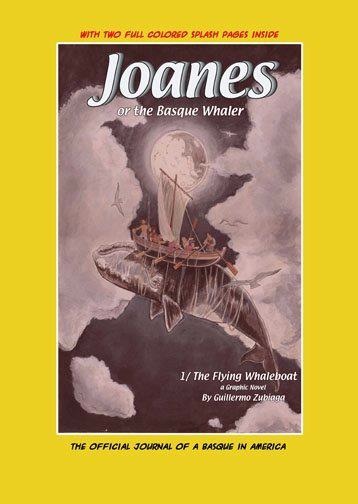
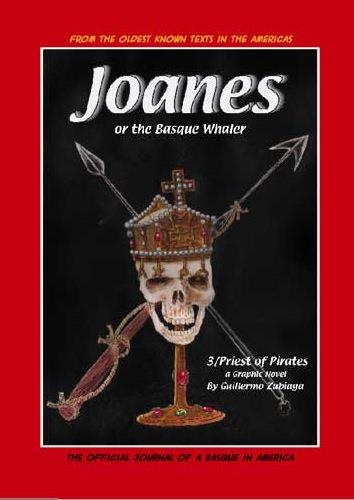
There are a lot of ways for independent creators to get published these days. You could start a Kickstarter campaign. You could publish on the web. Or, if you’re Guillermo Zubiaga, you could have it financed by scholarly cultural institutions like the University of Nevada and The Center for Basque Studies. His comic Joanes, or the Basque Whaler, has garnered him considerable attention, much of it from sources you wouldn’t normally associate with comic books.

guillermo1

 Derek Mainhart: So first a little background info: What’s your professional comics background?

Guillermo Zubiaga: I started my career working in an animation cartoon studio, while getting my degree at Syracuse University. After graduation I decided to move to New York City, to expand my professional possibilities. I got my first job in the comic book industry around 1997. I did a year or so work “ghosting” (uncredited work) and after a relatively short time I managed to get my work credited in Marvel’s X-Force. I also ghosted on Images Comics’ HellHole #1 and then on Witchblade INFINITY, for which I was given credit. 

Around the same time I also worked as a toy designer with Art Asylum, drawing designs for action-figures for ToyBIZ: X-Men, Spider-Man, Lord of the Rings and others. I also worked on the Image Comics title Nosferatu 1922 and some more ghosting for Vertigo (DC) on Big Daddy Danger, for which I was occasionally credited. I did some inking on an issue of B.P.R.D. for Dark Horse, and on an Image graphic novel, The Romp.

I have also drawn quite a few storyboards, mostly for TV-advertising, some music videos, but most notably for the short film Witchwise (2006) by Joe Harris and Night Messiah Films-Lointerscope.

DM: So you’ve been around. How did you feel about the “ghosting” process? Did it bother you to not get credited for some of your work?

GZ: I found ways around it. For example, perhaps semi-consciously, I began peppering a few subtle Basque “winks” and “tags”. Well, some not so subtle at all: there were iconic Basque symbols, letters, words, even phrases and names of Basque rock and rap bands, etc. Things I thought would not be recognized by anybody. I figured no other Basques were likely to be working as artists in the comic book industry. I never thought I was getting away with anything. If any of the camouflaged, incomprehensible Basque “winks” I drew in the background would have jumped out as any kind of red flag to an editor, the worst that could have happened was that I would’ve simply erased them and drew them over. But that never happened. On the contrary, I think that my when some of the books I worked on in America got published back in Europe, the “Basque winks” that I thought I had concealed so inconspicuously were eventually discovered. This led to some very considerable attention until finally the University of Nevada got news of my “affairs”.

DM: What was this “considerable attention”? When the University contacted you, were you already working on Joanes?

GZ: Yes. In 2007 I finished the flying whaleboat, showed it around to different editors in NYC and throughout the Comic Con circuit, trying to find a suitable venue.  I gave myself a self-imposed deadline of one year to find somebody to publish it. If not, I’d try self-publishing it.

During this time several articles were published about it in just about all the newspapers back in the Basque Country. I also was invited to participate in several interviews in a couple of Basque Radio shows and featured in a small piece on Basque News television.

A few months before my self-imposed deadline to find somebody to publish my book, I received a call from the University of Nevada, Reno. In 2009, courtesy of their Center of Basque Studies I published Episode 1 of my Joanes or the Basque Whaler saga: The Flying Whaleboat.

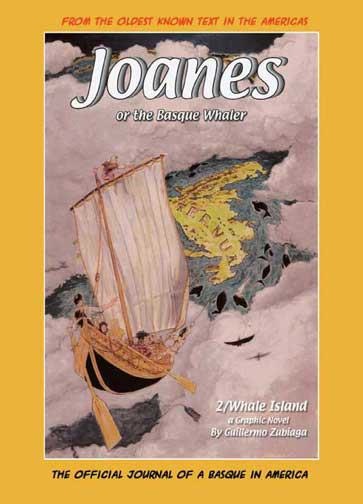
The second installment of the Basque whaling trilogy, Whale Island, premiered two years later at NY COMICON.

guillermo2

DM: What part did the University and the Center for Basque Studies play in publishing/promoting the book?

GZ: The Center for Basque Studies of the University of Nevada, in Reno holds and publishes (for the last 50 or so years and counting) the largest Basque themed library in the world (outside of the Basque country). So it has been, along with its vast distribution network, pivotal in spearheading this project and making it a reality.

I want to think of it as having been the right fit, and in retrospective I think I wouldn’t have wanted it any other way.

DM: What can you tell us about the story?

GZ: I would describe it as a fictional epic scattered with Basque mythological references. Regarding the first volume, Joanes, the protagonist, tries to make his fortune as a whaler during an era when the whales in the Bay of Biscay were becoming scarce. He’s forced to look farther afield, but without the means to do so. Here is when the story begins to depart from historical fact and the narrative weaves in elements of Basque legend. With the help of witches, Joanes summons a sea-devil who assist him…But for a price!

The episode ends with danger hanging over the recent success of Joanes and his crew as he has to live up to his unhallowed pact.

As far as the second book goes, continuing with the idea of Joanes as an anti-hero, we see that his fame and fortune grow, but so does his notoriety as a blasphemous and impious drunk. This defect will ultimately become his downfall, something quite real, human and flawed, characteristically lacking in most heroes.

This volume represents a turning point in the narrative: it’s the point of highest tension, before the conclusion in #3.

DM: The story takes great pains to recreate 15th century whaling practices. What interested you about the subject?

GZ: I hold the entire framework to be genuinely a Basque Western genre, comparable to The Cowboy in America, The Samurai in Japan or The Viking in Scandinavia. A truly epic age for the Basque people, which to quote a friend of mine “was the time when Basques have shined the brightest in their history”.

We Basques have been sitting on a buried treasure. As luck would have it, in our lifetime we have had the opportunity to discover the oldest and best preserved wreckage from the exploration age in the world. Not to mention two of the oldest written documents in American history, acknowledging us with the verifiable truth to claim back such a historical and cultural wealth.

DM: In addition to the whaling stuff, the narrative teems with historical detail. How much research did you have to do? Can you tell us about the process?

GZ: Research indeed!! I believe that the success of anything you do in this life depends 90% on research. It wasn’t easy, especially since not all investigating, in terms of archeological study, was done when I began this project. I realized that there wasn’t a whole lot to be found, although I am quite a library mouse and as much as I like to research, I had to talk to quite a lot of people. It wasn’t easy. I remember I went to different academic and cultural museums in the Basque Country as well as in Canada and Iceland, requesting any kind of visual aid, but like I said there wasn’t much. Luckily today I would say the field itself seems to be experimenting a bit of a revival.

DM: The story has the feel of folklore about it. How much derives from Basque tradition and how much is purely invention?

GZ: As far as the narrative is concerned, with the exception of personifying the natural occurrence of the Traganarroo (“watersprout” in Basque) into an anthropomorphic killer whale, I have painstakingly gathered every single element from the vast Basque mythological tradition; the witches and their relationship with the sea as well as the night whaleboat air rides, etc. I also drew from a very rich (though often little known) maritime history. The way I see it, all the elements were already there I just had to find them and weave them in a cohesive way that made them all fit.

guillermo3

the Traganarroo

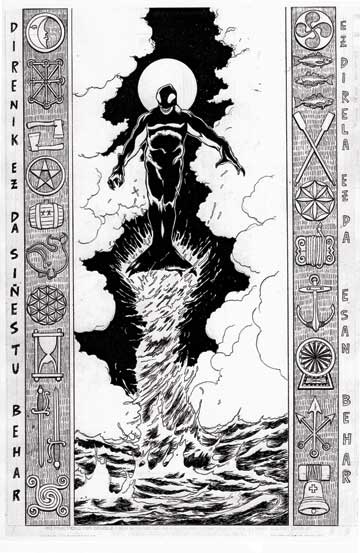
DM: You incorporate text and symbols into some of your page design. Considering your penchant for hidden “winks”, are these meant to provide added layers of meaning?

GZ: Well of course! One would only hope those “added layers of meaning” are deciphered. However, unlike my days of ghosting, where my Basque winks were somewhat unpremeditated, every element in JOANES is fully planned.

DM: The overall storytelling approach, episodic in nature, with an omniscient narrator, reads less like a traditional comic and more like a heavily illustrated narrative. In fact, the combination of this approach with your exhaustive attention to detail and realistic rendering style put me in the mind of nothing so much as Hal Foster’s work on Price Valiant. Was this approach dictated by the type of story you’re telling? Why did you choose this method?

GZ: Right off the bat, thanks for that reference to “the Prince of Illustrators”! I am not sure if I could explain my method or how I choose it; however I knew from the very beginning that I wanted to do something “different”, with a clear conscious effort along the way that I wanted to avoid most (if not all) cliches, narrative as well as visual. Yet I also knew I wanted something done with a traditional feel, especially if we consider the atavistic nature of the subject matter. I even considered doing it in sepia tone as opposed to B&W to give it a weathered look, although I do think the current print works fine.

DM: There is some interesting conjecture in the story concerning the Basque’s discovery of the New World (you even provide some historical footnotes to this effect). What evidence you find supporting this? And was this part of the impetus for the story?

GZ: Impetus for the story? You bet!! There is a whole lot of undisputed evidence on the early presence of Basques in the New world. The tale itself is inspired by two of the oldest known texts to be produced in North America, the last will and testaments of Juanes de Larrume and Joanes de Echaniz, Basque whalers who respectively died in Canada in the years 1577 and 1584. ( A recent discovery by Michael Barkham places Domingo de Luça, also a Basque Seaman, who died in 1563, as the oldest written document in North America). Along with these written documents, the oldest shipwreck found north of Florida is the Basque Galleon, San Juan.

Furthermore a recent discovery (it happened while I was wrapping #3) at a Huron village site near Toronto, places one of the oldest pieces of iron (an axe fragment) in North America. The item was radio carboned to be from around 1500 A.D. and it has yielded very suggestive results because not only does it turn out it is Basque in origin but forensic archeologists were even able to locate the actual forge where it was manufactured back in the old B.C. (Basque Country).

In 1497 A.D. when Giovanni Caboto sailed for the King Herny VIII of England and “discovered” Newfoundland, on his arrival to the New World he encountered several Basque ships already fishing its coast.

Later in 1534 A.D. as Jacques Cartier explored the east coast of Canada on his “discovery” expedition for France, he also reported seeing Basque whalers off its shores. Moreover, some of the French-Basque crew that Cartier brought with him were the only ones who could understand a few trade words that the natives were using. An Algonquin-Basque pidgin had developed over years of trade between the two groups. Modern Micmacs today claim that when both Cartier and Cabot were first encountered they were greeted in Basque. The Basque language was without a doubt one of the earliest European languages that the natives learned, before, English, French or Spanish.

You see the whole subject of Basque whaling shrouded in a halo of mystery. Besides working so far from their home ports, they were exempt from many taxes that the crown or the church would otherwise claim, so naturally the occupation itself was quite secretive, in the nature of the fisherman who keeps quiet about the source of its catch to protect him from his competitors.

At any rate, all these elements were like a jewel for at least the backdrop of the centerpiece for a narrative work.

DM: The second issue ended on a note of almost biblical proportions. What can you tell us about Joanes #3?

GZ: The whole narrative of Joanes could be described as a journey of self discovery where the protagonist begins as a clear cut anti-hero but events transpire which transform him into a more traditional hero. Self sacrifice comes into play in this last issue, but even though the character appears more benign, the inner scoundrel never fully disappears.

The only two things that I can reveal is that our character has himself ordained and in addition to that becomes a pirate!!! (hence the title, Priest of Pirates)!

guillermo4

Look for Joanes or the Basque Whaler on Guillermo Zubiaga’s Blog:

http://guillermozubiaga.blogspot.com/


Share this:

  • Click to share on X (Opens in new window) X
  • Click to share on Facebook (Opens in new window) Facebook
  • Click to share on Tumblr (Opens in new window) Tumblr
  • Click to share on Reddit (Opens in new window) Reddit
  • Click to email a link to a friend (Opens in new window) Email
  • Click to share on Pinterest (Opens in new window) Pinterest
Like Loading...

Dark Knight, Dark Bright, aired on IFC tonight…

07 Monday Jul 2014

Posted by dmainhart in I&Nsight

≈ Leave a comment

Tags

Adam West, Batman, Burt Ward, David S. Goyer, Dynamic Duo, IFC, Zach Snyder

Watching the Adam West/Burt Ward Batman series with my daughter (currently being shown on IFC), I’m reminded of my own childhood experience of the Dynamic Duo. Blissfully ignorant of irony, my 6-year-old self took these shows at face value, shark repellent and all. I was mesmerized, electrified, occasionally terrified. It was my introduction to the world of super heroes. My mind crackled with possibility. It was love at first sight.

As I grew, like many fans, I dismissed the 1960’s version as a too-campy distortion of what Batman was supposed to be. I preferred my Dark Knight serious, gritty, “realistic,” as God and Frank Miller intended.

Years later, having been exposed  to the unremittingly bleak visions of Nolan and Goyer, and having endured the utterly soulless spectacles of Zack Snyder, it occurs that asking imaginary costumed men to reflect our base reality is a task ill-suited to them. And reductive besides. They are better used to inspire, to fire the imagination, to fuel the stuff of dreams.

And so I think perhaps my 6-year-old self had it right.

-Derek


Share this:

  • Click to share on X (Opens in new window) X
  • Click to share on Facebook (Opens in new window) Facebook
  • Click to share on Tumblr (Opens in new window) Tumblr
  • Click to share on Reddit (Opens in new window) Reddit
  • Click to email a link to a friend (Opens in new window) Email
  • Click to share on Pinterest (Opens in new window) Pinterest
Like Loading...

Top 5 Books of May: Revenge of the Superheroes!

30 Monday Jun 2014

Posted by dmainhart in Top 5 Books of the Month

≈ 9 Comments

Tags

Action Lab, Brian Wood, D'Israeli, Danijel Zezelj, Dark Horse, Double Indemnity, Dry Spell, James Asmus, Jordie Bellaire, Kano, Ken Krekeler, Marcel Duchamp, Matt Kindt, Mind MGMT, Ordinary, Quantum and Woody, Rene Magritte, Rob Williams, The Massive, Titan, Valiant, Woody Allen

Oh, crow! That most foul-tasting, um, fowl. ‘Twas only a month ago I was bemoaning the continuing prevalence of superhero books on ye olde comics stand. And yet here we are, scarcely four weeks later, and no less than three such titles are being featured our hallowed list (and two taking the top slots no less!) In my defense, I did say that in the right hands, gold could still be wrought from the well-worn cape and tights set. The creators below have managed just that. To wit:

#5. Quantum and Woody #10 (Valiant): Look!  Up in the intro!  It’s a word!  It’s a phrase!  It’s Super Segue!  You bet it is!  And, so, well, this might hurt a bit: Speaking of wit: Quantum and Woody–a super duper hero book if there ever was one–has been full of it from the get-goat.  Here, though, the comic runneth over–and spiritedly so!  The Abbott and Costello of comedic crime fighting–straight man Quantum and wise-cracking Woody, respectively–find themselves in deep voodoo as Woody seemingly switches sides instead of simply splitting them, leaving Quantum in quite the buggy bind.  As the story takes shape, Woody’s questionable character is analyzed expertly by the heroes behind the heroes: creators James Asmus and Kano deliver a gay romp of painfully obvious punchlines and playful layouts–one that reaches around to the past for some insight into Woody’s relationship with the larcenous Jacklean; one that sees the images and words coming together to bust guts and gutters.  (Love, love, love how Woody–in a memorable meta moment–pushes aside the bars of his four-panel prison.)  Toss in a roundly panned appearance by the Swedish Chef and a surprising dash of sympathy for Woody, and we can’t help but confess: Quantum and Woody ain’t no joke; it’s a top book–as this super issue so heroically insists. (SC)

Picture

Quantum and Woody #10

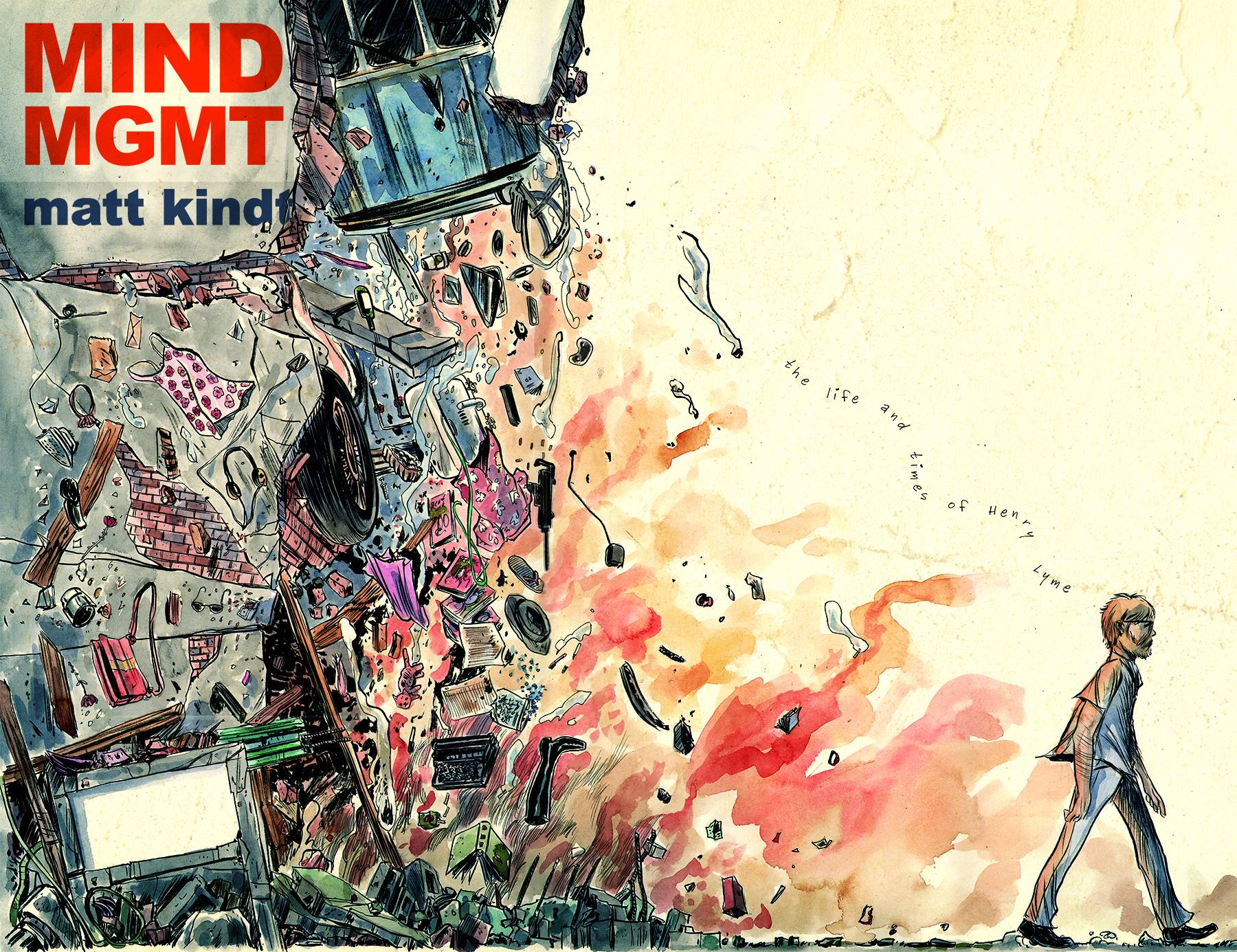
#4. Mind MGMT #22 (Dark Horse): After its ignominious appearance as The Biggest Dis(appointment) of last month’s list, Matt Kindt’s surreal spy masterpiece returns to rarefied form. As the plot explores the backstory of a splinter group within the overall worldwide conspiracy, the issue actually reveals itself to be a piece of art about art; the meticulous planning that goes into its creation, the frustration of failure, and its subtle, pervasive, and often unintentional influence. Kindt’s distinctly postmodern approach then, acts simultaneously as an apt metaphor for the book’s very existence, as well as catnip for art nerds (like me). The front-and-back matter that bookend the tale both take place in art museums, Marcel Duchamp is casually referenced, as is a supposed sequel to Double Indemnity (which had me immediately conducting Google searches to see if there actually was such a thing. I found nothing.) And talk about surreal – Kindt’s Magritte-inspired painting – whimsical, beautiful and oh-so-clever – is, as far as I’m concerned, already the cover of the year. (DM)

Mind MGMT #22

#3. The Massive #23 (Dark Horse): Brian Wood’s stripped down plot befits his story of survival at its most primal: at the end of the world a convoy of life-sustaining water crosses the unforgiving desert. The precious cargo, beset by thieves on all sides, is guarded by a small cadre of women led by the mysterious Mary, revealed at last to be akin to a goddess. The simplicity of the plot (matched by the bold, near woodcut-like art of Danijel Zezelj with colors by the peerless Jordie Bellaire) also belies the rich complexity of Wood’s themes: environmental degradation, the consequences of dwindling natural resources, geopolitical power and gender politics; and finally, and perhaps surprisingly, the remarkable resiliency of life in the face of devastation. (DM)

The Massive #23

#2. Ordinary #1 (Titan): But enough of this hoity-toity art stuff! Postmodernism? Gender politics? We’re here to talk superheroes! Capes! Muscles! Lasers shooting out of things! The stuff of every boy’s fantasy! And in Ordinary, by Rob Wiiliams and D’Israeli, everyone gets to be one. Everyone, that is, except Michael. A middle-aged schlemiel, eking out a pathetic living, Michael seemingly exists only to be life’s punching bag.  When a mysterious event grants superpowers to everyone on the planet, Michael is inexplicably left out. Hilarity arises as Michael suddenly has to navigate the increasing insanity around him. And this book is funny folks. Talking bears, super-beggars and cabbie-gods, all are part of the surreal, new landscape (D’Israeli, working in an exuberant Neo-Pop Art style, absolutely goes to town). But there is also pathos, including an astonishing scene involving a lonely old lady. And Michael himself is basically a decent guy: when the world goes nuts, his first thought is his son’s safety (his second thought is to get a drink). And then there’s the satiric edge: by making Michael a balding, bespectacled schlub surrounded by fantastic superpowers, Williams and D’Israeli have created a wry stand-in for the sort of middle-aged man who reads this type of story to begin with (ahem). A sad sack protagonist, absurdist humor, underlying heart: this is the comic Woody Allen would write if he wrote superheroes. (DM)

ORDINARY #1

Ordinary #1

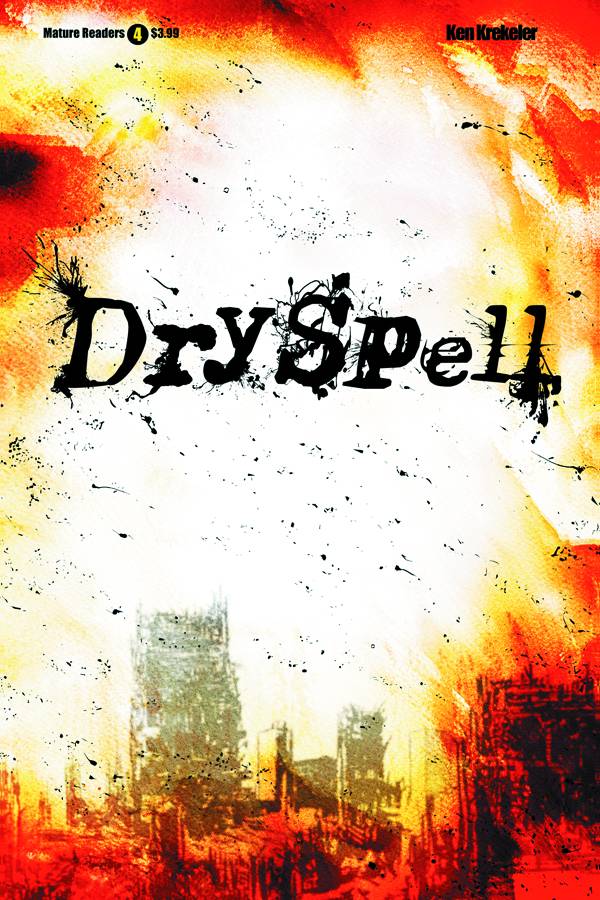
#1. Dry Spell #1 (Action Lab): Ken Krekeler has made quite a statement with Dry Spell #1.  Good thing, too, considering his choice to start his story with someone else’s.  And that someone else just so happens to be comic book god Alan Moore, so, you know, no pressure, right?  Wrong!  Duh.  Because the quotation Krekeler has chosen as his first issue’s first words aren’t merely an epigraph that simply sets a tone for the tale to come; they are the opening salvo of a layered conversation about what it means to be an artist–about that will-o-the-wisp known as inspiration and the war that rages between activity and passivity; and, as the conversation develops, about the nature of superheroes and the duality of man, which makes sense, you know, with the whole Watchman thing that comes along with Mr. Moore.  Sure, Krekeler’s placed the burden on himself, but he’s clearly up to the challenge, just as, on page three, Apollo, the first hero to whom we’re introduced, is up to his: he’s seen carrying a passenger plane to safety–seen not just by us, but by the protagonist, Tom, as well.  He’s a cubicle jockey, who is, as we later learn, more than just some guy with an empty job, an empty relationship, and an empty canvas that’s more like a mirror that mocks him by showing him what he’s become since leaving the a super-powered life behind: nothing. His secret uncovered by a clever co-worker–who just so happens to also be a former costumed figure–Tom eventually finds himself at a club among powered peers, who seem to have designs on his ability to design things.  In a stunning psychedelic splash that stands as an exemplar of both Krekeler’s eye for color and his ear for poetry, a tripping Tom appears to fracture as two voices dance across the page: one his own, lucid voice and the other–neither still nor small–that leads him directly into temptation and into a sequence that delivers some serious tension, that is until Nightingale–a super-powered woman from the club with whom Tom has some history left a mystery–saves an unsuspecting woman from Tom and Tom from himself.  But to what end?  We’ll find out in a month’s time.  The immediate end, however, is a compelling story captained by a sympathetic character and an inspired take on the superhero set that courageously–and believably–promises Moore. (SC)

Dry Spell #1

Dry Spell #1

The Biggest Dis(appointment): Zero #8 (Image): Ales Kot’s Zero hit the scene late in 2013 and made quite the impression; in fact, it went from zero to eight–our #8 book of the year–after only four innovative issues, each a singular experience served up by an artiste du mois.  Man, we were high on this book.  Were.  Now, we’re pretty darned low.  As low as one can go, really.  Four issues into 2014 and Zero has gone from eight back to zero, coincidentally on the weakness of #8, this month’s mock minimalist offering.  See: to catch us up with Roman Zizek’s plan for Sara Cooke, Kot makes up for a rather remarkable dearth of dialogue and overall want for words by having artist Jorge Coelho pile on the panels–so many unnecessary, momentum murdering panels–and leave plenty unsaid, well, undrawn, giving us the responsibility of crawling through the gutters in order to bring some clarity to the narrative.  Comprehension be damned!  Yeah, what we’ve got here is not so much storytelling as it is story suggesting–often imploring that we suspend disbelief in order to overlook some absolutely absurd moments.  My disbelief?  Suspended from the gallows until dead, dead, dead–and buried along with my anticipation and any hopes that Kot will return to the form that forced us to take notice in the first place.  In fact, I’ll let Zero’s final words be my final words on Zero, as well: “I am here to tell you that I quit.” (SC)

Zero #8

Share this:

  • Click to share on X (Opens in new window) X
  • Click to share on Facebook (Opens in new window) Facebook
  • Click to share on Tumblr (Opens in new window) Tumblr
  • Click to share on Reddit (Opens in new window) Reddit
  • Click to email a link to a friend (Opens in new window) Email
  • Click to share on Pinterest (Opens in new window) Pinterest
Like Loading...

The 2014 ‘Innie’ Awards!

05 Monday May 2014

Posted by dmainhart in Uncategorized

≈ 5 Comments

Tags

Abstract Studio, Afterlife With Archie, Archie, Austin Harrison, BOOM!, Brian K. Vaughan, Dark Horse, Dave Stewart, Dean Motter, Ed Brubaker, Eisner Awards, Fatale, Fiona Staples, Francesco Francavilla, Fury: My War Gone By, Garth Ennis, Goran Parlov, Greg Rucka, Harvey Awards, IDW, Image, Jeff Stokely, Jordie Bellaire, Jose Villarrubia, Laura Allred, Lazarus, Marvel, Matt Kindt, Michael Lark, Mike Raicht, Mind MGMT, Mister X, Mister X: Eviction, Nelson Daniel, Numbercruncher, PJ Holden, Rachel Rising, Roberto Aguirre Sacasa, Saga, Sean Phillips, Simon Spurrier, Six-Gun Gorilla, Terry Moore, Titan, Wild Blue Yonder, Zach Howard

The recent announcement of the 2014 Eisner Award nominees have occasioned much debate here at the I&N offices (located in a snug chateau high in the Swiss Alps). Needless to say we were filled with outrage! (And by ‘outrage’ I mean ‘mild disagreement’.) The choices for nominees did not exactly match our own! The temerity! This would not stand! And so, we here at I&N proudly present: the Innies!

What does ‘Innies’ stand for? Well other than an attempt at shameless self-branding, it stands for ‘independence’! Being ‘in’ the know! Part of the ‘in’ crowd! And possessing the non-freaky type of belly button.

Since we don’t have the big-time budget of the fancy-pants Eisners, we’ve limited ourselves to six categories (sorry Letterers of Archival Collections of Anthologies for Early Readers!)

If the Eisners are the Oscars, and the Harveys are the Golden Globes, then we’re the Independent Spirits! (or at least the Ace Awards)

Without further adieu:

Best Limited Series:

  • Fury: My War Gone By, by Garth Ennis and Goran Parlov (Marvel/Max)
  • Mister X: Eviction, by Dean Motter (Dark Horse)
  • Numbercruncher, by Simon Spurrier and PJ Holden (Titan)
  • Six-Gun Gorilla, by Simon Spurrier and Jeff Stokely (BOOM!)
  • Wild Blue Yonder, by Zach Howard, Mike Raicht, Nelson Daniel, and Austin Harrison (IDW)

Best Ongoing Series:

  • Afterlife with Archie, by Roberto Aguirre-Sacasa and Francesco Francavilla (Archie)
  • Fatale, by Ed Brubaker and Sean Phillips (Image)
  • Lazarus, by Greg Rucka and Michael Lark (Image)
  • Mind MGMT, by Matt Kindt (Dark Horse)
  • Saga, by Brian K. Vaughan and Fiona Staples (Image)

Best Writer:

  • Matt Kindt, Mind MGMT (Dark Horse)
  • Dean Motter, Mister X (Dark Horse)
  • Greg Rucka, Lazarus (Image)
  • Simon Spurrier, Six-Gun Gorilla (BOOM!), Numbercruncher (Titan)
  • Brian K. Vaughan, Saga (Image)

Best Artist:

  • Francesco Francavilla, Afterlife with Archie (Archie)
  • Matt Kindt, Mind MGMT (Dark Horse)
  • Terry Moore, Rachel Rising (Abstract Studio)
  • Dean Motter, Mister X (Dark Horse)
  • Fiona Staples, Saga (Image)

Best Colorist:

  • Laura Allred
  • Jordie Bellaire
  • Francesco Francavilla
  • Dave Stewart
  • Jose Villarrubia

Best Comic Book Related Website Run By Two High-School Teachers In Their Spare Time In The Greater NY Area: 

  • Images and Nerds

Now it’s your turn. Who did we miss?

Let the internet shouting begin!

Turning pages,

Derek & Scott


Share this:

  • Click to share on X (Opens in new window) X
  • Click to share on Facebook (Opens in new window) Facebook
  • Click to share on Tumblr (Opens in new window) Tumblr
  • Click to share on Reddit (Opens in new window) Reddit
  • Click to email a link to a friend (Opens in new window) Email
  • Click to share on Pinterest (Opens in new window) Pinterest
Like Loading...

I&N the Gutter with…Sheltered

24 Friday Jan 2014

Posted by dmainhart in I&N the Gutter...

≈ 1 Comment

Tags

All-New X-Men, Ed Brisson, Image, Johnnie Christmas, Manifest Destiny, Paul Allor, Revival, Shaolin Cowboy, Shari Chankhamma, Sheltered

Welcome to our newest feature: I&N the Gutter with Scott and Derek, where we go all Siskel and Ebert on some poor, unsuspecting comic book. What you’ll find here are brief snippets of (mostly) unedited transcripts from our never-ending conversations about comics; the raw, unfiltered stuff from which the rest of our writing on the site springs. What it may lack in eloquence we hope it makes up for in spontaneity. Please let us know your thoughts and feel free to chime in!

Our first victim, I mean, entry is:

Sheltered #6

Sheltered #6. Writer: Ed Brisson. Artist: Johnnie Christmas. Colorist: Shari Chankhamma. Editor: Paul Allor. Publisher: Image Comics 

Backstory: Safe Haven is a survivalist camp, stockpiling supplies for what they believe is the imminent apocalypse. It’s a mentality the children of the camp absorbed all too well: convinced that the greatest threat to their survival are their own parents, they slaughter them. Lucas, their leader, tries to hold them all together, but tensions are growing, secrets leaking, and further blood has been shed. All very Lord of the Flies. We join events after issue 5, when the outside world has come a-knockin’.

Discussed: patricide, letters pages, narcolepsy

Derek Mainhart: So, I have to disgree with you about Sheltered.

Scott Carney: Really?

DM: I quite enjoyed it. I thought it was the strongest issue they’ve had since the first one. I really liked it cause its the beginning, the creators set something up and then they blow it up, which is what they did in the first issue. In this case they’re bringing in this guy from the outside world. And I liked his backstory. I enjoyed getting to know him and his loser friends. And then, you know, the sort of expected happens, and now he’s on the run.

SC: I found myself not caring. I fall asleep when I read comics.

DM: Never a good sign.

SC: It doesnt always mean something. Sometimes I’m just reading and I recline and I just pass out. I did fall asleep a couple of times here though, and I do think it was because I wasn’t so terribly engaged. I don’t really care about any of the characters at this point. I understand why he brought in the new characters. I mean after having gone through five issues of developing this little kid-run society after slaughtering the adults and whatnot, and all the conflicts that are extant there, and now to step out of that for a moment and bring in the adult world a little bit more – a very innocent adult world too if you compare it to where the kids are –

DM:  – Right. the guys basically an idiot. –

SC: – yeah – “hey I could use some help over here!” kinda thing. But I think if we look at it in terms of the innocence/experience thing then it starts to take on a role. But do I care about it? And if I’m measuring it that way, I didnt really care about it.

DM: Well if you don’t care about it then you don’t care about it. It’s time to drop it.

SC: Well I dont know about that.

DM: One of the things I liked about the most recent Manifest Destiny, in the letters column – it’s great, funny – but they also talk about their comic reading habits; how they stack their books and what they read first and what the read last; y’know the crap we talk about all the time. And one of them says something like “as soon as it becomes a chore, I’m done”. And I completely agree.

SC: I’ve been saying that with All-New X-Men for 21 issues.

(laughter)

DM: But I liked the switch. The way it ended last issue with the adults coming in shining lights on the camp, they seemed like a threat. But Brisson did a nice job this issue showing that they’re really not a threat at all. And now he’s going to be tracked down by, yknow, kids.

SC: True.

DM: I hope it doesnt become a five issue arc of them tracking this guy, going all Shaolin Cowboy on us yknow, five issues of them just running around in the woods.

SC: That would be awful.

DM: That would be enough to turn me off. I can deal with one issue of that. What I’m hoping happens is that somehow this will complicate things. Like, does this whole series have to be these kids in a bunker? Where does it go? If it ends up, they shoot the guy, status quo, yeah thats not good. Then theyre just spinning their wheels.

SC: Yeah, what’s the point?

DM: Like Revival

SC: Top Ten book!

(chuckle)

DM: So, the big question: Will you pick up the next issue? I’m def still in.

SC: Sure. After that, who knows?

Turning Pages,

Scott & Derek

Share this:

  • Click to share on X (Opens in new window) X
  • Click to share on Facebook (Opens in new window) Facebook
  • Click to share on Tumblr (Opens in new window) Tumblr
  • Click to share on Reddit (Opens in new window) Reddit
  • Click to email a link to a friend (Opens in new window) Email
  • Click to share on Pinterest (Opens in new window) Pinterest
Like Loading...

Top 5 Books of September

22 Tuesday Oct 2013

Posted by dmainhart in 5 Comics You Should Be Reading

≈ Leave a comment

Tags

Abstract Studio, BOOM!, Brian K. Vaughan, Daniel Quinn, DC, Dredd, Fiona Staples, Glen Brunswick, Image, Ishmael, Jeff Lemire, Jeff Stokely, Jordie Bellaire, Numbercruncher, P.J. Holden, Rachel Rising, Reality Check, Saga, Simon Spurrier, Six-Gun Gorilla, Terry Moore, Titan, Trillium, Vertigo, Victor Bogdanovic

5. Trillium #2 (DC/Vertigo): Jeff Lemire trades one flippin’ great gimmick for another in this, the sophomore effort of his so-far fantastic fledgling sci-fi series.  Our star-crossed something-or-others, Nika and William, come together after meeting face to face for seemingly the first time at the end of issue #1; but, not surprisingly, they suffer from intercursus interruptus, which is played up perfectly through Lemire’s clever choice of cutting out one side of the conversation, and then swapping sides and back again, until they find common ground–well, until they find something growing on common ground: trillium, of course!  This device, as vital as it is to the story and the pair’s burgeoning relationship, is merely an accessory–a necklace around the neck of a beautiful woman; and the beautiful woman, in this case, is Lemire’s own stunning artwork, which celebrates both the frustration and the humor present in the situation and the magical connection that’s present even when the right words aren’t.  I’m happy to say: I’ve found my thrill-ium, on Kuka Mama’s temple-ium–and in Lemire’s petal-to-the-metal original vision. (SC)

Trillium #2

Trillium #2

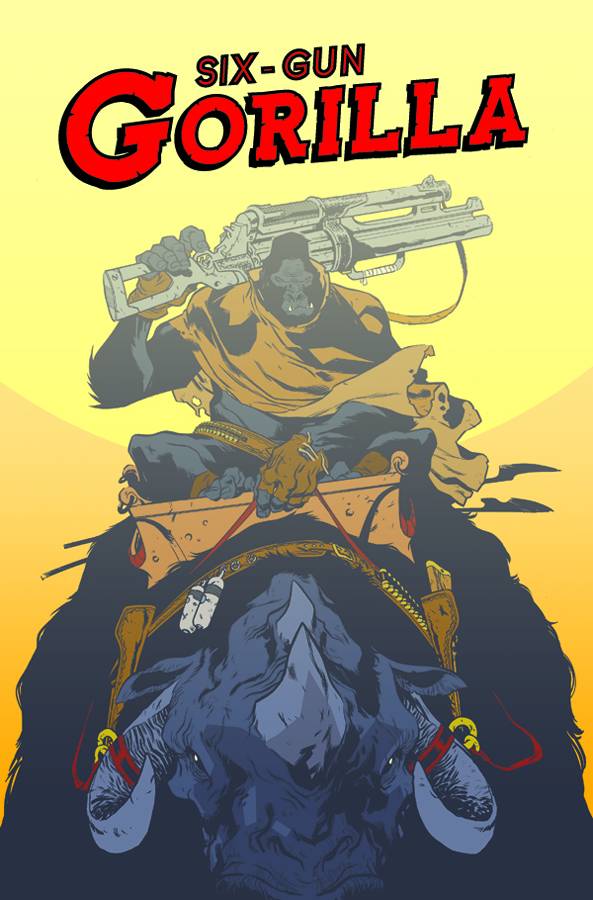
4. Six-Gun Gorilla #4 (BOOM!): “The story…the story we’re told, folks” is layers thick in this issue-laden chapter of the Gospel According to Simon Spurrier.  The visionary and his visualizer, hot-shot artist Jeff Stokely, continue Blue’s blistering journey from zero to hero, even as Jiminy Gorilla ties to convince him to say au revior to his savior complex.  The fourth episode of the genre-bending series kicks off with some sidewalk rabble-rousing before a cheeky sense of Dredd muscles its way into the mix, one that hovers over the whole of the book, especially as Spurrier continues his satiric assault on our infatuation with reality entertainment.  He ironically reviles the voyeur in us and assails our suicidal self-importance–the latter played up in the Mittyesque Blue, whose conversation with the “pseudo-mystical” gorilla about his place in this wild-west world is not unlike the Socratic dialogue in Daniel Quinn’s Ishmael (1992), which, by the way, is between the novel’s narrator and, if you didn’t already know, a talking gorilla.  That heady tète-à-tète is balanced brilliantly by plenty of high-velocity action drawn at a breakneck pace by the supersonic Stokely, who rides horses, stagecoaches, and speed lines all the way to a “classic scene”–a showdown between “the griller” and the well-armed Auchenbran–and a hairy final splash.  Where most minis of late have fallen short of the high expectations established by first issues built upon clever concepts, two-thirds of the way through, this gorilla of a book has evolved into something even more fascinating, with no sign of slowing down. (SC)

Six-Gun Gorilla #4

Six-Gun Gorilla #4

3. Numbercruncher #3 (Titan): Simon Spurrier is on a serious roll with his second book in this month’s Top 5 (the first time that’s happened!) This one’s a fast-paced, perfectly structured tale of a love that will not die, no matter how many times a mercenary angel of death tries to kill it. That said angel is a thuggish, bowler hat-wearing accountant in the ecclesiastical bureaucracy of the afterlife, is the clever underlying conceit.  The literally undying love provides, at first, a through line of hope. But in this issue, Spurrier seems to suggest that the romantic concept of ‘eternal love’ is not only unrealistic, but obsessive: that way lies madness.  Colorist Jordie Bellaire deserves special mention here as she alternates between gray tone and color palettes, visually separating life from afterlife (often in the same panel) over PJ Holden’s manic art. One hopes that Spurrier’s vision of the unforgiving machinery of the universe is mere fancy; but, in presenting such themes against unrelenting race(s) against death(s), the creators have fashioned 22 pages of story that hum like clockwork. (DM)

Numbercruncher #3

Numbercruncher #3

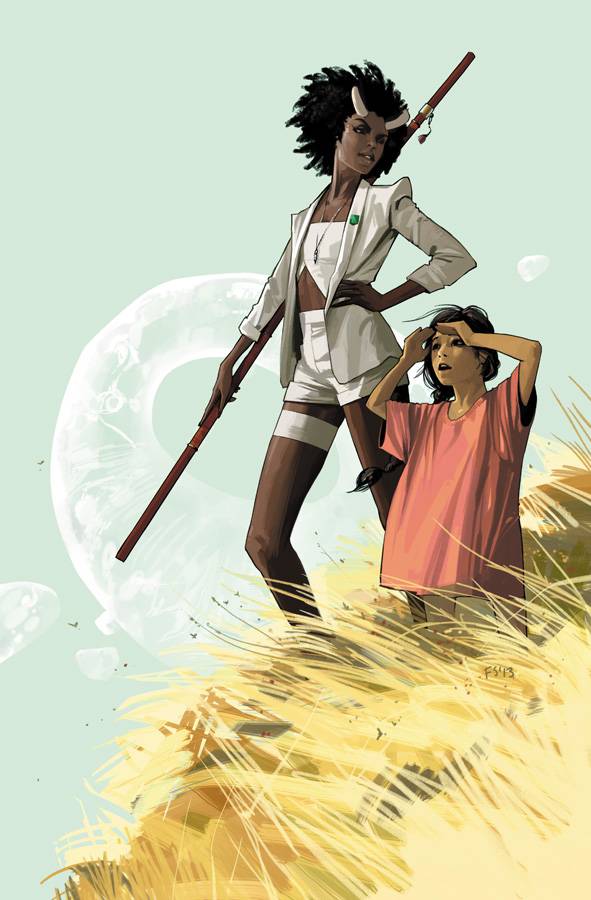
2. Saga #14 (Image): Another issue of Saga, another spot in our Top 5. It’s getting almost pedestrian, really. And that’s the kicker; often our top choices offer some formal aspect, some innovation, perhaps in the concept or structure of the writing, or the design or lay-out of the art, that really sets it apart. But Brian K. Vaughan and Fiona Staples just make it look so damn effortless, month after month. The latest chapter of our favorite sci-fi family dramedy features such earth-shaking events as budding romances, stopping for gas, and the most quietly touching scene between a young girl and her cat that you’re ever likely to read. And the only fireworks on display is the laid-back naturalism with which Vaughan and Staples are able to balance the fantastic with the all-too-real inner lives of their characters. Seamless. (DM)

Saga #14

Saga #14

1. Rachel Rising #19 (Abstract Studio): Terry Moore’s monthly dose of well-honed supernatural horror has risen to the top spot for the month on the strength of this issue’s blast to the all-important past–to this better-than-good book’s Genesis.  Moore sends us back to the black and white world of 17th century Manson and sets an ominous tone as he tempts us with ages-old character and thematic archetypes embodied in the gorgeous forms of the raven-haired Lilith and the innocent “little fawn,” Bryn Erin; he juxtaposes his avatars of death and life, respectively, with a chilling result, particularly as Bryn Erin’s parents, ironic Christian zealots, prove impotent–especially her pitchfork-slash-tri-pronged-phallus-wielding father–against the confident and bewitching power of a different, and certainly more feminine, perspective.  Speaking of perspective: Moore plays with negative space to a positive effect as Rachel–who in 2013 has been poisoned by her friend Carol– opens her eyes to shades of gray, a device that speaks, as we learn upon Rachel’s waking at the end, to Bryn Erin’s inner conflict and the relativism that marks the modern, more enlightened world.  As Rachel’s eyes close once more, we’re thrust back to early Manson and a heartbreaking scene between Bryn Erin and her young love, James.  Yes, there is danger here–nothing more dangerous, however, than the potential for ruinous, story-crushing sap, which Moore avoids with a magical mix of urgent dialogue, intense artwork, and more high-caliber irony.  At that point, a freckled expectation is certainly set, and the page turn doesn’t disappoint.  Perfection rarely does. (SC)

Rachel Rising #19

Rachel Rising #19

The Biggest Dis(appointment): Reality Check #1 (Image) – The concept: A lovelorn schlub with a heroic alter ego. Sound familiar? Ah, but here’s the meta twist – the schlub is actually a comic book creator and the hero is his costumed creation who’s mysteriously come to life! So what we have here are actual comic book creators (Glen Brunswick and Viktor Bogdanovic) creating a comic book about a comic creator creating a comic book about a generic superhero. What it amounts to is a comic book that gazes so intently into its own navel that it threatens to disappear. This might have been forgivable if the characters themselves weren’t so insufferable. I suppose the socially-awkward misfit paradigm is meant to make the lead character relatable to “the average comic book fan”. But playing to that stereotype only serves to reinforce it. Really, comic book fans need to get over the whole “loser” mentality, and books like this don’t help. Even sadder, the supposedly sexycool superhero displays an attitude toward women that is middle-school at best. But wait, maybe Brunswick is using the “writing” of his main character to expose his shortcomings and set him and his caped companion on a path out of arrested development! Yeah, and maybe bad writing is just bad writing. (DM)

Turning pages,

Scott & Derek

Share this:

  • Click to share on X (Opens in new window) X
  • Click to share on Facebook (Opens in new window) Facebook
  • Click to share on Tumblr (Opens in new window) Tumblr
  • Click to share on Reddit (Opens in new window) Reddit
  • Click to email a link to a friend (Opens in new window) Email
  • Click to share on Pinterest (Opens in new window) Pinterest
Like Loading...

Impressions: New York Comic Con

21 Monday Oct 2013

Posted by dmainhart in Uncategorized

≈ 1 Comment

Tags

Agents of S.H.I.E.L.D., Babymouse, Bluffton, CBLDF, Colleen AF Venable, cosplay, Eric Wight, Frankie Pickle, Greg Rucka, Guinea Pig, Hit, Jacob Javitz Center, Jeff Stokely, Jennifer Holm, Larry Marder, Lazarus, Matt Kindt, Matt Phelan, Matthew Holm, Mel Brooks, Meryl Jaffe, Michael Lark, New York Comic Con, Peter Tomasi, Six-Gun Gorilla, Tales of the Beanworld, Vanesa Del Rey

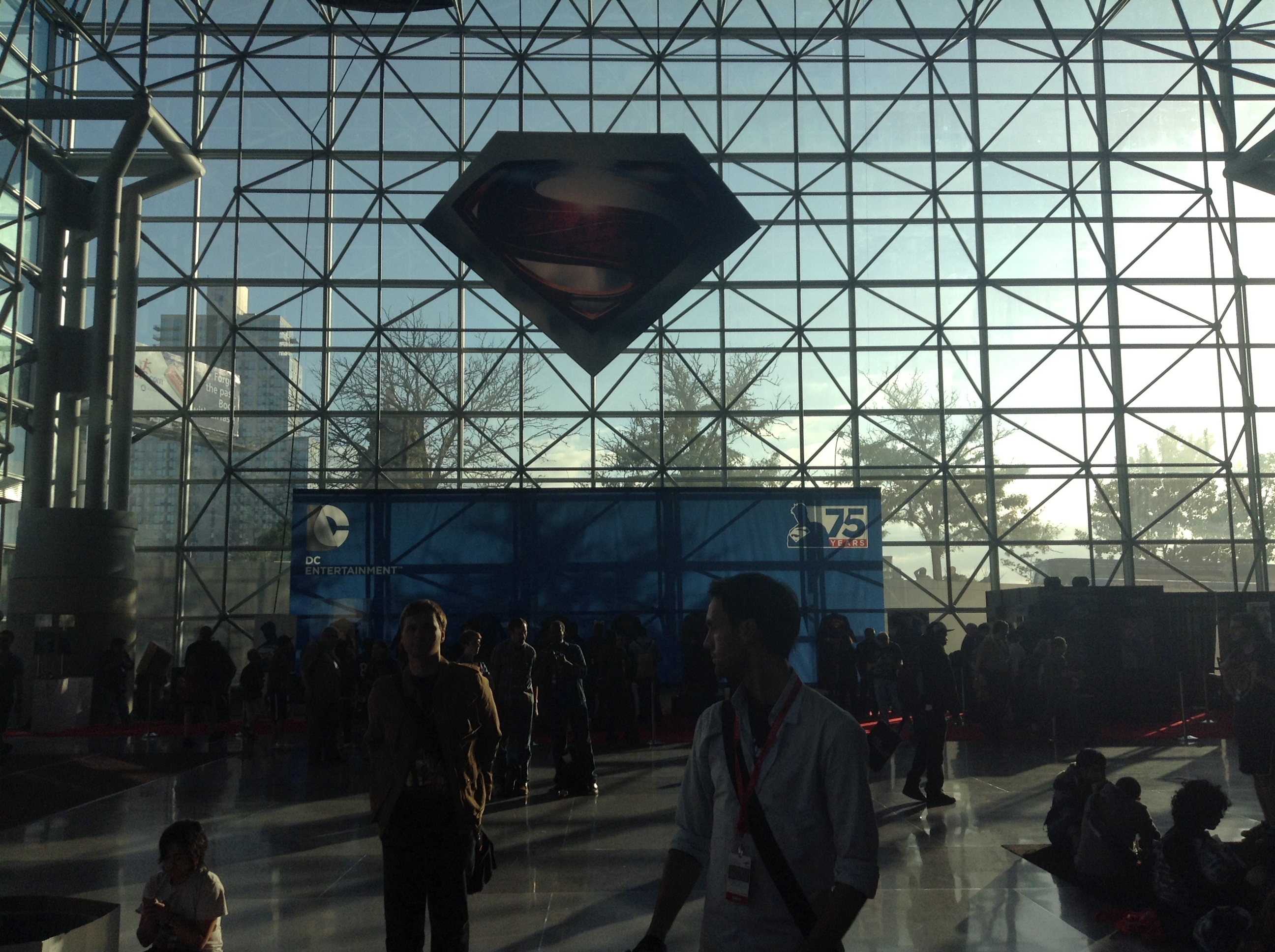
It’s been just over a week since the New York Comic Con descended on our fair city in a whirlwind of, if not glitz and glamour, then body paint and wishful thinking. And while seven days seems hardly sufficient to digest this pop cultural smorgasbord, I nonetheless humbly offer the following  highly personal, utterly non-comprehensive account of the weekend’s festivities.

scott

Scott, my partner in crime, about to go down the rabbit hole

First of all the size. I went to one of the earlier incarnations when NYCC was still sharing space with three or so other events. In the few scant intervening years it has metastasized to fill all eighteen miles of the Jacob Javits Center. It took us twenty minutes just to get our bearings.

derek-terrordomeAnd yet (like many of the costumes there) it was still bursting at the seams. Untold masses of pilgrims winding their way from one temporary chapel of plastic tubing and garish banners to the next. Caught in a sea of spandex and fishnets amidst a cacophony of miked-up segment hosts and video game sound effects. An iridescent fusion of Arab market and downtown Tokyo. Wonderland and TerrorDome at once.

dclegocar

The show was split into six major areas that I could discern. First, something called ‘The Block’. The name, suggestive of the title of HBO’s latest foray into the penal system, is perhaps not apt for anyone whose sensibilities have a volume setting under ’11’. Truly one’s senses were assaulted by an endless array of toys, gadgetry, accessories, statues, t-shirts and miscellanea, mostly of the mash/up or ironic kind (sidenote: if irony has spawned an entire industry, does it cease to be ironic?). In other words this was the place for high-octane (in your best Mel Brooks/Yogurt voice): ‘Merchandising! Merchandising! Merchandising!’ In keeping with my general skepticism, and appreciation for comics history, I referred to this place as ‘The Blech‘.

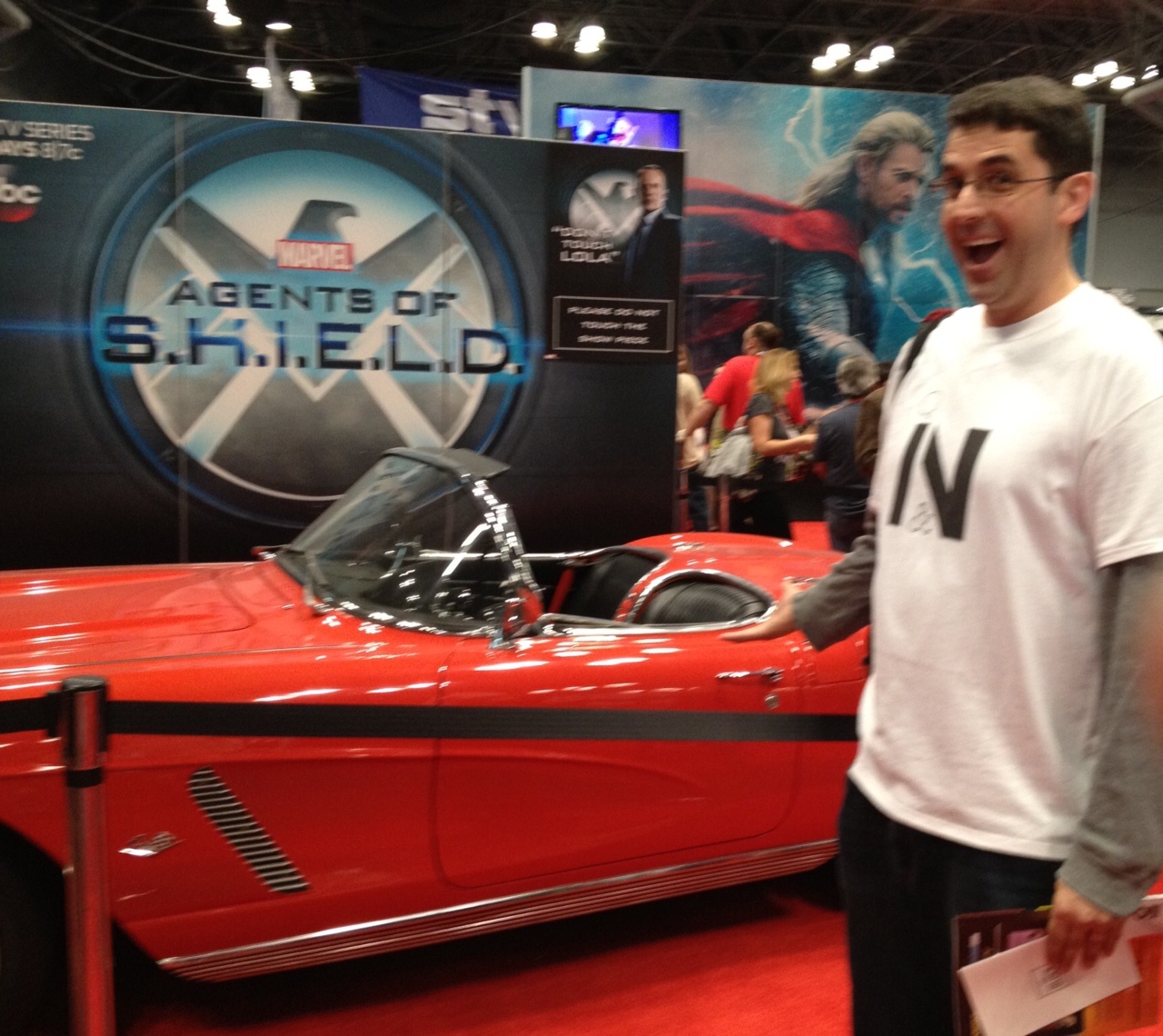
derek-southparkNot to be outdone, we next had the main exhibition space. This is where the publishers (and some major retailers) set up shop. This was nominally more interesting; at least this had something to do with comics, what with with editors, assistants and the occasional creator manning the booths. But what really seemed to be emphasized were the corporate bona-fides (‘synergy’ if you so choose) and the big events needed to prop them up (Look! It’s that car from “S.H.I.E.L.D”!) So, again the Aesthetic of the Exclamation Point reigned: bigger,better,faster,shinier. Sure there were islands of interest; an unknown publisher, a hard-to-find book.  But ultimately we were fleas in a thousand-ring circus.

derek-shieldcar

Am I being sarcastic? Or does some part of me think it’s kinda….cool?

There was the autograph section, with all the personality of an airplane hanger, housing long undulating queues of people clutching Hulk Hogan dolls.

The Food Court offered a range of selections from grease-bomb heart attack to actually edible. Its central location made logistical sense I suppose. But it did throw into high relief the outlying relegation of what were, after all, the two most interesting areas: the Panels and Artist’s Alley.

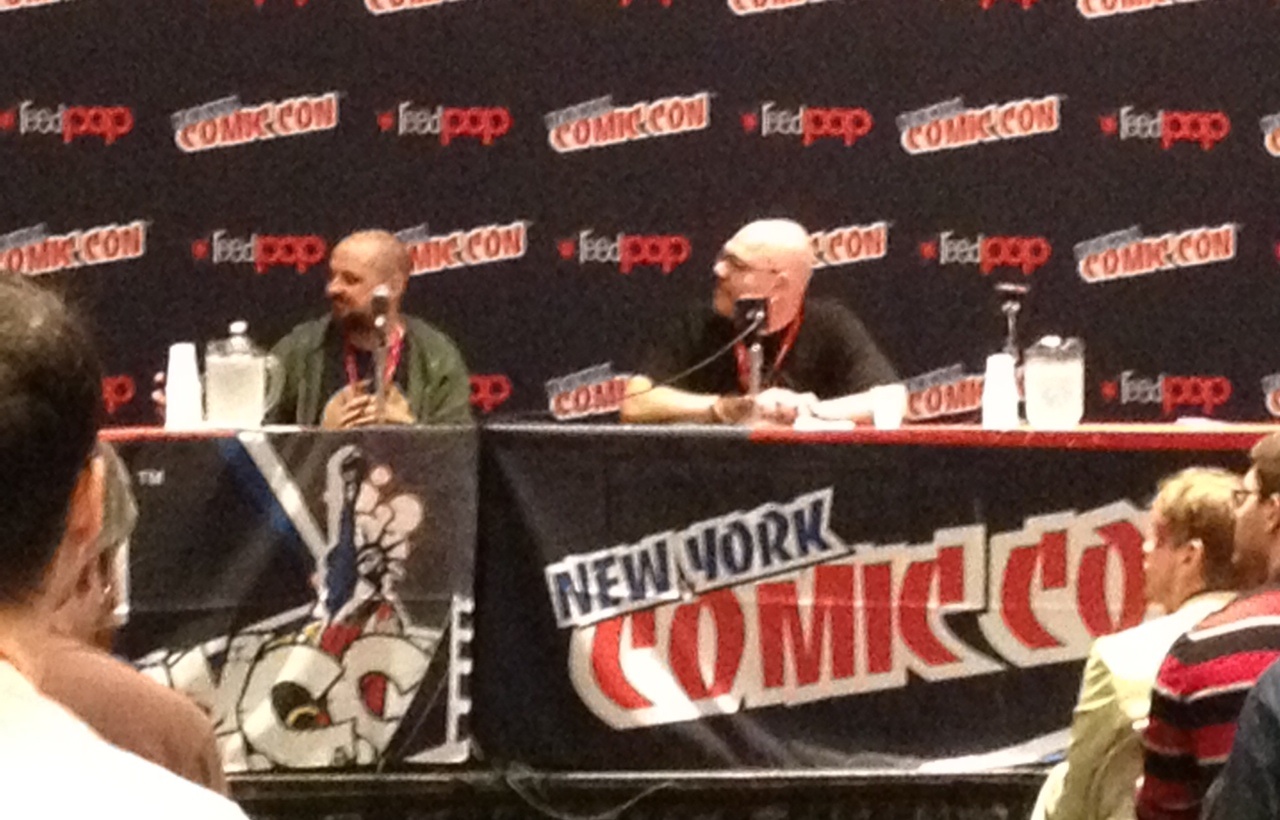
Perhaps it was too much to expect of a four day event that the panels would be ensconced in more attractive surroundings. But given the hyperventilating visuals of the Main Floor, the Spartan look of the panel rooms and attendant waiting area stood in stark contrast. Imagine an unused hockey rink with giant, unfinished cubicles, and you start to get the idea. But no matter; this was where you could hear creative minds wax creatively, expounding on craft, influence, the politics of the day, etc. (OK, maybe the Sonic the Hedgehog and Mega Man panel don’t quite fit this bill)

Some personal highlights:

-Greg Rucka’s political rant during the Lazarus panel, in which he got visibly angry at, among other things, the surveillance state, the highjacking of Washington DC, the ever-increasing power of the oligarchy, and mass manipulation by the media. He seemed to be aware of the danger of putting too much of this stuff in the comic, thereby risking alienating his audience; but I say caution be damned! I wanna see more of that! Michael Lark, on the other hand, perfectly played the comic foil to Rucka’s histrionics with well-timed barbs puncturing any impending pomposity. Best moment: Rucka, bemoaning current security practices, explaining to his audience just how easy it would have been for him to kill everyone in the room. Lark, not missing a beat, slowly backed away.

rucka/lark

The comedy stylings of Rucka and Lark

–CBLDF: Raising a Reader – A panel on the educational value of reading comics that managed to be informative and entertaining, featuring current rising stars of comic kid-lit Jennifer Holm and Matthew Holm (Babymouse), Colleen AF Venable (Guinea Pig), Matt Phelan (Bluffton), child literacy expert Meryl Jaffe, and indie comics icon Larry Marder (Tales of the Beanworld). The roundtable discussion covered the current boom in childrens’ comics (after a long dearth of such material), advocated for comics in the classroom to promote literacy, and defended against the charge that comics “dumb down” readers. Particularly insightful was Eric Wight (Frankie Pickle) recounting his experiences in using comics not just to get kids reading, but to help them write, focusing the type of visual storytelling skills that are becoming increasingly important in this day and age. The panel wrapped with some of the featured creators demonstrating a useful idea-generating exercise, while taking direction from a child in the audience.

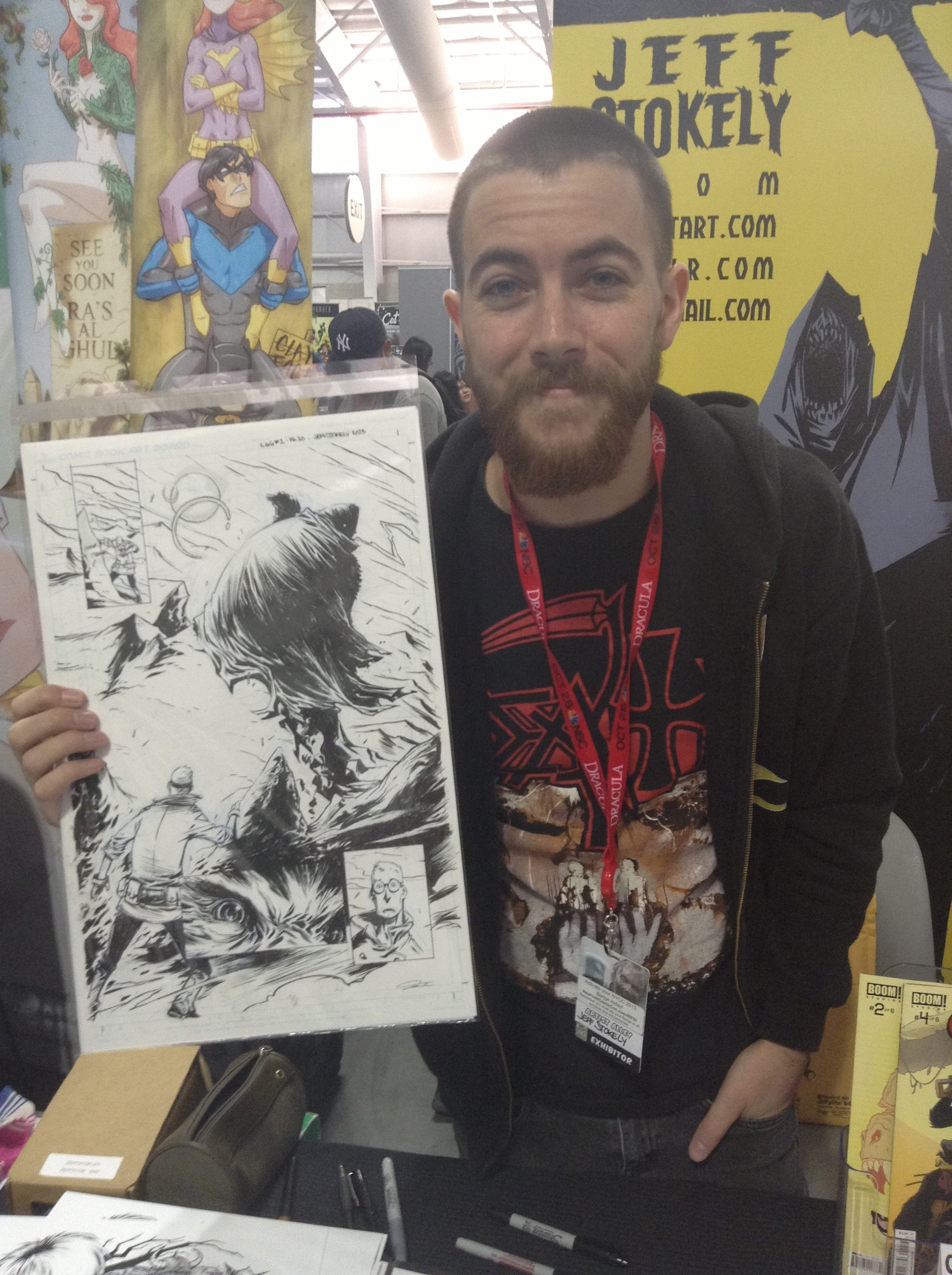
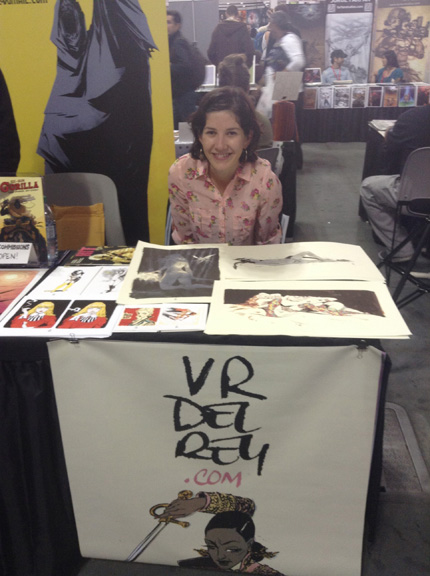
Finally, there was Artist’s Alley, with all the ghettoization the name implies. Far off the main exhibition space, and sharing a floor with the coat check, this was nonetheless the place to be. Here, after all, were the very creators upon whose talents Comic Con, and much of the entertainment industry, is built upon. Those, in other words, who put the Comic in Comic Con. (Without them it’s just one Big Con.) And quite a who’s who of artists, writers and editors it was; everyone from Adam Hughes to Yanick Paquette available to converse, debate, and of course, promote. Our man Scott chatted up Peter Tomasi on the current state of the Bat-universe. We drooled over Matt Kindt’s original art. And we spent some time with table-mates Jeff Stokely (Six-Gun Gorilla) and Vanesa Del Rey (Hit). (Really enjoyed talking process with Stokely. Nice to see a relatively young artist who still gets ink under his fingernails. I’ve got nothing against digital art – how could I in the age of Fiona Staples? – but there’s something so beautifully tactile about pages with nib scratches and ink splatter.)

stokely

Mr. Stokely

del rey

Ms. Del Rey

Of course, I can’t end an essay about Comic Con without mentioning what, for many, is its raison d’etre: the costumes. The make-up, the wigs, the giant wings, the giant-er artillery, the latex, the leotards – body type be damned! I viewed these hodge-podge concoctions with a mixture of admiration for the inventiveness (and in some cases, even artistry) that went into their creation, and a tugging sadness at the willful obliviousness involved in transforming oneself into a walking advertisement for something one doesn’t even own. The elaborate artifice employed to faithfully mimic a favorite characters held just a whiff of desperation. And yet, there was a disarming innocence about these folks. And they seemed, by and large, to be having fun; posing, taking pictures with fellow cos-players; in short, being seen. In fact, they’ve adopted the ethos of Comic Con so thoroughly – big, brash, ridiculous, corporate, with an undercurrent of genuine creativity – that they’ve become the perfect metaphor for it.

-exodus

Exodus

And so, New York Comic Con, you three-hundred pound gal in a Catwoman costume, I bid you adieu. You bewilder me, you repulse me, you intrigue me.

See you next year.

Probably.

Yours in Comics,

Derek

Share this:

  • Click to share on X (Opens in new window) X
  • Click to share on Facebook (Opens in new window) Facebook
  • Click to share on Tumblr (Opens in new window) Tumblr
  • Click to share on Reddit (Opens in new window) Reddit
  • Click to email a link to a friend (Opens in new window) Email
  • Click to share on Pinterest (Opens in new window) Pinterest
Like Loading...

Top 5 Books of August

22 Sunday Sep 2013

Posted by dmainhart in 5 Comics You Should Be Reading

≈ 1 Comment

Tags

Adventure Time, American Flagg!, Armageddon 2419 A.D., BOOM!, Braden Lamb, Buck Rogers, Greg Rucka, Hermes Press, Howard Chaykin, Image, Jeff Lemire, Jeff Stokely, kaboom!, Lazarus, Matt Fraction, Michael Lark, Numbercruncher, Philip Francis Nowlan, Ryan North, Satellite Sam, Shelli Paroline, Simon Spurrier, Six-Gun Gorilla, Titan, Trillium, Vertigo

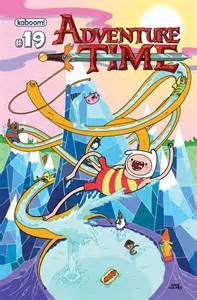
5. Adventure Time #19 (kaboom!): Ryan North puts aside the usual formal fireworks this month, instead a offering a complex mingling of alternate realities, terrible rap skills and honest-to-goodness heartbreak. Artists Shelli Paroline and Braden Lamb keep track of all the goings-on with their usual aplomb. As is often the case with AT, the tone and pacing can turn on a dime: the initial silliness turns bittersweet when the usually villainous Ice King has his heart’s desire destroyed, almost cruelly, by the usually heroic Finn and Jake. Expectations already defied, North then gives the poor Ice King a small measure of redemption, allowing us a peak into his misunderstood, heroic heart. I tell you, if you’re able to get through this tale with completely dry eyes, your heart must be cold as ice. (DM)

Adventure Time #19

Adventure Time #19

4. Trillium #1 (DC/Vertigo): Jeff Lemire, who it seems hasn’t had an appropriate outlet for his true voice since the elegaic Sweet Tooth came to an end last year, returns to captivating form with the premiere issue of his latest series. And by “form” I mean “format”: he tells the stories of his two main characters separately at first by cleverly employing a flip-book configuration. Moreover, the page layout for both stories mirror each other precisely throughout until they finally meet in the middle; quite the disciplined feat (not to take away from this but, in an interesting coincidence, Andy Hirsch utilizes the same exact strategy for his back-up feature in the aforementioned issue of Adventure Time – another reason to pick it up!). This isn’t merely technical wizardry however; the format perfectly complements Lemire’s tale of two literally star-crossed lovers, separated by unimaginable distance and thousands of years. It was this type of artistic adventurousness that garnered Lemire his indy cred to begin with. Here’s hoping enough people buy this book that he can stop working on the likes of Green Arrow. (DM)

3. Satellite Sam #2 (Image): Here’s the truth: Matt Fraction and Howard Chaykin certainly didn’t blow their collective wad with a well-received #1, which, somewhat surprisingly, was wildly entertaining for a book about a troubled television program back in the black and white days of the medium.  The second installment brings much of the same to the page: Fraction’s showy dialogue is all business yet feels breezy and unbuttoned; and Chaykin delivers, yet again, earning exclamation points for nailing the period and for ostentatiously trading on subtlety as he slides from one panel to the next.  Overall, this issue traipses along like a stylish transition; but, unlike Mike, who’s a little too handful of himself at the bathroom sink while focused on a lineup of father’s floozies, it delivers the goods–the very, very goods. (SC)

2. Six-Gun Gorilla #3 (BOOM!): Simon Spurrier and Jeff Stokely hit the mark again with the further adventures of Blue and his partner, the eponymous gun-toting primate.  Spurrier, whose Numbercruncher (Titan) is by all accounts another engaging escape from reality gracing today’s increasingly crowded shelves, plays up the personal and cultural relevance of fiction, especially as he conjures Thurber’s Walter Mitty while crafting Blue into an increasingly compelling Christ figure–one persecuted from every angle imaginable: from the ridiculously voluminous General Vertid to the remotely sadistic Auchenbran.  Without a doubt: three issues in, this creative team has proven it’s getting its inspiration from a higher power; that’s right, folks: this is the Newer Testament.  Read.  Rejoice. (SC) 

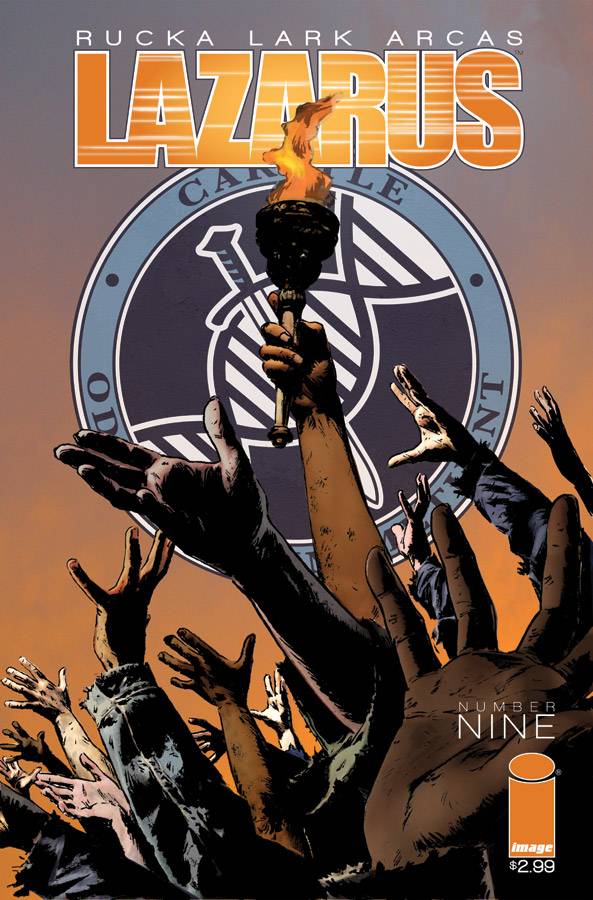
1. Lazarus #3 (Image): Greg Rucka and Michael Lark are a perfect pair, like a flavor-forward cabernet sauvignon and a medium-rare porterhouse.  Each is known for his firm grasp of reality and his uncanny ability to reflect it on the page.  Together, they’ve brought an unbridled energy to the first three issues of this female-fronted fantasy: Rucka is a master storyteller, who is as good as it gets when it comes to delivering naturalistic dialogue; and Lark brings it all to life with a style that screams screen–small or big.  This month’s offering sports an opening sequence that relies extensively on Eve’s intense eyes and ultimately focuses on her blade, which becomes a slicing symbol for her sexuality; see: even in this fabricated future, it’s clear: no means no.  After some revelatory intercourse between the two Lazaruses–the Lazari?–another moment worth noting takes place poolside: Jonah and Johanna, status-driven siblings from the Carlyle family, plan a hit on their sister with the ease of planning a party; and, startlingly, just as easily, Johanna callously calls for Charles’s execution–because the simple servant may have “heard enough of [Jonah’s] tantrums to guess what’s going on.”  That’s one cold broad!  But this is hot stuff–thanks, in part, to the explosive cliffhanger–and is about as good as it gets.   Forever and ever.  Amen. (SC)

The Biggest Dis(apponitment): Buck Rogers #1 (Hermes Press)-  A classic pulp hero re-imagined by a comics legend; this title had a lot to recommend it. Howard Chaykin after all revolutionized the design of comic books with such seminal works as American Flagg! and has done stellar work reviving bygone characters on titles like The Shadow and Blackhawk. This seemed then, a match made in heaven. Chaykin does takes Buck back to his origins, drawing much inspiration from his very first appearance in Armageddon 2419 A.D., a novella by Buck’s creator, Philip Francis Nowlan, (published in Amazing Stories in 1928). This is not the breezier futuristic adventure of the well-known, subsequent comic strip (the world’s first, and most influential, sci-fi comic) or the beloved low-budget Buster Crabbe film serial. This version is decidedly more political, detailing a violent guerrilla insurgency between surviving tribes of Americans against their overlords. For starters, here Buck is portrayed as a card-carrying communist firebrand, railing against the capitalist system. No, this is not your father’s Buck Rogers (though I suppose it may be your grandfather’s).

Now I readily admit, I’ve never read the Nowlan novel (I claim the dilettante’s credo, “I know of it”). Given the era, it’s entirely possible that it included communist concerns. In our own era of increasing economic disparity and global recession, perhaps this is Chaykin’s way of reintroducing such class-conscious ideas into the conversation. One might even commend him for doing so. But using your lead character (and a beloved icon, at that) as a mouthpiece to go on and on about the tyranny of the “plutocrats” is wearying, even dispiriting. Further, while decrying the evils of the capitalist war machine, it irritatingly ignores communism’s own history of atrocity.

Have your eyes glossed over yet? It gets worse. The threat that the future Americans are fighting? The Han (read Chinese). Again, this stays true to the original novella. But, so what? Whatever its merits, Armageddon 2419 A.D., reflects the paranoid racism of its time. Does Chaykin really want to revive the notion of the “Yellow Peril”? An example: at one point, Chaykin has an (admittedly unscrupulous) character, Black Barney, whom Buck begrudgingly admires, refer to the Han as “those cheap yellow bastards.”  Now, the current, real-world China is an ascendant world power run by a government that is lousy with human rights abuses. Its increasing influence and deplorable treatment of its own people is a legitimate concern. But is this this really the lens through which we want to address such issues? By invoking a mindset that was abhorrent one-hundred years ago?

(An aside: isn’t it ironic that Comrade Buck is hellbent against China, of all things?)

Chaykin’s mastery of the medium is unassailable and ongoing. A large part of our enjoyment of Satellite Sam (see above) derives from his stunning period visuals. I eagerly anticipate his upcoming Century West from Image. But Buck Rogers is retro in the worst ways possible. (DM)

Turning pages,

Scott & Derek

Share this:

  • Click to share on X (Opens in new window) X
  • Click to share on Facebook (Opens in new window) Facebook
  • Click to share on Tumblr (Opens in new window) Tumblr
  • Click to share on Reddit (Opens in new window) Reddit
  • Click to email a link to a friend (Opens in new window) Email
  • Click to share on Pinterest (Opens in new window) Pinterest
Like Loading...

Derekommendations: 8/21

29 Thursday Aug 2013

Posted by dmainhart in Derekommendations

≈ Leave a comment

Tags

Adventure Time, Andy Hirsch, Animal Man, Braden Lamb, Brian Azzarello, Chris Samnee, Cliff Chiang, Daredevil, Darth Vader, DC, Eisner Award, Jeff Lemire, kaboom!, Mark Waid, Marvel, Numbercruncher, P.J. Holden, Rafael Albuquerque, Ryan North, Shelli Paroline, Simon Spurrier, Six-Gun Gorilla, Star Wars, Titan, Wonder Woman

Brief highlights from last week:

Wonder Woman #23 (DC): Brian Azzarello wraps up his two-year epic with a bang. And with style – Cliff Chiang handles the art from start to finish. By expanding Diana’s family ties beyond her strictly Amazonian origin, Azzarello and Co. have given her truly mythic proportions.

Animal Man #23 (DC): Jeff Lemire continues to slowly get his mojo back on this book (the anthropomorphic pirates riding a giant narwhal through a sea of blood was particularly fun). The balancing act between the personal, fanciful, and horrific, along with the impending arrival of Rafael Albuquerque on art, are threatening to make this title relevant again.

Numbercruncher #2 (Titan): Along with the superlative Six-Gun Gorilla, this title offers further proof that Si Spurrier is one of the most wildly inventive writers around. Turns out God is nothing but a miserly accountant, keeping track of every tick of the adding machine in the great equation that is the Universe. Against such a soul-numbing backdrop, what chance does true love have? If you’re a genius mathematician, the answer is: pretty good. P.J. Holden provides the appropriately loopy visuals. As unlikely entertaining a confection as you’re likely to find.

Daredevil #30 (Marvel): As an endless array of crossovers (ugh) spill out from the big two (and beyond), Mark Waid and Einser-Award-Winner Chris Samnee show us how it’s done. An unlikely team-up, a self-contained story that nevertheless manages to raise the stakes sky-high, and a nice twist at the end that actually affects the main character – what more could a super hero fan want? Ok, how ’bout this: Samnee drawing DD rocking a surfboard through the streets of  Manhattan?

Top Pick – Adventure Time #19 (kaboom!): I’ve come to expect formal innovation from this title (it deserves the accolades it’s been getting); and indeed we get that in Andy Hirsch’s clever back-up  story. But what we get in the lead feature (by Ryan North, with art by Shelli Paroline and Braden Lamb) is unexpected depth and heartbreak, as the Ice King further assumes his role as the central, tragic figure of the whole Adventure Time franchise (sort of like what Darth Vader was supposed to be in Star Wars). And all the while, as is often the case with AT, all the silliness and jokes practically dare you to take any of it seriously.

Give it a Miss – X-Men #4 (Marvel): The definition of a filler issue. Some nice (if uncharacteristic) scenes between Jubillee and Wolverine aside, nothing really happens in this book; disappointing, considering Brian Wood’s strong start on this title. And with the Battle of the Atom crossover (again I say, ugh) looming, I may be giving this book a miss for the foreseeable future. Wake me when it’s over!

Yours in Comics,

Derek

Share this:

  • Click to share on X (Opens in new window) X
  • Click to share on Facebook (Opens in new window) Facebook
  • Click to share on Tumblr (Opens in new window) Tumblr
  • Click to share on Reddit (Opens in new window) Reddit
  • Click to email a link to a friend (Opens in new window) Email
  • Click to share on Pinterest (Opens in new window) Pinterest
Like Loading...
← Older posts
Newer posts →

The Nerds

  • dmainhart's avatar dmainhart
  • ScottNerd's avatar ScottNerd

Enter your email address to follow this blog and receive notifications of new posts by email.

Join 142 other subscribers

An Amazing Comic Shop

Wiggle Room

It's just the beginning...

Tag Salad!

Ales Kot All-New X-Men Animal Man Archer & Armstrong Avatar Batman Batwoman Bloodshot BOOM! Brian Azzarello Brian K. Vaughan Brian Michael Bendis Brian Wood China Mieville Chris Bachalo Chris Samnee Clone comics Cullen Bunn Daredevil Dark Horse DC DC Comics Dial H Dynamite Dynamite Entertainment Ed Brubaker Fatale Fiona Staples Fred Van Lente Garth Ennis Goran Parlov Grant Morrison Greg Rucka Harbinger IDW Image Image Comics J.H. Williams III J. Michael Straczynski Jason Aaron Jeff Lemire Jonathan Hickman Jordie Bellaire Joshua Dysart Kevin Eastman Kieron Gillen Kurt Busiek Lazarus Mark Waid Marvel Matt Fraction Matt Kindt Mike Allred Mind MGMT Nick Spencer Oni Press Rachel Rising Robert Venditti Saga Scott Snyder Sean Phillips Swamp Thing Teenage Mutant Ninja Turtles Terry Moore The Massive Titan Uber Ultimate Spider-Man Uncanny X-Men Valiant Vertigo Wonder Woman X-O Manowar zero

Archives

  • August 2022
  • March 2022
  • February 2022
  • December 2021
  • August 2020
  • November 2018
  • October 2018
  • September 2018
  • August 2018
  • July 2018
  • August 2017
  • September 2016
  • August 2016
  • July 2016
  • September 2015
  • August 2015
  • July 2015
  • June 2015
  • May 2015
  • April 2015
  • March 2015
  • February 2015
  • January 2015
  • December 2014
  • November 2014
  • October 2014
  • September 2014
  • August 2014
  • July 2014
  • June 2014
  • May 2014
  • April 2014
  • March 2014
  • February 2014
  • January 2014
  • December 2013
  • November 2013
  • October 2013
  • September 2013
  • August 2013
  • July 2013
  • June 2013
  • May 2013
  • April 2013
  • March 2013
  • February 2013
  • January 2013
  • December 2012
  • November 2012
  • October 2012
  • September 2012
  • August 2012

Features

  • 22 I&N 22
  • 5 Comics You Should Be Reading
  • Back and Forth
  • Derekommendations
  • I&N Print
  • I&N Review
  • I&N Scott's Bag
  • I&N Store
  • I&N the Gutter…
  • I&N's Top Ten
  • I&Nsight
  • I&Nterview
  • Innie Awards
  • Microviews
  • Scottlight on…
  • Superhero Friday!
  • Top 5 Books of the Month
  • Uncategorized
  • What's I&N Store?

Recent Posts

  • Creator Watch: Deniz Camp
  • The Best Comics You’re Not Reading
  • Pick of the Week
  • Best Comics of 2021
  • Worth Your Time

Real Nerdy Stuff

  • Create account
  • Log in
  • Entries feed
  • Comments feed
  • WordPress.com

Twitter Updates

Tweets by imagesandnerds

Top 3 Posts & Pages

  • Creator Watch: Deniz Camp
  • The Best Comics You're Not Reading
  • Pick of the Week

Finders Keepers

Blog at WordPress.com.

Privacy & Cookies: This site uses cookies. By continuing to use this website, you agree to their use.
To find out more, including how to control cookies, see here: Cookie Policy
  • Subscribe Subscribed
    • Images and Nerds
    • Join 57 other subscribers
    • Already have a WordPress.com account? Log in now.
    • Images and Nerds
    • Subscribe Subscribed
    • Sign up
    • Log in
    • Report this content
    • View site in Reader
    • Manage subscriptions
    • Collapse this bar
 

Loading Comments...
 

    %d