• The Big Picture
  • Here’s ScottNerd…
  • Here’s DerekNerd…

Images and Nerds

~ We're turning pages–and writing about them!

Images and Nerds

Author Archives: dmainhart

Creator Watch: Deniz Camp

31 Wednesday Aug 2022

Posted by dmainhart in Uncategorized

≈ Leave a comment

Tags

20th Century Men, Agent of W.O.R.L.D.E, Deniz Camp, Filya Bratukhin, Image Comics, S. Morian, scout comics

By Derek Mainhart

It can be interesting tracing the arcs of creators’ careers, watching them take their first trepidatious steps into storytelling, finding their initial footing, beginning to develop the themes that will guide then, ultimately honing a voice to match their ambition. And then there are those annoying folks who arrive, seemingly, fully formed.

To wit, Deniz Camp.

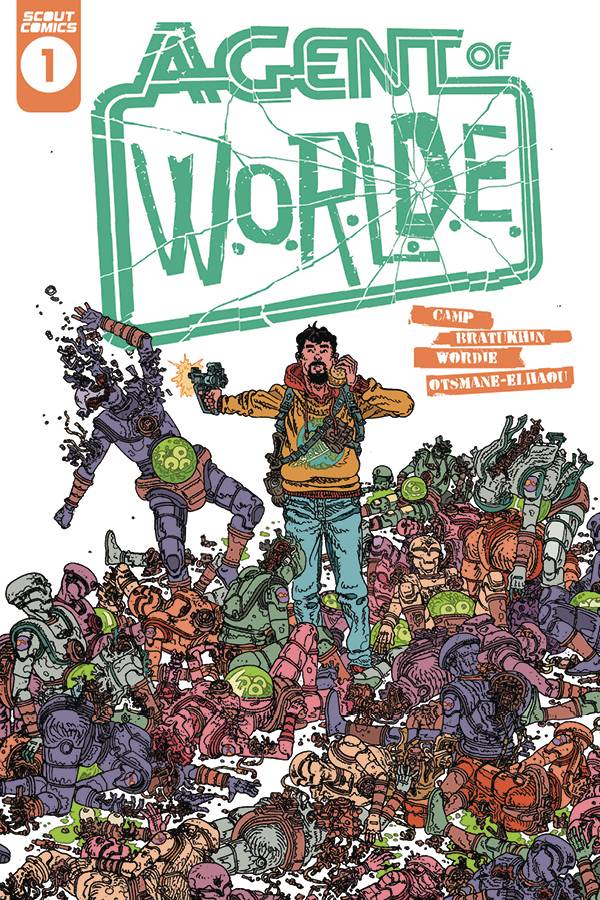
With a scant comics resume, Camp has two of the more interesting books on the stands right now. Anyone who’s had the pleasure of reading the first issue of Agent of W.O.R.L.D.E. (published by Scout Comics) by Camp and artist Filya Bratukhin was treated to a maelstrom of wild sci-fi concepts rendered in hyper-detailed art. Melancholic teddy-bear poets, biomorphic pocket universes, robot orgies; in lesser hands, all of the ideas on display could have easily spiraled into incoherence. But, out of the gate, the creative team is fully in control of their potentially unwieldy material.

If Grant Morrison and Geof Darrow got together to make a super spy comic, tinged with chaos theory, it might look something like this.

The second title, 20th Century Men (from Image Comics) is even more ambitious, as it weaves the geopolitics of the Cold War, with the myth-making of nationalist superheroes, among multiple timelines. In fact, with its fractured structure, political themes and surreal sensibility, it recalls the work of Ales Kot, a comics wunderkind from a few years back (whatever happened to that guy?). The artist, S. Morian, varies his style, depending on the needs of the story; at times recalling Frank Quitely, at others Richard Corben. The kaleidoscopic effect beautifully enhances the wide ranging narrative. The ideological battle of the century never looked better.

In any case, both titles are two of the more audacious debuts of the year. This Deniz Camp guy is all over my radar.

Share this:

  • Click to share on X (Opens in new window) X
  • Click to share on Facebook (Opens in new window) Facebook
  • Click to share on Tumblr (Opens in new window) Tumblr
  • Click to share on Reddit (Opens in new window) Reddit
  • Click to email a link to a friend (Opens in new window) Email
  • Click to share on Pinterest (Opens in new window) Pinterest
Like Loading...

The Best Comics You’re Not Reading

26 Saturday Mar 2022

Posted by dmainhart in Uncategorized

≈ Leave a comment

Tags

Addison Duke, Anand RK, Andrea Mutti, Andworld Design, Anisha, Bruce Springsteen, Dark Interlude, fearscape, Gold Rush, Nathan Gooden, Radio Apocalypse, Ram V, Ryan O'Sullivan, Si Spurrier, Supergirl: Woman of Tomorrow, The Many Deaths of Laila Starr, The Rush, vault comics, Vertigo, Vladimir Popov

By Derek Mainhart

Welcome to The Best Comics You’re Not Reading, where we highlight some books that are deserving of your attention. This week we dare to enter…Vault Comics.

Revisionist Victorian ghost stories, punk rock apocalypses, explorations of literary dream realms; in the 1980’s and 90’s, such was the dominion of Vertigo, an imprint of DC Comics, founded by legendary comics editor Karen Berger. Their unique, sophisticated blend of horror and experimentation, fantasy and commentary, set a new standard of storytelling in comics. Then, in the 21st century, the rest of the comics world caught up. The boundaries Vertigo broke were explored and integrated into all manner of comics and publishers, for both good and ill. But since its demise, no other publisher has captured that rarified air of Vertigo in its heyday.

Until (perhaps) now.

Vault, with its stable of titles featuring boundary-pushing work by top-tier creative teams, is doing a better job at occupying the space formerly occupied by Vertigo than anyone around. To wit:

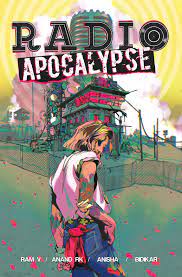
Radio Apocalypse

Anyone tuned in to the comics scene knows that you should be picking up anything Ram V has been laying down. His book The Many Deaths of Laila Starr (published by BOOM! Studios) was the best comic of last year.

Add this track to the hit list. Yes it’s the Apocalypse (that played out genre), but the emphasis is on the Radio. Here, it’s the only thing keeping what’s left of humanity together. And humanity is in some Dire Straits (musical pun intended), what with ecological devastation, dwindling resources and refugee crises among the pressing issues cast into sharp relief. But music lives on, and its power helps what’s left of the population not just to scratch for survival, but remember, even in bleak circumstance, to live.

It’s a bit as if Mad Max had been directed by Cameron Crowe. And the art by Anand RK absolutely shreds; a little Chris Bacchalo punk, a bit of Sanford Greene funk, with some psychedelic flair added by colorist Anisha.

All this and Springsteen? I’m down.

Dark Interlude

Imagine the precocious literary tapestry weaving of Neil Gaiman, mixed with the meta-gamesmanship of Grant Morrison, add a healthy does of caustic wit, and you might get something approximating Dark Interlude.

Henry, Henry, a most unreliable narrator (and a would-be writer himself) previously introduced us to an allegorical literary dimension called the Fearscape (in the eponymous first volume of the series), even as he tried to corrupt it for his own petty ends. In this sequel, he further implicates the reader, as he again offers commentary on the nefarious goings on, as they are occurring. In this case, the offending literary trope is the concept of sequels, which Henry vehemently argues against, even as we are reading one.

(The lettering, credited to Andworld Design, cleverly abets the meta fun)

Too much you say? Gloriously so. The joy of reading this book is reveling in Ryan O’Sullivan’s purposely overwrought, beautifully hilarious use of language, as we quaff his heady brew of satire and allegory.

 This is paired perfectly with the pleasure of savoring Andrea Mutti’s atmospheric artwork, especially suffused in Vladimir Popov’s misty hues. 

A puzzle for the mind, a feast for the eyes and a tickle for the funny bone.

The Rush

Western stoicism meets eldritch horror in Si Spurrier’s latest; a tale of one woman’s quest into the unknown. Set during the Gold Rush, a desperate mother braves that fabled, desolate frontier in search of her missing son. There, she discovers a land beset by greed, obsession and….something darker. The evocative period narration (told via the mother’s letters to her son) perfectly sets the tone, as her indefatigable nature comes up against forces that are increasingly unfathomable. (Fans of Tom King’s and Bilquis Evely’s recent Supergirl: Woman of Tomorrow – also one of last year’s best – would do well to check this out). Spurrier seems to be forgoing the ornate world-building and narrative metaphor he’s explored elsewhere, instead offering something more focused and intense, heightening the claustrophobic paranoia of the story nicely.

Nathan Gooden’s remarkable artwork seamlessly balances the stark western and visceral horror elements, accentuated by Addison Duke’s refined palette, alternating from pale blues and sepias to spasms of crimson violence.

Unlike what most prospectors found in their ill-fated pans, this comic is pure gold.

Vertigo may be long gone. But luckily for you, the discerning comics reader, the Vault is open.

Share this:

  • Click to share on X (Opens in new window) X
  • Click to share on Facebook (Opens in new window) Facebook
  • Click to share on Tumblr (Opens in new window) Tumblr
  • Click to share on Reddit (Opens in new window) Reddit
  • Click to email a link to a friend (Opens in new window) Email
  • Click to share on Pinterest (Opens in new window) Pinterest
Like Loading...

Pick of the Week

14 Monday Feb 2022

Posted by dmainhart in Uncategorized

≈ Leave a comment

Tags

Bilquis Evely, DC Comics, Matheus Lopes, Supergirl: Woman of Tomorrow, Tom King

By Derek Mainhart

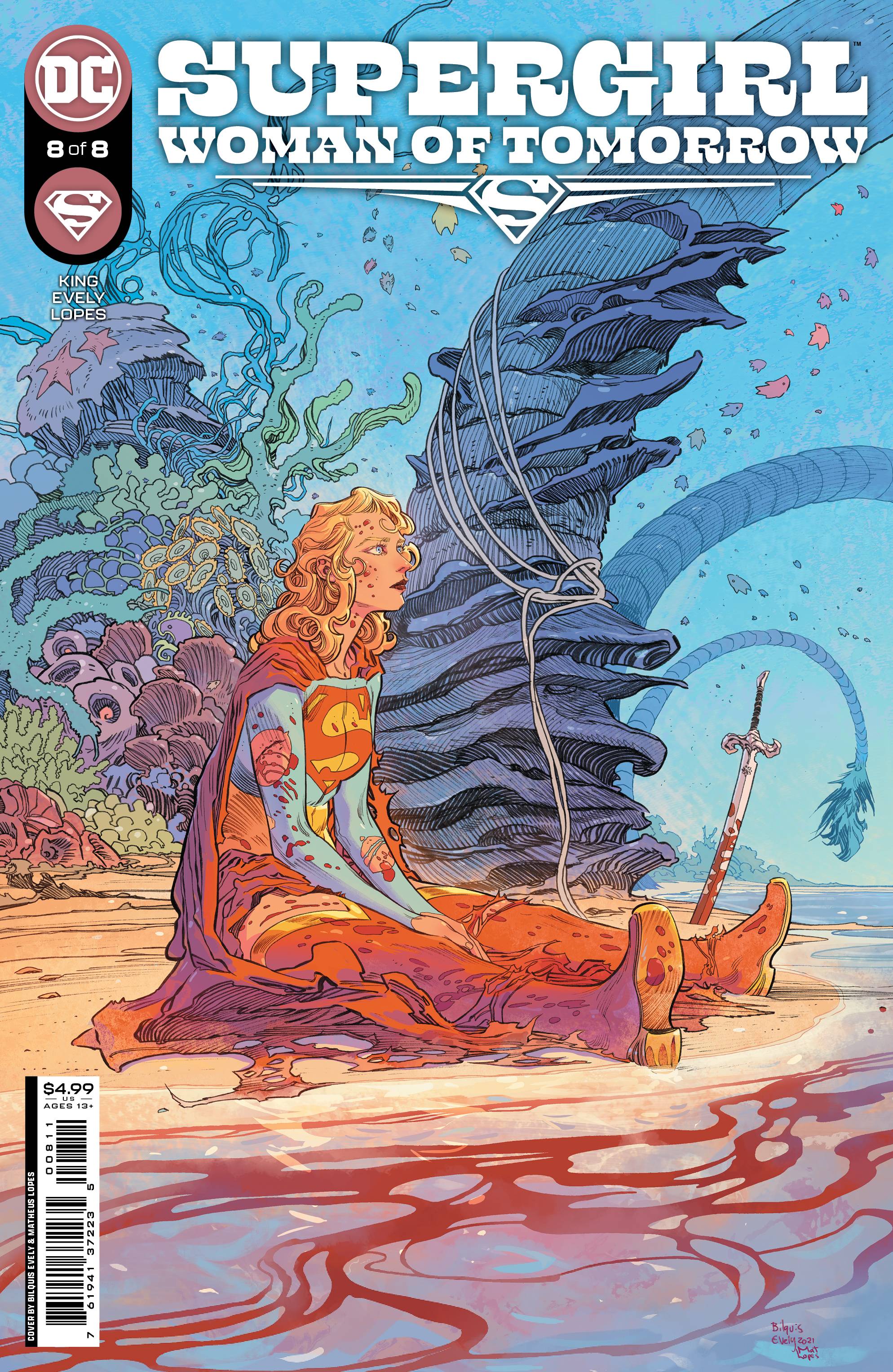
Supergirl: Woman of Tomorrow 8 (DC Comics)

A greenhorn seeking help from a seasoned warrior.

A mission of vengeance and rescue.

A journey narrated through memoir, with language that’s beautifully ornate and of a simpler time.

A trail that leads our heroes through many a backwater town.

Hostile landscapes full of deprivation and suffering.

A band of low-down killers terrorizing the local popuation.

A hero astride her trusty steed.

In addition to being an invigorating re-definition of the character (one that I hope sticks), this masterpiece, by Tom King, Bilquis Evely and Matheus Lopes, is also one of the best damn western I’ve experienced in a long while.

The Searchers in space.

I’m at once at the edge of my seat for the climactic showdown,  and terribly sad that the trail has reached its end.

Share this:

  • Click to share on X (Opens in new window) X
  • Click to share on Facebook (Opens in new window) Facebook
  • Click to share on Tumblr (Opens in new window) Tumblr
  • Click to share on Reddit (Opens in new window) Reddit
  • Click to email a link to a friend (Opens in new window) Email
  • Click to share on Pinterest (Opens in new window) Pinterest
Like Loading...

Best Comics of 2021

26 Sunday Dec 2021

Posted by dmainhart in Uncategorized

≈ Leave a comment

Tags

6 Sidekicks of Trigger Keaton, Best of 2021, BOOM! Studios, Cardinal Rae, Chris Schweizer, comic books, Eat the Rich, Filipe Andrade, Image Comics, Kyle Starks, Pius Bak, Ram V, reviews, Sarah Gailey, The Many Deaths of Laila Starr

By Derek Mainhart

There’s something thrilling about serialized storytelling. Sure, a work of art that arrives fully realized, complete, of a piece, can provide an immersive envelopment; a meal satisfying in its soup to nuts wholeness. But there’s a special excitement about the delayed gratification, the suspense of awaiting the next installment, of dissecting and discussing the latest episode/installment/issue of an ongoing narrative that pulls a continuous tug on the soul. It’s how Dickens captivated his audiences. How movie theatres of old ensured repeat business.  It’s why we watch TV the way we do now. And it’s something comics have always had.

So this is not a list of graphic novels. Those auteur-driven pieces of art undoubtedly deserve praise and parsing. Elsewhere. Here you will find the best of the installments, the cliffhangers, the roguish improvisations whose most sacred credo is  “To be continued…”

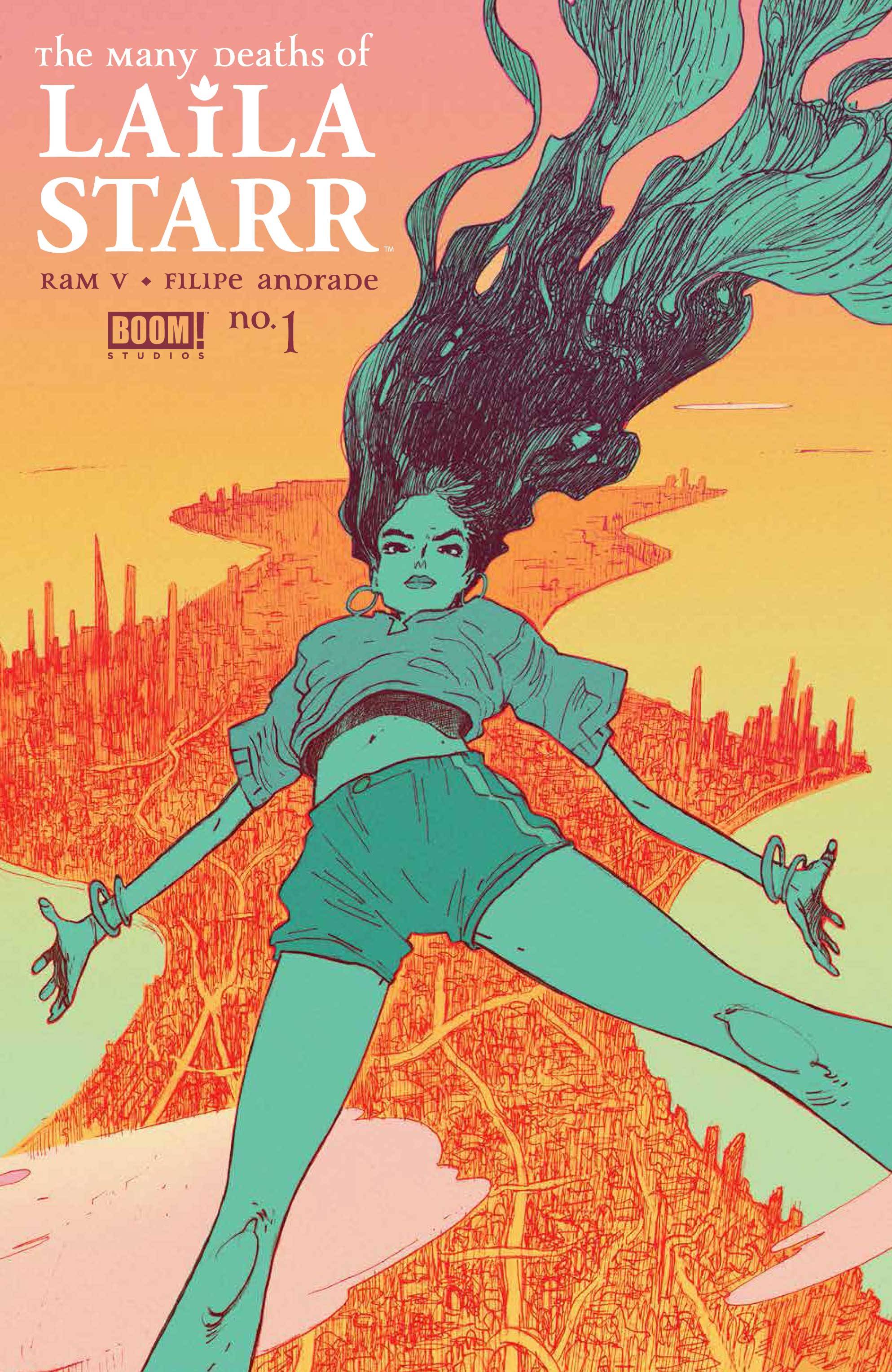
1. The Many Deaths of Laila Starr (BOOM! Studios):

Death takes a forced holiday, as some upstart mortal has discovered the secret to immortality. When unleashed, this will render the (not so) grim reaper obsolescent. Here, Death takes the form of the titular character, and meets her would-be adversary at various points in his life. Each of these meetings ends in her demise, though not at his hands. What could have been a game of cat and mouse, with death trying to thwart her nemesis at every turn, becomes, in Ram V’s hands, something far more lyrical; a meditation on choices made, the nature of purpose, and the beauty of being present in the moment.  This is aided immeasurably by Filipe Andrade’s style (with notes of Gabriel Ba’s visual poetry, mixed with Marc Hempel’s cartoony expressionism, perhaps). The joy comes less from the plot than from the audacity of the storytelling, as profound observations can come from such unlikely sources as an abandoned temple, or a discarded cigarette.

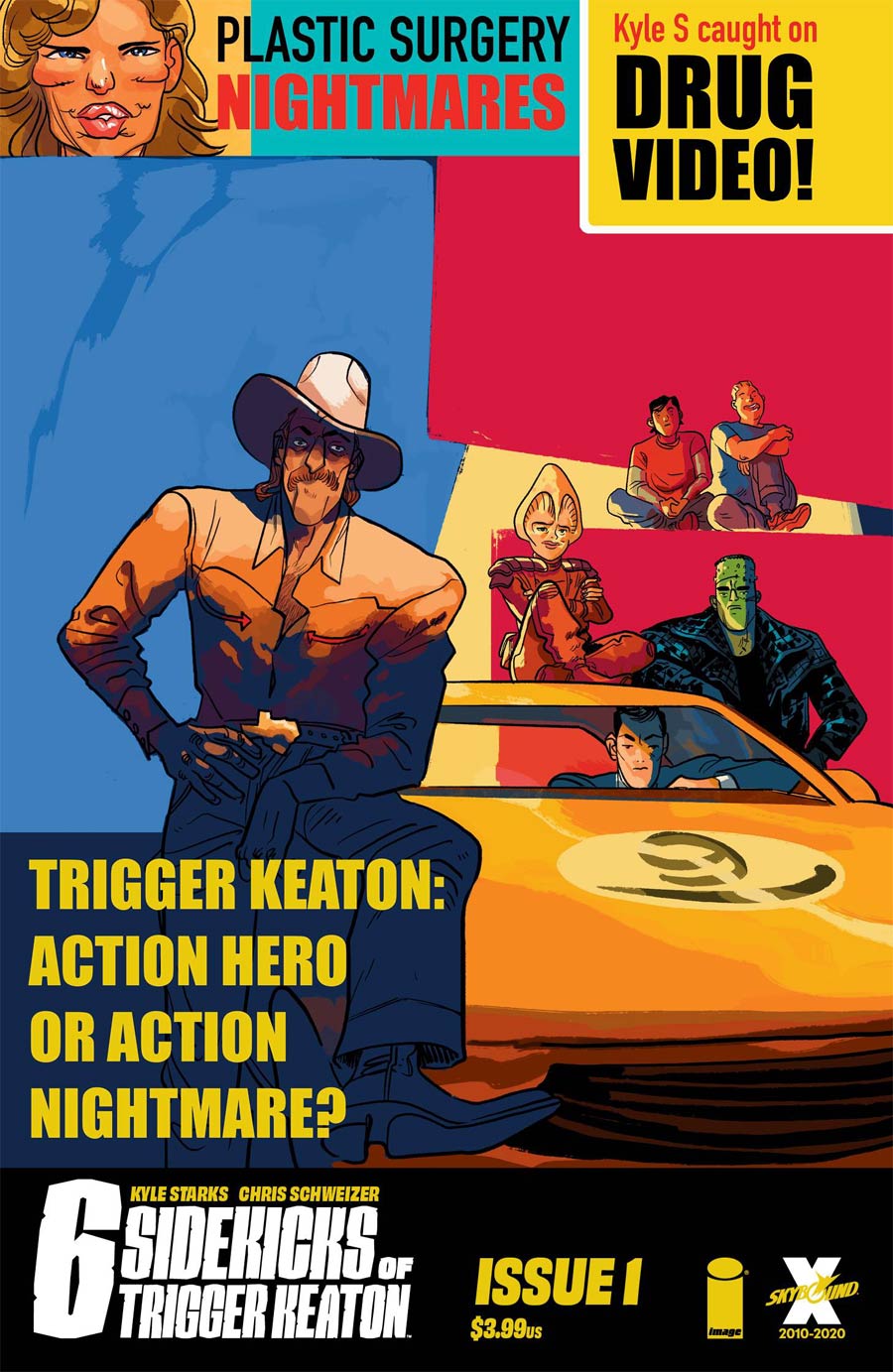
2. 6 Sidekicks of Trigger Keaton (Image Comics):

A kick to the jaw. A slap to the face. A withering put-down. All of these grab your attention, as delivered by one of the most low-down, irredeemably caustic S.O.B.’s in recent memory, Trigger Keaton. A peripatetic star of the small screen, he abuses all around him like a Chuck Norris written by Charles Bukowski. Good thing he’s fucking dead. And lo, it’s up to his hapless assortment of onscreen sidekicks (each an object of his abuse) to find out who killed him. Kyle Starks takes this bonkers concept and careens it through a pop cultural landscape dotted with the B-list detritus of yesteryear. And it is flat-out hilarious. Chris Schweizer’s kinetic, madcap art seamlessly mixes the comedy and the action, with the sequencing chops of a Chris Samnee, flowing through the loopy inventiveness of a Sergio Aragones. He has, among other things, playfully advanced the sequential depiction of martial arts  (no small distinction), as well as accomplished the herculean feat of depicting a breathtaking car chase in comics. This is sublime bad-assery in a bottle and your life is incomplete without it.

3. Eat the Rich (BOOM! Studios):

Jesus. So, it’s like Get Out, except focusing on issues of class instead of race. Plus with cannibalism. It answers the question: What’s the reward for a lifetime of service to the one-percent? No surprise, it’s brutal desecration. Grindhouse exploitation you say? Well there’s enough of that, via Pius Bak’s evocative art (shades of Phil Hester), to satisfy the promise of the title (special shout-out to letterer Cardinal Rae, whose design wittily adds to the shock value). But mostly it’s couched in Sarah Gailey’s trenchant, bleakly reasonable explanation as to why this horrific world works the way it does. And we realize it’s unsettlingly close to our reality. A Modest Proposal for the 21st century.

But wait, you should also read these:

The Me You Love in the Dark (slow burn Gothic horror)

The Good Asian (classic noir with something to say)

Dark Blood (for fans of HBO’s Watchmen)

Maw (uncompromising feminist horror)

Two Moons (western / horror mash-up with an Indigenous American antihero)

Ginseng Roots (a fascinating exploration of the intersection of autobiography, local history, agriculture and cultural diffusion)

Sandman / Locke & Key (a rarified treat for the sophisticated comics nerd)

Happy 202To Be Continued…

Share this:

  • Click to share on X (Opens in new window) X
  • Click to share on Facebook (Opens in new window) Facebook
  • Click to share on Tumblr (Opens in new window) Tumblr
  • Click to share on Reddit (Opens in new window) Reddit
  • Click to email a link to a friend (Opens in new window) Email
  • Click to share on Pinterest (Opens in new window) Pinterest
Like Loading...

Worth Your Time

27 Thursday Aug 2020

Posted by dmainhart in Derekommendations, Uncategorized

≈ Leave a comment

Tags

Adventureman, Black Label, Brittany Peer, Chris Evenhuis, comics, DC Comics, Evan Shaner, Fabiana Mascolo, GI Joe, IDW, Immigrant, Iraq, ISIS, Matt Fraction, Mitch Gerads, Paul Allor, Rachel Dodson, reviews, Saif A. Ahmed, scout comics, Strange Adventures, Terry Dodson, Tom King, Yasmeen

By Derek Mainhart

Being a cartoonist myself, naturally I read comics. A lot. With hundreds of titles to choose from, who has the time to comb through all that content?

I do. Here are some that are worthy of your attention:

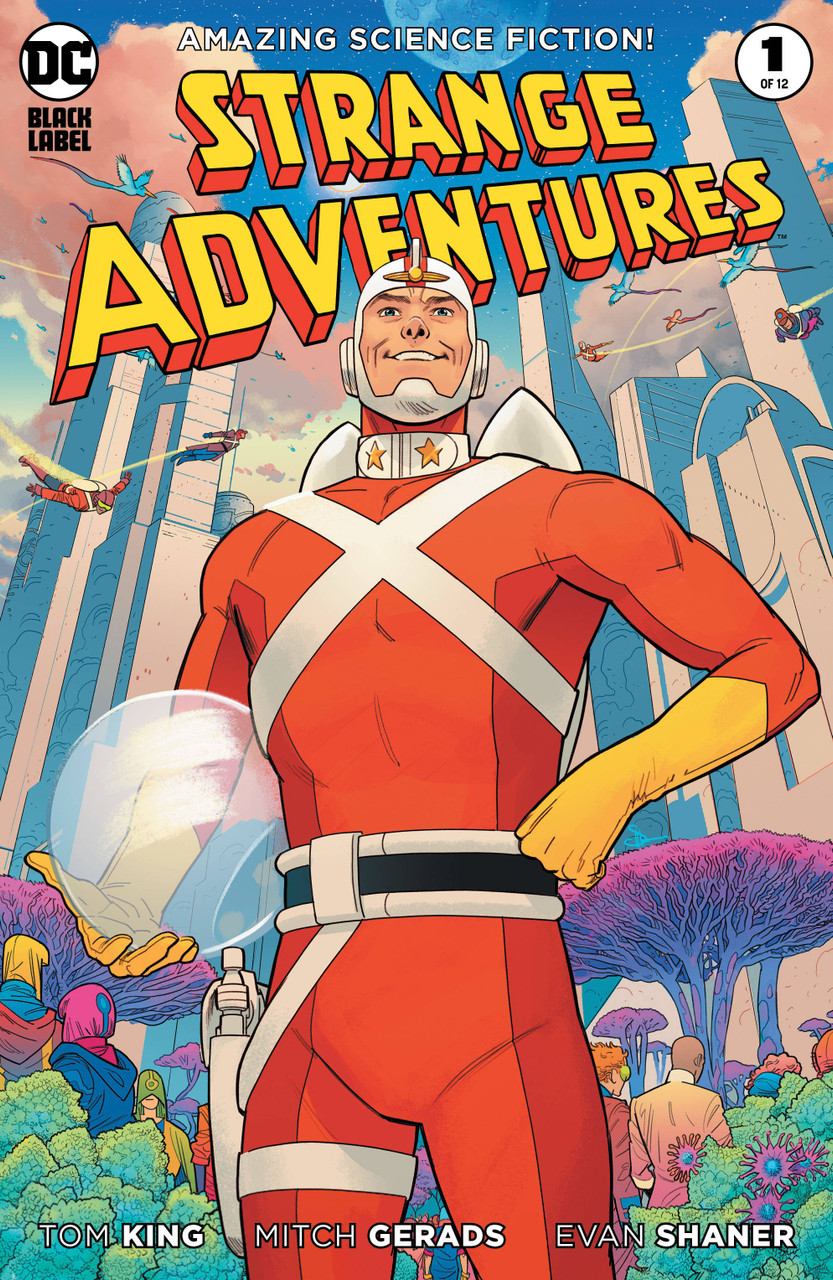
Strange Adventures (DC/Black Label): I’ll admit it: I didn’t care for Tom King’s and Mitch Gerads’ previous collaboration, Mister Miracle. Though highly lauded elsewhere, I found its mix of quotidian family life with the apocalyptic horror of war unconvincing; each aspect undercut the other. The elliptical storytelling approach, so effective in The Sheriff of Babylon and The Vision, here seemed too coy by half.

Now King and Gerads take on another classic character, Adam Strange. Strange is part of a continuum of a specific type of hero, dating back to the likes of Flash Gordon, whose role as saviors of foreign, untamed lands sits uneasily with a modern, examined view of colonialism. King and Gerads tackle this legacy head on, telling two sides of the same story. In one version, Strange saves his adopted home world from certain destruction, in classic comic book fashion. In the other, depicted more realistically in the present day, his actions are called into question, possibly amounting to war crimes. Here the juxtaposition (queasy in Mister Miracle) cuts to the heart of the historical subtext of the character, and other classic characters like him (Matt Fraction and the Dodsons are exploring similar territory in Adventureman – also worth a look). The format itself, with a different artist depicting each version of the story, provides the perfect structure for the themes being explored.

In this, King and Gerads are immeasurably aided by the addition of Evan ‘Doc’ Shaner. His clean, concise, fluid style is the perfect match for the ‘classic hero’ sections of the book. Shaner’s work effortlessly recalls the art of past greats of the genre, seemingly distilling them into a timeless sort of comic book storytelling. In the promo material King calls him a “Platonic comics ideal”. He is this generation’s Curt Swan.

Gerad’s approach is more structured and repetitive, evoking something more akin to our reality. The constant shifting between the two keeps the reader appropriately off-balance, given the subject matter.

In its critical re-examination of who and what is considered a hero, Strange Adventures couldn’t be more timely.

DC Strange Adventures Comic Book 1 of 12 Evan Shaner Variant Cover ...

G.I. Joe (IDW): Yes I see you rolling your eyes: yet another man-child gripped by nostalgia for his childhood soldier-dolls. The reason to get this book, however, is writer Paul Allor. In the past, he has displayed a knack at taking established, staid properties and pushing them in unexpected, expansive directions (a couple of years back, he took Clue – yes the board game – and crafted a meta-mystery-mini-series that was at least as engaging as the beloved cult movie).

Here, he takes the concept of G.I. Joe and flips it. In this iteration, Cobra (the bad soldier-dolls of yore) has indeed conquered the world. But here’s the rub: they didn’t do it with some giant laser pointed at the sun. They accomplished it through dominating the tech sector, establishing global markets and creating a media empire. In other words they did it drip by drip, using multiple levers of control in order to convince enough people that they were better off with Cobra in charge. True, they brutally crush dissent when necessary (which is where the crux of the story lies). But that is not their only, nor even their primary, method of keeping their grip on power. The acquiescence of the population is the foremost element required. Cobra has come to power by studiously following the authoritarian playbook. Cue the real-world comparisons.

As such, the Joes, in this new reality, are seen by much of the general populace as terrorists. And they are truly a rag-tag group: scant resources, constantly on the move, and engaging in guerilla tactics (small acts of sabotage, disrupting supply chains and such – think Red Dawn, but not dumb). Indeed one of the intriguing things Allor is presenting are the internecine conflicts within the Joe’s themselves (there are at least three different factions opposing Cobra). The interpersonal conflicts of these desperate freedom fighters provides much of the tension. Imagine – G.I. Joe driven by character development!

Not that there isn’t plenty of action. The difference is that, unlike a child’s (or man-child’s) fantasy of war, violence here comes with cost. Indeed one of the issues the characters wrestle with, is if that cost, measured in their lives and the lives of others, is too high.

Artist Chris Evenhuis, working with colorist Brittany Peer, render the proceedings with a no-nonsense, clear-cut graphic style that acts as a nice counterpoint to a story in which there are so many shades of gray.

As our own democracy teeters on the verge of authoritarianism, this prescient iteration of G.I. Joe warns us what it will look like when we get there.

G.I. Joe (2019 comic book) - Wikipedia

Alright, enough wading in pop-culture. Do weighty issues have to be tied to entertaining, escapist fare in order for people to pay attention to them? What about those rooted more firmly in reality? Which brings us to today’s final entry:

*TOP PICK* 

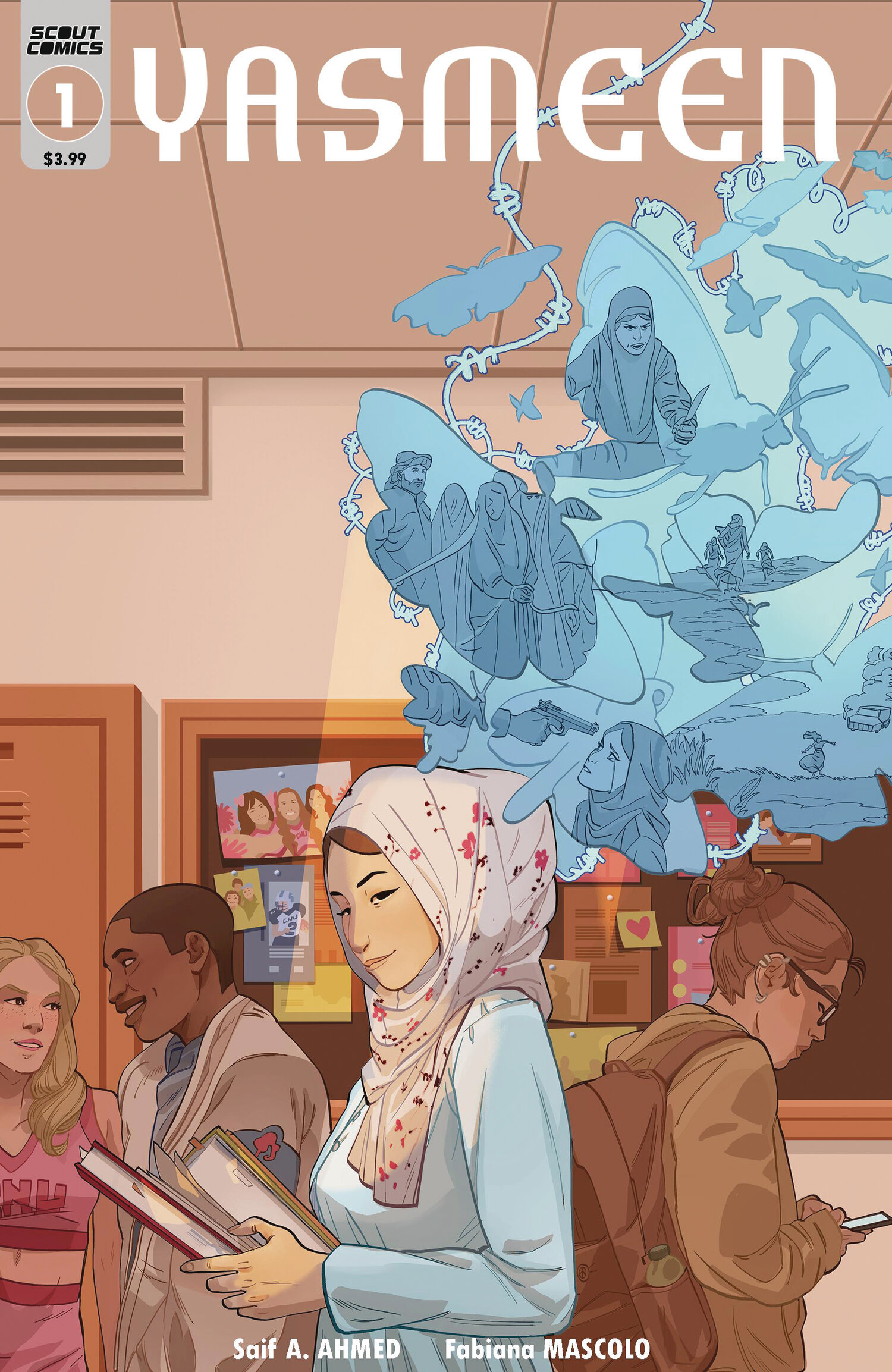
Yasmeen (Scout Comics): Yasmeen, the remarkable debut comic by writer Saif A. Ahmed, follows the eponymous character as she survives the horrors of war, and tries to navigate what comes after. Her story unfolds along dual timelines. One takes place in Iraq in 2014 as ISIS invades the city of Mosul. The other, two years later in Iowa, as she tries to gather the strands of her life while simultaneously assimilating to a strange, new land.

In Iraq, Yasmeen lives a comfortable, even privileged life. Ahmed exposes the fragility of this seeming security with an almost casual abruptness. Violence and capture follow. The tragedy is presented with fidelity, but never gratuity. Much credit goes to the thoughtful staging and restraint shown by artist Fabiana Mascolo whom imbues the visuals with a cinematic flair for both the domestic and epic.

In Iowa, Yasmeen, having survived her ordeal, is reunited with her family. But any happiness is undercut by the changes her experiences have wrought on her, and the gulf it creates between her and those closest to her. This is compounded by the alienation she feels in her new, foreign surroundings.

While the tragedy of Iraq and neighboring Syria are well-known via news coverage, Ahmed’s focus on one teenage girl achieves the feat of making the abstract intimate, though never exploitative. This is due in large part to the story being informed by the writer’s own experiences and of those he knew. He himself escaped ISIS and immigrated to the US. Others were not so fortunate. Though the fictional Yasmeen is drawn from these sources, Ahmed breathes life into her as an individual, with care for the closely- observed details that imbue her, and the rest of the cast, with gravity and authenticity.

Ultimately this is a tale of trauma and the strength needed to heal. One of the most laudable things art can do is to give voice to the voiceless, to enable us to truly see them, and in seeing them, build empathy for their individual experience. In a world that is increasingly a patchwork of people displaced by violence, the story of Yasmeen is one of no small urgency. Highest recommendation.

Yasmeen #1 from Scout Comics - REVIEW — Comics Bookcase


Share this:

  • Click to share on X (Opens in new window) X
  • Click to share on Facebook (Opens in new window) Facebook
  • Click to share on Tumblr (Opens in new window) Tumblr
  • Click to share on Reddit (Opens in new window) Reddit
  • Click to email a link to a friend (Opens in new window) Email
  • Click to share on Pinterest (Opens in new window) Pinterest
Like Loading...

Derekommendations: 8/9/17

09 Wednesday Aug 2017

Posted by dmainhart in Derekommendations, Uncategorized

≈ Leave a comment

Tags

Black Hammer, Clue, Crypt-Keeper, DC Comics, Erica Henderson, IDW, Marvel, Mister Miracle, Mitch Gerads, Nelson Daniel, Paul Allor, Ryan North, Silver Surfer, The Sheriff of Babylon, the unbeatable Squirrel Girl, The Vision, Tom King

Here are my 3 must-read comics for this Wednesday:

Mister Miracle #1 (DC): Tom King and Mitch Gerads crafted the best comic book of last year with The Sheriff of Babylon, a shattering, close-up deconstruction of the everyday tragedies created by the fog of war. King also created last year’s best superhero comic in The Vision. In that book, he used the creative latitude afforded in penning a B-lister to orchestrate a tale about a family of androids, living in suburbia, that incorporated bits of Mary Shelley, Philip K. Dick and Leave It To Beaver. The resultant tale explored, amongst other trivialities, death, prejudice, and what it means to be human. Throughout, King established a pitch-perfect tone that was absurd, poetic and tragic, frequently all at once. One hopes that in working with another character not-well known outside of comic circles, King and Gerads will produce something similarly profound.

MISTER MIRACLE #1

Mister Miracle #1

The Unbeatable Squirrel Girl #23 (Marvel): If you already aren’t reading this comic book about a computer-science grad student with the powers of a squirrel (who is soon to be featured in a gosh-darn TV show), you’re missing out on the best superhero book that isn’t Black Hammer or Silver Surfer. Ryan North continues to delight with buoyant, laugh-out-loud writing that manages to feel upbeat and empowering without a trace of didactic, self-congratulatory posturing (hear that Saga?). If you still need an excuse to jump on this book, the current story allows the inimitable Mr. North to return to his first love: Dinosaurs! The child-like exuberance North obviously feels for the subject is matched by Erica Henderson’s energetic, Ditko-inflected art. The joy in this book is infectious.

UNBEATABLE SQUIRREL GIRL #23

The Unbeatable Squirrel Girl #23

Clue #3 (IDW): Yes, I can feel your eye-roll: a book that’s an obvious corporate tie-in to a friggin’ board game? Has Battleship taught me nothing?! But my childhood affection for said game, as well as the cult-favorite movie it inspired (itself a corporate tie-in) impelled me to give it a shot (Or a candlestick. Whatever.). Happily, like the movie, Paul Allor’s story benefits from a wacky cast, clever pacing and an off kilter sense of humor. Nelson Daniel’s art contributes some fittingly comedic touches, especially in terms of staging and page layout. And Clue features that hallowed comic book trope, the mordant, omniscient narrator/host (think the Crypt-Keeper except with impeccable manners and in a butler’s suit). Except it seems he’s not so omniscient after all. Hmm….

CLUE #3 CVR B DANIEL

Clue #3

Happy Wednesday!

-Derek

Share this:

  • Click to share on X (Opens in new window) X
  • Click to share on Facebook (Opens in new window) Facebook
  • Click to share on Tumblr (Opens in new window) Tumblr
  • Click to share on Reddit (Opens in new window) Reddit
  • Click to email a link to a friend (Opens in new window) Email
  • Click to share on Pinterest (Opens in new window) Pinterest
Like Loading...

The 2015 Innies: The Winners!

14 Monday Sep 2015

Posted by dmainhart in Innie Awards, Uncategorized

≈ Leave a comment

Tags

Action Lab, Daredevil, Dark Horse, Dry Spell, Image, Innie Awards, Ken Krekeler, Marvel, Matt Kindt, Matthew Wilson, Mind MGMT, The Wicked & The Divine

And the winners are…

  • Best Colorist: Matthew Wilson, for The Wicked + The Divine (Image) and Daredevil (Marvel)
  • Best Artist: Matt Kindt, for Mind MGMT (Dark Horse)
  • Best Writer: Matt Kindt, for Mind MGMT (Dark Horse)
  • Best Limited Series: Dry Spell (Action Lab/Danger Zone) by Ken Krekeler
  • Best Ongoing Series: Mind MGMT (Dark Horse) by Matt Kindt

Congratulations! See you in 2016!

imagesandnerds-logo.png

Share this:

  • Click to share on X (Opens in new window) X
  • Click to share on Facebook (Opens in new window) Facebook
  • Click to share on Tumblr (Opens in new window) Tumblr
  • Click to share on Reddit (Opens in new window) Reddit
  • Click to email a link to a friend (Opens in new window) Email
  • Click to share on Pinterest (Opens in new window) Pinterest
Like Loading...

The 2015 Innie Award Nominations!

07 Friday Aug 2015

Posted by dmainhart in Innie Awards

≈ 5 Comments

Tags

2000 AD, Action Lab, Afterlife With Archie, Archie Comics, B.P.R.D.: Hell on Earth, BOOM!, Brass Sun, Brian Wood, Dan Abnett, Dan Slott, Daredevil, Dark Horse, Dave Stewart, Dry Spell, Dynamite, Eric Shanower, Francesco Francavilla, Gabriel Rodriguez, Greg Rucka, Guiu Vilanova, Hellboy and the B.P.R.D., I.N.J. Culbard, Ian Edginton, IDW, Image, Innie Awards, J. Michael Straczynski, Jordie Bellaire, Ken Krekeler, Laura Allred, Lazarus, Little Nemo: Return to Slumberland, Matt Kindt, Matt Wilson, Michael Lark, Mike Allred, Mind MGMT, Moon Knight, Nelson Daniel, Roberto Aguirre Sacasa, Silver Surfer, The Massive, The Twilight Zone, The Wicked & The Divine, Wild Blue Yonder, Wild's End, zero

The Harvey Award nominations have been announced! The Eisners are in the books! And now we offer our annual corrective: THE INNIE AWARDS!

What does ‘Innies’ stand for? Well, other than an attempt at shameless self-branding, it stands for ‘independence’! Being ‘in’ the know! Part of the ‘in’ crowd! And possessing the non-freaky type of belly button.

Since we don’t have the big-time budget of the fancy-pants Eisners or Harveys, we’ve limited ourselves to five categories.  (Sorry Best Translation of Foreign Material for Tweens!)

Keep in mind that these are for comics that were published in 2014.

If the Eisners are the Oscars, and the Harveys are the Golden Globes, then the Innies are the Independent Spirits–or at least the People’s Choice Awards!

The Nominations:

Best Limited Series:

  • Brass Sun by Ian Edginton and I.N.J Culbard (2000AD)
  • Dry Spell by Ken Krekeler (Action Lab/Danger Zone)
  • Little Nemo: Return to Slumberland by Eric Shanower and Gabriel Rodriguez (IDW)
  • The Twilight Zone by J. Michael Straczynski and Guiu Vilanova (Dynamite Entertainment)
  • Wild’s End by Dan Abnett and I.N.J Culbard (BOOM! Studios)

Best Ongoing Series:

  • Afterlife with Archie by Roberto Aguirre-Sacasa and Francesco Francavilla (Archie Horror)
  • Lazarus by Greg Rucka and Michael Lark (Image)
  • The Massive by Brian Wood and various (Dark Horse)
  • Mind MGMT by Matt Kindt (Dark Horse)
  • Silver Surfer by Dan Slott and Mike Allred (Marvel)

Best Writer:

  • Matt Kindt, Mind MGMT (Dark Horse)
  • Ken Krekeler, Dry Spell (Action Lab/Danger Zone)
  • Greg Rucka, Lazarus (Image)
  • Dan Slott, Silver Surfer (Marvel)
  • Brian Wood, The Massive (Dark Horse), Moon Knight (Marvel)

Best Artist:

  • Mike Allred, Silver Surfer (Marvel)
  • I.N.J. Culbard, Wild’s End (BOOM! Studios), Brass Sun (2000AD)
  • Francesco Francavilla, Afterlife with Archie (Archie Horror)
  • Matt Kindt, Mind MGMT (Dark Horse)
  • Gabriel Rodriguez, Little Nemo: Return to Slumberland (IDW)

Best Colorist:

  • Laura Allred, Silver Surfer (Marvel)
  • Jordie Bellaire, The Massive (Dark Horse), Moon Knight (Marvel), Zero (Image)
  • Nelson Daniel, Little Nemo: Return to Slumberland (IDW), Wild Blue Yonder (IDW)
  • Dave Stewart B.P.R.D.: Hell on Earth (Dark Horse), Hellboy & the B.P.R.D.: 1952 (Dark Horse)
  • Matthew Wilson The Wicked + The Divine (Image), Daredevil (Marvel)

Now it’s your turn. Did we miss anyone or anything?

Let the internet shouting begin!

Turning pages,

Derek & Scott

Share this:

  • Click to share on X (Opens in new window) X
  • Click to share on Facebook (Opens in new window) Facebook
  • Click to share on Tumblr (Opens in new window) Tumblr
  • Click to share on Reddit (Opens in new window) Reddit
  • Click to email a link to a friend (Opens in new window) Email
  • Click to share on Pinterest (Opens in new window) Pinterest
Like Loading...

I&N Review: TERRORIST by Henrik Rehr

10 Friday Apr 2015

Posted by dmainhart in I&N Review

≈ Leave a comment

Tags

Archduke Franz Ferdinand, Berlin, Fatherland: A Family History, Frans Masereel, Gavrilo Princip, Graphic Universe, Henrik Rehr, Jason Lutes, Joe Sacco, Nina Bunjevac, Safe Area Gorazde, Terrorist: Gavrilo Princip the Assassin who Ignited World War I, World War I

61kKFmJgB8L._SY344_BO1,204,203,200_

By Derek Mainhart

What makes someone become a terrorist? It’s a question with some urgency at this point; one that, given recent events, is particularly resonant with cartoonists. In his new book Terrorist: Gavrilo Princip, the Assassin who Ignited World War I, cartoonist Henrik Rehr explores the mixture of ideology, desperation and political circumstance that are at the root of the phenomenon. Rehr’s vehicle for this exploration is perhaps the most infamous terrorist act in history.

Starting at birth, Rehr traces the forces that shape his subject, Gavrilo Princip: from his grandfather’s nationalistic stories of Serbia’s past glory, through the repression and indignity of daily life under occupation, first by the Turks, then the Austrians. Lacking any real education or prospects due to his second class status, Gavrilo’s idle days are filled at cafes digesting the news of the time with friends whose radicalization slowly, frighteningly, transforms from theoretical braggadocio to cold, irreversible action. As young Gavrilo (he was nineteen when he assassinated the Archduke) and his cohorts engage in ever more dangerous behavior, Rehr pulls off the neat trick of having the reader, fully aware of the historical implications of their actions, still feel anxious for their safety. He accomplishes this by skillfully interspersing telling, personal moments (Gavrilo’s sweetly naive relationship with his girlfriend, the family life of a reluctant co-conspirator), humanizing the principle actors.

As counterpoint, he interpolates scenes from the life of Archduke Franz Ferdinand, revealing him to be, yes, privileged and insulated, but also a loving family man, a reluctant leader, and also an optimist (charmingly naive in his own way) regarding human nature. If anything, he was predisposed, as Rehr portrays him, against exacerbating the tensions that would lead to war; more’s the tragedy.

Rehr’s even-handedness speaks to his humanistic underpinnings: whatever you think of his actions, Gavrilo’s concerns for his people were heartfelt. Whatever the cruelties of the Hapsburg Empire, Franz did not deserve to be gunned down in cold blood. (There is also a fatalistic irony at play as the author traces the combination of incompetence, botched plans and sheer chance that ultimately led to the fateful act.)

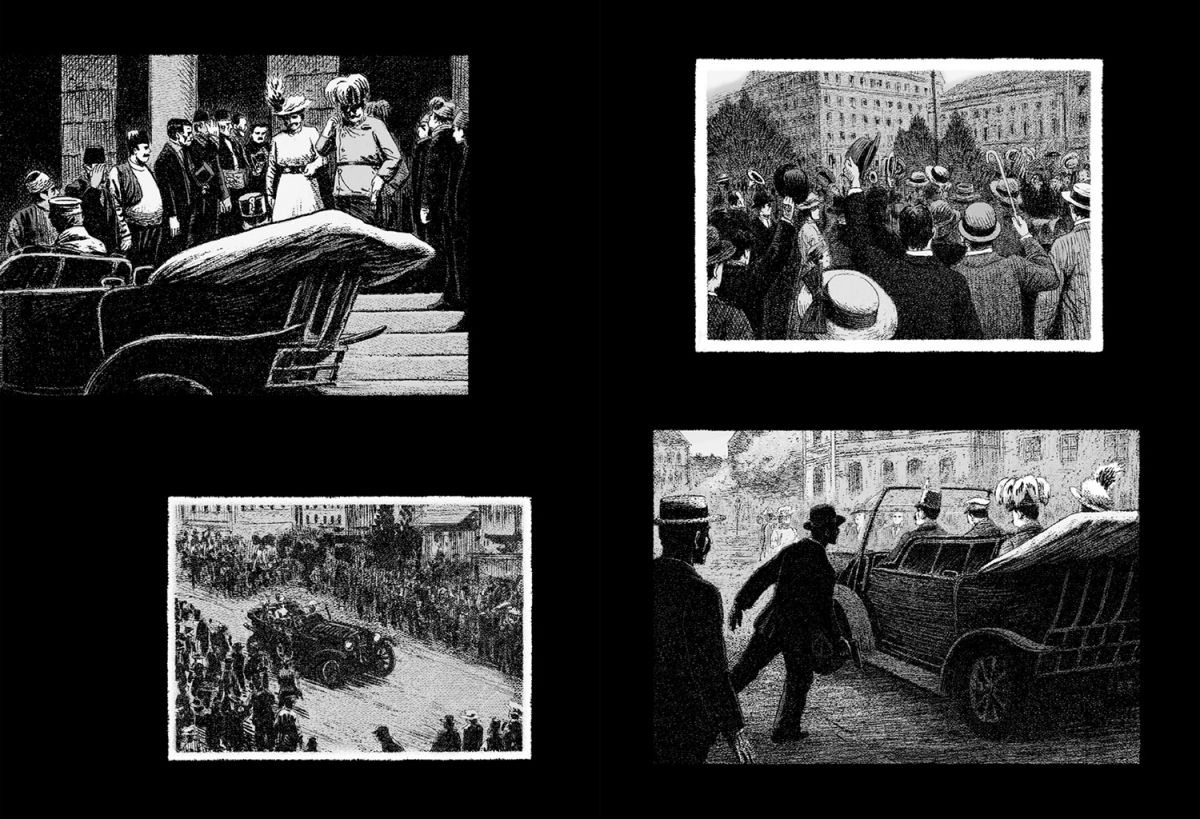
The subtlety of Rehr’s approach extends to his art, which is gorgeous throughout: beautifully composed, convincingly researched without being cluttered, the occasionally dense storytelling broken up by poetic vignettes of starkly lyrical black and white. This is especially true in the largely wordless coda, the powerful imagery of which recalls the work of the legendary Frans Masereel.

_____Intet_navn_____854823n

In trying to condense a massive amount of complex information, Rehr does occasionally commit the misstep of having his characters narrate history through their dialogue. And as Gavrilo’s coterie grows, it sometimes becomes difficult (to these American eyes at least) to keep track of everyone amongst all those dark moustaches and names with too many consonants.

These are quibbles of course. Terrorist takes an impressive spot amongst the burgeoning field of politically-minded, historical graphic works. In addition to the aforementioned Masereel, Rehr’s exploration of history’s intimate effects on people’s daily existence recalls Jason Lutes’ magisterial Berlin, as well as the works of the incomparable Joe Sacco. (In fact, one could construct a credible primer on the tragic twentieth century of the region by reading a ‘graphic trilogy’ comprised of Rehr’s book, the acclaimed Fatherland: A Family History by Nina Bunjevac, and Sacco’s masterpiece Safe Area Gorazde.) Comprising various approaches and styles, the underlying hope offered by these works is that by attempting to understand how outsize forces affect individual lives (their dreams, their failures, their loved ones, their deaths) we can, on some small level, alter the course of our troubled times, before our own lives become so much grist for some future account of catastrophic history.

Terrorist: Gavrilo Princip, the Assassin who Ignited World War I, published by Graphic Universe, is on sale now. 

Share this:

  • Click to share on X (Opens in new window) X
  • Click to share on Facebook (Opens in new window) Facebook
  • Click to share on Tumblr (Opens in new window) Tumblr
  • Click to share on Reddit (Opens in new window) Reddit
  • Click to email a link to a friend (Opens in new window) Email
  • Click to share on Pinterest (Opens in new window) Pinterest
Like Loading...

I&N’s Top Ten Books of 2014

15 Sunday Feb 2015

Posted by dmainhart in I&N's Top Ten

≈ 9 Comments

Tags

1984, Action Labs, Afterlife With Archie, Alan Moore, Ales Kot, Archie, BOOM!, Brian Wood, Dan Abnett, Dan Slott, Danger Zone, Dark Horse, Declan Shalvey, Dry Spell, Dynamite, Francesco Francavilla, Garry Brown, Greg Rucka, Greg Smallwood, Guiu Vilanova, I.N.J. Culbard, Image, J. Michael Straczynski, Jamie S. Rich, Jordie Bellaire, Ken Krekeler, Lazarus, Madame Frankenstein, Marvel, Marvelman, Matt Kindt, Megan Levens, Michael Lark, Mike Allred, Mind MGMT, Miracleman, Moon Knight, Ms. Marvel, Roberto Aguirre Sacasa, Silver Surfer, The League of Extraordinary Gentlemen, The Massive, The New Deadwardians, The Twilight Zone, The War of the Worlds, The Wind in the Willows, Warren Ellis, Warrior, Watchmen, Wild's End, zero

Welcome to the 34th edition of I&N’s Top Ten Comics of the Year! Why, it seems like just yesterday we were bestowing our top honor to a little known comic from across the pond titled Warrior #1 (1982), solely for its inclusion of the work of a budding, young upstart named Alan Moore (who subsequently sent us a scroll with a nigh-illegible incantation, which was either a note of thanks or a curse from the Necronomicon; we could never tell which). While we dug his nascent V for Vendetta, it was his writing on Marvelman that enthralled. Happily, after a long absence, the original stories are finally being reprinted by Marvel Comics of all places (now re-titled Miracleman, due to the book’s long and tortured publishing history in which Marvel itself played an ignominious part). Viewed through the lens of history, this groundbreaking work has often been seen as Moore’s warm-up to his seminal, ubiquitous Watchmen. Visiting these stories afresh, however, it quickly becomes apparent that Moore’s initial go at “realistic” superheroes is as poetic, disquieting and masterful as his better-known oeuvre. Indeed, it’s a good thing we already recognized Marvelman’s greatness. Otherwise, despite Marvel’s awkward presentation (half of each issue is filler? and polybagged for no discernible reason?) these brilliant, essential tales would likely top our list again.

Speaking of which!

10. The Twilight Zone (Dynamite):

This is the dimension of J. Michael Straczynski’s imagination.  It is an area which we call the #10 book of 2014.  Returning to a creative comfort zone, J.M.S. has penned a series of meticulously plotted arcs that could easily stand as episodes of the iconic television show, each issue filled with tight twists, palpable fear, and ethical dilemmas that try and crush the souls of men and women alike.  Complementing Straczynski’s script is the gorgeous work of artist Guiu Vilanova, who draws out the fateful schemes in a realistic manner, making the unreal scenarios that much more believable–that much more frightening.  So while Straczynski might be going through the motions with some of his other titles, here he’s most assuredly in the zone.  We, unlike his protagonists, are the luckier for it; and Rod Serling’s somewhere out there in the timeless fifth dimension smiling, smoking–and waiting for the next issue of The Twilight Zone to hit the shelves.  Sadly, Straczynski and Vilanova’s terrific turn on this moralistic monster of a comic has but one issue left!  Ah, yet another cruel twist…(SC)

The Twilight Zone #4

The Twilight Zone #4

9. Wild’s End (BOOM!):

At this point, the mash-up is a long accepted (if not well-worn) artistic trope throughout all types of media. Indeed the initial collaboration between creators Dan Abnett and I.N.J. Culbard yielded The New Deadwardians, a ripping Victorian detective story simply teeming with zombies and vampires wot, wot! Wild’s End’s mix of The Wind in the Willows and The War of the Worlds may seem an unlikely entry into the burgeoning genre at first (and ill-advised besides, given Alan Moore’s own memorable War of the Worlds mash-up in The League of Extraordinary Gentlemen). But in the end, what matters, as it always has, is the telling. Abnett fully realizes the quaint comforts of his cozy anthropomorphized village, before threatening to tear it to shreds. Culbard’s rendering is uncluttered and timeless, effortlessly evoking both 19th century fairy tales and 1950’s sci-fi cinema. Most mash-ups hold their disparate elements in stark relief. The magic of this one is that it seems utterly seamless, as though these genres had been married from the start. The result is deceptively simple and completely enchanting. (DM)

Wild's End #3

Wild’s End #3

8. Moon Knight (Marvel):

It’s an I&N first!  That’s right: we’re celebrating a book that has had two different creative teams–over the course of the title’s first ten issues, no less!  Yeah, that’s usually a bad sign.  Not here, though: the launch team of Warren Ellis and Declan Shalvey rocketed this latest incarnation of the second-string, schizophrenic servant of Khonshu into lunar orbit.  In a series of connected one-offs, Ellis finds his–and Marc Spector’s–voice while favoring frugality: displaying his mastery of the craft–and enough confidence to cast a long shadow over some of his long-winded contemporaries–he wisely withdraws his words from the massive moments, not because they are unnecessary, but to allow Shalvey to shine like the fullest of moons–and shine he does, showcasing loudly his silent storytelling through striking sequences issue after issue.  Now, the news that this team was only on board for a sixer didn’t come as a surprise, but it was disappointing, especially considering what the pair had accomplished in so short a time.  The disappointment wouldn’t last long, however: the new team–Brian Wood and Greg Smallwood–came in with a clear plan and executed it with a vengeance.  They were clearly not intimidated by the work before them, and their fearlessness helped them to hit the Marc–changing the titular character to suit this new phase–one that so far reads not unlike an episode–or an arc–of The Twilight Zone.  Man, I only wish they’d gibbous more than one more issue!  (See: sticking to the motif: it’s on to a newer phase–and on to creative team number three–with #13.)  What they–both teams–have given us, however, has been superior–and vital–superhero fare; what they’ve given us is a white knight to lead us out of the dark. (SC)

Moon Knight #1

Moon Knight #1

7. Zero (Image):

Certainly the most frustrating title on our list, Ales Kot’s nihilistic super-spy thriller could range from the poetically sublime one issue to incoherent violence the next. At different points this year we named it both Book of the Month and Biggest Dis(appointment) – one thing you could never call this book was ‘predictable’. But at its best, this title (drawn by an impressive roster of rotating artists) was at once lyrically beautiful and viscerally harrowing, loosely tethered, as it was, to real life arenas of violence. This was never more true than in issue #9, a tale (an origin story it turns out) set in the Bosnian War that encompassed deceit and innocence, hope and despair, and a tragic ultimatum that yielded new life in the face of brutal murder. Told in a spare 22 pages, it was possibly the best single comic we read all year. Holding up a mirror to the darkness of recent history, and shining a light upon it, however frail, not only to remember, but also to try to render something beautiful out of it, may well be a fruitless exercise. It may also be art. (DM)

Zero #10

Zero #10

6. Afterlife with Archie (Archie):

A no-brainer, really–well, only because said brains have been exuberantly consumed by the Jughead-led undead of Riverdale.  Maestro Roberto Aguirre Sacasa and the perfectly frightening Franceso Francavilla have continued their brazen exploration into the heart of nostalgia by wearing the mask of familiarity while delivering something wholly unexpected–something undeniably challenging and zombeautiful.  And, of course, there’s issue #4–our #2 book of March and one of the best single issues of the year–which, doggone it, made me cry.  Real tears.  See: as it turns, what happens to Vegas stays with you for a long, long time–like that heartbreaking song that’s so perfectly composed that you get lost in the shadow of every sorrowful note–and hope to never be found again.  Sure, this isn’t the afterlife that they pitched in Sunday school, but if I’m being honest–and maybe a little bit blasphemous–I like this one a hell of a lot more.  (SC)

Afterlife With Archie #4

Afterlife With Archie #4

5. The Massive (Dark Horse):

Environmental degradation and societal collapse have always been the subtext in Brian Wood’s magisterial, globe-trotting mystery. Well, in its unsparing final act, (with appropriately stark visuals by Garry Brown and Jordie Bellaire) subtext became text as the Ahab-like search for a missing vessel, which previously drove the narrative, was transformed into Judgement Day, with all the biblical proportion that implies. One always suspected that Wood would get around to driving his point home; that he did so with such force contrasted sharply with earlier issues, which were told with a subtlety that sometimes veered toward the opaque. The apocalyptic ending, with its uneasy mix of hope and misanthropy, served as a case study for a failed species: humanity. The series, in the end, is an impassioned, ecological cri de guerre, but one that is packed in a masterpiece of storytelling. (DM)

The Massive #24

The Massive #24

4. Silver Surfer (Marvel):

Of the so-called “Big Two” in 2014, Marvel seemed to have the more cohesive game plan. Certainly, they thrived on the expected, event-driven, media-tie-in franchise titles. But they balanced the relentless grinding of the hype machine with some surprisingly refreshing takes on some of their lesser known characters; those B and C – listers who exist at a remove from the shenanigans of the their bread-and-butter superstars. That remove and relative obscurity allowed for a certain amount of freedom. Marvel, to their credit, brought in some top-tier talent and gave them a free hand with these characters (see Moon Knight, above). Call them the Outliers, for their success seems to be in inverse proportion to their proximity to the main goings on of the Marvel U. (Even everyone’s darling, Ms. Marvel, began to flag once she was saddled with Wolverine guest-appearances and increasing ties to Marvel’s ongoing Inhumanity storyline). What better place then for Silver Surfer to be, than on the fringes of the known universe? Dan Slott’s inspired choice of setting not only wisely removed him from the chess board, so to speak, it gives wunderkind artist Mike Allred the largest possible canvas in which to unleash imagination. Aliens, other dimensions, planet casinos; Allred brings the F-U-N to any project he’s involved in. As I’ve said before, he seems to inspire his collaborators to elevate their game, and Slott has proven up to the challenge. Together they’ve concocted the kind of absurdly sublime cosmic romp one would be hard-pressed to find anywhere this side of Terry Pratchett. And in Dawn Greenwood, small-town girl from Anchor Bay, Mass., they created the most winning new Marvel character of the year (the aforementioned Ms. Marvel notwithstanding). Finally, in pairing the Man from Beyond the Stars with the Girl Next Door, they also have the makings of the most adorable budding romance in comics. Truly they’ve producing the best monthly super-hero book on the stands. Let’s hope it survives Marvel’s Next Big Thing. (DM)

Silver Surfer #7

Silver Surfer #7

3. Dry Spell (Action Labs/Danger Zone):

Ken Krekeler’s Dry Spell is a book that kicks off with a bold promise–one in the form an artfully chosen quotation from the incomparable Alan Moore.  In fact, I bought the book because I figured anyone ballsy enough to borrow so brazenly from the best must have something to say.  Turns out that Krekeler didn’t have something to say after all–he had something to shout!  Hey, Ken: I hear you.  Loud and clear.  OK, so, it took re-releasing your book (originally published through Krekeler’s own Kinetic Press in 2011) through a more established outfit like Action Labs to finally reach me; but thank goodness for that–for the person who knew this book needed to reach me and that it could only reach me this way; otherwise, I would’ve been deprived of this superb take on the superhero genre–a canvas filled with small voices and big moments, crazy twists and smart page-turns–in total, a “Howl” for the villain in us all.  Krekeler–a previously unknown quantity–delivers on his book’s bold promise by taking advantage of the medium, particularly with his inventive dialogue and his sympathetic color palette; and he serves up a finale–the definitive finale–a perfect final issue that hits massive notes–the biggest struck by the tsunami of splash pages, the last–reminiscent of Rocky and Apollo (coincidence?) throwing punches that never quite connect at the end of Rocky III–declaring the Black Baron’s personal dry spell officially over.  Good to know that this superior series–and best mini of 2014–isn’t over: the inside back cover of #4 makes another bold promise–one that Krekeler better keep, if he knows what’s good for him–and for us: Dry Spell 2 is coming soon.  Yeah, not soon enough. (SC)

Dry Spell #4

Dry Spell #4

2. Lazarus (Image):

What would you get if 1984 was directed by Francis Ford Coppola from a screenplay written by Noam Chomsky? The answer might look a lot like Lazarus. Alternating between a macro view of a near-future worldwide economic catastrophe and a microcosm of the inner-workings of one of the powerful Families who rose to power because of it, Lazarus, like most great socially-minded science fiction, feels at once expansive and suffocating. Creators Greg Rucka and Michael Lark have hit that sweet spot of dystopian dread, where the reader is exhilarated by the sheer breadth of this brave new world, even as its does its best to debase, dehumanize and stamp out any sign of resistance from its inhabitants. No mere escapism this; its true power comes from the realization that the seeds of the future nightmare it describes are currently being planted all around us, if only we would notice. Lazarus is a visionary sci-fi masterpiece for the early 21st century. (DM)

Lazarus #9

Lazarus #9

1. Mind MGMT (Dark Horse):

There was no denying Matt Kindt’s kinetic masterpiece this time around.  Its ascension to the top spot of our annual Top Ten was as inevitable as truth and death: #3 (2012), #2 (2013), and now #1, the spot it so richly deserves for its clever cover homages (re: Rousseau [#18] and Magritte [#22]) and its ebullient barrages of images and words, which create a reading-cum-sensory experience even more unique than unique to the comic book genre.  The year flew by in a fury of frantic page turns: from Meru’s failed recruitment of Ella the Animal Kid, an inventive and intense story inspired by Kindt’s own daughter and one of our favorite single issues of the year; to the illusory introduction of the Magician; to the frustratingly thoughtful silent issue, which actually earned the ignominious title of Biggest Dis(appointment) for the month of April; to Kindt’s pushing the petal-to-the-metal to reach the speed of heartbreak, the result of the death of a major character; to the father of clichéd revelations that manages to be fresh and affecting; and ultimately, to a showdown that’s all show up, leaving us to wait a little while longer for the final throw down between Meru and the Eraser.  Kindt drives the narrative as only he can with his unexpected layouts and whitewater watercolors.  His Field Guide/Voice of God–voice of Meru!–marginalia continue to draw more into the story, allowing us to draw more out–more out of the relative reality of the universe he’s created; more out of the fiction that empowers Meru in climactic moments; more out of the memories that are either reality or fiction–or both.  There’s unquestionably more here in Mind MGMT than in any book on the shelf, which makes this our easy pick for the #1 book of 2014. (SC)

Mind MGMT #24

Mind MGMT #24

Derek’s Honorable Mentions: 20. Multiversity (DC) 19. Archer and Armstrong (Valiant) 18. Cap’n Dinosaur (Image) 17. Satellite Sam (Image) 16. The Fade Out (Image) 15. Punks: The Comic (Image) 14. Copperhead (Image) 13. Ordinary (Titan) 12. Little Nemo: Return to Slumberland (IDW) 11. Adventure Time (kaboom! – so long Ryan North & co.!)

Scott’s Honorable Mentions: 20. BPRD (Dark Horse) 19. Saga (Image) 18. Evil Empire (BOOM!) 17. Satellite Sam (Image) 16. Iron Fist: The Living Weapon (Marvel) 15. Stray Bullets: Killers (Image) 14. Southern Bastards (Image) 13. Brass Sun (2000 AD) 12. East of West (Image) 11. The Wicked & The Divine (Image)

Publisher of the Year:
This was the year that Image Comics doubled-down on its core strategy: attracting top-tier talent from throughout the industry and parlaying their success to create a space where lesser-known creators can play as well. The result was an avalanche of diversity that exemplified the boundless range of the medium (just check out how many Image titles made our Honorable Mentions, not to mention the two on our Top Ten). Were they all winners? Of course not. But each title was allowed to be its own idiosyncratic, little thing. To wit: Madame Frankenstein. Perhaps not one of the year’s best, Jamie S. Rich’s odd melange of Shelly’s classic horror story, F. Scott Fitzgerald’s milieu, Pygmalion‘s mores (stretched to their logical conclusion) and even Kafka-esque fatalism at the end, was unlike anything else on the stands, possibly ever. Furthermore, Megan Levens tackled such complex, macabre subject matter with an art style that was a cartoony blend of Jeff Smith and Ted Naifeh; in other words something one is more accustomed to seeing in a YA book. As a visual approach, it stretched the overall reading experience almost to the point of incongruity. Was Madame Frankenstein a complete success? I’m still not sure. But it sure was fascinating watching the creators try. And for giving such singular titles like this one a place to exist, I’m grateful to Image Comics. (DM)

Turning pages,

Derek & Scott

Share this:

  • Click to share on X (Opens in new window) X
  • Click to share on Facebook (Opens in new window) Facebook
  • Click to share on Tumblr (Opens in new window) Tumblr
  • Click to share on Reddit (Opens in new window) Reddit
  • Click to email a link to a friend (Opens in new window) Email
  • Click to share on Pinterest (Opens in new window) Pinterest
Like Loading...
← Older posts

The Nerds

  • dmainhart's avatar dmainhart
  • ScottNerd's avatar ScottNerd

Enter your email address to follow this blog and receive notifications of new posts by email.

Join 142 other subscribers

An Amazing Comic Shop

Wiggle Room

It's just the beginning...

Tag Salad!

Ales Kot All-New X-Men Animal Man Archer & Armstrong Avatar Batman Batwoman Bloodshot BOOM! Brian Azzarello Brian K. Vaughan Brian Michael Bendis Brian Wood China Mieville Chris Bachalo Chris Samnee Clone comics Cullen Bunn Daredevil Dark Horse DC DC Comics Dial H Dynamite Dynamite Entertainment Ed Brubaker Fatale Fiona Staples Fred Van Lente Garth Ennis Goran Parlov Grant Morrison Greg Rucka Harbinger IDW Image Image Comics J.H. Williams III J. Michael Straczynski Jason Aaron Jeff Lemire Jonathan Hickman Jordie Bellaire Joshua Dysart Kevin Eastman Kieron Gillen Kurt Busiek Lazarus Mark Waid Marvel Matt Fraction Matt Kindt Mike Allred Mind MGMT Nick Spencer Oni Press Rachel Rising Robert Venditti Saga Scott Snyder Sean Phillips Swamp Thing Teenage Mutant Ninja Turtles Terry Moore The Massive Titan Uber Ultimate Spider-Man Uncanny X-Men Valiant Vertigo Wonder Woman X-O Manowar zero

Archives

  • August 2022
  • March 2022
  • February 2022
  • December 2021
  • August 2020
  • November 2018
  • October 2018
  • September 2018
  • August 2018
  • July 2018
  • August 2017
  • September 2016
  • August 2016
  • July 2016
  • September 2015
  • August 2015
  • July 2015
  • June 2015
  • May 2015
  • April 2015
  • March 2015
  • February 2015
  • January 2015
  • December 2014
  • November 2014
  • October 2014
  • September 2014
  • August 2014
  • July 2014
  • June 2014
  • May 2014
  • April 2014
  • March 2014
  • February 2014
  • January 2014
  • December 2013
  • November 2013
  • October 2013
  • September 2013
  • August 2013
  • July 2013
  • June 2013
  • May 2013
  • April 2013
  • March 2013
  • February 2013
  • January 2013
  • December 2012
  • November 2012
  • October 2012
  • September 2012
  • August 2012

Features

  • 22 I&N 22
  • 5 Comics You Should Be Reading
  • Back and Forth
  • Derekommendations
  • I&N Print
  • I&N Review
  • I&N Scott's Bag
  • I&N Store
  • I&N the Gutter…
  • I&N's Top Ten
  • I&Nsight
  • I&Nterview
  • Innie Awards
  • Microviews
  • Scottlight on…
  • Superhero Friday!
  • Top 5 Books of the Month
  • Uncategorized
  • What's I&N Store?

Recent Posts

  • Creator Watch: Deniz Camp
  • The Best Comics You’re Not Reading
  • Pick of the Week
  • Best Comics of 2021
  • Worth Your Time

Real Nerdy Stuff

  • Create account
  • Log in
  • Entries feed
  • Comments feed
  • WordPress.com

Twitter Updates

Tweets by imagesandnerds

Top 3 Posts & Pages

  • Creator Watch: Deniz Camp
  • The Best Comics You're Not Reading
  • Pick of the Week

Finders Keepers

Blog at WordPress.com.

Privacy & Cookies: This site uses cookies. By continuing to use this website, you agree to their use.
To find out more, including how to control cookies, see here: Cookie Policy
  • Subscribe Subscribed
    • Images and Nerds
    • Join 57 other subscribers
    • Already have a WordPress.com account? Log in now.
    • Images and Nerds
    • Subscribe Subscribed
    • Sign up
    • Log in
    • Report this content
    • View site in Reader
    • Manage subscriptions
    • Collapse this bar
 

Loading Comments...
 

    %d