Because Marvel doesn’t bother promoting its own products.
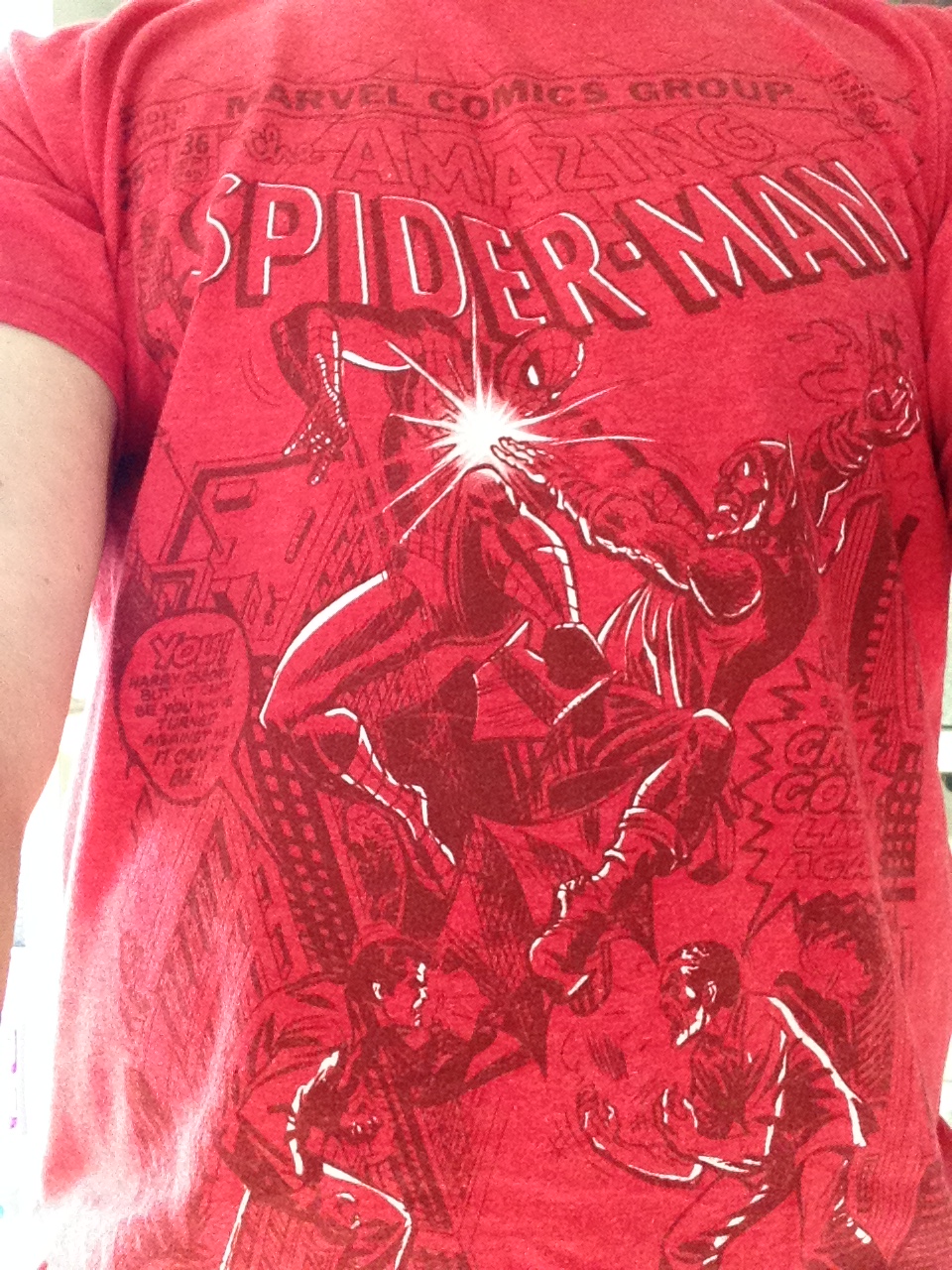
The Amazing Spider-Man!
Who are you wearing today?
Turning pages,
Scott
02 Friday May 2014
Posted in Uncategorized
Because Marvel doesn’t bother promoting its own products.
The Amazing Spider-Man!
Who are you wearing today?
Turning pages,
Scott
21 Friday Feb 2014
Posted in Uncategorized
Tags
Adventure Time, Afterlife With Archie, Archie Comics, BOOM!, Braden Lamb, Brian K. Vaughan, Damon Lindelof, Dark Horse, Dinosaur Comics, EC Comics, Ed Brubaker, Fatale, Fiona Staples, Francesco Francavilla, Good Housekeeping, Henri Rousseau, Image, Lost, Matt Kindt, Mind MGMT, Roberto Aguirre Sacasa, Ryan North, Saga, Sean Phillips, Shelli Paroline, The Midas Flesh
Our first Top 5 of the year! If the titles below are any indication, 2014 is already shaping up to be a great one for our beloved medium. To wit:
5. Afterlife With Archie #3 (Archie): Roberto Aguirre-Sacasa and Francesco Francavilla serve up another clinic on the art of the mash-up. Opening with a nightmare scene worthy of EC Comics, this issue also treats us to tragic teen romance (is there any other kind?), a new wrinkle on a classic rivalry, and a climactic set piece featuring teens in bathing suits engaging in the kind of logic that only makes sense in horror movies. Oh, and two more beloved characters acquire the taste for human flesh. Forget that other zombie book; this is the best undead comic on the stands, and a lot more fun besides. (DM)

Afterlife with Archie #3
4. Saga #18 (Image): Our #4 book of 2013 kicks off the year in feline fashion!
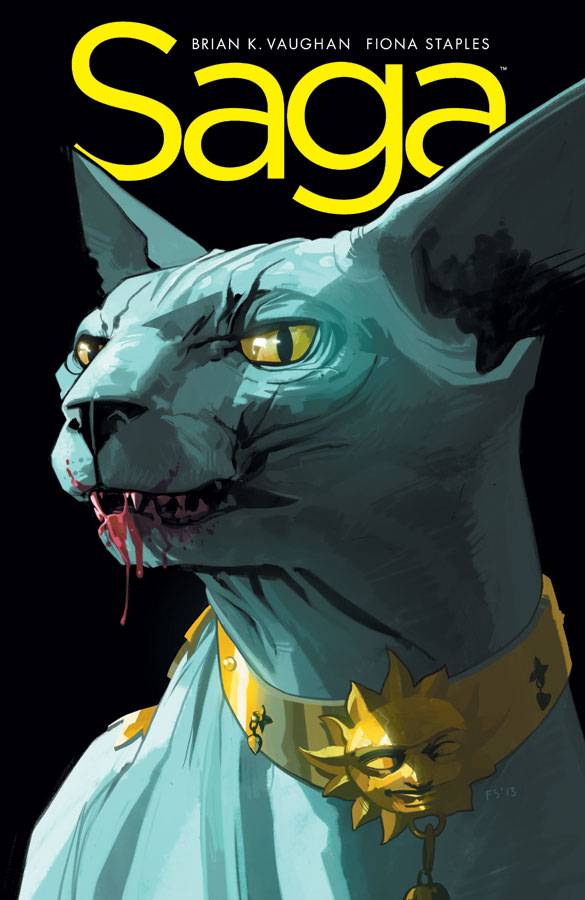
Saga #18
Brian K. Vaughan and Fiona Staples head into their well-deserved–and freakin’ fan-frustrating!–“Vacationanza” with another extraordinary chapter rife with expertly orchestrated peril and commensurate–in one case, winged–crescendos. The issue bares its teeth–along with poor Lying Cat–on page one and from there hits the high notes that our hearts–which are wrenched and warmed by design–long to hear, that they recognize and react to, like a favorite song or a lover’s voice. The final note, struck on the final splash, resounds, envelops us in pure joy. “That a girl,” indeed. OK, sure, the “TIME JUMP!” is a bit of a leap; but isn’t that what we love about these creators–these characters, even? When they go, they go boldly. And the result? I mean, by now, “Isn’t it obvious?” (SC)
3. The Midas Flesh #2 (BOOM!): Ryan North made his name on the wise-assery of his clip art cult favorite Dinosaur Comics and his innovative, medium-bending work on the Eisner Award-winning Adventure Time comic book. Here he tries something a little different: a more or less straight up narrative. Forgoing the conceptual bells and whistles of his earlier work, North trusts instead in the fantastic nature of the story he’s telling. And so far it’s a doozy: a band of space explorers have discovered a planet shrouded in legend and frozen in time; encrusted in solid gold and instant death to any who descend upon it. The planet of course, is earth. Mixing science fiction, ancient mythology and talking dinosaurs (naturally) North is able to balance his trademark philosophical/slacker humor with high adventure and some genuine pathos. And then there is the ethereal beauty, recalling the ruins of Pompeii, and rendered lovingly by series artists Shelli Paroline and Braden Lamb, of the transitory everyday moments, gilded for all eternity, commemorated in catastrophe. (DM)
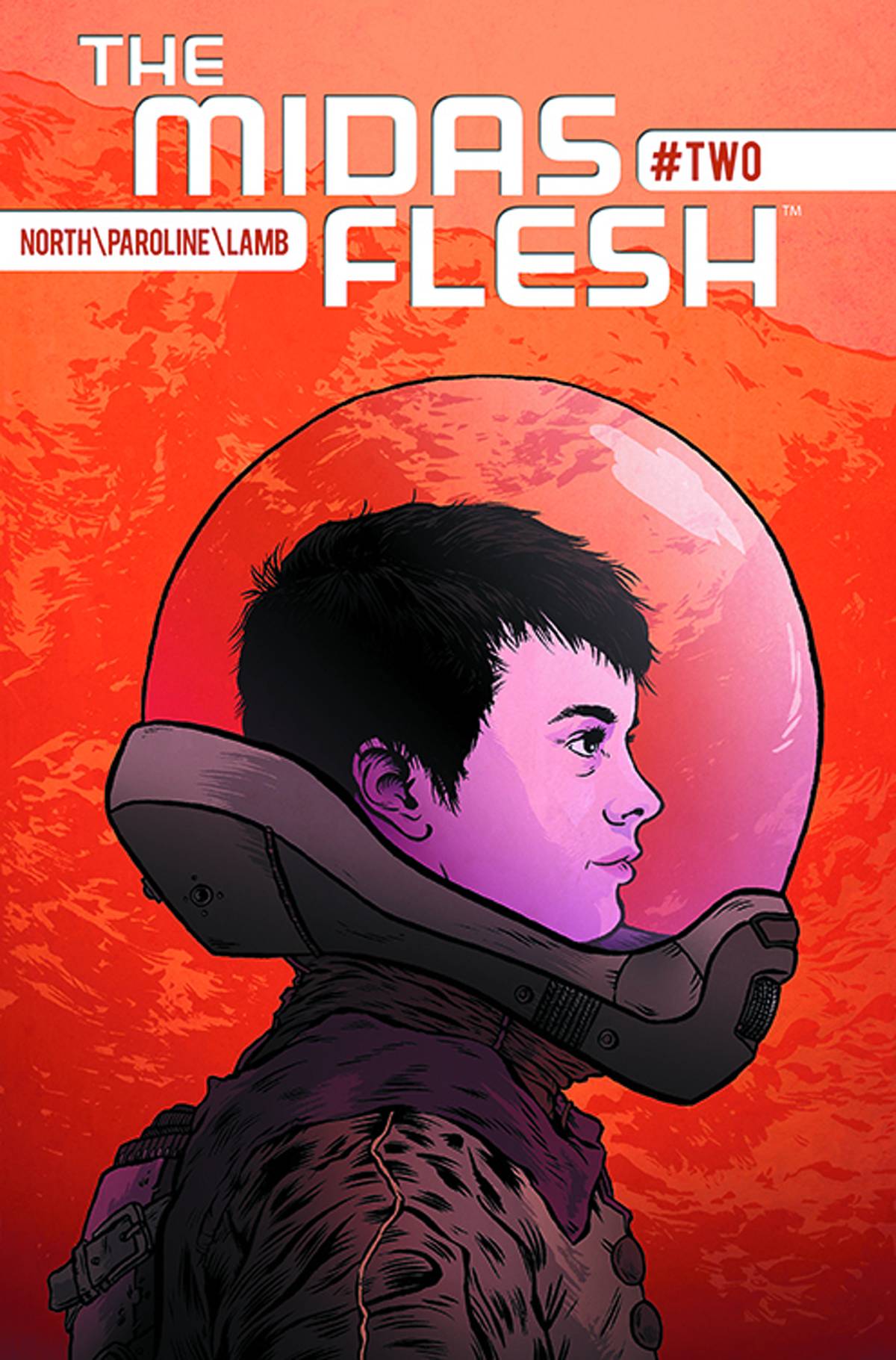
The Midas Flesh #2
2. Fatale #19 (Image): I have to admit, this long-time favorite had fallen a bit on the old depth chart recently. The noir/horror (noirror) tone established, if not invented, by Ed Brubaker and Sean Phillips seemed to spring naturally from the early stories taking place in the 1950s and worked surprisingly well in such far-flung eras as the Middle Ages, the Wild West and the 1970s. But somehow, the Seattle grunge scene of the early ’90’s seemed a poor fit. All the shaggy hair and Doc Martens seemed to dull the edge of the knife Brubaker’s been wielding (or maybe it just brought back too many memories). But with this issue, they’ve once again reached Nirvana. Our unfortunate band of would-be rockers, the latest to fall under the spell of the title character, are dispatched in a pool of blood and flannel in an issue as cold and sleek as any in the series. And by the end, Brubaker has masterfully set up his players for the present-day finale. The femme fatale has found herself. Her enemies have found her. And you’ll find the sweet, foreboding sense of despair that has become this title’s stock in trade, especially in those last few unrelenting pages. And in the knowledge that the end of this book is nigh. Savor it while you can. (DM)

Fatale #19
1. Mind MGMT #18 (Dark Horse): The following confession is being made under extreme coercion. Not physical or emotional, but artistic. You see, everything that’s appeared on this site about Matt Kindt’s superlative Mind MGMT has been written by our man Scott. That’s because until recently, I was not reading it. This is no fault of Scott’s; he’s been pushing it on me ever since I gave him my copy of issue one (gave it to him! like some philistine! some rube! some unmitigated yokel!). I rationalized that I wasn’t a fan of conspiracy fiction; after all, early on the book was garnering comparisons to Lost (with praise from Damon Lindelof yet) and I’ve generally found such fare queasily claustrophobic. So despite its quality, which was readily apparent from the get-go, I figured it simply wasn’t my cup of tea. The change came with issue 13, the first of a series of one-shots each focusing on a different character. But the selling point was really the cover:

Amidst all the slick sci-fi and sexy superheroes was a comic that looked like a 1950’s issue of Good Housekeeping? Talk about audacity! But that was only the beginning. Inside I found that Kindt was playing all sorts of games, unearthing his sordid, multi-layered drama from beneath a veneer of suburban bliss. As the one-shots continued, each gaining momentum from the last, so did Kindt’s lay-outs and design choices become ever more daring, until story and art finally exploded in a beautifully orchestrated climax of form and content in the epic #17 (which, not coincidentally, we named the top single issue of 2013). Claustrophobic? Anything but! Such wild experimentation happily continues in #18, from its Rousseau-inspired cover, to the subtextual juxtaposition of text and images, quite unlike anything I’ve seen (*impressed*). And so I’ve finally succumbed to Kindt’s persuasion: I’ve bought the trades (sadly, not printed on newsprint like the single issues), absorbed the stories and have surrendered my will to Mind MGMT. Because this is what comics can do. Book of the Month. (DM)
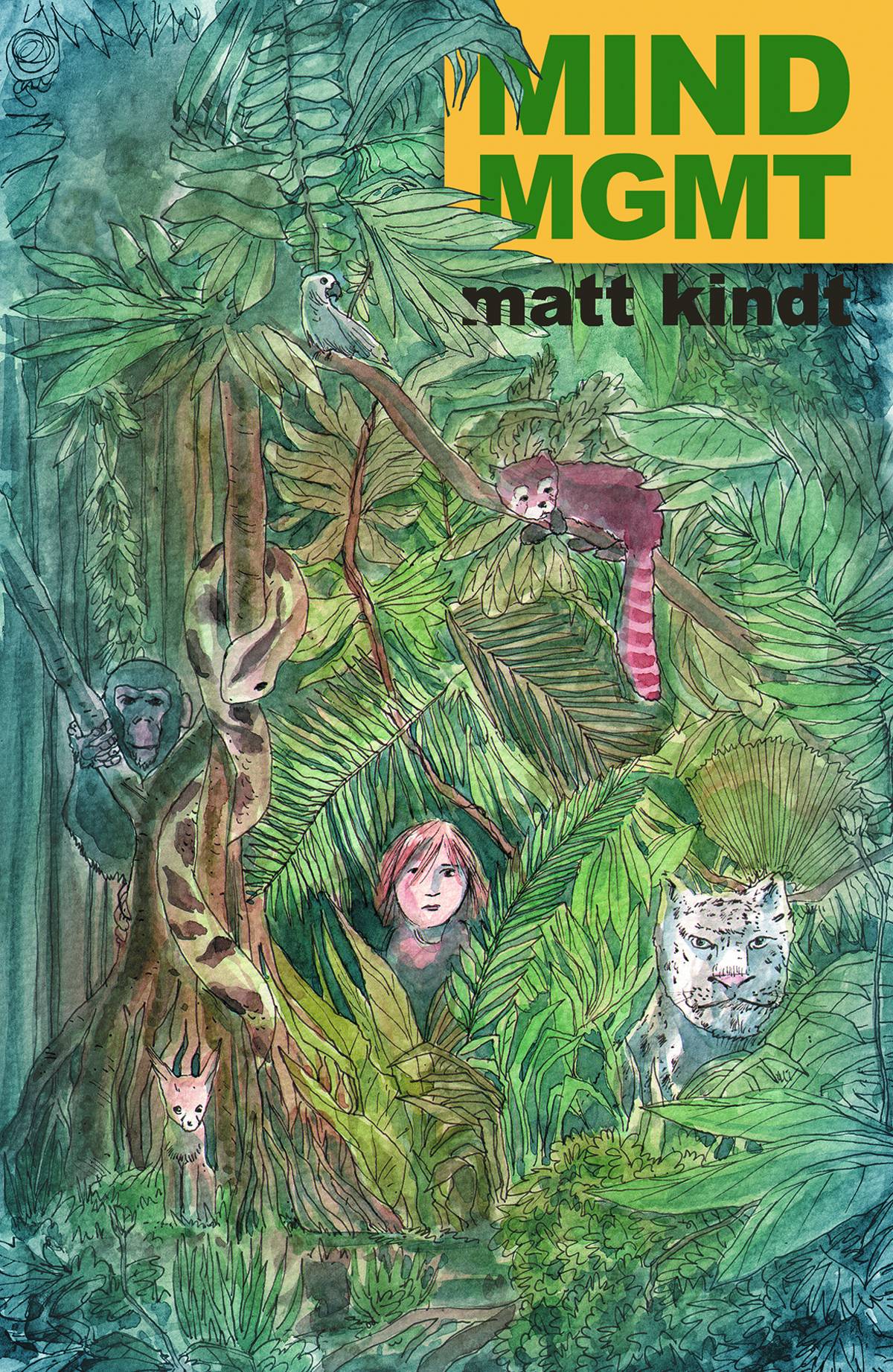
Mind MGMT #18
The Biggest Dis(appointment): All-New Invaders #1 (Marvel):
I know that you thought the same thing I thought when I first saw this advertised: James Robinson and Steve Pugh? Yes, please. Well, didn’t take very long for that to turn into No, thanks. Perhaps I should’ve paid more attention to the “All-New” designation, which, from recent experience, is wielded not unlike “delicious” on a box of gluten-free anything. Once you get into it–once you take a bite–you find yourself thinking What was I thinking? For Gods and Soldiers’ sakes, I’m still picking the clichés out of my teeth! And if Robinson were shooting for hokey–as a bit of an homage, I suppose–with his dialogue, well, then he hit the mark. Oh, he Imperius Wrecks the mark, all right! Yeah, someone should’ve invaded the dialogue writing process to liberate the language from the atrocities of The Word Reich–to prevent the Hokeycaust! I guess I should’ve seen it coming. I guess I was blinded by my faith in Robinson. I guess I was remembering fondly some of my early experiences with The Invaders. (In fact, I have a few early copies, including #2 (1975), which I bought in 1983 around the same time I got into Wolfman’s Vigilante. How’s that for a memory, eh?) I guess, too, I was hoping that I’d finally get a version of Captain America–post-Brubaker–that I could be proud of. In the end, guess what: it doesn’t take supreme intelligence to realize that the All-New Invaders is, disappointingly, old news. So, when’s Fantastic Four #1 coming out, again? (SC)
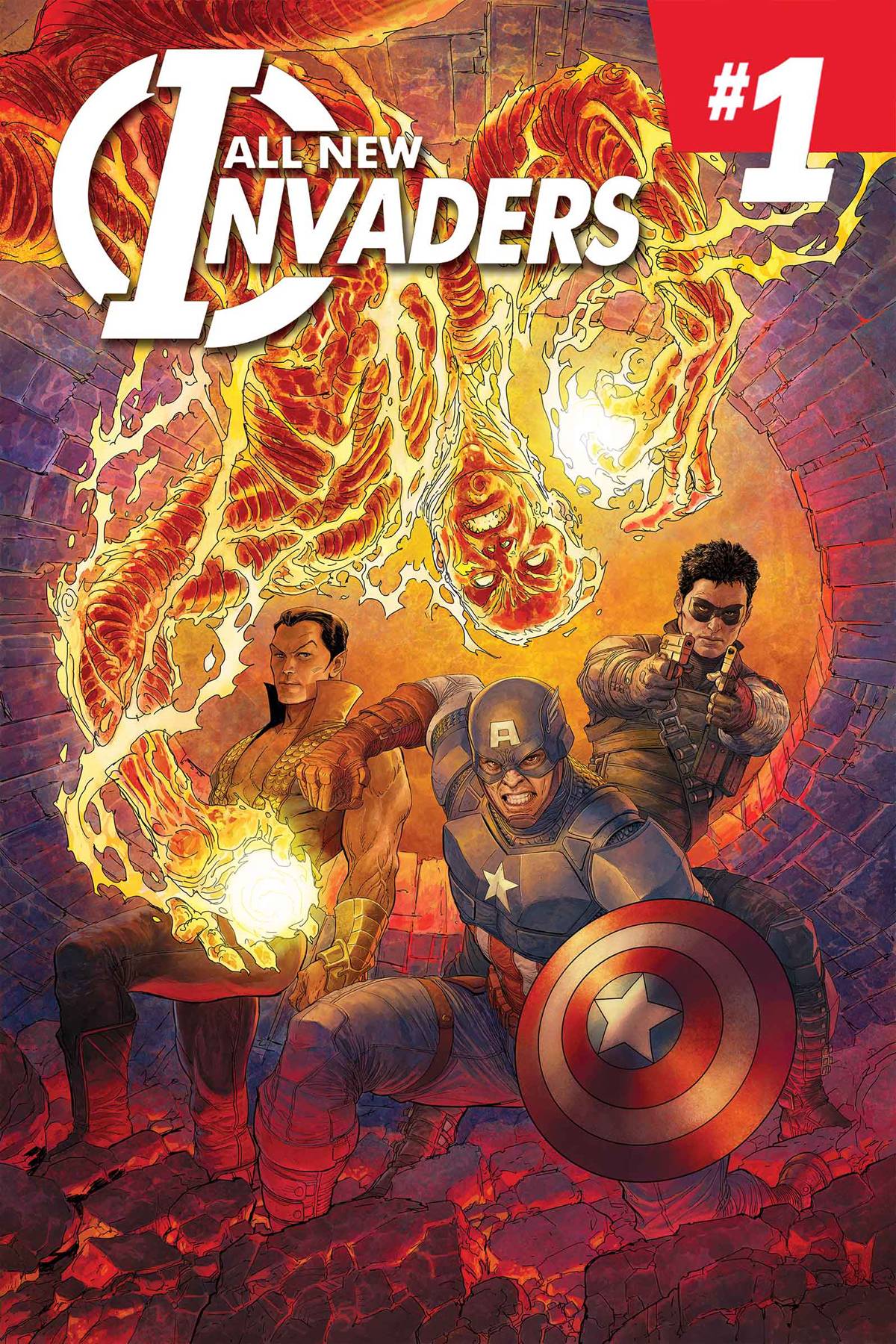
All-New Invaders #1
Turning pages,
Derek and Scott
11 Tuesday Feb 2014
Posted in Uncategorized
Stocking up before the next big storm.
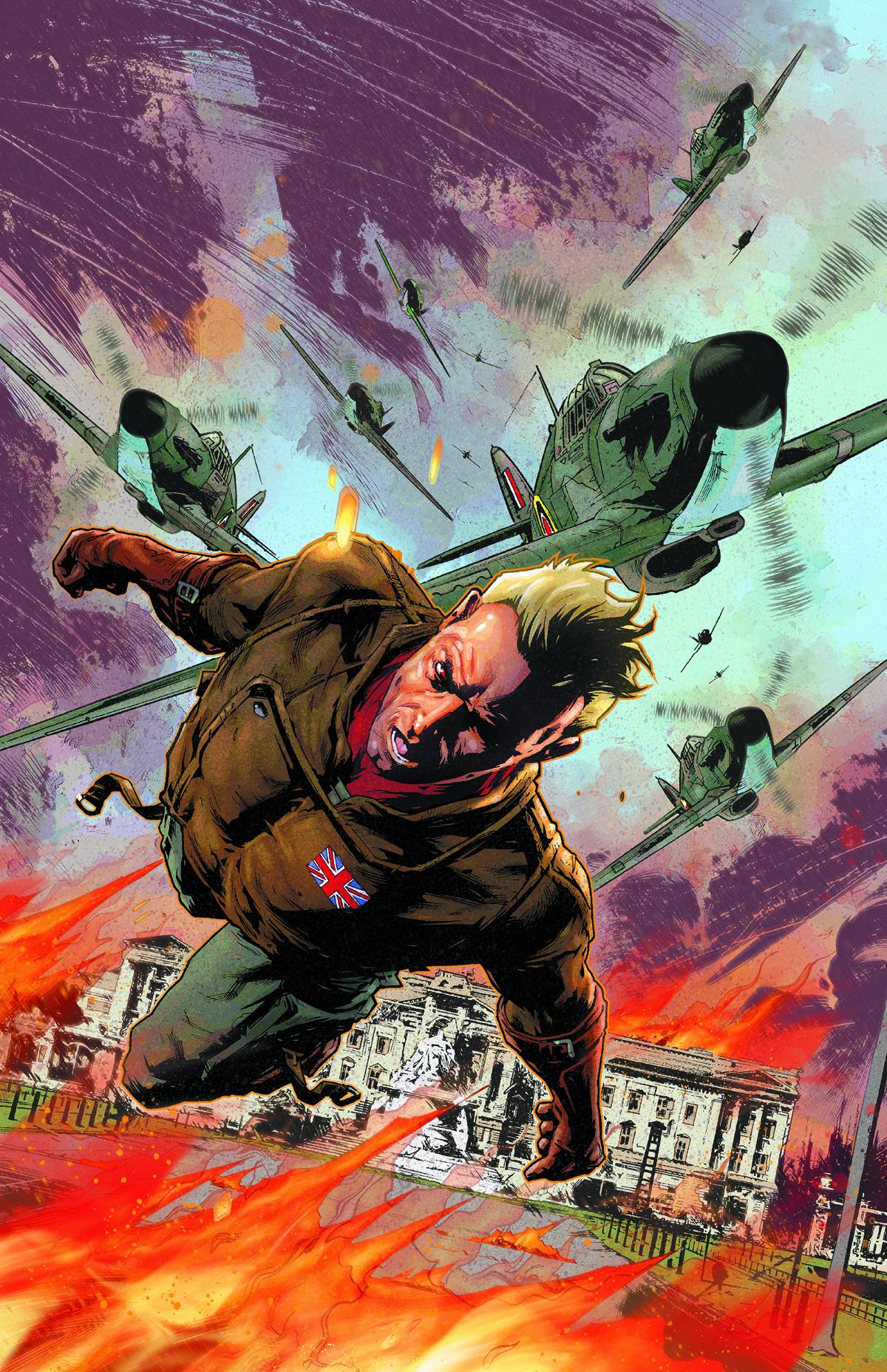
Royals: Masters of War #1
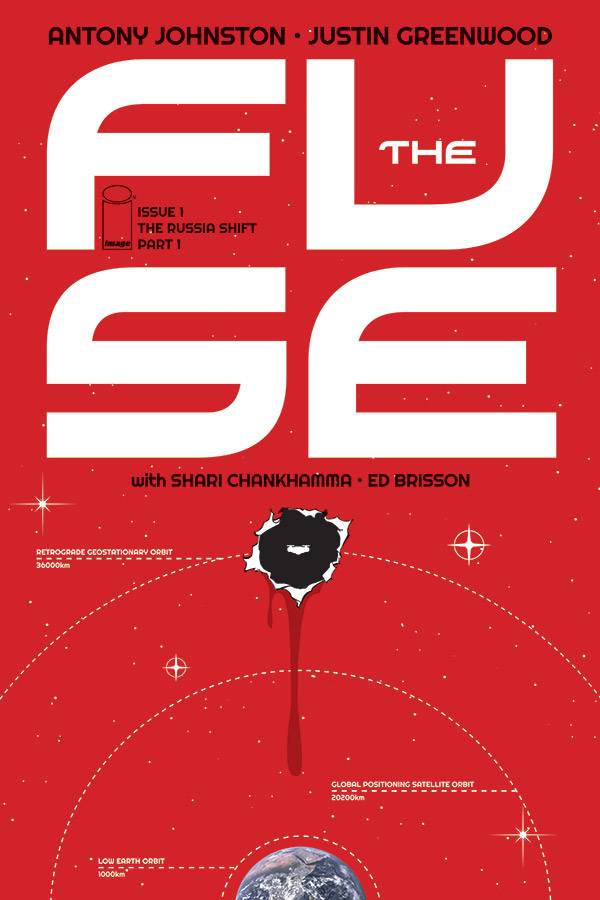
Fuse #1
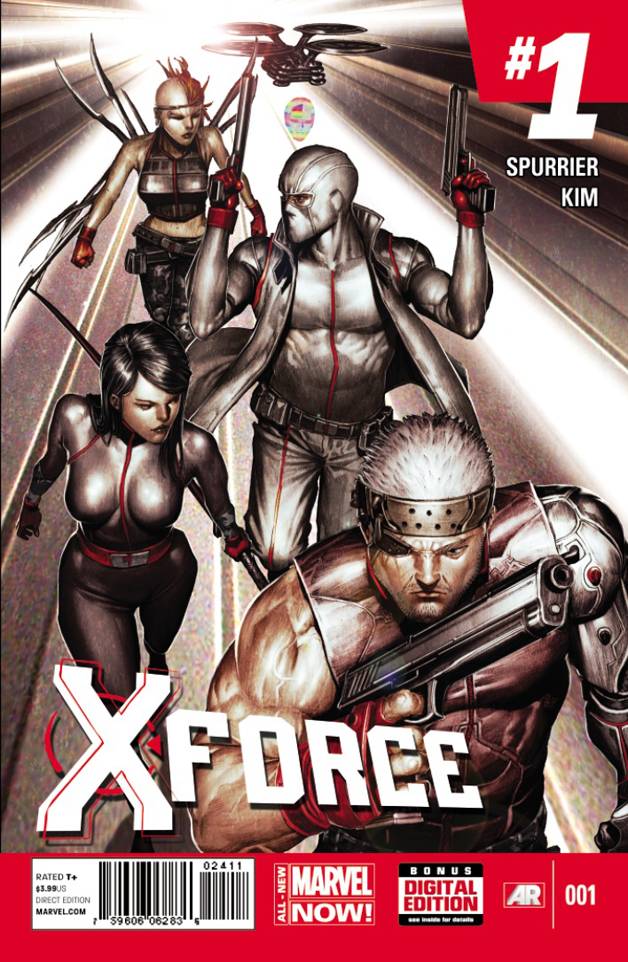
X-Force #1
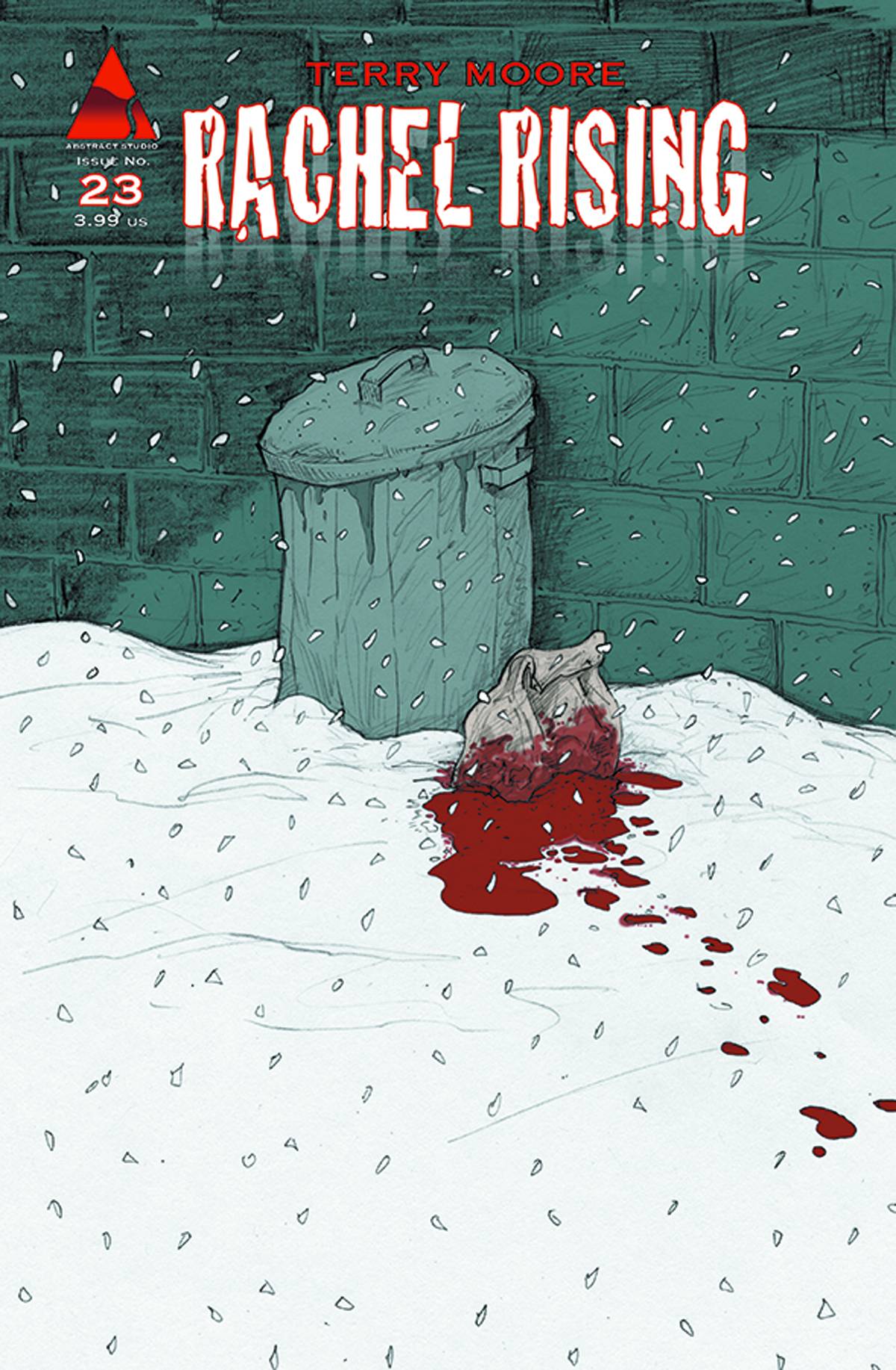
Rachel Rising #23
What are you looking forward to tomorrow?
Turning pages,
Scott
31 Tuesday Dec 2013
Posted in Uncategorized
Tags
Abstract Studio, Adventure Time, Adventure Time with Fionna & Cake, Afterlife With Archie, Ales Kot, Archer & Armstrong, Archie, Austin Harrison, Bad Houses, Bandette, Battlefields, BOOM!, Brian K. Vaughan, Buzzkill, Clone, Daredevil, Dark Horse, Dark Horse Presents, DC, Dean Motter, Deathmatch, Dial H, Dynamite, Fiona Staples, Fred Van Lente, Fury: My War Gone By, Garth Ennis, Goran Parlov, Greg Rucka, Harold Gray, IDW, Image, Jeff Stokely, kaboom!, Lazarus, Manifest Destiny, Marvel, Mateus Santolouco, Matt Kindt, Michael Lark, Michael Walsh, Mike Raicht, Mind MGMT, Mind the Gap, Mister X: Eviction, Mister X: Hard Candy, Morgan Jeske, Nelson Daniel, Numbercruncher, Oni, Rachel Rising, Sabretooth Swordsman, Saga, Satellite Sam, Seth, Simon Spurrier, Six-Gun Gorilla, Star Wars, Terminator, Terry Moore, the Hernandez Bros, The Massive, The Sixth Gun, The Spirit, Thumbprint, Titan, Tradd Moore, Trillium, Valiant, Vertigo, Wild Blue Yonder, Will Eisner, Winsor McCay, Zach Howard, zero
Welcome to the 46th Annual I&N’s Top Ten Comics of the Year (aka “The Innies”)! Why it seems like just yesterday that a struggling little mag named “The Amazing Spider-Man” edged out “The Adventures of Jerry Lewis” for the top spot on our hallowed list, signaling the spectacular rise of one and the slow descent into obscurity of the other.
Each title below is testament to the fact that, even as conventional wisdom holds that print is dying, comics are in the midst of some kind of Renaissance. The persistent stereotype that this vibrant, global medium is followed by sad, middle-aged men who like to see men in tights beat each other up simply doesn’t hold water anymore, nor has it for quite some time. The fact is, the problem is no longer a lack of diversity in incredible material for any and all possible demographics; it’s that there’s too much of it to keep track of! No less than seven publishers are represented in our Top Ten, each producing catalogues of more great work than we could ever hope to encompass in our tiny alloted piece of the internet. (You’ll note we even had to expand our “Honorable Mentions” section to ten books apiece – and we could’ve used ten more!) Simply put: everyone should be reading comics.
As always, we here at I&N welcome debate – hell, that’s the whole point. Just be aware that results below have already been encrypted onto floppy discs and blasted into space for the benefit of our future alien overlords. (DM)
The List!
10. Archer & Armstrong (Valiant): When Valiant, earlier this year, began hyping up their new title Quantum and Woody as their foray into buddy-action slapstick comedy, I wanted to yell “Wait! They’ve already GOT one of those!” But Archer & Armstrong is much more than that. Fred Van Lente and Co. have taken the best of Lethal Weapon, The X-Files, ancient Sumerian mythology, Dan Brown-type conspiracy novels, Dr. Strangelove, and god knows what else, and concocted a world-spanning epic that despite its breakneck pace and impeccable comic timing, manages an intellectual underpinning that questions the very nature and origins of faith. Even at its most gleefully satirical, however, the sheer exuberance of the writing embraces an expansive view of humanity, in all its wonders and frailties. Fun in a bottle, folks. (DM)

Archer & Armstrong
9. Fury: My War Gone By (Marvel): Garth Ennis proves he’s one of the most incisive writers around (not just in comics) on the subject of war. His deconstruction of the Marvel soldier/spy icon (lately supercool due to Samuel Jackson’s sleek big screen portrayal) is the least of this title’s attributes (which is on our Top Ten for the second year running). Ennis’ story (rendered with appropriate, unblinking grit by Goran Parlov) also serves as an insider’s account through the anguished litany of armed conflict of the second half of the 20th century. Most devastatingly, it portrays the effects of war, not on the nameless many whose lives are needlessly cut short, but on the wretched perpetrators who survive. Merciless and shattering. (DM)
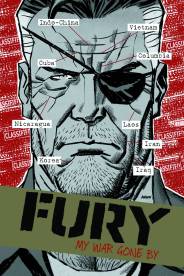
Fury: My War Gone By
8. Zero (Image): Ales Kot, the enigmatic engineer behind the challenging Change (Image), a mostly on-time bullet train of thought fueled by a combustible blend of poetry and pictures, has heroically hit the brakes on the overplayed and over-parodied secret agent genre, expertly taking it from 007 to Zero in no time flat. He’s applied the same amount of poetic pressure here, but to a more successful–and coherent–end storytelling-wise: the danger is palpable, the emotion undeniable–thanks, in part, to the rather complex collaborative effort that has called for four different artists on the first four issues of the series–a move that has transcended gimmick and, instead, has proven invaluable, if only because the first four artists have been Michael Walsh (Comeback), Tradd Moore (The Strange Talent of Luther Strode), Mateus Santolouco (Dial H, TMNT), and Morgan Jeske (Change). My experience thus far: #1 hooked me with its perfect timing and left me lying in the gutter; #2 knocked me upside-down; #3 disarmed me; and #4 made me love it–made me punch-drunk love it, damn it! What makes the book even more exciting? It defies expectations. I expect that it’ll continue defying expectations as we move into 2014. And, in that, I expect Zero to be just as good as it’s been–if not infinitely better because we’re getting the best of Kot, who’s clearly giving us everything he’s got. (SC)

Zero
7. Lazarus (Image): Greg Rucka’s vision of a near-future oligarchic dystopia gets under your skin because, in the tradition of Huxley and Orwell, it seems an all-too-plausible extrapolation of our current reality. The story is made even more unsettlingly concrete by Michael Lark’s stark, photorealistic visuals. Contrast the plight of the teeming masses with the power-hungry family dynamic of the ultra-privileged few, and you have a potent, volatile mix. A comic for our times. (DM)

Lazarus
6. Wild Blue Yonder (IDW): Sure, it’s only three issues in, but what a three-issue ride it’s been! We’ve celebrated this action-packed series from its radar-arousing takeoff, with each high-speed pass earning enviable I&N accolades along the way. (Check out the love here, here, and here.) Top Gunners Mike Raicht, Zach Howard, Nelson Daniel, and Austin Harrison have come together in classic diamond formation to deliver one superior salvo after another, each on its own–and as a whole–a blockbuster that would humble Hollywood’s own best of 2013. (SC)

Wild Blue Yonder
5. Rachel Rising (Abstract Studio): Terry Moore presents a truly American horror story: witches, serial killers, and a resurrected figure of biblical origins seeking vengeance for the sins of our nation’s past. Oh yeah, and the Devil. Moore draws you in with the quiet beauty of his artwork; his snow-covered renditions of the sleepy town of Manson enveloping you like a down blanket in front of a fireplace, before the sharp spasms of bloodletting shock you right back into his nightmare. However terrible the events depicted though, Moore seems to suggest they pale against the cruelties of history. Speaking of cruelties, let’s hope a purported television adaptation staves off recent talk of this book’s imminent demise. Because the real horror story would be a world without Rachel Rising. (DM)

Rachel Rising
4. Saga (Image): Saga is a lot of things: a superlative satire, a side-splitting sci-fi romp, a heart-wrenching romance, a critique of fiction, a controversy magnet; but most of all, it’s extraordinarily consistent; and it’s that consistency that fosters a critical expectation: to expect the unexpected. On a monthly basis, Brian K. Vaughan and Fiona Staples serve up sublime slices of a greater story–slices that showcase razor sharp dialogue, that pitch perfect pathos, that sell sure shocks; they wisely fool with the elements of fiction and, like confident alchemists, have come up with issue after issue of 22-page gold–and we’re all the richer for it. (SC)
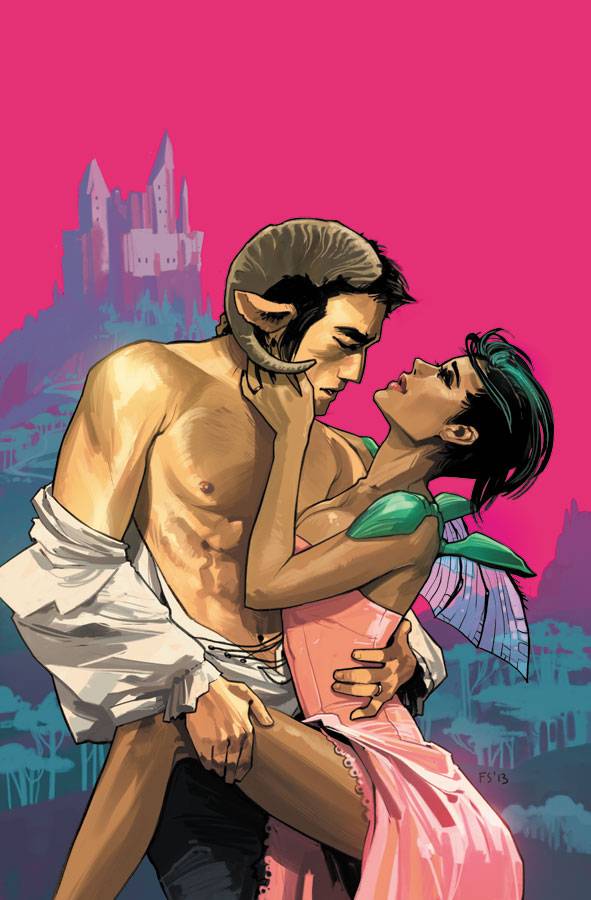
Saga
3. Six-Gun Gorilla (BOOM!): In the biggest surprise of the year, Si Spurrier conducts a multi-layered masterclass in metaficiton and at the same time delivers a eulogy on the dying art of escapism. From the existential exposition of this weird, weird western to its necessarily hopeful final act, Spurrier’s imaginative muse–the Six-Gun Gorilla, himself–becomes Blue’s, and then naturally becomes ours as we consent to the writer’s every insistence; as we gladly lose ourselves in this genre-bending–and never-ending–battle between reality and fiction, good and evil, and fate and freewill, which is brought to life by rising star Jeff Stokely, whose artwork crucially complements the conflicts at the core of the story. At the same time a celebration of a culture’s vital literary legacy and a criticism of the current collective unconscious, Six-Gun Gorilla has earned its spot in the Western Canon of Comics–and our Top Ten–with a simple but oft-neglected gesture: by making and keeping a primal promise. (SC)

Six-Gun Gorilla
2. Mind MGMT (Dark Horse): Matt Kindt’s magical mystery tour de force Mind MGMT—our #3 book of 2012–continues to astound, especially as its crafty creator meticulously molds the medium to suit his carefully constructed conspiratorial agenda. As the story of the eponymous enigmatic entity has evolved, so too has Kindt’s strategy for telling it: his precise, patient prose; his layouts, enlivened by some otherworldly calculus; and his innovative brushstrokes of genius merge miraculously and challenge us to think and to feel, to be active participants in the world in which we’ve been immersed: to put beautifully painted pieces together in order to experience–along with the impressive cast of characters–confusion and loss, the conflation of time, and a higher power drawing us somewhere unprecedented in breadth and scope–drawing us in to the mind of the medium’s finest manager. (SC)

Mind MGMT
1. Mister X (Dark Horse): There are many approaches to creating great comics. One of them is largely collaborative, in which the creative duties are are separated and clearly defined (writer, artist, colorist, letterer, etc). Through an amalgam of traditional, action-based American comics and the more leisurely paced, lushly visual influence of manga, this approach has evolved over the last twenty years or so into what could be called a “cinematic” style; a treatment of the comic book form that seems based in the ethos of filmmaking (Lazarus, above, is an excellent example of this). Then there is another approach (let us call it the “auteur’s” approach) in which the cartoonist (let us rescue this title from the cultural dung-heap) assumes all of the above creative responsibilities to produce narratives that are singular and personal in a way that no other visual medium, not even movies, can replicate. Since they control all aspects of the work – not just writing and drawing, but page design, panel lay-out, font style and placement and all sorts of graphic elements; in short the whole package – they can, at their best, perfectly marry content and form in a manner that is unique to the comics medium. It is an approach with a history that extends at least back to Will Eisner and The Spirit. Perhaps because it takes such a concerted effort by a single individual, this type of formal, experimental approach is most often seen in the realm of the “graphic novel”. Rarely is it employed in our beloved, stapled floppies (though glimmers of hope have begun to appear on the comic racks: see Matt Kindt, above and below). And then there is Mister X. Created by Dean Motter in the early 1980’s, (when “graphic novels” barely existed as an idea) the title has long been a touchstone among independent-minded cartoonists (early contributors include the Hernandez Bros and Seth). In its latest iterations, Hard Candy and Eviction, Motter continues to seamlessly wed both approaches: there is the clear stylistic influence of German Expressionism and film noir for which the comic is known, but there are also the aforementioned design choices that reflect the themes of the narrative itself. The story involves the mysterious architect of a city in which the very buildings (in all their art deco glory) seem to respond to, and adversely influence, the psyches of its very inhabitants. This theme, played out in yarns that are at once hard-boiled, surreal and whimsical, acts as a fitting metaphor for the experience of the reader, as they interact with the “architecture” of Motter’s intricate design. Further, Motter includes delightful homages to the likes of Harold Gray (“Little Urchin Andy”), Winsor McCay (“Dream of the Robot Friend”) and the aforementioned Eisner (see cover below) which pay tribute to the comics history of which Mister X is a part, while, again, also making sense within the story itself. The overall effect is immersive and beguiling. Some comics tell great stories. Some comics celebrate their history. Some comics continue to push at the boundaries of the medium. And then there is Mister X. Book Of the Year. (DM)

Mister X:Eviction
Derek’s Honorable Mentions: 20. Dial H (DC) 19. Afterlife with Archie (Archie) 18. Manifest Destiny (Image) 17. Thumbprint (IDW) 16. The Massive (Dark Horse) 15. Battlefields (Dynamite) 14. Adventure Time (kaboom!) 13. Numbercruncher (Titan) 12. Trillium (DC/Vertigo) 11. Adventure Time with Fionna and Cake (kaboom!)
Scott’s Honorable Mentions:
20. Battlefields (Dynamite) 19. Daredevil (Marvel) 18. The Sixth Gun (Oni) 17. Deathmatch (BOOM!) 16. Satellite Sam (Image) 15. Clone (Image) 14. Numbercruncher (Titan) 13. Mind the Gap (Image) 12. The Massive (Dark Horse) 11. Trillium (DC/Vertigo)
Best Single Issue of the Year: Mind MGMT #17 (Dark Horse)
With #17, Kindt reaches new heights, goes to greater lengths–particularly in page-busting panels of crisply-crafted and concurrent continuous narratives–to exploit the power of the medium. As promised by the clever cover–one awash in paranoia and paronomasia–the story moves at a breakneck pace: from a locked and loaded unhappy Home Maker to a veritable orgy of violent rivers running toward a simultaneous orgasm of double-page splashes–there goes the neighborhood, indeed!–to a crack shot Meru, who, with a twist of Lyme, is ready to take the reins and restore reason to the world one agent at a time. The whole damn thing’s a miracle, really. Hell, at this point, I wouldn’t be surprised if Kindt could turn his watercolors to wine; his work is that divine. (SC)

Mind MGMT #17
Publisher of the Year: Most comics-related outfits have finally caught onto Image Comics‘ trend-setting ways and already bestowed this honor upon them (no doubt, in no small part, due to our ahead-of-the-curve naming them Publisher of the Year in 2012 😉 And with stellar debuts like Lazarus and Zero (not to mention books like Manifest Destiny and Rat Queens) the accolades are hard to dispute. But let us do just that (contrary bastards that we are). Because 2013 was the year that a bevy of other publishers took a page from Image’s playbook and produced work, much of it creator-owned, that was just as innovative, idiosyncratic, and invigorating as Image’s output. BOOM!, IDW, Oni, Dyanmite – all produced titles of creativity, breadth and distinction. But there was one publisher that rose unexpectedly, like its namesake, above the rest: Dark Horse. While never taking their eye off their bread-and-butter licensed properties (like Star Wars and Terminator) Dark Horse branched out into new territory with exciting minis from largely unknown creators (Buzzkill), original graphic novels (Bad Houses), and printed versions of high quality digital comics (Bandette, Sabretooth Swordsman). And let’s face it, Dark Horse has been doing the creator-owned, independent thing for over twenty years, as evidenced by the revival of the premiere comics anthology, Dark Horse Presents. So while Image is the current industry darling (and deservedly so), we can’t ignore the evidence of our comic-lovin’ eyes: the best overall books of 2013 (including our Top Two titles) were published by Dark Horse Comics. (DM)
Looking forward to 2014,
Scott & Derek
24 Tuesday Dec 2013
Posted in Uncategorized
James D. Robinson and J. Bone’s Saviors is the only book that caught my eye.
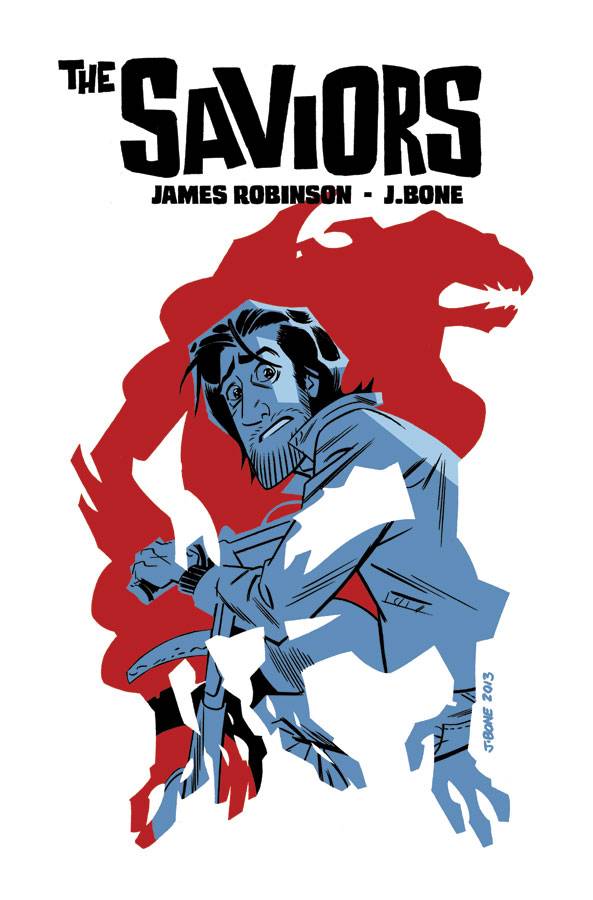
Saviors #1
Wasn’t excited enough for it to go to the shop today. If there’s one left on the shelf next week, I’ll certainly thumb through it.
As far as tomorrow–Christmas Day–goes, I’m hoping Santa brings me all or some or one–but mostly all–of the following:
Can’t wait to see what’s under the tree!
I wish you all the best and all of the comics you want–and, most of all, a very Merry Christmas.
Turning pages.
Scott
24 Sunday Nov 2013
Posted in 5 Comics You Should Be Reading, Uncategorized
Tags
Afterlife With Archie, Al Hirschfeld, Alberto Alburquerque, Ales Kot, Archie Comics, Armageddon, Austin Harrison, Charles Soule, Dark Horse, Dave McKean, David Mazzucchelli, DC Comics, Deep Impact, Francesco Francavilla, IDW, Image, Independence Day, J.H. Williams III, Letter 44, Matt Kindt, Mike Raicht, Mind MGMT, Neil Gaiman, Nelson Daniel, Oni Press, Roberto Aguirre Sacasa, The Sandman: Overture, Tradd Moore, Vertigo, Wild Blue Yonder, Zach Howard, zero
Extreme Makeover Edition! This month’s list features five new titles. That’s right: not one of the books from last month’s list is making a repeat appearance. For those scoring at home, that’s the first time that’s happened. Two ways to look at this: last month’s titles par excellence took the inevitable step back (alas, this is partially true – I’m looking at you, Saga!) Or, you may arrive at the conclusion that we have after making these lists every month: there’s a ton of great new comics being produced right now. Really, just the 5 below titles alone represent a cross-section of material that either you, or at the very least someone you know, would get a tremendous kick out of.
5. The Sandman: Overture #1 (DC/Vertigo): This one comes as no surprise. Neil Gaiman, one of the most celebrated writers of our time, makes the long-awaited return to his signature creation, The Sandman. What is surprising is how easily Gaiman re-envelops you in his world. That would be the world of Dream, the name of both the title character and the realm he is lord of; the Endless, his immortal brothers and sisters, each representing a facet of existence that starts with the letter “D” (like Gaiman’s winning goth-punk-cute take on Death); and the host of mythological beings, endearing and terrifying, that were introduced during Sandman’s original, legendary run. This could easily have been a greatest hits tour; give some page space to old fan-favorite characters, indulge your readership’s sense of nostalgia, and call it a day. Gaiman does indeed deliver on both these counts. But what quickly becomes evident is that what is missed most is not the characters, nor even their fantastical world; it is Gaiman’s voice. Alternately warm and wise, mysterious and remote, it has more magic in it than all of the wings and wands and arcane trappings that pass for so much of fantasy these days. And I haven’t even mentioned J.H. Williams art yet. Exquisite draftsmanship, a painterly palette that ranges from monochromatic to kaleidoscopic depending on the scene, eye-popping design that includes double and quadruple-page spreads (you’ll have to see for yourself); suffice it to say that, other than his longtime partnership with Dave McKean, this may be Gaiman’s most fortuitous artistic pairing yet. And that is saying something. A most welcome return. (DM)

The Sandman: Overture #1
4. Wild Blue Yonder #3 (IDW): After a brief hiatus, Wild Blue Yonder soars back onto the scene without having missed a beat. That’s right: it’s another action-packed issue from the terrific team of Mike Raicht, Zach Howard, Nelson Daniel, and Austin Harrison, who are well on their way toward cementing this series as one of the year’s best. Every note is played perfectly, as one might expect after two smartly developed and beautifully rendered issues. Chapter Three takes off with a testosterone-fueled test–one that leaves Tug, the clever new gun, with a sore jaw, a result of the unimpressed Scram’s heavy-handed assessment–and lands with a low-fuel rescue and a highly-anticipated kiss. (Looks like Tug’s jaw was all right, after all.) The care taken to craft such a superb story arc is reflected–more, it’s amplified–by Howard’s art and Daniel’s colors, which together capture both the chaotic and the tender moments with remarkable ease–with no better example of the delicate balance struck issue-wide than the absolutely stunning double-page spread that rests at the heart of this fabulously fun book. Despite that romantic scene and the kiss that closes the chapter, we’re still left with the knowledge that Tug’s loyalties lie elsewhere–with the Judge. Hey: he may be coming around to the cause; or maybe he’s simply playing Cola for the free-spirited fool that she is. Who’s going to win this war of Tug? Please, please, please don’t make me have to wait another three months to find out! (SC)
Wild Blue Yonder #3
3. Mind MGMT #16 (Dark Horse): At sixteen-issues old, Matt Kindt’s magnum opus is clearly the most mature book on our list, but don’t let its age fool you: it’s still contagiously kinetic and impossibly unpredictable–especially here in this expectation-erasing one-shot, which showcases Kindt’s incomparable ability to marry his watercolors and his words. Once again, he “escape[s] into books” and plays both sides of the unique relationship between reader and writer, tapping into the fascination, obsession, and madness of this novel form of unrequited love. Kindt takes a risk as he builds this complex character study on a character who’s important to the overarching storyline, sure, but in whom we’ve yet to make a significant investment. The risk pays off: he fills up the blank spaces in the Eraser: he sets up and sells Julianne’s psychosis, her rapid divorce from reality, by literally drawing what’s going on in her mind and, as a result, figuratively drawing us into it. We follow her, observe her, as she follows and observes; and her anxiety, which builds with each panel, parallels ours–not surprisingly thanks to Kindt’s attention to detail as he creates a memory game of sorts throughout the issue: one in which he challenges us to see patterns, subtle parallels between one panel, one page and another, even as Julianne’s own memory seemingly fails her–particularly in terms of her husband, the author of her obsession, Philip K. Verve. Whether it’s a crescendo of phantom “taps,” a persistent mask of pipe smoke, or a face left unfinished, Kindt cleverly details her descent all the way toward the penultimate page of the story proper: a stunning splash, which, ironically, after an ascent–of stairs, anyway–brings the fictitious relationship to its inevitable, bloody end. From the beginning, Mind MGMT has been a comic book experience unlike any other. This issue may very well be the best of the bunch: it engages us as fully as the medium can; and, as Kindt writes through his art (see below), he manages to get us to think not only while we’re lost in the story, but long after we’ve finished reading it, as well. (SC)
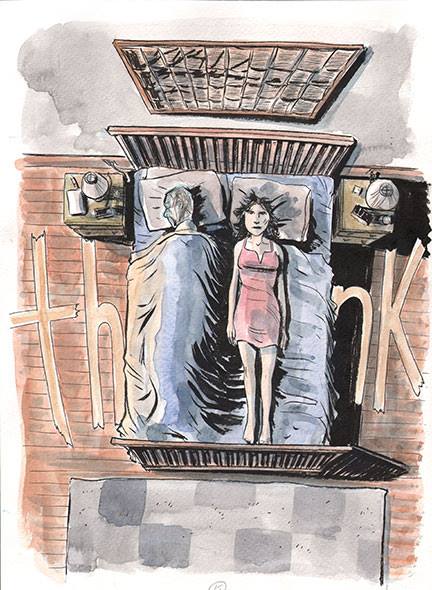
Mind MGMT #16 p. 15
2. Afterlife with Archie #1 (Archie): This was, perhaps, inevitable. We live in a mash-up world after all. Bluegrass techno music. Superheroes on Broadway. Bacon and everything. Add the seemingly undying craze for zombies, and it’s actually surprising it took this long. Now, at their worst, these types of amalgamations are self-indulgent exercises in pointlessness. And yet, there’s something about this... Just reading the title gives rise to an involuntary smile. The prospect of throwing those beloved, unaging teen icons and their whitewashed Norman Rockwell existence into a flesh-rending, post-apocalyptic fervor holds the excitement of both a dare and a promise. Indeed the difficulty may be in staying true to the Archie half of the equation. For this to work, there has to be a genuine understanding of these characters and their world; otherwise it could easily descend to a Mad magazine parody. Luckily, writer Roberto Aguirre-Sacasa seems up to the task. (His work salvaging the aforementioned superhero musical may have provided good training ground in the mash-up dept.) These characters act the way they’re supposed to; the corny jokes, the anachronistic cat-fighting of Betty and Veronica. But then there is the palpable mood of creeping horror, thanks largely to the stunning art of modern pulp-master Francesco Francavilla (which is, by itself, worth the price of admission – honestly I would’ve bought a regular issue of Archie Digest if Francavilla was drawing it. Note to self: Digest Archie would’ve been a great alternative title for this book.) Aguirre-Sarcasa promises much darker times ahead. The thrill of this book will be seeing how far he can go while still having it be recognizable as an Archie comic. It’s quite the task he’s set for himself. And if he goes too far? Well, that could be fun too… (DM)

Afterlife with Archie #1
1. Zero #2 (Image): Issue one was pretty good: Ales Kot presented a espionage/black-ops story involving a superhuman arms race. Not the most original concept, but placing it in the context of the ongoing Arab-Israeli conflict gave it a certain edge, aptly rendered by Michael Walsh’s choppy, early-Mazzucchelli realism. Issue two is a different beast entirely. The mysterious operative, Zero, is still the main character. We are again witness to a political assassination. And yet the tone couldn’t be more different. Whereas the first issue was all brutality and military jargon, the second issue balances the awful goings-on with a poignant tale of innocence lost. Or more accurately, torn away. In this issue, we flashback to Zero’s childhood. The sweet, unaffected cadence of his young view of the world is set side-by-side with the harsh nihilism of his education in sanctioned murder. This duality heightens the mood of each, a quality that extends to the art, which also couldn’t be more different from the first issue. Tradd Moore’s work exudes the literally wide-eyed, childlike perspective, without skimping out on any of the violence, by employing linework that has more of a late-Mazzucchelli grace; a clean, exuberant style suggestive of animation, or dare I suggest, even a touch of Al Hirschfeld (I’ve never before encountered an image of a brain-splattered assassination in which I wanted to count the ‘Nina’s‘.) In presenting two initial issues that attack his basic premise from wildly different angles (and artists), Kot has proven himself quite the chameleon, and hopefully set up that rare book in which, month to month, you truly don’t know what to expect. Book of the Month. (DM)

Zero #2
The Biggest Dis(appointment): Letter 44 #1 (Oni Press)
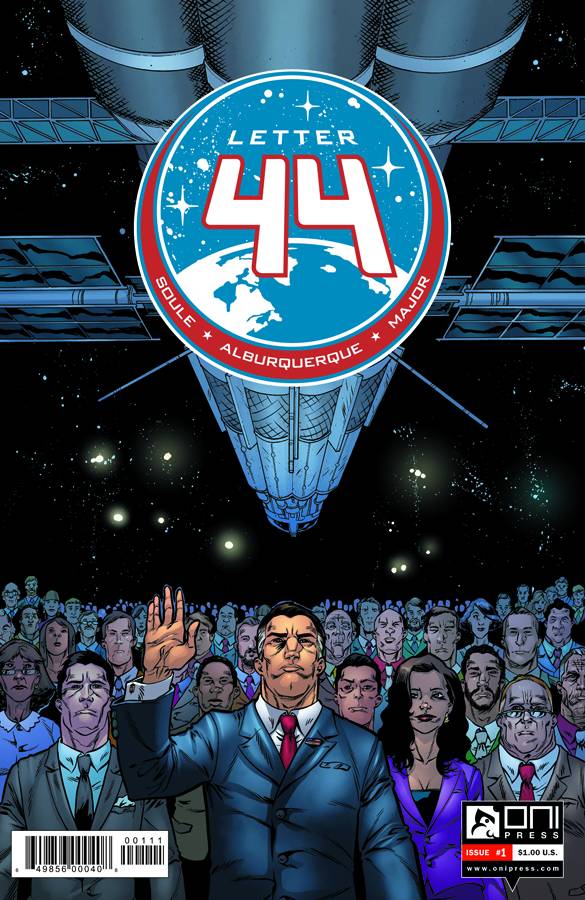
Letter 44 #1
Welcome to the dis, Mr. Soule. So you know, the next few lines are going to be rough. A bunch of over-the-top positive reviews and a TV deal in the works don’t really prepare you for being The Biggest Dis(appointment) of the month–but you’ll get through it. They all do.
Sorry. Seemed fitting.
If I’m being honest, your being here isn’t really your fault. Your book’s actually pretty good. In fact, the first page is “something else,” and the introduction to 44 is expertly done; we know exactly what kind of man he is in four pages flat. Your dialogue is sharp and naturalistic; and Alburquerque’s art does its job. But my perspective changed after the abrupt insinuation of the, umm, extraterrestrial problem. And you knew it would, didn’t you? I mean, you had the President-elect express–perhaps even more accurately–exactly what I was thinking a couple of panels later. Clever, sir!
Now don’t get me wrong: I can suspend disbelief with the best of ’em. Problem is, my disbelief immediately got suspended alongside several former disbeliefs that got strung up as a result of my having endured rockbusters like Armageddon and Deep Impact, and the soulless Independence Day. It’s an inglorious gallows, indeed. So, expectations? Exploded. A big budget’s worth of bust for only a buck!
As the issue wears on–and it does–it wears the White House well; the crew of the Clarke, well, not so much. But, hey, it happens. In this case, it is your fault for having created such a strong character in President Blades. Any time he’s not on the page, however, the story suffers–but not as much as it suffered from its not living up to the previews and reviews that held it up to the heavens.
I think you’d agree: it’s not quite there yet. I mean, at this stage, the core of Letter 44 is nothing more than a mostly familiar concept. But will I give your book another issue? Sure I will. Will your book eventually meet the hyperbolic expectations heaped upon it–if not in #2, sometime soon? Will it play more like an artsy independent film and less like a brain-dead blockbuster? I have no idea. Heck, I’d be happy if it meets the humble expectations I’ve now tied to it. But as it stands, I expected more from this, which is why your initial offering has earned a dis. (SC)
Turning pages,
Scott and Derek
12 Tuesday Nov 2013
Posted in Uncategorized
Having trouble narrowing down your choices this week? Let me not help you at all.

The Shaolin Cowboy #2

The Manhattan Projects #16
Three #2
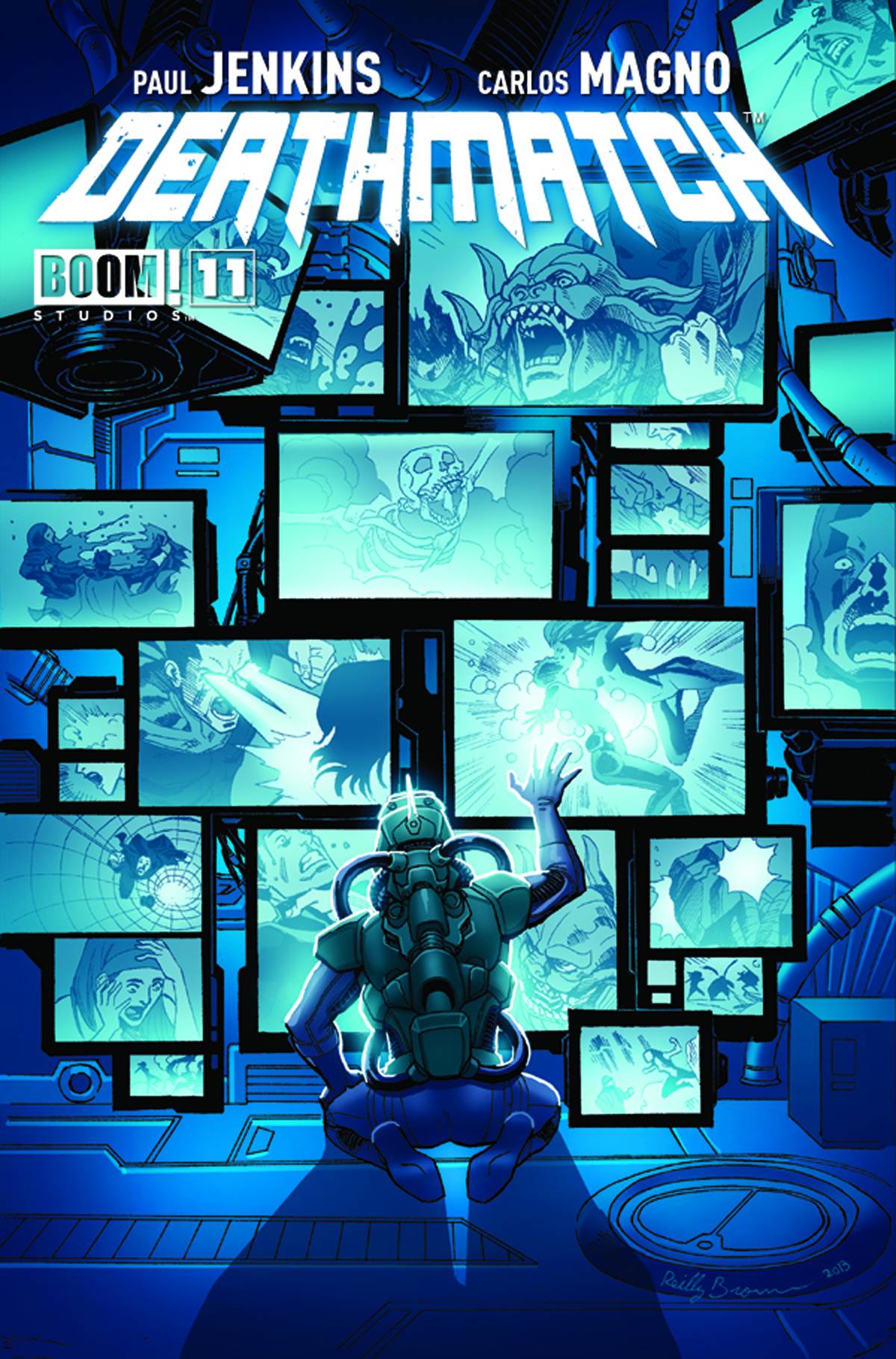
Deathmatch #11

Unity #1
What are you looking forward to tomorrow?
Turning pages,
Scott
21 Monday Oct 2013
Posted in Uncategorized
Tags
Agents of S.H.I.E.L.D., Babymouse, Bluffton, CBLDF, Colleen AF Venable, cosplay, Eric Wight, Frankie Pickle, Greg Rucka, Guinea Pig, Hit, Jacob Javitz Center, Jeff Stokely, Jennifer Holm, Larry Marder, Lazarus, Matt Kindt, Matt Phelan, Matthew Holm, Mel Brooks, Meryl Jaffe, Michael Lark, New York Comic Con, Peter Tomasi, Six-Gun Gorilla, Tales of the Beanworld, Vanesa Del Rey
It’s been just over a week since the New York Comic Con descended on our fair city in a whirlwind of, if not glitz and glamour, then body paint and wishful thinking. And while seven days seems hardly sufficient to digest this pop cultural smorgasbord, I nonetheless humbly offer the following highly personal, utterly non-comprehensive account of the weekend’s festivities.

Scott, my partner in crime, about to go down the rabbit hole
First of all the size. I went to one of the earlier incarnations when NYCC was still sharing space with three or so other events. In the few scant intervening years it has metastasized to fill all eighteen miles of the Jacob Javits Center. It took us twenty minutes just to get our bearings.
 And yet (like many of the costumes there) it was still bursting at the seams. Untold masses of pilgrims winding their way from one temporary chapel of plastic tubing and garish banners to the next. Caught in a sea of spandex and fishnets amidst a cacophony of miked-up segment hosts and video game sound effects. An iridescent fusion of Arab market and downtown Tokyo. Wonderland and TerrorDome at once.
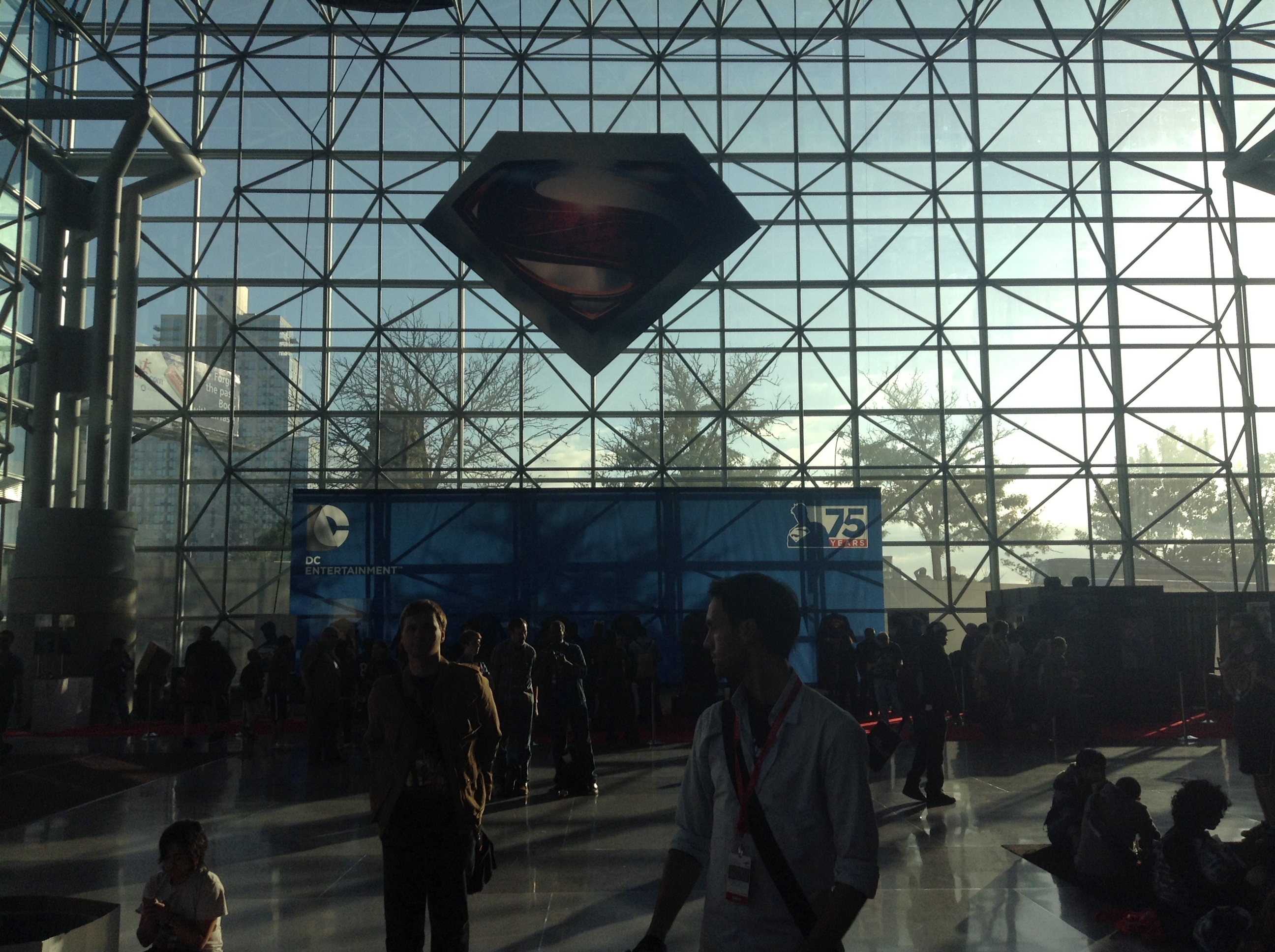

The show was split into six major areas that I could discern. First, something called ‘The Block’. The name, suggestive of the title of HBO’s latest foray into the penal system, is perhaps not apt for anyone whose sensibilities have a volume setting under ’11’. Truly one’s senses were assaulted by an endless array of toys, gadgetry, accessories, statues, t-shirts and miscellanea, mostly of the mash/up or ironic kind (sidenote: if irony has spawned an entire industry, does it cease to be ironic?). In other words this was the place for high-octane (in your best Mel Brooks/Yogurt voice): ‘Merchandising! Merchandising! Merchandising!’ In keeping with my general skepticism, and appreciation for comics history, I referred to this place as ‘The Blech‘.
 Not to be outdone, we next had the main exhibition space. This is where the publishers (and some major retailers) set up shop. This was nominally more interesting; at least this had something to do with comics, what with with editors, assistants and the occasional creator manning the booths. But what really seemed to be emphasized were the corporate bona-fides (‘synergy’ if you so choose) and the big events needed to prop them up (Look! It’s that car from “S.H.I.E.L.D”!) So, again the Aesthetic of the Exclamation Point reigned: bigger,better,faster,shinier. Sure there were islands of interest; an unknown publisher, a hard-to-find book. But ultimately we were fleas in a thousand-ring circus.
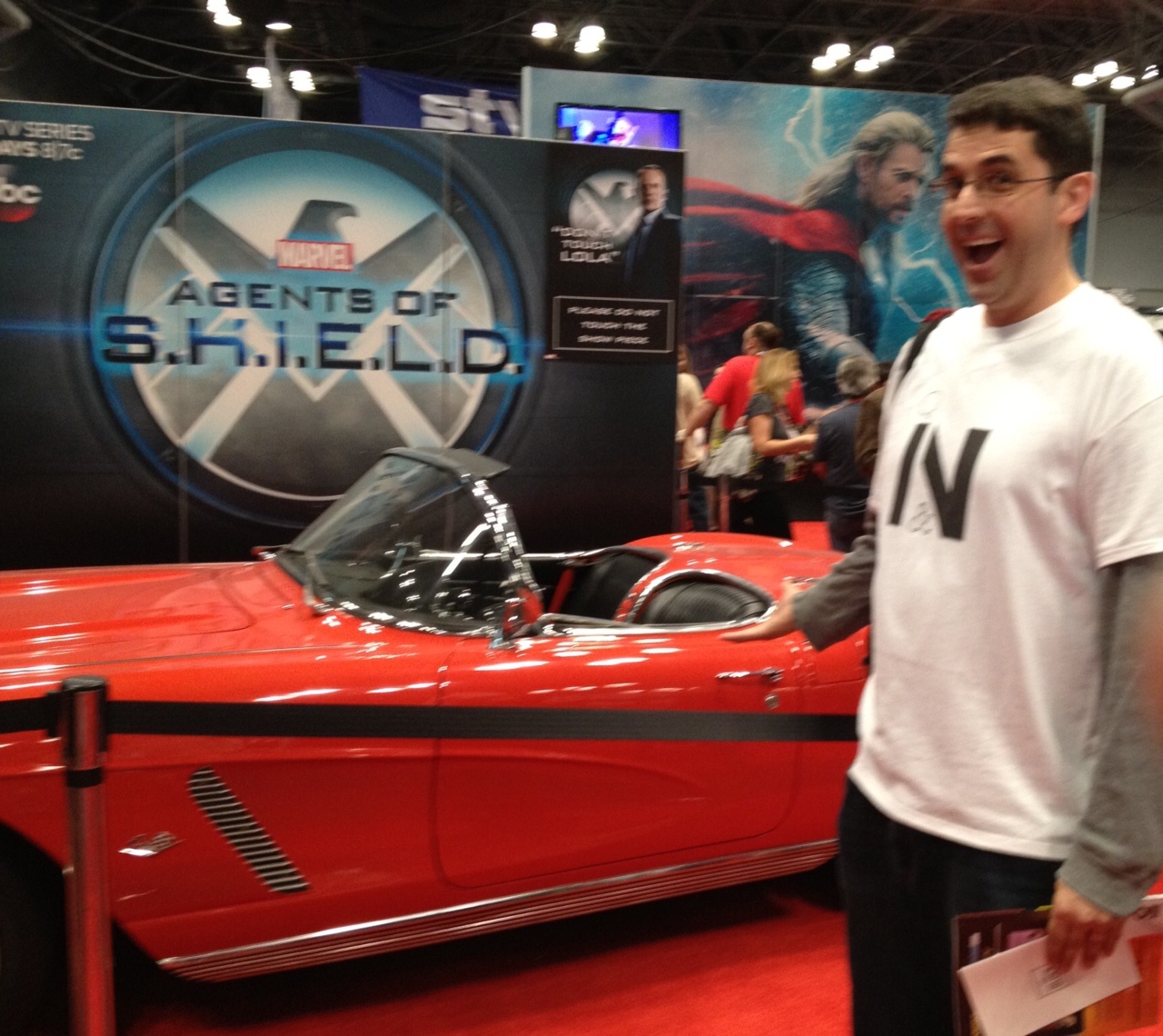
Am I being sarcastic? Or does some part of me think it’s kinda….cool?
There was the autograph section, with all the personality of an airplane hanger, housing long undulating queues of people clutching Hulk Hogan dolls.
The Food Court offered a range of selections from grease-bomb heart attack to actually edible. Its central location made logistical sense I suppose. But it did throw into high relief the outlying relegation of what were, after all, the two most interesting areas: the Panels and Artist’s Alley.
Perhaps it was too much to expect of a four day event that the panels would be ensconced in more attractive surroundings. But given the hyperventilating visuals of the Main Floor, the Spartan look of the panel rooms and attendant waiting area stood in stark contrast. Imagine an unused hockey rink with giant, unfinished cubicles, and you start to get the idea. But no matter; this was where you could hear creative minds wax creatively, expounding on craft, influence, the politics of the day, etc. (OK, maybe the Sonic the Hedgehog and Mega Man panel don’t quite fit this bill)
Some personal highlights:
-Greg Rucka’s political rant during the Lazarus panel, in which he got visibly angry at, among other things, the surveillance state, the highjacking of Washington DC, the ever-increasing power of the oligarchy, and mass manipulation by the media. He seemed to be aware of the danger of putting too much of this stuff in the comic, thereby risking alienating his audience; but I say caution be damned! I wanna see more of that! Michael Lark, on the other hand, perfectly played the comic foil to Rucka’s histrionics with well-timed barbs puncturing any impending pomposity. Best moment: Rucka, bemoaning current security practices, explaining to his audience just how easy it would have been for him to kill everyone in the room. Lark, not missing a beat, slowly backed away.
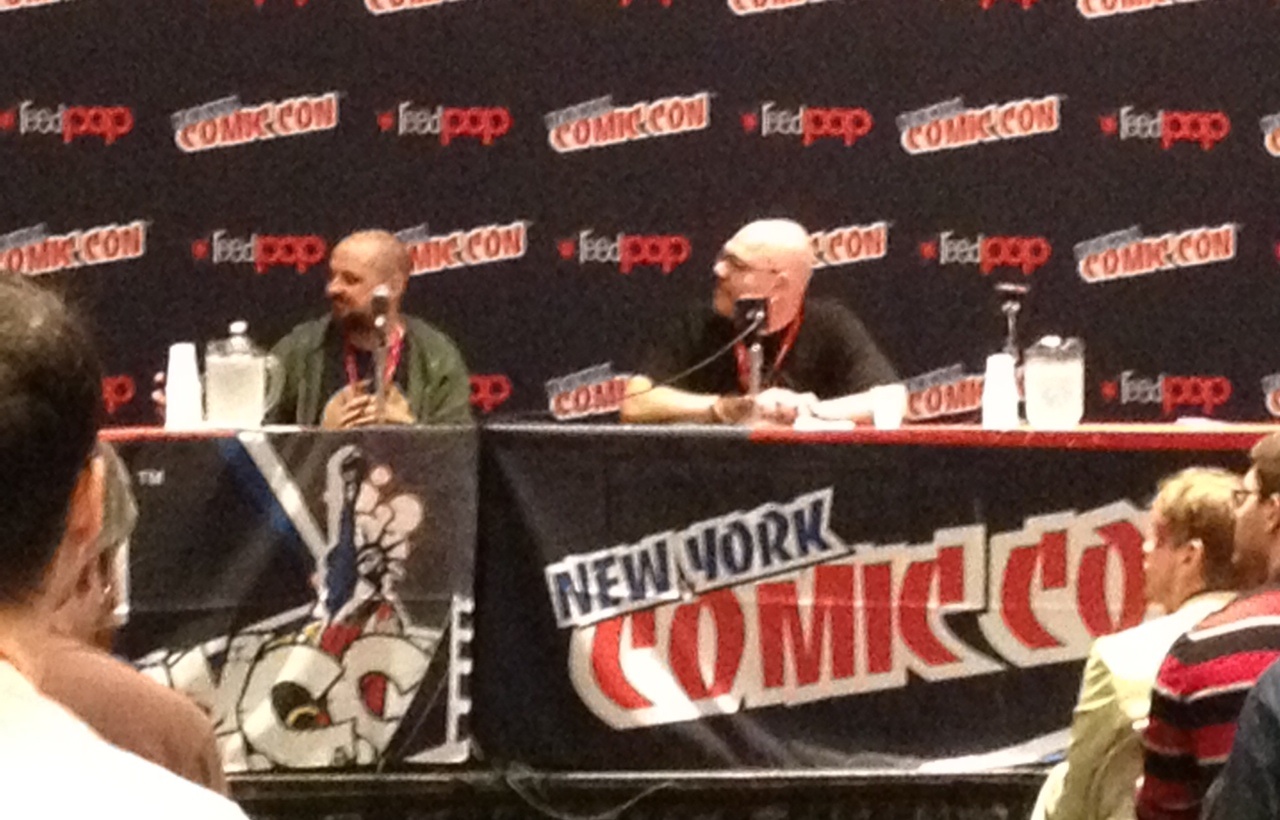
The comedy stylings of Rucka and Lark
–CBLDF: Raising a Reader – A panel on the educational value of reading comics that managed to be informative and entertaining, featuring current rising stars of comic kid-lit Jennifer Holm and Matthew Holm (Babymouse), Colleen AF Venable (Guinea Pig), Matt Phelan (Bluffton), child literacy expert Meryl Jaffe, and indie comics icon Larry Marder (Tales of the Beanworld). The roundtable discussion covered the current boom in childrens’ comics (after a long dearth of such material), advocated for comics in the classroom to promote literacy, and defended against the charge that comics “dumb down” readers. Particularly insightful was Eric Wight (Frankie Pickle) recounting his experiences in using comics not just to get kids reading, but to help them write, focusing the type of visual storytelling skills that are becoming increasingly important in this day and age. The panel wrapped with some of the featured creators demonstrating a useful idea-generating exercise, while taking direction from a child in the audience.
Finally, there was Artist’s Alley, with all the ghettoization the name implies. Far off the main exhibition space, and sharing a floor with the coat check, this was nonetheless the place to be. Here, after all, were the very creators upon whose talents Comic Con, and much of the entertainment industry, is built upon. Those, in other words, who put the Comic in Comic Con. (Without them it’s just one Big Con.) And quite a who’s who of artists, writers and editors it was; everyone from Adam Hughes to Yanick Paquette available to converse, debate, and of course, promote. Our man Scott chatted up Peter Tomasi on the current state of the Bat-universe. We drooled over Matt Kindt’s original art. And we spent some time with table-mates Jeff Stokely (Six-Gun Gorilla) and Vanesa Del Rey (Hit). (Really enjoyed talking process with Stokely. Nice to see a relatively young artist who still gets ink under his fingernails. I’ve got nothing against digital art – how could I in the age of Fiona Staples? – but there’s something so beautifully tactile about pages with nib scratches and ink splatter.)
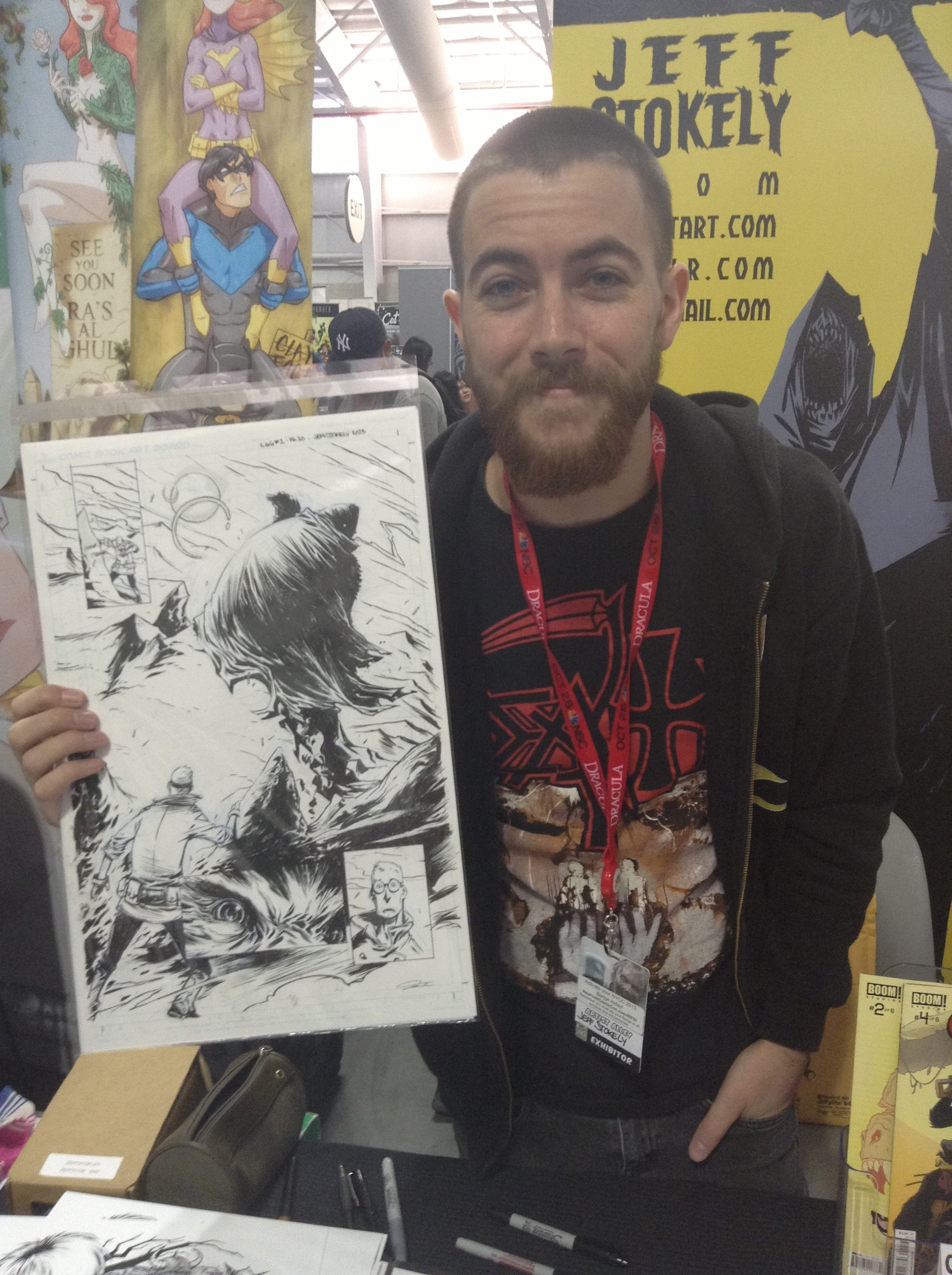
Mr. Stokely
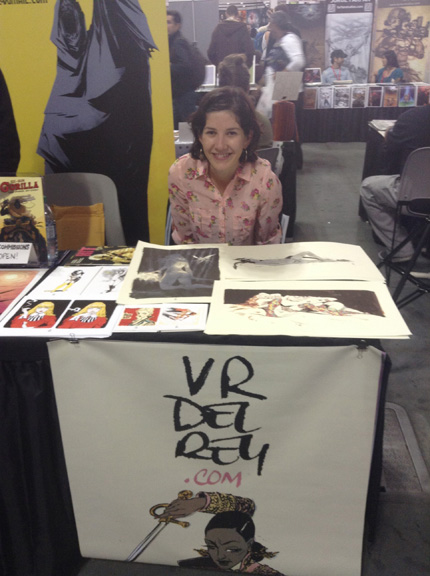
Ms. Del Rey
Of course, I can’t end an essay about Comic Con without mentioning what, for many, is its raison d’etre: the costumes. The make-up, the wigs, the giant wings, the giant-er artillery, the latex, the leotards – body type be damned! I viewed these hodge-podge concoctions with a mixture of admiration for the inventiveness (and in some cases, even artistry) that went into their creation, and a tugging sadness at the willful obliviousness involved in transforming oneself into a walking advertisement for something one doesn’t even own. The elaborate artifice employed to faithfully mimic a favorite characters held just a whiff of desperation. And yet, there was a disarming innocence about these folks. And they seemed, by and large, to be having fun; posing, taking pictures with fellow cos-players; in short, being seen. In fact, they’ve adopted the ethos of Comic Con so thoroughly – big, brash, ridiculous, corporate, with an undercurrent of genuine creativity – that they’ve become the perfect metaphor for it.

Exodus
And so, New York Comic Con, you three-hundred pound gal in a Catwoman costume, I bid you adieu. You bewilder me, you repulse me, you intrigue me.
See you next year.
Probably.
Yours in Comics,
Derek
10 Tuesday Sep 2013
Posted in Uncategorized, What's I&N Store?
Tags
Archer & Armstrong, Astro City, Battle of the Atom, Becky Cloonan, Brian Wood, Captain America, Carlos Pacheco, Clone, Dark Horse, David Lopez, David Schulner, DC Comics, Eternal Warrior, FBP: Federal Bureau of Physics, Fred Van Lente, Gerard Way, Ghosted, Goran Sudzuka, Greg Pak, Image, Indestructible Hulk, J. Michael Straczynski, Jonathan Hickman, Joshua Williamson, Juan Jose Ryp, Kurt Busiek, Mark Waid, Marvel, Matteo Scalera, Nick Pitarra, Pere Perez, Rachel Rising, Rick Remender, Robbi Rodriguez, Sidekicks, Simon Oliver, Terry Moore, The Manhattan Projects, The True Lives of the Fabulous Killjoys, Tom Mandrake, Trevor Hairsine, Valiant, Vertigo, X-Men
Vacation’s history. Good thing I’ve got an escape plan:
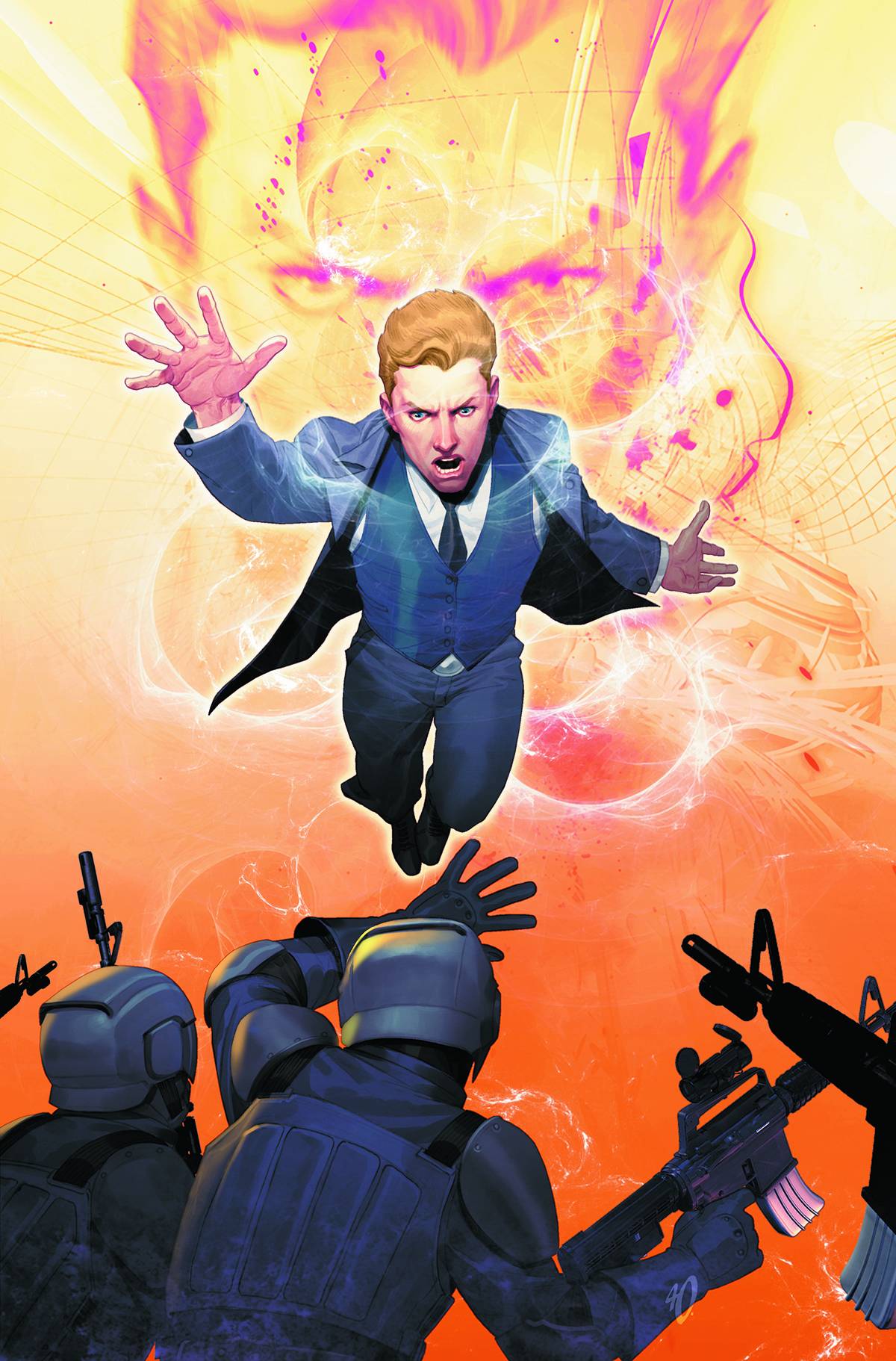
Brain Boy #1
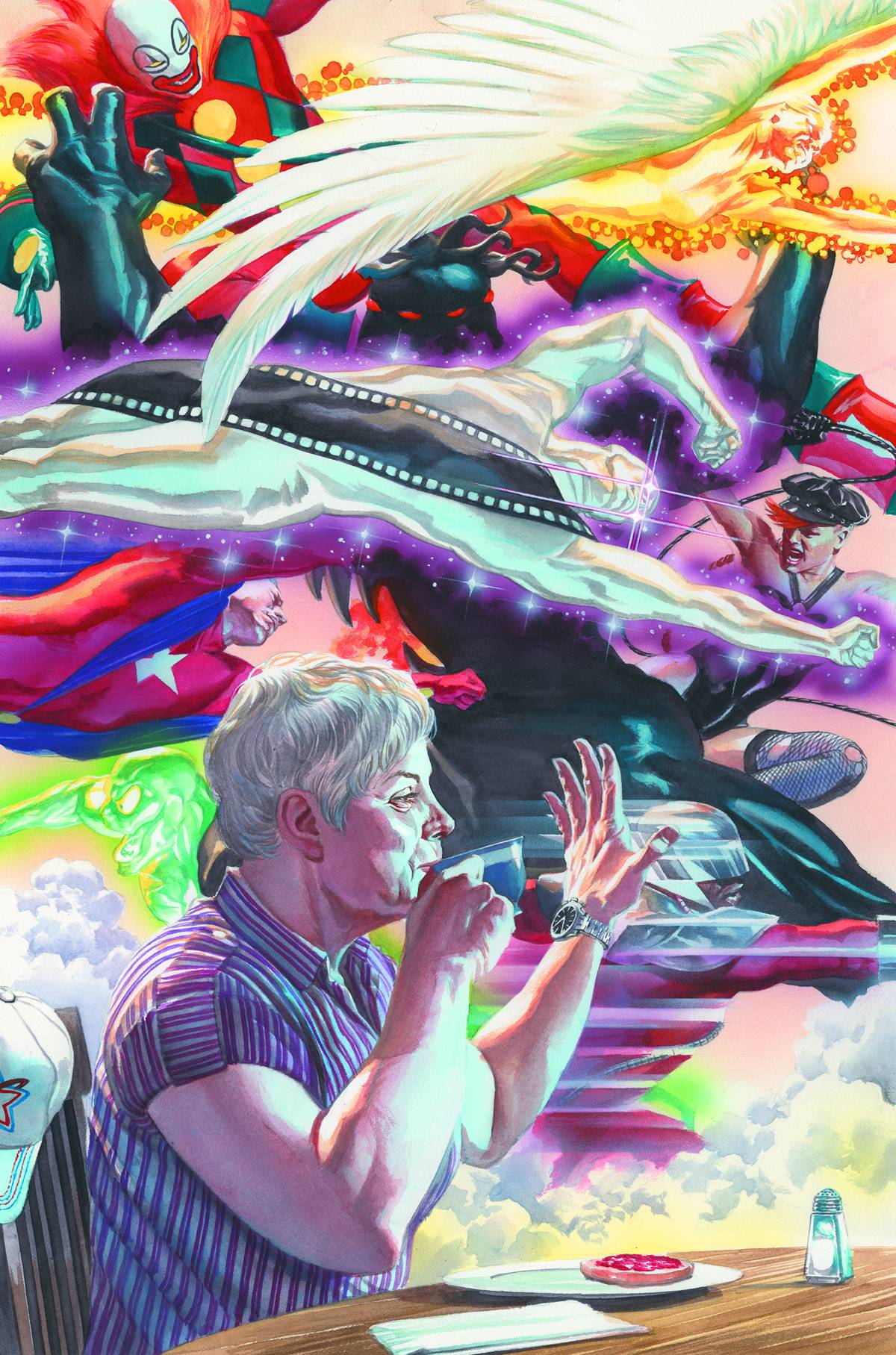
Astro City #4
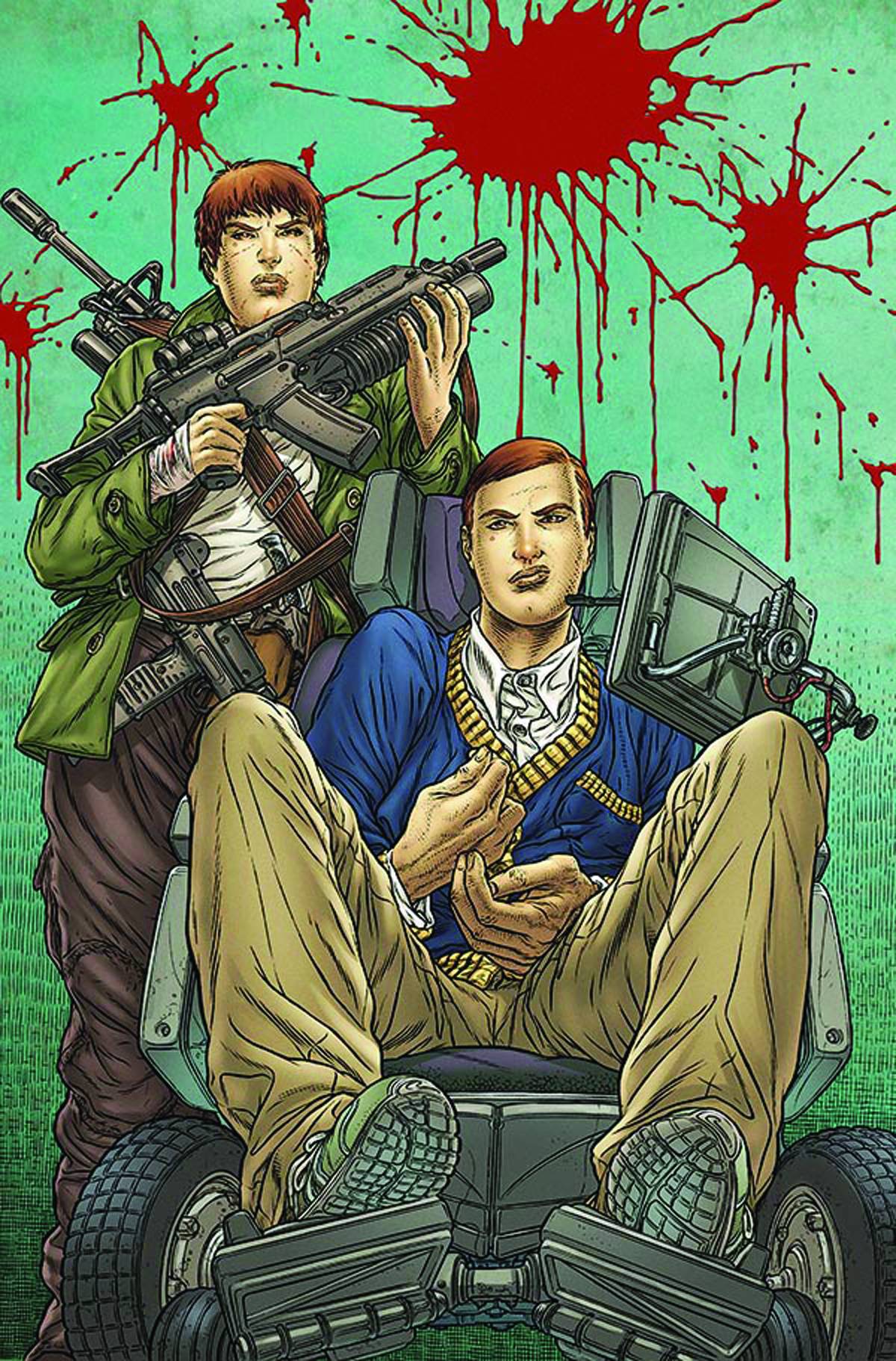
Clone #10
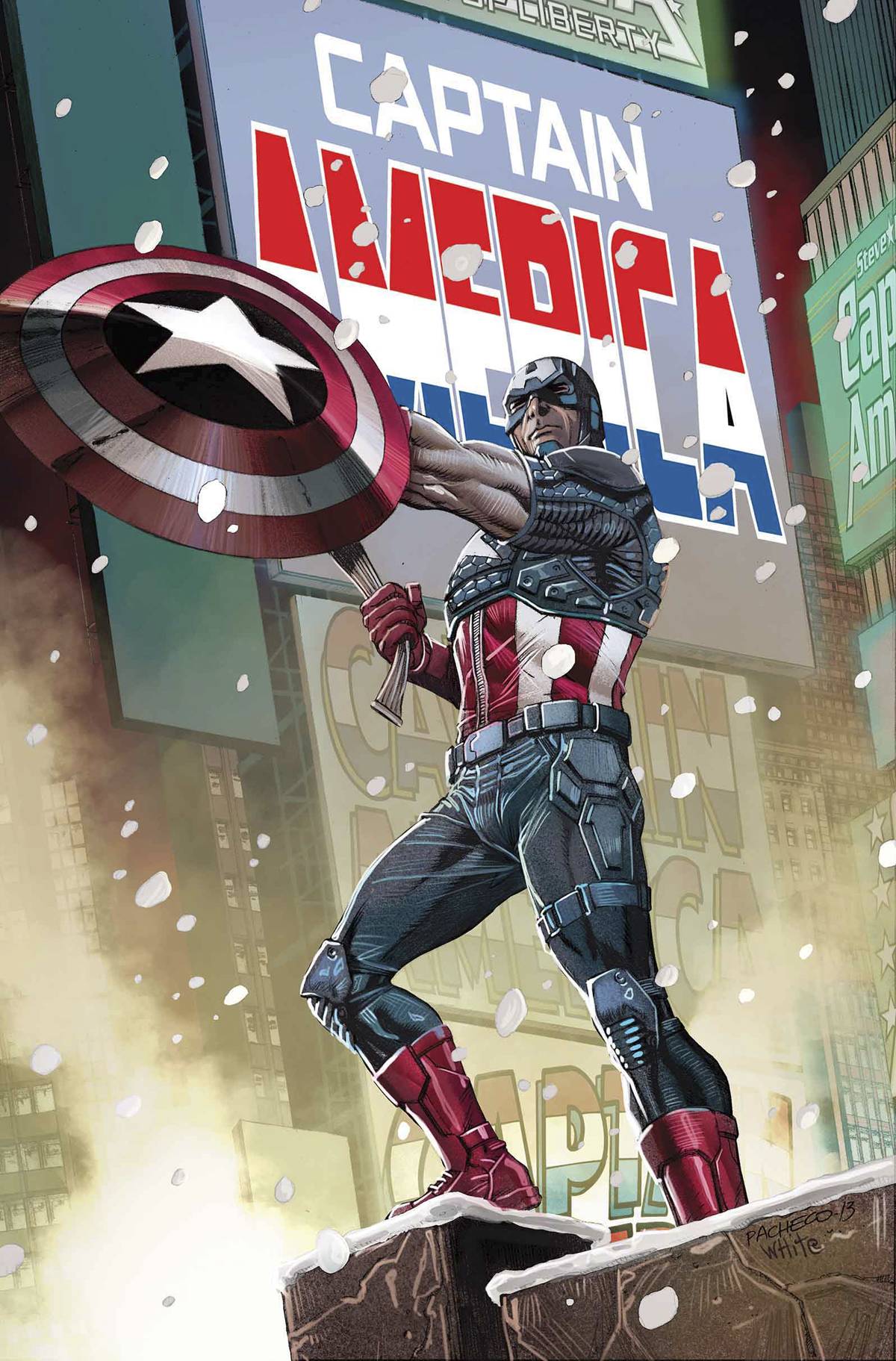
Captain America #11

Archer & Armstrong #13

Rachel Rising #19
What are you looking forward to tomorrow?
Turning pages,
Scott
04 Sunday Aug 2013
Tags
Images and Nerds is a year old this month, and we’re celebrating with…a brand new logo!
 Let us know what you think!
Turning pages,
Scott & Derek
Posted by ScottNerd | Filed under Uncategorized
 Images and Nerds