• The Big Picture
  • Here’s ScottNerd…
  • Here’s DerekNerd…

Images and Nerds

~ We're turning pages–and writing about them!

Images and Nerds

Tag Archives: Will Eisner

I&N’s Top Ten of 2013

31 Tuesday Dec 2013

Posted by ScottNerd in Uncategorized

≈ 27 Comments

Tags

Abstract Studio, Adventure Time, Adventure Time with Fionna & Cake, Afterlife With Archie, Ales Kot, Archer & Armstrong, Archie, Austin Harrison, Bad Houses, Bandette, Battlefields, BOOM!, Brian K. Vaughan, Buzzkill, Clone, Daredevil, Dark Horse, Dark Horse Presents, DC, Dean Motter, Deathmatch, Dial H, Dynamite, Fiona Staples, Fred Van Lente, Fury: My War Gone By, Garth Ennis, Goran Parlov, Greg Rucka, Harold Gray, IDW, Image, Jeff Stokely, kaboom!, Lazarus, Manifest Destiny, Marvel, Mateus Santolouco, Matt Kindt, Michael Lark, Michael Walsh, Mike Raicht, Mind MGMT, Mind the Gap, Mister X: Eviction, Mister X: Hard Candy, Morgan Jeske, Nelson Daniel, Numbercruncher, Oni, Rachel Rising, Sabretooth Swordsman, Saga, Satellite Sam, Seth, Simon Spurrier, Six-Gun Gorilla, Star Wars, Terminator, Terry Moore, the Hernandez Bros, The Massive, The Sixth Gun, The Spirit, Thumbprint, Titan, Tradd Moore, Trillium, Valiant, Vertigo, Wild Blue Yonder, Will Eisner, Winsor McCay, Zach Howard, zero

Welcome to the 46th Annual I&N’s Top Ten Comics of the Year (aka “The Innies”)! Why it seems like just yesterday that a struggling little mag named “The Amazing Spider-Man” edged out “The Adventures of Jerry Lewis” for the top spot on our hallowed list, signaling the spectacular rise of one and the slow descent into obscurity of the other.

Each title below is testament to the fact that, even as conventional wisdom holds that print is dying, comics are in the midst of some kind of Renaissance. The persistent stereotype that this vibrant, global medium is followed by sad, middle-aged men who like to see men in tights beat each other up simply doesn’t hold water anymore, nor has it for quite some time. The fact is, the problem is no longer a lack of diversity in incredible material for any and all possible demographics; it’s that there’s too much of it to keep track of! No less than seven publishers are represented in our Top Ten, each producing catalogues of more great work than we could ever hope to encompass in our tiny alloted piece of the internet. (You’ll note we even had to expand our “Honorable Mentions” section to ten books apiece – and we could’ve used ten more!) Simply put: everyone should be reading comics.

As always, we here at I&N welcome debate – hell, that’s the whole point. Just be aware that results below have already been encrypted onto floppy discs and blasted into space for the benefit of our future alien overlords. (DM)

The List!

10. Archer & Armstrong (Valiant): When Valiant, earlier this year, began hyping up their new title Quantum and Woody as their foray into buddy-action slapstick comedy, I wanted to yell “Wait! They’ve already GOT one of those!” But Archer & Armstrong is much more than that. Fred Van Lente and Co. have taken the best of Lethal Weapon, The X-Files, ancient Sumerian mythology, Dan Brown-type conspiracy novels, Dr. Strangelove, and god knows what else, and concocted a world-spanning epic that despite its breakneck pace and impeccable comic timing, manages an intellectual underpinning that questions the very nature and origins of faith. Even at its most gleefully satirical, however, the sheer exuberance of the writing embraces an expansive view of humanity, in all its wonders and frailties. Fun in a bottle, folks. (DM)

Archer & Armstrong

9. Fury: My War Gone By (Marvel): Garth Ennis proves he’s one of the most incisive writers around (not just in comics) on the subject of war. His deconstruction of the Marvel soldier/spy icon (lately supercool due to Samuel Jackson’s sleek big screen portrayal) is the least of this title’s attributes (which is on our Top Ten for the second year running). Ennis’ story (rendered with appropriate, unblinking grit by Goran Parlov) also serves as an insider’s account through the anguished  litany of armed conflict of the second half of the 20th century. Most devastatingly, it portrays the effects of war, not on the nameless many whose lives are needlessly cut short, but on the wretched perpetrators who survive. Merciless and shattering. (DM)
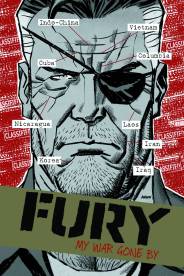
Fury: My War Gone By

8. Zero (Image): Ales Kot, the enigmatic engineer behind the challenging Change (Image), a mostly on-time bullet train of thought fueled by a combustible blend of poetry and pictures, has heroically hit the brakes on the overplayed and over-parodied secret agent genre, expertly taking it from 007 to Zero in no time flat. He’s applied the same amount of poetic pressure here, but to a more successful–and coherent–end storytelling-wise: the danger is palpable, the emotion undeniable–thanks, in part, to the rather complex collaborative effort that has called for four different artists on the first four issues of the series–a move that has transcended gimmick and, instead, has proven invaluable, if only because the first four artists have been Michael Walsh (Comeback), Tradd Moore (The Strange Talent of Luther Strode), Mateus Santolouco (Dial H, TMNT), and Morgan Jeske (Change). My experience thus far: #1 hooked me with its perfect timing and left me lying in the gutter; #2 knocked me upside-down; #3 disarmed me; and #4 made me love it–made me punch-drunk love it, damn it! What makes the book even more exciting? It defies expectations. I expect that it’ll continue defying expectations as we move into 2014. And, in that, I expect Zero to be just as good as it’s been–if not infinitely better because we’re getting the best of Kot, who’s clearly giving us everything he’s got. (SC)

Zero #4

Zero

7. Lazarus (Image): Greg Rucka’s vision of a near-future oligarchic dystopia gets under your skin because, in the tradition of Huxley and Orwell, it seems an all-too-plausible extrapolation of our current reality. The story is made even more unsettlingly concrete by Michael Lark’s stark, photorealistic visuals. Contrast the plight of the teeming masses with the power-hungry family dynamic of the ultra-privileged few, and you have a potent, volatile mix. A comic for our times. (DM)

Lazarus #2

Lazarus

6. Wild Blue Yonder (IDW): Sure, it’s only three issues in, but what a three-issue ride it’s been!  We’ve celebrated this action-packed series from its radar-arousing takeoff, with each high-speed pass earning enviable I&N accolades along the way.  (Check out the love here, here, and here.)  Top Gunners Mike Raicht, Zach Howard, Nelson Daniel, and Austin Harrison have come together in classic diamond formation to deliver one superior salvo after another, each on its own–and as a whole–a blockbuster that would humble Hollywood’s own best of 2013. (SC)

Wild Blue Yonder

Wild Blue Yonder

5. Rachel Rising (Abstract Studio): Terry Moore presents a truly American horror story: witches, serial killers, and a resurrected figure of biblical origins seeking vengeance for the sins of our nation’s past. Oh yeah, and the Devil. Moore draws you in with the quiet beauty of his artwork; his snow-covered renditions of the sleepy town of Manson enveloping you like a down blanket in front of a fireplace, before the sharp spasms of bloodletting shock you right back into his nightmare. However terrible the events depicted though, Moore seems to suggest they pale against the cruelties of history. Speaking of cruelties, let’s hope a purported television adaptation staves off recent talk of this book’s imminent demise. Because the real horror story would be a world without Rachel Rising. (DM)

Rachel Rising

4. Saga (Image): Saga is a lot of things: a superlative satire, a side-splitting sci-fi romp, a heart-wrenching romance, a critique of fiction, a controversy magnet; but most of all, it’s extraordinarily consistent; and it’s that consistency that fosters a critical expectation: to expect the unexpected.  On a monthly basis, Brian K. Vaughan and Fiona Staples serve up sublime slices of a greater story–slices that showcase razor sharp dialogue, that pitch perfect pathos, that sell sure shocks; they wisely fool with the elements of fiction and, like confident alchemists, have come up with issue after issue of 22-page gold–and we’re all the richer for it. (SC)
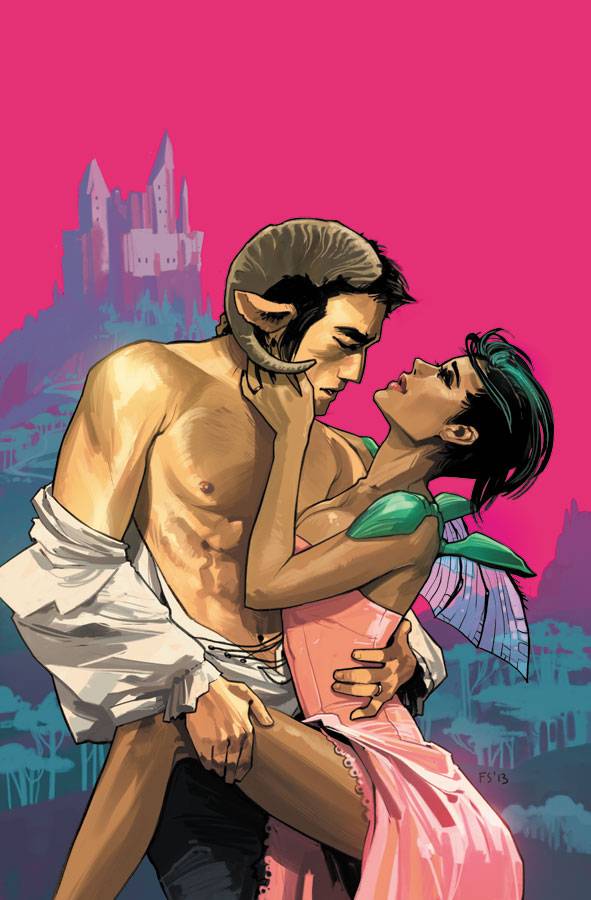
Saga

Saga

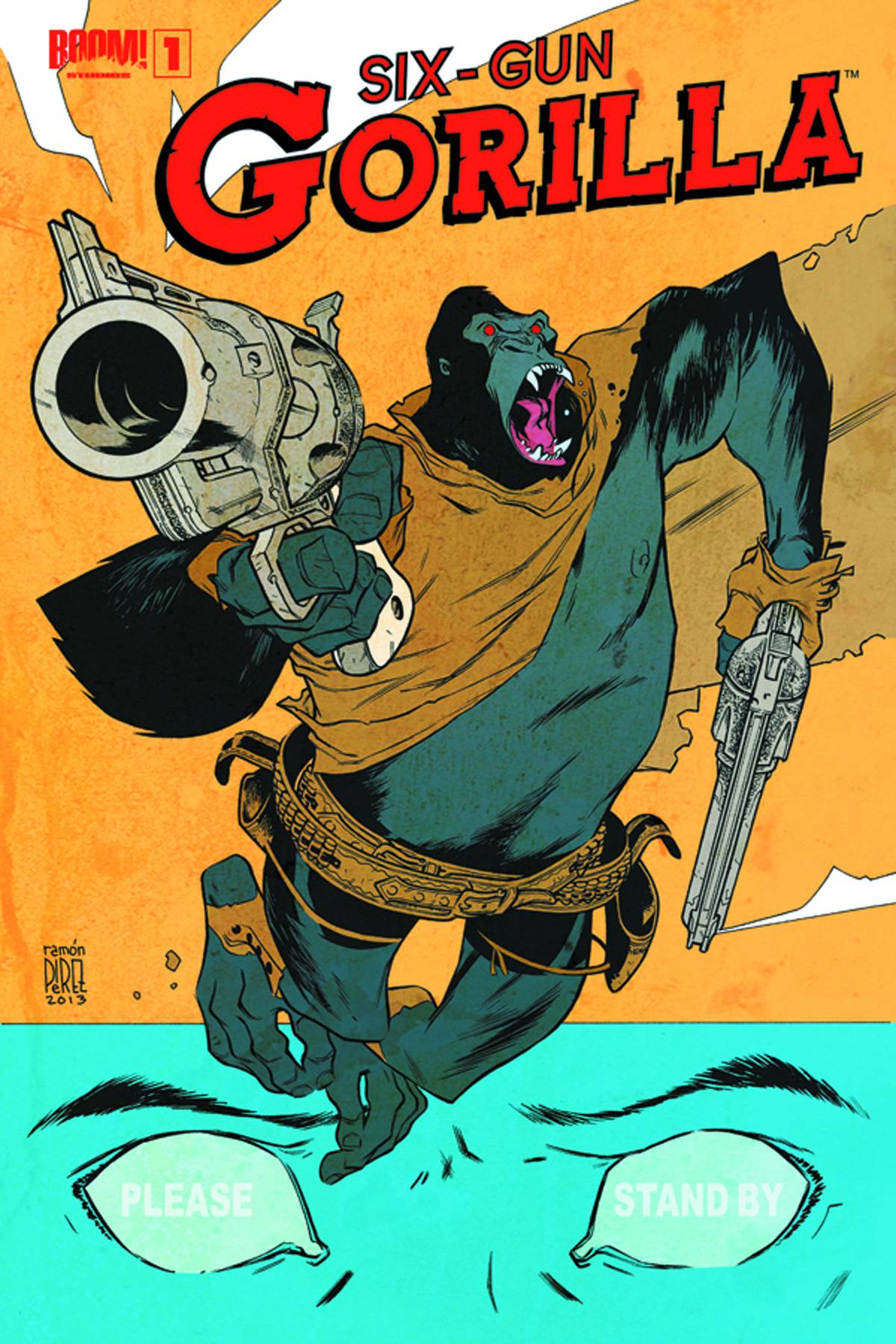
3. Six-Gun Gorilla (BOOM!): In the biggest surprise of the year, Si Spurrier conducts a multi-layered masterclass in metaficiton and at the same time delivers a eulogy on the dying art of escapism.  From the existential exposition of this weird, weird western to its necessarily hopeful final act, Spurrier’s imaginative muse–the Six-Gun Gorilla, himself–becomes Blue’s, and then naturally becomes ours as we consent to the writer’s every insistence; as we gladly lose ourselves in this genre-bending–and never-ending–battle between reality and fiction, good and evil, and fate and freewill, which is brought to life by rising star Jeff Stokely, whose artwork crucially complements the conflicts at the core of the story.  At the same time a celebration of a culture’s vital literary legacy and a criticism of the current collective unconscious, Six-Gun Gorilla has earned its spot in the Western Canon of Comics–and our Top Ten–with a simple but oft-neglected gesture: by making and keeping a primal promise. (SC)

Six-Gun Gorilla #2

Six-Gun Gorilla

2. Mind MGMT (Dark Horse): Matt Kindt’s magical mystery tour de force Mind MGMT—our #3 book of 2012–continues to astound, especially as its crafty creator meticulously molds the medium to suit his carefully constructed conspiratorial agenda.  As the story of the eponymous enigmatic entity has evolved, so too has Kindt’s strategy for telling it: his precise, patient prose; his layouts, enlivened by some otherworldly calculus; and his innovative brushstrokes of genius merge miraculously and challenge us to think and to feel, to be active participants in the world in which we’ve been immersed: to put beautifully painted pieces together in order to experience–along with the impressive cast of characters–confusion and loss, the conflation of time, and a higher power drawing us somewhere unprecedented in breadth and scope–drawing us in to the mind of the medium’s finest manager. (SC)

Mind MGMT #13

Mind MGMT

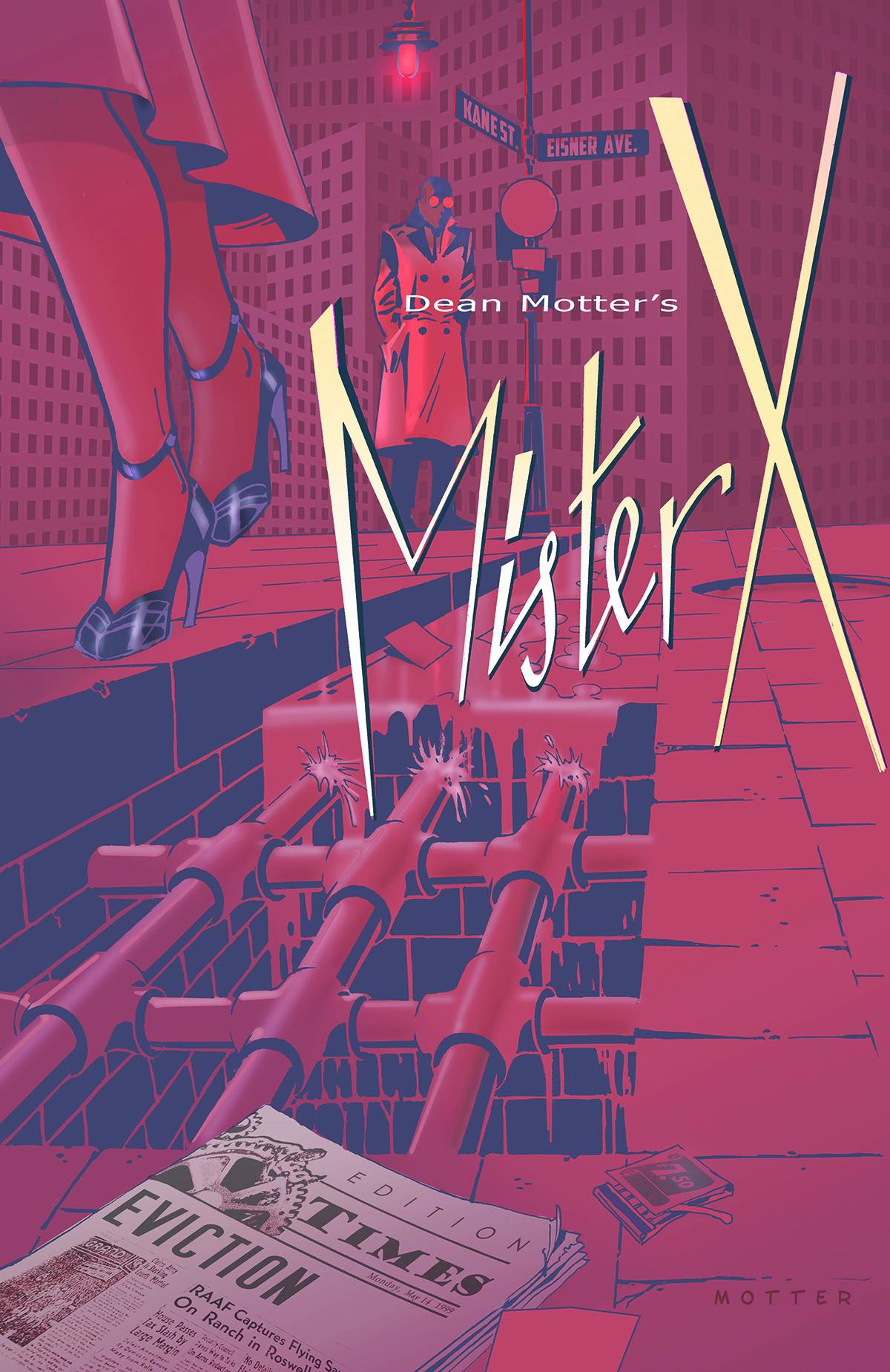
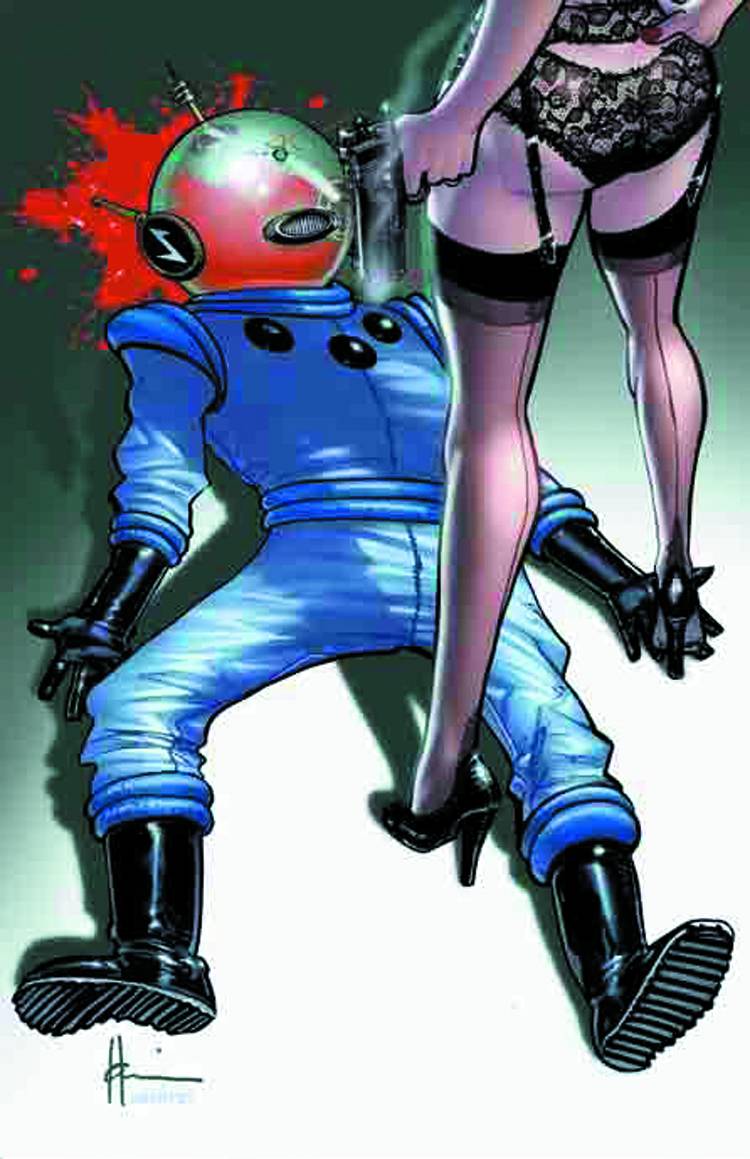
1. Mister X (Dark Horse): There are many approaches to creating great comics. One of them is largely collaborative, in which the creative duties are are separated and clearly defined (writer, artist, colorist, letterer, etc). Through an amalgam of traditional, action-based American comics and the more leisurely paced, lushly visual influence of manga, this approach has evolved over the last twenty years or so into what could be called a “cinematic” style; a treatment of the comic book form that seems based in the ethos of filmmaking (Lazarus, above, is an excellent example of this). Then there is another approach (let us call it the “auteur’s” approach) in which the cartoonist (let us rescue this title from the cultural dung-heap) assumes all of the above creative responsibilities to produce narratives that are singular and personal in a way that no other visual medium, not even movies, can replicate. Since they control all aspects of the work – not just writing and drawing, but page design, panel lay-out, font style and placement and all sorts of graphic elements; in short the whole package – they can, at their best, perfectly marry content and form in a manner that is unique to the comics medium. It is an approach with a history that extends at least back to Will Eisner and The Spirit. Perhaps because it takes such a concerted effort by a single individual, this type of formal, experimental approach is most often seen in the realm of the “graphic novel”. Rarely is it employed in our beloved, stapled floppies (though glimmers of hope have begun to appear on the comic racks: see Matt Kindt, above and below). And then there is Mister X. Created by Dean Motter in the early 1980’s, (when “graphic novels” barely existed as an idea) the title has long been a touchstone among independent-minded cartoonists (early contributors include the Hernandez Bros and Seth). In its latest iterations, Hard Candy and Eviction, Motter continues to seamlessly wed both approaches: there is the clear stylistic influence of German Expressionism and film noir for which the comic is known, but there are also the aforementioned design choices that reflect the themes of the narrative itself. The story involves the mysterious architect of a city in which the very buildings (in all their art deco glory) seem to respond to, and adversely influence, the psyches of its very inhabitants. This theme, played out in yarns that are at once hard-boiled, surreal and whimsical, acts as a fitting metaphor for the experience of the reader, as they interact with the “architecture” of Motter’s intricate design. Further, Motter includes delightful homages to the likes of Harold Gray (“Little Urchin Andy”), Winsor McCay (“Dream of the Robot Friend”) and the aforementioned Eisner (see cover below) which pay tribute to the comics history of which Mister X is a part, while, again, also making sense within the story itself. The overall effect is immersive and beguiling. Some comics tell great stories. Some comics celebrate their history. Some comics continue to push at the boundaries of the medium. And then there is Mister X. Book Of the Year. (DM)

Mister X:Eviction

Derek’s Honorable Mentions: 20. Dial H (DC) 19.  Afterlife with Archie (Archie) 18. Manifest Destiny (Image) 17. Thumbprint (IDW) 16. The Massive (Dark Horse) 15. Battlefields (Dynamite) 14. Adventure Time (kaboom!) 13. Numbercruncher (Titan) 12. Trillium (DC/Vertigo) 11. Adventure Time with Fionna and Cake (kaboom!)

Scott’s Honorable Mentions:

20. Battlefields (Dynamite) 19. Daredevil (Marvel) 18. The Sixth Gun (Oni) 17. Deathmatch (BOOM!) 16. Satellite Sam (Image) 15. Clone (Image) 14. Numbercruncher (Titan) 13. Mind the Gap (Image) 12. The Massive (Dark Horse) 11. Trillium (DC/Vertigo)

Best Single Issue of the Year: Mind MGMT #17 (Dark Horse)

With #17, Kindt reaches new heights, goes to greater lengths–particularly in page-busting panels of crisply-crafted and concurrent continuous narratives–to exploit the power of the medium.   As promised by the clever cover–one awash in paranoia and paronomasia–the story moves at a breakneck pace: from a locked and loaded unhappy Home Maker to a veritable orgy of violent rivers running toward a simultaneous orgasm of double-page splashes–there goes the neighborhood, indeed!–to a crack shot Meru, who, with a twist of Lyme, is ready to take the reins and restore reason to the world one agent at a time.  The whole damn thing’s a miracle, really.  Hell, at this point, I wouldn’t be surprised if Kindt could turn his watercolors to wine; his work is that divine. (SC)

Mind MGMT #17

Mind MGMT #17

Publisher of the Year: Most comics-related outfits have finally caught onto Image Comics‘ trend-setting ways and already bestowed this honor upon them (no doubt, in no small part, due to our ahead-of-the-curve naming them Publisher of the Year in 2012 😉 And with stellar debuts like Lazarus and Zero (not to mention books like Manifest Destiny and Rat Queens) the accolades are hard to dispute. But let us do just that (contrary bastards that we are). Because 2013 was the year that a bevy of other publishers took a page from Image’s playbook and produced work, much of it creator-owned, that was just as innovative, idiosyncratic, and invigorating as Image’s output. BOOM!, IDW, Oni, Dyanmite – all produced titles of creativity, breadth and distinction. But there was one publisher that rose unexpectedly, like its namesake, above the rest: Dark Horse. While never taking their eye off their bread-and-butter licensed properties (like Star Wars and Terminator) Dark Horse branched out into new territory with exciting minis from largely unknown creators (Buzzkill), original graphic novels (Bad Houses), and printed versions of high quality digital comics (Bandette, Sabretooth Swordsman). And let’s face it, Dark Horse has been doing the creator-owned, independent thing for over twenty years, as evidenced by the revival of the premiere comics anthology, Dark Horse Presents. So while Image is the current industry darling (and deservedly so), we can’t ignore the evidence of our comic-lovin’ eyes: the best overall books of 2013 (including our Top Two titles) were published by Dark Horse Comics. (DM)

Looking forward to 2014,

Scott & Derek
Share this:

  • Click to share on X (Opens in new window) X
  • Click to share on Facebook (Opens in new window) Facebook
  • Click to share on Tumblr (Opens in new window) Tumblr
  • Click to share on Reddit (Opens in new window) Reddit
  • Click to email a link to a friend (Opens in new window) Email
  • Click to share on Pinterest (Opens in new window) Pinterest
Like Loading...

Top 5 Books of July

14 Wednesday Aug 2013

Posted by ScottNerd in 5 Comics You Should Be Reading

≈ 2 Comments

Tags

BOOM!, Brian Michael Bendis, Captain Video, Chris Bachalo, Cyclops, Dark Horse, Dean Motter, His Girl Friday, Howard Chaykin, IDW, Image, Jason Ciaramella, Jeff Stokely, Joe Hill, L.A. Confidential, Mad Men, Marvel, Matt Fraction, Mike Raicht, Mister X: Eviction, Mystique, Nelson Daniel, Satellite Sam, Simon Spurrier, Six-Gun Gorilla, Stuart Immonen, Thumbprint, Vic Malhotra, Wild Blue Yonder, Will Eisner, Winsor McCay, Zach Howard

5. Satellite Sam #1 (Image): Matt Fraction and Howard Chaykin take us back to the dawn of television for a behind-the-scenes look at the type of low-fi, sci-fi program that nostalgists pine for as evidence of a simpler, more innocent time. But what Fraction and Chaykin show us is anything but: murder, sex, and best of all the breathless pacing and snappy dialogue of such stylish, seedy media sneak-peeks as L.A. Confidential, Mad Men and His Girl Friday. Captain Video this ain’t. Rather, with its mature themes and sophisticated storytelling, this is the kind of comic to give to people who don’t read comics. We need more like this. (DM)

Satellite Sam #1

Satellite Sam #1

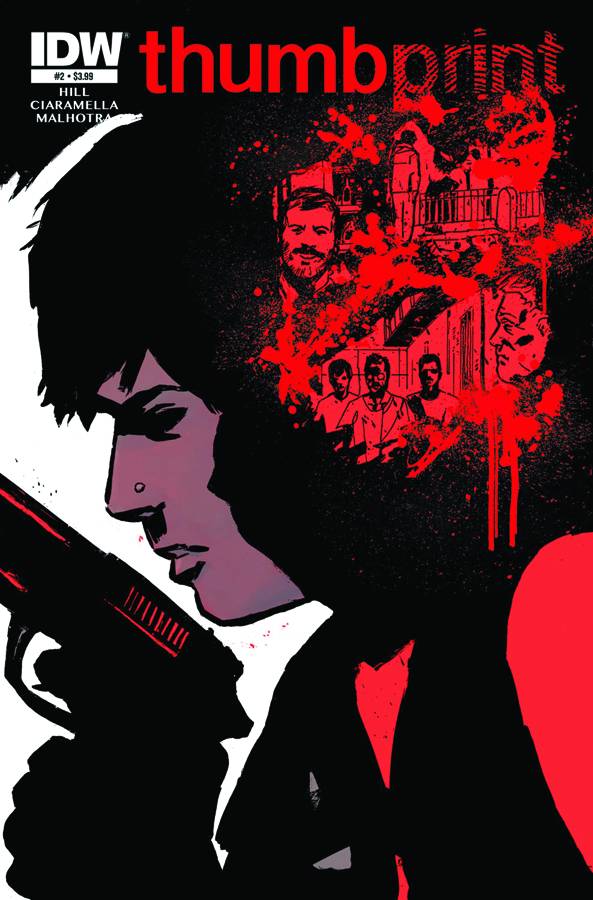
4. Thumbprint #2 (IDW): Jason Ciaramella and Vic Malhotra deftly continue their adaptation of Joe Hill’s tour-de-force story about the horror that has seemingly followed a disgraced Iraqi War veteran back home. Emphasis on force: this issue largely concerns a flashback to a wartime episode of breathtaking cruelty. Hill’s accomplishment is not in the depiction of the act itself, but in the implicit conveyance that, as bad as this is, there were things that went on that were much, much worse. (DM)

Thumbprint #2

Thumbprint #2

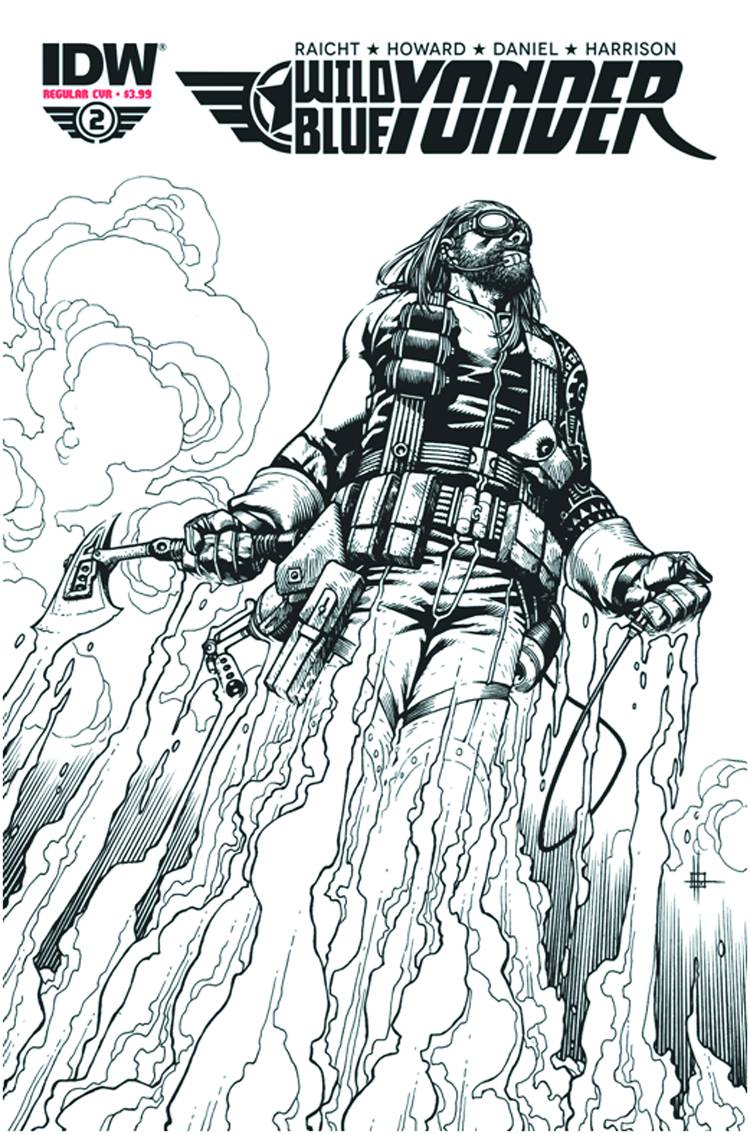
3. Wild Blue Yonder #2 (IDW): Regular readers might remember that I celebrated the series’ opening salvo as a summer blockbuster.  Yeah, well, this issue takes all of the itty-bitty block bits left over from the initial blockbusting and busts them into even itty-bittier pieces!  Mike Raicht scripts the light fantastic as he slides from the Dawn to the dark side; as he builds bonds and, just like that, breaks them.  Zach Howard and Nelson Daniel come in heavy, bringing each scene to life or death with their gorgeously gritty artwork.  That’s right: grab your popcorn and pick the perfect seat: when it comes to high-flying fun, Wild Blue Yonder can’t be topped.  Two issues in and it’s quite clear: the sky’s the limit. (SC)

Wild Blue Yonder #2

Wild Blue Yonder #2

2. Six-Gun Gorilla #2 (BOOM!): Duck Dynasty ain’t got a damn thing on this simply “perfick” reality show from Simon Spurrier and Jeff Stokely.  Attention must be paid!  Hell, it’s “the name of the game.”  And if you’re not paying attention to this wild, wild western–if you’re not runnin’ with the ‘rilla by now–you’re clearly of questionable taste.  But, hey, it’s Goodall–I mean, it’s all good.  Sure, it’s possible–but not likely–you’re just not that into action-packed satires that co-star cigar-chomping simians who sell their lines like they’re looking to earn enough scratch to buy a big ol’ bunch of bananas before Blazetime. Yeah, that’s what I thought.  We ostentatiously tossed roses at the dusty knuckles of #1 (it was our Book of the Month for June), but Spurrier and Stokely very well may have raised the monkey bar with this one. (SC)

Six-Gun Gorilla #2

Six-Gun Gorilla #2

1. Mister X: Eviction #3 (Dark Horse): Dean Motter’s contender for Book of the Year is not just a compelling story with beautiful art; it is also a love-letter to the medium itself. From the Will Eisner-inspired cover to the delightful Winsor McCay interlude, this book is just catnip for comics enthusiasts. If Satellite Sam is recommended for people who don’t read comics, this is a gift for people that do. Book of the Month. (DM)

Mister X: Eviction #3

Mister X: Eviction #3

Biggest Dis(appointment): Brian Michael Bendis’s X-Mess

Both Uncanny and All-New versions of the X-Men this month–#8 and #9 of the former and #14 of the latter–are X-ercises in the ol’ rhetorical runaround.  Oh, they’re perfectly pretty–thanks to Chris Bachalo and Stuart Immonen, respectively–but what do they accomplish, really?  That’s right: be honest with yourself and with the world: the answer’s disgracefully obvious: not much at all.  Now, I know we’re headed toward the big Battle of the Atom crossover and maybe the jogging in place is related to that.  As it is, Bendis’s X-titles have been X-tremely disappointing for some time now; yeah, sadly this isn’t the first month where I’ve been like Why am I still buying these damn things?  But I’m still buying ’em–because I still believe in Bendis and because I’m not quite ready to be an ex-X-Men reader.  See: I’m a sucker for Cyclops.  So, on one eye, I’m like, to hell with it; and on the other, I’m sure that something’s going to happen–and soon!–to justify my loyalty.  I just know it!  After all, Bendis himself  promises–through Mystique–that “[t]here’s a bigger picture” here.  And, if, in the end, all of these pointless little pieces fit together to form it, well, then shame on me for doubting.  And if they don’t, whom do I ask for a refund? (SC)

Turning pages,

Derek & Scott

Share this:

  • Click to share on X (Opens in new window) X
  • Click to share on Facebook (Opens in new window) Facebook
  • Click to share on Tumblr (Opens in new window) Tumblr
  • Click to share on Reddit (Opens in new window) Reddit
  • Click to email a link to a friend (Opens in new window) Email
  • Click to share on Pinterest (Opens in new window) Pinterest
Like Loading...

I&Nterview: Danny Fingeroth

16 Tuesday Jul 2013

Posted by dmainhart in I&Nterview

≈ Leave a comment

Tags

A Contract with God, Alain Resnais, All Things Considered, Alter Ego, Chris Claremont, Danny Fingeroth, Dean Haspiel, Dennis O'Neil, Disguised as Clark Kent: Jews Comics and the Creation of the Superhero, Fredric Wertham, Harvey Pekar, Hilde Mosse, Jack Kirby, Jason, Joey Cavalieri, Klaus Janson, Last Year at Marienbad, Leila Corman, Marvel, Marvel Comics: The Untold Story, memoirs, Miriam Katin, MoCCA, NPR, Peter Kuper, Rick Geary, Robert Crumb, Roy Thomas, Sean Howe, Seth, Silver Surfer, Society of Illustrators, Spider-Man, Stan Lee, superheroes, Superman on the Couch: What Superheroes Really Tell Us about Ourselves and Our Society, The Rough Guide to Graphic Novels., The SoHo Gallery for Digital Art, The Stan Lee Universe, The Today Show, TwoMorrows Publishing, Unterzakhn, WhirlGirl, Will Eisner, Write Now!

Danny Fingeroth is a man who’s made his life in comics. Best known as the longtime editor of Marvel’s Spider-Man comics line, Danny is also something of an academic authority on the form. His impressive contributions to the underlying power of the medium include such well-received books as: Superman on the Couch: What Superheroes Really Tell Us about Ourselves and Our Society; Disguised as Clark Kent: Jews, Comics and the Creation of the Superhero; and The Rough Guide to Graphic Novels. He created and edited Write Now!, a magazine dedicated to the craft of writing comics. In a similar vein, he has taught comics-related courses at New York University, The New School and The Museum of Comic and Cartoon Art (MoCCA). He has spoken on the subject at The Smithsonian Institute and The Metropolitan Museum of Art and has appeared on NPR’s All Things Considered and The Today Show on NBC. He currently offers classes and educational programs at The SoHo Gallery for Digital Art. His most recent book (co-edited with fellow legend Roy Thomas) is The Stan Lee Universe.
Derek Mainhart: You’ve delved quite a bit into the autobiographical subtext of a lot of comics, especially regarding the original superhero comics of the early 20th Century. What got you thinking along these terms?

Danny Fingeroth: It’s something I just gravitate toward thinking about. Sure, these stories were created to generate revenue, but with that as a given, what were they about under the spandex trappings? Why THESE stories and characters, and not others?  When you start thinking about that, pretty soon you’re getting to “What were the creators—including the editors—trying to express? What personal experiences, yearnings, dreams, did they draw on?”

DM: Interesting that you mention the editors; they often get overlooked in questions like this. To what degree do you think editors influenced some of the autobiographical subtext we’re talking about?

DF: Editors often become part of the creative process, especially in mainstream comics, since you are often dealing in a shared universe. Every comic and every team deals with this differently. Ultimately, the editor is concerned with, “What will sell the most comics while also preserving the long term integrity of the main characters?” (Business imperatives may dictate how much concern is evidenced for those long term concerns.) So if a story ultimately becomes a combination of ideas and experiences from the various parties concerned in making the story, then that’s fine, at least as far as the long term health of the character franchise, if not for the egos of all concerned. Just as a TV series can be the “vision” of one or multiple minds, the same with a comics series. The editor is supposed to not take credit for the creative content, but if you find yourself liking multiple titles, on an ongoing basis, that are edited by a specific person, then you have to think that, at the very least, that editor is catalyzing these particular creators into working at the top of their game, even if he or she is not specifically directing them regarding what to do and how to do it.

DM: What would you say the comics written by Danny Fingeroth reveal about him?

DF: That’s not really for me to say. Let a thousand doctoral theses be launched! (Or at least a couple of blog posts.)

DM: On the other side of the coin, you’ve written about society’s need for superheroes. Do you think they have a shelf life? The heroic figures of the 19th Century, for example, don’t necessarily carry the same weight as they did in their own time (Sherlock Holmes being, perhaps, an exception). Even the pulp heroes that begat superheroes, while still around, are hardly the phenomena that they once were. Could it be said that, in terms of comics, the 20th Century was the Superhero Century, and that the 21st will perhaps move on to Something Else? Or have waves of blockbuster movies enshrined them in the popular consciousness?

DF: The latter. As our society seems to become more complex than ever (is that an illusion?), people tend to want simple, direct solutions to these problems in their entertainment. Superheroes, even complex ones, fill that bill. The superhero has become for the 2000s what the Western was for the 20th Century—a metaphor system through which Americans tell ourselves our collective story.

Behind the Scenes

DM: Sean Howe’s book Marvel Comics: The Untold Story recently garnered some attention. Naturally, you make a couple of appearances. Would you say his behind-the-scenes look at Marvel’s history paints an accurate picture? Is there anything in it you’d care to comment on?

DF: I’d say given the enormity of the task Sean took on, he did a good job of weaving the company’s history into a narrative with a compelling flow. There is no single “Marvel,” after all. Everyone who worked there experienced it differently. I think Sean delved into some of what was going on behind the scenes over the years with a reasonable amount of accuracy. The hardest thing to convey in a biography of a company is the reality that, while people come together at a place for a common cause, they/we all have our own non-work lives going on at the same time. That’s where personal memoirs would come in. What non-work-related reasons were there for why a particular person made a series of decisions? Who were they when they left the office for the day? How did that affect the work they produced?

DM: How do you think the job of an editor has changed in the last 15 years or so?

DF: It seems pretty much the same to me. I think the replacement of the phone call with e-mail and other electronic communication media is problematic when applied to a creative field. As in most areas of life, communication is now quicker, and while in some ways clearer, in other ways more confusing. We’re probably now at a similar point where, 100 years ago, people were bemoaning the impersonal nature of the phone call. Now we yearn for the shades of meaning that can be conveyed by an actual human voice over a phone. But the roles of an editor as representing the company to the creators and the creators to the company seem to me to be pretty constant.

DM: What about the role of an editor as representing the company and creators to the public/fan base? How important is it to have a presence on social media, for example?

DF: Social media is an accelerated, intensified version of the letters page, and convention interaction which editors and creators used to interact with the public in the pre-digital era. Readers and fans (not always the same thing) may think they want to see a particular character’s saga develop in a certain way, but the fact is that what people want is to be surprised by something that in retrospect was inevitable–which is the definition of a good story. Ultimately, in non-gaming, non-fanfic narratives, we want to see the characters we have an emotional investment in do amazing things that are awesome and cool–but that also make sense given what we know about the characters and their worlds. So social media can serve to help get a more immediate sense of what the readership likes and doesn’t like, or what surprises they may have figured out before you wanted them to–but ultimately, just as they want to hear a singer sing, they want to have the storytellers tell them the best possible stories. Social media helps that process along.  

DM: The fanboy/geek in me has to ask: the Spider-Man line is currently involved in a controversial storyline. Your run as editor on Spider-Man was no stranger to controversy itself. Is there any advice you could give to Spidey’s current editorial crew?

DF: Listen to all advice, but keep your own counsel. If the fan inside you says “I gotta read that!”—then do it!

Memoir-able

DM: In The Rough Guide to Graphic Novels, your top three choices are memoirs, and your top ten is rounded out by books that are at least partly autobiographical in nature. Is there something inherent in the medium that lends itself to this type of personal narrative?

DF: I think so. There’s something so direct and visceral about comics.  The medium can convey complexities of human experience that are simultaneously “realistic” and yet also subjective, and do it in a way that neither print nor film/video can.

DM: How much of this autobiographical strain do you think can be traced back to the “first” graphic novel, Will Eisner’s A Contract with God?

DF: I think it goes back at least as far as Crumb, who often told stories that were from his own life, and then to Harvey Pekar, who refined autobiography to a high level, often with Crumb illustrating. Eisner added a distancing layer by lightly fictionalizing his characters’ names and likenesses. Being of a different generation with a different orientation toward comics, Eisner’s stuff was a synthesis of what he had done over the previous decades, along his realization that adults who enjoyed comics might actually want material that deals with more mature themes and concerns.  Of course, storytellers have been mixing autobiography with fiction forever. Even in Contract and his other work that is considered autobiographical, Eisner is very careful to use fictional street names and somewhat disguised characters, so what seems like memoir is fictionalized.

DM: TRGtGN was published in 2008. Anything since then crack your list of must-reads?

DF: Jason and Seth are pretty fantastic. So are Miriam Katin, Dean Haspiel, and Peter Kuper. Leila Corman’s Unterzakhn was great. Rick Geary’s body of work is astonishing.

And Now for Something Completely Different…

DM: Whatever happened to WhirlGirl?

DF: She hasn’t gone away. More info when and if something happens…

Stan the Man

DM: What was the impetus behind Write Now! ?

DF: I wanted to demystify comics writing and to get it some respect. Also, I wanted people to get some sense of how it’s done and make them think about how they might be able to write comics of whatever type, for the major companies, or 20 of their friends. Art is “sexier” than writing because its appeal is visceral and often immediate, whereas writing takes a little more time and effort to judge and respond to—at least it seems that way on the surface. After all, writing and art combine to make comics, so how can you really separate the two crafts, anyway?

DM: Was putting together The Stan Lee Universe a natural outgrowth of your experience on Write Now! ?

DF: Well, it started as the simple idea to combine my and Roy Thomas’s 85th birthday tributes to Stan from Write Now and Alter Ego magazines. Then it got a whole lot more complicated when we decided that I would travel to Stan’s archives at the University of Wyoming and see what unique material I could find there. And I found lots!!

 DM: Sounds potentially fascinating. Anything you can share?

DF: I found recordings of radio interviews that were broadcast in the 1960s and then never heard again. I had the best of them transcribed and then lightly edited them, and they appear in the book. There’s a lengthy one of Stan with Jack Kirby from 1967, which is fascinating. Then there’s one from 1968, the week after Nixon was elected president, of Stan debating comics-hating Fredric Wertham’s colleague, psychiatrist Hilde Mosse, about comics and popular culture.

DM: Wow.

DF: There’re also pages from the screenplay Stan wrote in the early ’70s for a film that was to be directed by his friend, French director Alain Resnais, who made Last Year at Marienbad, among many classics, and is still making important movies.

DM: Tres avant garde

DF: Plus, there’s a lot of script and pencil art from the 1978 Silver Surfer graphic novel Lee and Kirby did, including many personal notes and comments from both of them. Those are just a few of the incredible things in the book. It’s pretty amazing stuff. I’d love to do a volume two. 

DM: Stan projects a very strong public image. Without giving anything away, did editing all of those interviews from various points in Stan’s life give you some new insight into the intersection of his life and work? The man behind the persona?

DF: I learned that he gives the world more glimpses behind that public persona than is immediately obvious, because he often couches remarkably frank statements within the context of other material that is more purely promotional or entertaining. His public persona, in my experience, isn’t that different from the private one—just louder.

From Behind the Scenes to In Front of a Blackboard

DM: The classes you put together for MoCCA over the years featured an impressive roster of talent (Chris Claremont, Dennis O’Neil, etc). Had any of them taught before?

DF: Dennis had taught for many years at SVA. Ditto for Joey Cavalieri and Klaus Janson. I think at some point most comics creators have done at least a guest shot in a class or been on a panel at a convention. For those with less teaching experience, I would do the lesson as an interview I was conducting with them. Don’t forget, in pitching a story, one uses many of the same skills a teacher uses: conveying an idea clearly and in a compelling manner to someone else. I would generally try to choose people to teach whom I knew had an engaging conversational style, and who were excited about sharing ideas. They were teaching already, even if they weren’t aware that they were.

DM: Any thoughts on MoCCA’s absorption by the Society of Illustrators?

DF: I’m glad MoCCA is surviving and thriving. I’m a big fan of both organizations.

DM: Anything else in the works?

DF: I’m working on several book and comics projects that I hope to be able to speak about in more detail soon. Ditto for events and classes that I’ll be giving live and online. I can tell you that I’ll be teaching my comics writing online class again through The Media Bistro website in the fall, and teaching a comics writing course for undergrads through the department of TV and Radio at Brooklyn College, also in the fall.

DM: What advice would you give to prospective comics creators (other than to take your classes!)?

DF: Don’t do just one thing. Be an artist, not just a comics artist. Be a writer, not just a comics writer. Comics careers are for the most part relatively short, even for people whose talent is acclaimed and in demand. Even if you have a twenty-year comics career, you still have another twenty, thirty, forty or more years of a working life in which you’ll want to stay active and productive.   


Share this:

  • Click to share on X (Opens in new window) X
  • Click to share on Facebook (Opens in new window) Facebook
  • Click to share on Tumblr (Opens in new window) Tumblr
  • Click to share on Reddit (Opens in new window) Reddit
  • Click to email a link to a friend (Opens in new window) Email
  • Click to share on Pinterest (Opens in new window) Pinterest
Like Loading...

Back & Forth: Gorilla/War

04 Thursday Jul 2013

Posted by dmainhart in Back and Forth

≈ Leave a comment

Tags

30 Days of Night, All-New X-Men, Battlefields, BOOM!, Breath of Bones: A Tale of the Golem, Brian Michael Bendis, Captain America, Criminal Macabre, Dark Horse, Dave Wacher, Doug Murray, Enrico Fermi, Fightin' Marines, Fury: My War Gone By, Garth Ennis, Heart Shaped Box, IDW, Image, Jason Ciaramelia, Jeff Stokely, Joe Hill, Jonathan Hickman, Kurt Vonnegut, Locke and Key, Marvel, Nick Fury, Nick Pitarra, Noel Sickles, Saga, Samuel Jackson, Saving Private Ryan, Sergio Leone, Sgt. Fury and his Howling Commandos, Simon Spurrier, Six-Gun Gorilla, Steve Niles, Steven Spielberg, The Manhattan Projects, The' Nam, Thumbprint, Uncanny X-Men, Vic Malhotra, war comics, Weird War Tales, Will Eisner

Derek Mainhart: One of the things about the current comics landscape that we here at I&N are really excited about is the sheer variety of material being produced: comedy, drama, memoir, romance, crime, horror, etc. I’ve said it before: if you can’t find something that appeals to you, it’s because you aren’t looking. Having said that, given the reality of the world since 2001, it’s perhaps surprising that there’s been a relative dearth of one particular genre: war comics. So, as we celebrate the birth of our nation, we thought it appropriate to revisit this neglected corner of the comics store.

The heyday of war comics naturally began with WWII. Captain America famously punched Hitler in the face. The heroic exploits of our men in uniform filled the pages of titles like Fightin’ Marines and Sgt. Fury and his Howling Commandos (that’s right; long before Samuel Jackson’s ultra-cool portrayal of the man at the helm of flying CGI aircraft carrier, Nick Fury was a regular-army fightin’ grunt.) Through the ’50s and ’60s newsstands were replete with tales of grit, patriotism and sacrifice. Their popularity waned however to the point that in the ’70s the most notable war book was almost unrecognizable as such: Weird War Tales (emphasis on the Weird). It was perhaps inevitable that the genre should fade under the shadow of Vietnam. It is somewhat ironic then that the one significant war comic of the ’80s was The ‘Nam. Doug Murray’s fictionalized account of the Vietnam War, drawn partially from his own experiences, was remarkable both for the way it tackled its difficult subject matter as well as for being published by a mainstream publisher like Marvel, of all places. Lately, as we’ve previously noted, Garth Ennis seems to be single-handedly reviving the genre with his superlative Battlefields series, as well as his surprising Fury: My War Gone By, in which he brings the aforementioned Nick Fury back to his combat roots and then proceeds to make him witness and participant to the litany of American military misdeeds following “the good war”.

Well, happily, if this week’s books are any indication, Ennis has some company in the trenches:

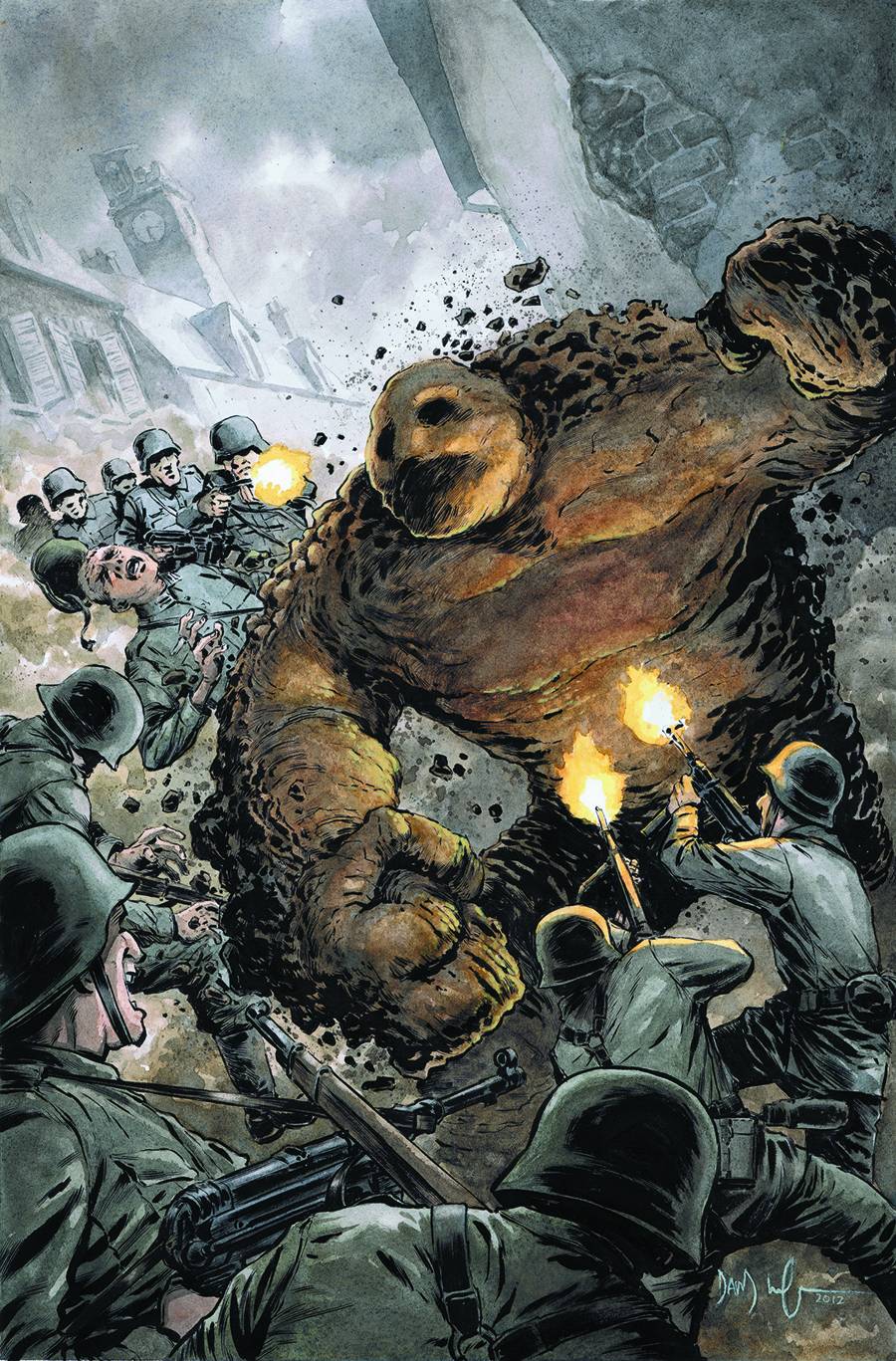
We begin, not surprisingly, in WWII, our most eulogized of conflicts, where the lines of good and evil were, it seems, so clearly delineated. This contrast is literally, beautifully rendered in black and white in Breath of Bones: A Tale of the Golem #1 (Dark Horse) by Steve Niles and Dave Wachter.

Breath of Bones: A Tale of the Golem #1

Breath of Bones: A Tale of the Golem #1

Scott Carney: Yeah, the storytelling here is a cut above.  The aforementioned pair–and it’s a magical pair, indeed–harvests horror and hope in an temperately-paced issue that plays out as a promise: evil will get its comeuppance.  Noah and his grandfather–generational bookends–are another magical pair, one that personifies the perpetual struggle between wonder and wisdom, which plays out tenderly–affected by the soft lines Wachter employs throughout, especially to craft the grandfather’s expressive countenance–during the debate over what to do with the downed RAF pilot and as the grandfather entrusts the means to salvation to his grandson with an aphorism that teaches the boy a grim reality: “sometimes it takes monsters to stop monsters.”

DM: Niles, best known for clever, over-the-top horror fare such as 30 Days of Night and Criminal Macabre, here displays a more heartfelt touch, especially, as you mention, in the boy’s relationship with his grandfather, but also in his stoic denial, and then acceptance, of his father’s fate. This is echoed by the quiet dread of a village that fears it is doomed by the encroaching forces of war – a fear that, sadly, always has currency, somewhere in the world. And Wacher’s truly remarkable art recalls not only the great Will Eisner’s later work, but even work from further afield – dare I mention Noel Sickles?

SC: While The Manhattan Projects (Image) delivers a tender turn in issue #11, in #12 masterminds Jonathan Hickman and Nick Pitarra return tender to sender and unleash the monster–the one that has been exploiting Enrico Fermi’s identity all this time in order observe humanity–particularly to discover its capabilities as it pertains to some “out of this world things.”

The Manhattan Projects #12

The Manhattan Projects #12

Throughout the book, we’re treated to “drone” Enrico’s backstory, which, outside of how he came to be, clues us into the “other side” of scenes we’ve already encountered; I particularly enjoyed the flashback decked out with a dialogue overlay, which adds a dimension to the drama that unfolded during the scout team’s assault on the Siill, as initially seen in issue #5.  (For those keeping score: a similar strategy was recently employed–effectively so–by Brian Michael Bendis in a mini-crossover of sorts between All-New X-Men #10 and Uncanny X-Men #4.)  As the tragic tale of Enrico Fermi comes to a close, it’s worth noting that, despite the drone’s programmed prerogative, there remains a hint of humanity in the monster; but all the apologies in the world cannot save it from the monster meant to mete out final justice in this instance: a marvelously maniacal Einstein with a chainsaw cleverly tagged with E=MC^2.  My goodness!  Has the Cold War ever been any hotter than this?

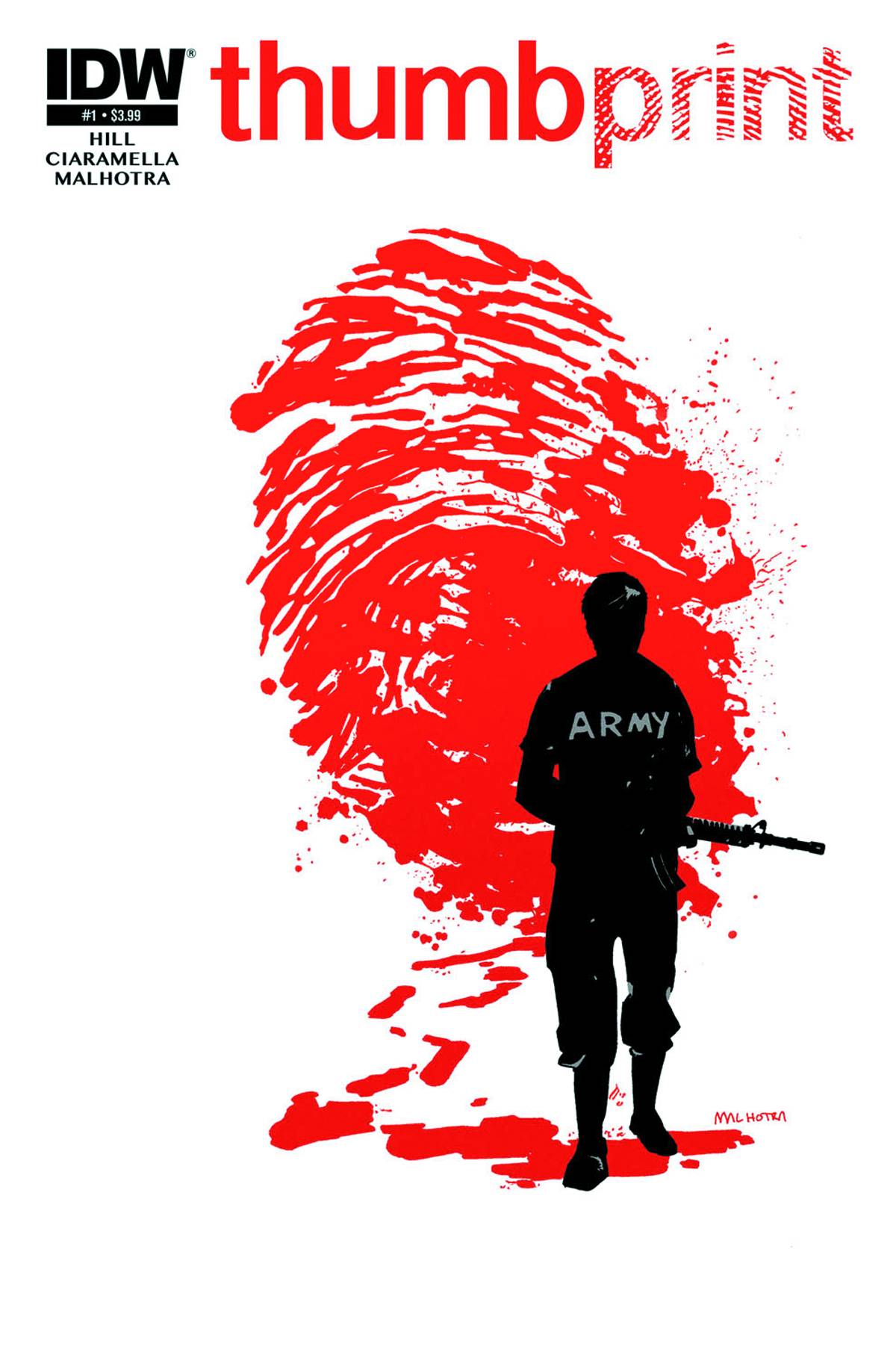
Thumbprint #1 (IDW), based on Joe Hill’s novella of the same name and brought to the page by Jason Ciaramella and Vic Malhotra, is a well wrought thriller that exploits the more recent and far more politically polarizing Iraq War–specifically the moral suicide that was Abu Ghraib–as a backdrop for one vet’s struggle to reacclimate herself to her far less complicated life in New York, where the problems she’s facing are almost farcical considering what she dealt with and what she did in the infamous prison.  Yeah, it’s all par for the course for someone in her situation, really–until she receives by mysterious means a couple of thumbprints: one that triggers a flashback of a routine “soften[ing] up” of a prisoner at Abu Ghriab and another that really seems to soften her up a bit.

DM: Hill, who’s already proven his horror chops in comics (Locke and Key) and prose (Heart Shaped Box) here combines both worlds via an excellent adaptation by Ciaramelia and Malhotra. He’s taken the horror trope of the single, isolated damsel in distress and successfully turned it on its head; readers’ natural predisposition to root for her are tempered, if not wholly undercut, by the knowledge of her wartime actions. She may very well deserve whatever’s coming to her! Talk about “sometimes it takes monsters to stop monsters”!

SC: She responds to this faceless intimidation by carelessly casting threats to the wind–threats that she may very well be able to back up with the gun she’s got; I mean, she handles herself well enough with the all-too-handy John Perry, right?  But it’s clear: her bluster belies her vulnerability; it screams she’s scared.  Hell, after that last page, I know I am!

Thumbprint #1

Thumbprint #1

SC: But as good as those books are–and they’re really good–not a one can stand up to Six-Gun Gorilla #1 (BOOM!).  I’d be lying if I said I expected that to be the case.  I pretty much picked it up because of its being a #1 and, well, yeah, that and because of the promise of the title; I mean, let’s be honest, great apes and guns are the Reese’s of comics.  Yes, the prospect of some sort of shenanigans starring a side-armed simian guided my first few page turns.  But I found myself going bananas over one primate-free panel after another; and in that, it became clear: killa gorilla or no, this book is as fun as a bored-out barrel full of monkeys!

DM: The whirling dervish of a plot, from the mind of Simon Spurrier, involves a soldier, known only as “the Librarian,” who’s volunteered for a suicide mission on a faraway desolate planet. The Deal? He and the other members of his unit have been promised a big pay-out to their loved ones back on earth if and when they die in battle. The Twist? (SPOILER ALERT!)  They’re not fighting for freedom, national defense or any other noble cause; the entire enterprise is being broadcast back home as a reality show, with all the demographic pandering and ad revenue that implies. That’s right, they’re dying for ratings. Now that’s a 21st century war! Spurrier’s story, with its multilayered mishmash of wartime violence, science-fiction conceit, and sharp-eyed satire brings to mind some of Kurt Vonnegut’s work. But thanks to Jeff Stokley’s expansive art, it’s Vonnegut as stylistically filtered through Steven Spielberg in army mode (a chaotic early sequence recalling the opening of Saving Private Ryan) and the desolation of Sergio Leone’s spaghetti westerns. The Result? The most promising sci-fi opening these eyes have seen since Saga. And I haven’t even mentioned that damn, dirty ape…Book of the Week.

Sixth-Gun Gorilla #1

Sixth-Gun Gorilla #1

You’ll have to pry this comic out of our cold, dead hands,

Scott & Derek

Share this:

  • Click to share on X (Opens in new window) X
  • Click to share on Facebook (Opens in new window) Facebook
  • Click to share on Tumblr (Opens in new window) Tumblr
  • Click to share on Reddit (Opens in new window) Reddit
  • Click to email a link to a friend (Opens in new window) Email
  • Click to share on Pinterest (Opens in new window) Pinterest
Like Loading...

The Nerds

  • dmainhart's avatar dmainhart
  • ScottNerd's avatar ScottNerd

Enter your email address to follow this blog and receive notifications of new posts by email.

Join 142 other subscribers

An Amazing Comic Shop

Wiggle Room

It's just the beginning...

Tag Salad!

Ales Kot All-New X-Men Animal Man Archer & Armstrong Avatar Batman Batwoman Bloodshot BOOM! Brian Azzarello Brian K. Vaughan Brian Michael Bendis Brian Wood China Mieville Chris Bachalo Chris Samnee Clone comics Cullen Bunn Daredevil Dark Horse DC DC Comics Dial H Dynamite Dynamite Entertainment Ed Brubaker Fatale Fiona Staples Fred Van Lente Garth Ennis Goran Parlov Grant Morrison Greg Rucka Harbinger IDW Image Image Comics J.H. Williams III J. Michael Straczynski Jason Aaron Jeff Lemire Jonathan Hickman Jordie Bellaire Joshua Dysart Kevin Eastman Kieron Gillen Kurt Busiek Lazarus Mark Waid Marvel Matt Fraction Matt Kindt Mike Allred Mind MGMT Nick Spencer Oni Press Rachel Rising Robert Venditti Saga Scott Snyder Sean Phillips Swamp Thing Teenage Mutant Ninja Turtles Terry Moore The Massive Titan Uber Ultimate Spider-Man Uncanny X-Men Valiant Vertigo Wonder Woman X-O Manowar zero

Archives

  • August 2022
  • March 2022
  • February 2022
  • December 2021
  • August 2020
  • November 2018
  • October 2018
  • September 2018
  • August 2018
  • July 2018
  • August 2017
  • September 2016
  • August 2016
  • July 2016
  • September 2015
  • August 2015
  • July 2015
  • June 2015
  • May 2015
  • April 2015
  • March 2015
  • February 2015
  • January 2015
  • December 2014
  • November 2014
  • October 2014
  • September 2014
  • August 2014
  • July 2014
  • June 2014
  • May 2014
  • April 2014
  • March 2014
  • February 2014
  • January 2014
  • December 2013
  • November 2013
  • October 2013
  • September 2013
  • August 2013
  • July 2013
  • June 2013
  • May 2013
  • April 2013
  • March 2013
  • February 2013
  • January 2013
  • December 2012
  • November 2012
  • October 2012
  • September 2012
  • August 2012

Features

  • 22 I&N 22
  • 5 Comics You Should Be Reading
  • Back and Forth
  • Derekommendations
  • I&N Print
  • I&N Review
  • I&N Scott's Bag
  • I&N Store
  • I&N the Gutter…
  • I&N's Top Ten
  • I&Nsight
  • I&Nterview
  • Innie Awards
  • Microviews
  • Scottlight on…
  • Superhero Friday!
  • Top 5 Books of the Month
  • Uncategorized
  • What's I&N Store?

Recent Posts

  • Creator Watch: Deniz Camp
  • The Best Comics You’re Not Reading
  • Pick of the Week
  • Best Comics of 2021
  • Worth Your Time

Real Nerdy Stuff

  • Create account
  • Log in
  • Entries feed
  • Comments feed
  • WordPress.com

Twitter Updates

Tweets by imagesandnerds

Top 3 Posts & Pages

  • Creator Watch: Deniz Camp
  • The Best Comics You're Not Reading
  • Pick of the Week

Finders Keepers

Create a free website or blog at WordPress.com.

Privacy & Cookies: This site uses cookies. By continuing to use this website, you agree to their use.
To find out more, including how to control cookies, see here: Cookie Policy
  • Subscribe Subscribed
    • Images and Nerds
    • Join 57 other subscribers
    • Already have a WordPress.com account? Log in now.
    • Images and Nerds
    • Subscribe Subscribed
    • Sign up
    • Log in
    • Report this content
    • View site in Reader
    • Manage subscriptions
    • Collapse this bar
 

Loading Comments...
 

    %d